How to Get Around Tulum: 12 Transportation Methods

Discover how to get around Tulum by bus, colectivo, car, taxi, shuttle, and more in this complete transportation guide.

This post may contain affiliate links, which means we might earn a small commission on anything purchased through these links at no extra cost to you. Learn more on our disclaimer page.
Getting around Tulum isn’t always as straightforward as it looks, especially for first-time visitors. Between unreliable public transport, expensive taxis, long distances between the town, beach, and ruins, and confusing bike paths, it’s easy to underestimate how much time and money you’ll spend getting from place to place.
We spent a while researching and asking locals on the ground about the best transportation in Tulum, and have used pretty much every transport option available, including bikes, colectivos, taxis, rental cars, and tours. Some worked great, others were frustrating, and a few are best avoided depending on where you’re staying.
In this guide, we break down all the ways to get around Tulum, including what each option costs, when it makes sense to use it, and common mistakes to avoid. Whether you’re staying in Tulum Pueblo, the Hotel Zone, or somewhere in between, this will help you move around more efficiently and enjoy your trip without the transport headaches.
Getting around Tulum at a glance

More from Tulum
What is the best way to get around Tulum?
Tulum isn’t a compact resort town – it’s split into different zones and super spread out – so getting around is one of its biggest frustrations. The town consists of two main areas:
There are also several other neighbourhoods like La Veleta and Aldea Zama, scattered several miles apart. The town and beach area are connected by two main roads: Avenida Coba and Avenida Kukulcan, but the journey is surprisingly long, at 25 minutes between the two main areas.
With so many areas and different transportation options coming at different levels of convenience and price points, it can be hard to choose where to stay in Tulum. There’s no single best way to get around, and it depends on where you’re staying, your budget, and how much time you want to spend dealing with traffic.

Getting around Tulum Map
We’ve pinned Tulum’s main transportation methods and public transport stops on the interactive map below.
Tulum Transportation
Transportation in Tulum is simple in theory but messy in practice if you don’t know what to expect. There’s a mix of informal systems, private operators, and limited public transport, with very little coordination between them. Prices vary widely depending on distance, time of day, and season, and there’s rarely a fixed tariff visible to passengers.
We’ve covered airport transfers in our post on getting to Tulum separately, so now we’re going to delve into how to get around Tulum itself – transiting between the town, Hotel Zone, and major attractions like Tulum’s Mayan Ruins.
Common transportation methods in Tulum include:
Bookaway is amazing for booking shuttles and transport throughout Mexico. You can get 5% off with our code THOROUGHLY5.

1. On foot
The cheapest way to get around Tulum is simply to walk, but it’s not practical everywhere. Downtown is relatively compact and easy to explore on foot, especially around the main avenue and its side streets. Lots of accommodations and restaurants in Tulum are found here. Most streets have dedicated sidewalks, and there are plazas and markets that are fun to come across as you go.
It’s safe to walk around Tulum at night, but it’s still smart to stick to well-lit areas. We spent many nights wandering Downtown to the street food markets on Satélite Sur 12, Geminis Nte., and Calle Sol Ote, as well as Palma Central, a nighttime food truck plaza – all cheap, easy to get to, and veggie-friendly.
The Hotel Zone, however, is long and narrow, with uneven paths (if any at all) and traffic-heavy sections. We spent an afternoon exploring the Hotel Zone on foot and were exhausted by the long distances, strong heat, and little shade. Visiting it might be one of the best things to do in Tulum, but be sure to have your transportation pre-arranged.

2. By bicycle
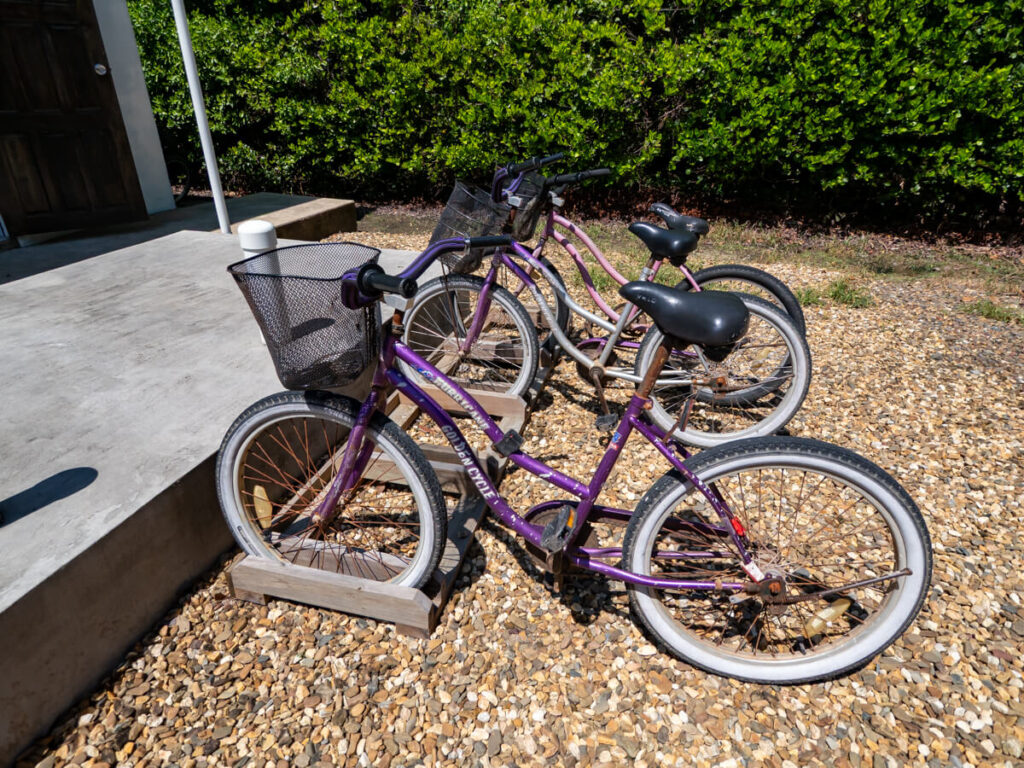
Cycling is one of the most popular ways to get around Tulum, especially between Downtown and nearby neighbourhoods. The terrain is flat, and there are dedicated bike lanes on some main roads, though they’re not continuous.
Bike rentals in Tulum are affordable and widely available through hotels and rental shops. Daily rates start at around 200 pesos ($12 USD), with discounts often offered for longer-term rentals. Ola Bike Tulum and IBike Tulum are two of the most popular bike rental places in Tulum.
The main downsides of cycling are traffic, the occasional aggressive driver, and poor lighting after dark. The rainy season can also make cycling unpleasant.
3. By scooter
Scooters are a common choice in Tulum for travellers who want more speed than a bike without renting a car. They’re easier to park and cheaper than cars at around $25-40 USD per day. Plus, many shops offer pastel-coloured Vespas, which tourists like to position by Tulum’s photogenic signs and street art for whimsy Insta shoots.
Helmets are legally required (and we’d highly recommend wearing one), though enforcement is inconsistent. Road conditions can be rough, with potholes and unpaved sections that you need to look out for, particularly around the Hotel Zone. Traffic accidents involving scooters aren’t uncommon, so having experience is important, and it’s a good idea to have comprehensive travel insurance just in case.

4. By ATV
ATVs are popular in Tulum, but not as widespread as bikes and scooters. They’re fun for short trips and can handle rougher roads better than scooters, but rental costs are high, and fuel consumption is worse than that of smaller vehicles.
Taking an ATV tour in Tulum is a popular option, allowing you to get out in nature and explore the jungle while also learning more about the local area from your local guide, who can help keep you safe while you ride. ATV rentals start from around $80-120 USD per day, while half-day ATV tours are only $30-50 USD.
5. By taxi
Taxis are widely available in Tulum, but considerably expensive for the distances covered. There are no meters, and fares are fixed by zones rather than time or distance, but can be negotiated, so it’s important to agree on the price before getting in. Prices also increase at night and during peak tourist periods.
Similar to the taxi situation in Cabo, taxis have a monopoly in Tulum, and the union is even known as the taxi mafia. It’s not uncommon to be quoted crazy prices for a short journey, and if you’ve not arranged other transportation, you often have little option but to pay up. We know people who have been quoted up to $100 USD for journeys to and from the airport or the beach from Downtown.
If you are going to take a taxi, be sure to have cash in Mexican pesos (US dollars are commonly accepted, but you’ll get a worse exchange rate and end up paying more), as many drivers still don’t accept cards.

6. By Rideshare app
Unlike Uber in Cancún, rideshare apps in Tulum simply aren’t reliable. There technically is Uber, but it doesn’t work in reality. It’s very difficult to get a ride and coverage is inconsistent, mainly due to the taxi monopoly pressuring Uber drivers not to pick up in Tulum.
If you can get a ride, the price is often lower than a taxi, but drivers often cancel rides, so it’s best just to pre-arrange a transfer with a shuttle company or use public transport instead.

7. By rental car
Renting a car in Tulum offers the most freedom, especially for visiting cenotes, ruins, and nearby nature reserves on day trips. You can rent from major international companies, including Hertz, Avis, and Europcar, at the airport, and there are a handful of local operators in the airport and downtown, too. We use DiscoverCars.com to find the best rates and have inclusive insurance. Beware that sometimes car rental companies are accused of scams, like adding huge fees you weren’t expecting, so always check the reviews before booking.
The roads between major destinations are generally straightforward to drive and in good condition, but signage can be confusing, and it can help to brush up on some basic Spanish.
Traffic and parking are major drawbacks, particularly in the Hotel Zone, which can become congested. Parking fees are common, even near beaches, so make sure to park in official lots. Fuel is pretty affordable, but rental insurance costs add up – and we’d recommend having full coverage.

8. By bus
Buses in Tulum are reliable and budget-friendly for longer routes and travel between towns. The main company is ADO Bus, which has comfortable air-conditioned coaches. We’ve used them all over the Yucatán Peninsula, and they’ve always been affordable and consistent.
Within Tulum, their usefulness is limited, as routes are sparse and stops aren’t always clearly marked. For getting to the beaches or ruins, a local colectivo is more useful – we actually asked the ADO desk about getting to the ruins, as there are a couple of buses a day going along the main road passing the entrance, but we were advised to take a colectivo. You can buy tickets for ADO online or at the Tulum Downtown ADO Terminal.

9. By colectivo
Colectivos are shared vans that operate on fixed routes at low prices. They’re by far the cheapest way to get around Tulum and are favoured by locals. You can use them to get to major attractions and transit between the town and the Hotel Zone, as well as for visiting nearby towns like Akumal and Bacalar.
There are no official timetables, but they tend to come along every 5-10 minutes or so between 5:00 AM and 11:00 PM, so you’ll rarely wait long. Vehicles depart when full, so you might sometimes have to wait for the van to fill up. Space can be tight, so they’re not a great option if you have luggage, but they’re handy for short trips if you don’t mind getting a little sweaty for a short amount of time.
Routes mainly run along the highways rather than smaller roads. You’ll find several colectivo stops marked along Avenida Tulum, the main road in Downtown, while the stop for colectivos to the Hotel Zone is on C. Orión Sur near Parque Rotario.

You can simply flag a colectivo down on the side of the road. Often at each stop on the main road, a staff member will radio colectivos to stop and help you onto the right one. Just hop on and tell them your destination. It’s helpful to track your location on Google Maps, so you know when it’s your destination, and you can remind the driver to stop if they don’t look like they’re stopping.
Most of the time, you pay the driver as you get on, but for some popular routes, like to the Hotel Zone, a staff member will collect your cash while you queue. It’s best to ask them the price first (you can find the up-to-date price in Google reviews), to avoid being overcharged – we were told the price to the Hotel Zone was 60 pesos when it was actually 20 pesos. The differences may be relatively small, but they all add up, especially if you’re on a tight budget like we were. It’s now around 20-30 pesos to the Hotel Zone, 25-30 pesos to the ruins, 40-50 pesos to Akumal, and 70-80 pesos to Cobá. Be sure to have cash in small denominations of Mexican pesos.

10. By transfer
Tulum transfers are commonly used for airport pickups and longer journeys. They’re comfortable, reliable, and remove the stress of navigating unfamiliar roads, but not the cheapest option. Buses and colectivos are more affordable, but transfers are a better option than navigating the local taxi situation.
Shared shuttles are best for those on a budget, while private transfers are more convenient but more expensive. Expect to pay around $45-70 USD per person one way for a shared shuttle and $150-300 USD per vehicle one way for a private shuttle (with prices varying by provider and group size).

11. By shuttle bus
Hop-on hop-off shuttles are uncommon in Tulum but operate mainly in Jaguar Park, the protected zone that encompasses the ruins and Playa Ruinas. It shuttles visitors from the park entrance by the main road to the entrance of the ruins. When we visited, it was 25 pesos or $2 USD, but we chose to walk the 15 minutes instead of waiting around for it. We took it on the way back, and it was perfectly fine, if not busy.

12. By tour
Taking an organised tour in Tulum is a great way to see nearby sights like cenotes and Mayan ruins without needing to arrange transport or navigate the busy roads. Tours usually include transportation as part of the package, often from the door of your hotel, which simplifies logistics.
Tour options range from group excursions to fully private experiences, so you can choose based on your budget and travel style. They’re also great for visiting more remote places like Sian Ka’an Biosphere Reserve, which are hard to reach independently.

Tulum Transportation FAQs
To help you plan your trip, we’ve answered these frequently asked questions about getting around Tulum.
How do tourists get around in Tulum?
Most tourists rely on a mix of bicycles, taxis, and occasional transfers rather than a single transport method in Tulum. Cycling is popular for short distances, especially between Downtown and nearby neighbourhoods, with scooters and ATVs being other options. Taxis are widely used for trips to the beach, cenotes, or at night, despite being expensive, but local colectivos are better and cheaper options. Tours often include transport, which simplifies logistics for longer excursions.
What is the cheapest way to get around Tulum?
Walking and cycling are the cheapest ways to get around Tulum, but only work for short distances. Colectivos are the most affordable motorised option, especially for travelling along the highway or to nearby towns. ADO buses are cheap but limited in usefulness within the town.
Is it safe to take public transportation in Tulum?
Public transport in and around Tulum is generally safe to use, especially buses and colectivos. Vehicles are well-used by locals and travellers alike. The main risks are more about road safety than crime, such as speeding or poor lighting at night. If you’re driving or renting a scooter or ATV, be sure to have experience, use a helmet or seatbelt, and follow local rules.
Is it easy to get around Tulum without a car?
It’s totally possible to get around Tulum without a car, and we didn’t use one on our visit. Cycling works well for nearby trips, taxis are widely available, colectivos are super handy, and tours and transfers help for longer distances or day trips.
Do you tip cab drivers in Tulum?
Tipping taxi drivers in Tulum isn’t required but is appreciated. Rounding up the fare or leaving a small tip for good service is common. If a driver helps with luggage or waits for you, a tip makes sense. You don’t need to tip colectivo drivers.
Do Ubers work in Tulum?
Uber exists in Tulum, but coverage is limited compared with Cancún or Playa del Carmen. Wait times can be longer, and some drivers refuse airport pickups. The app is useful for short distances around town, especially in the Hotel Zone and Downtown – if you can get a car. For longer trips or transfers, traditional taxis or shuttles are more reliable.

Read next:
A Responsible Traveller’s Guide to Tulum: Worth Visiting or a Tourist Trap?
25 Unique & Non-Touristy Things to Do in Tulum + 4 Activities to Avoid
How to Get to Tulum: The Easiest & Cheapest Ways
Where to Stay in Tulum: Neighbourhoods & Top Hotels For Every Budget
15 Best Vegan & Veggie Restaurants in Downtown Tulum
A Complete Guide to Visiting Sian Ka’an Biosphere Reserve
How to Visit Tulum Mayan Ruins: Worth it?
A Traveller’s Guide to Akumal Beach Town & Bay: 10 Things to Do + 5 to Avoid
