How to Get to Isla Holbox (Easiest & Cheapest Ways) + Getting Around

Discover everything you need to know about getting to Holbox from Chiquilá, Cancún, and beyond in this guide to transportation to the island, as well as the best ways to get around once you’re there.

This post may contain affiliate links, which means we might earn a small commission on anything purchased through these links at no extra cost to you. Learn more on our disclaimer page.
Isla Holbox is a beautifully rustic island off the tippy top of Mexico’s Yucatán Peninsula, so it stands to reason that this remote paradise isn’t straightforward to get to. We nearly didn’t visit because figuring out the logistics was so challenging, but that would have been a mistake. It’s actually quite easy to get to Isla Holbox once you know how, and the reward is worth the journey.
We travelled to Holbox while exploring the Yucatán Peninsula and found the journey easier than we’d expected, although there are a few things that can make it more complicated. Bus connections aren’t always as frequent as you’d expect, ferry prices can add up, and once you arrive, the sandy roads and lack of regular public transport mean you’ll need to think about how you’re getting around the island too. In this guide, we’ll explain how to get to Isla Holbox, including the easiest and cheapest options, how to take the ferry from Chiquilá, and how to get around once you arrive.
Holbox Transportation at a glance
More from Holbox
Where is Holbox?
Isla Holbox is a small island off the northern coast of Mexico’s Yucatán Peninsula, in the state of Quintana Roo. It’s separated from the mainland by the shallow Yalahau Lagoon, with the small port town of Chiquilá providing the main connection to the island.
Holbox sits between the Gulf of Mexico and the Caribbean Sea, although most of the island’s northern coastline faces the Gulf. The island itself is around 26 miles (42 km) long and roughly 1 mile (1.5 km) wide, so it’s a long, narrow island rather than a small, compact beach resort. Most of the accommodation, restaurants, and tourist facilities are concentrated around the town on the western end of the island, with much of the rest made up of beaches, mangroves, wetlands, and protected areas.
Isla Holbox sits about 8 miles (13 km) from the mainland, across the lagoon from Chiquilá. It’s roughly 90 miles (145 km) northwest of Cancún by road, although the final part of the journey involves crossing from Chiquilá by ferry.
Tulum and Playa del Carmen are considerably further south along the Riviera Maya, which is why getting to Holbox takes a little more effort than reaching more central Mexican islands like Isla Mujeres or Isla Cozumel.

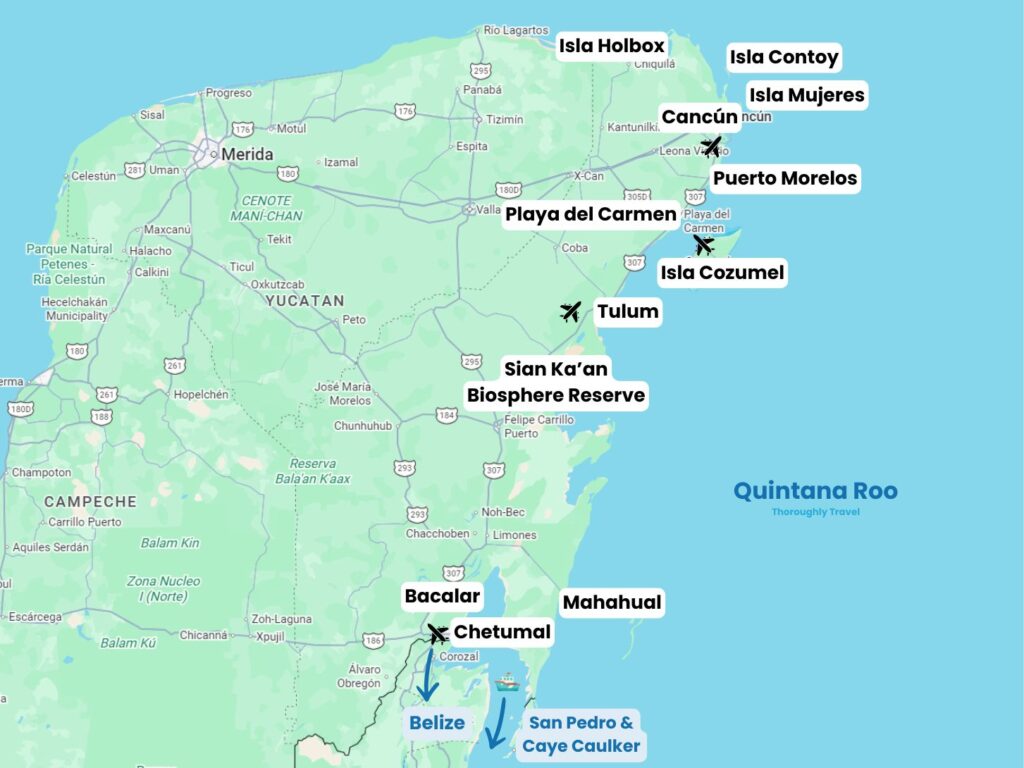
Holbox Map
Isla Holbox sits off the tippy top of Quintana Roo.
How to get to Isla Holbox?
Getting to Isla Holbox takes a little more planning than getting to some of the other Mexican Caribbean destinations because Holbox is a car-free island, so the final part of your journey has to be by boat or private flight.
Holbox does have its own small private airstrip, but it isn’t a conventional commercial airport with scheduled passenger flights. Private charter and air-taxi flights can operate from places including Cancún, Playa del Carmen, and other nearby destinations, but this is an expensive option and isn’t how most visitors arrive.
For most people, the easiest option is to fly into Cancún International Airport (CUN) and then travel overland to Chiquilá, where you can catch the passenger ferry across to Holbox.
Tulum does have an international airport, Tulum Felipe Carrillo Puerto International Airport (TQO), but it’s a long way south of Holbox, so we wouldn’t choose it specifically for getting to the island unless you’re already travelling around Tulum or the southern Riviera Maya.
How to get to Chiquilá?
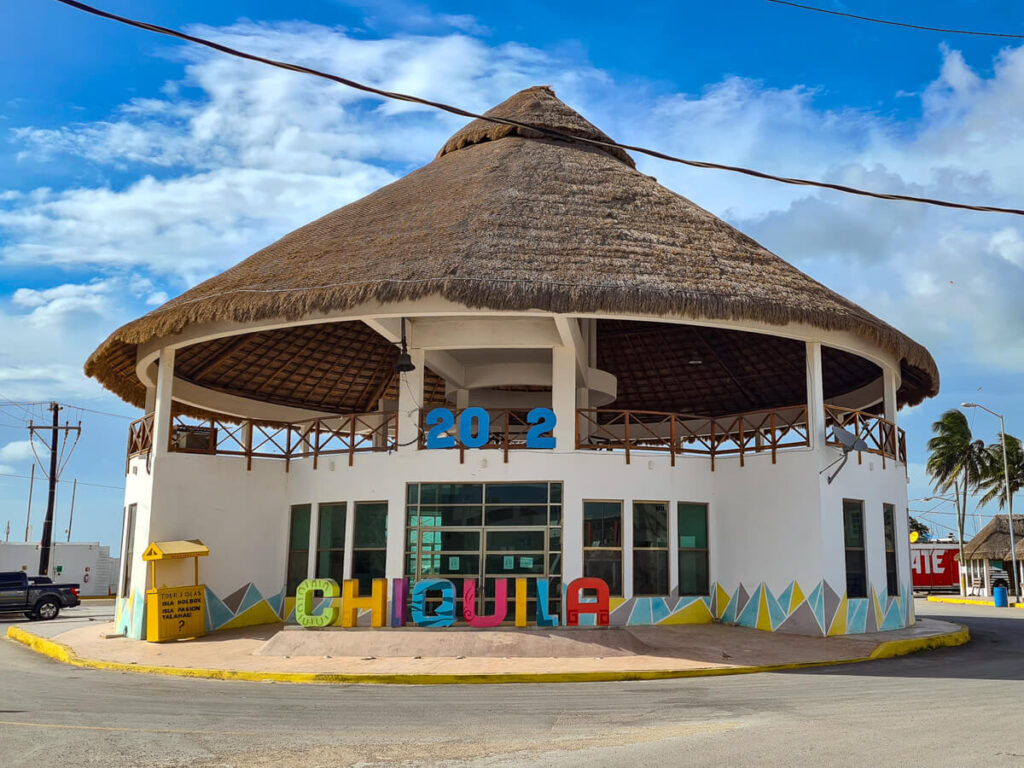
Chiquilá is the main mainland gateway to Isla Holbox, and it’s well connected with several destinations around the Yucatán Peninsula. You can travel to Chiquilá from other parts of the Yucatán Peninsula by bus or car, but you’ll still need to reach Holbox by boat.
If you’re travelling by bus, ADO Bus operates services to Chiquilá from places including Cancún (where we came from), Playa del Carmen, Valladolid, and Mérida, while colectivos (shared local vans) also operate on some routes.
You can rent a car (but you can’t take the car over to Holbox, so you’ll need to leave it in Chiquilá ) or book a transfer to Holbox, which is much easier.
Cancún to Holbox
If you’re coming from further south and taking a bus – from Tulum or Bacalar – you’ll probably need to change in Cancún.
Cancún to Holbox is pretty easy, with the journey overland to Chiquilá taking around 2.5-3.5 hours.
Mérida to Holbox
If you’re travelling around the Yucatán Peninsula, you might fly into Mérida International Airport, which is what we did on our first trip when we first visited Baja California Sur and Mexico City. It’s further away than Cancún, but you can travel overland directly towards Chiquilá rather than heading towards the Riviera Maya.
To get from Mérida to Holbox, there are direct bus services to Chiquilá, or you can rent a car, with the journey taking around 4 hours.
Bookaway is amazing for booking ferries, shuttles, and transport throughout Mexico. You can get 5% off with our code THOROUGHLY5.
How to take the ferry to Holbox?
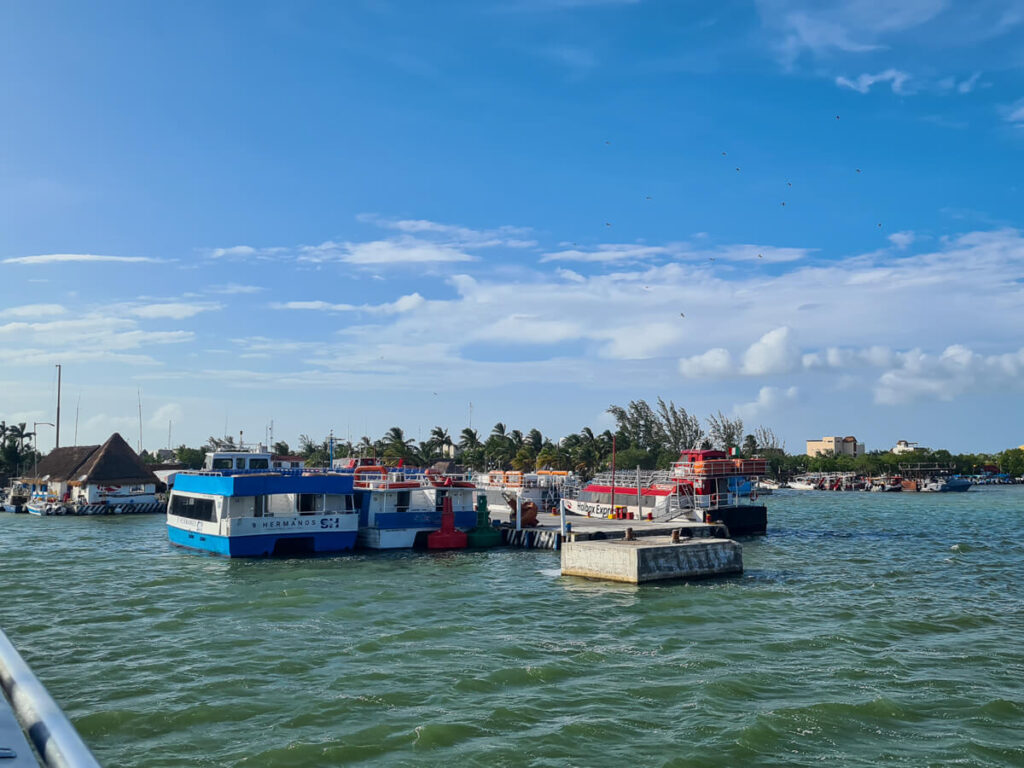
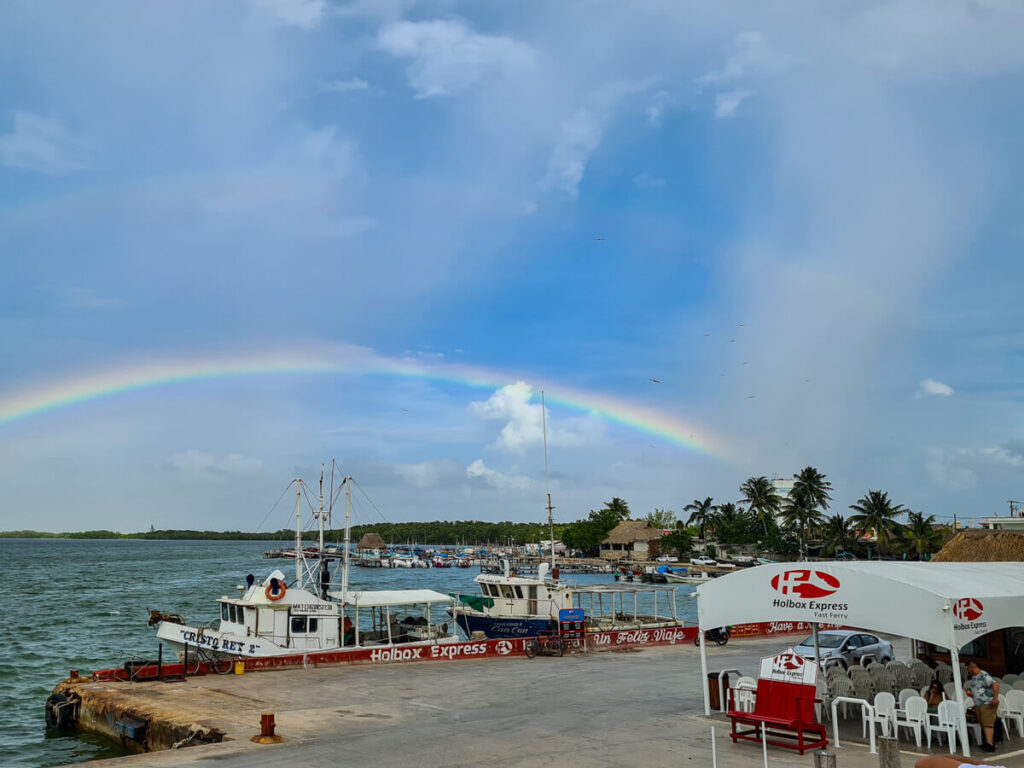
To get from Chiquilá to Holbox, you need to take the ferry. There are two companies that operate the ferry to Isla Holbox from there:
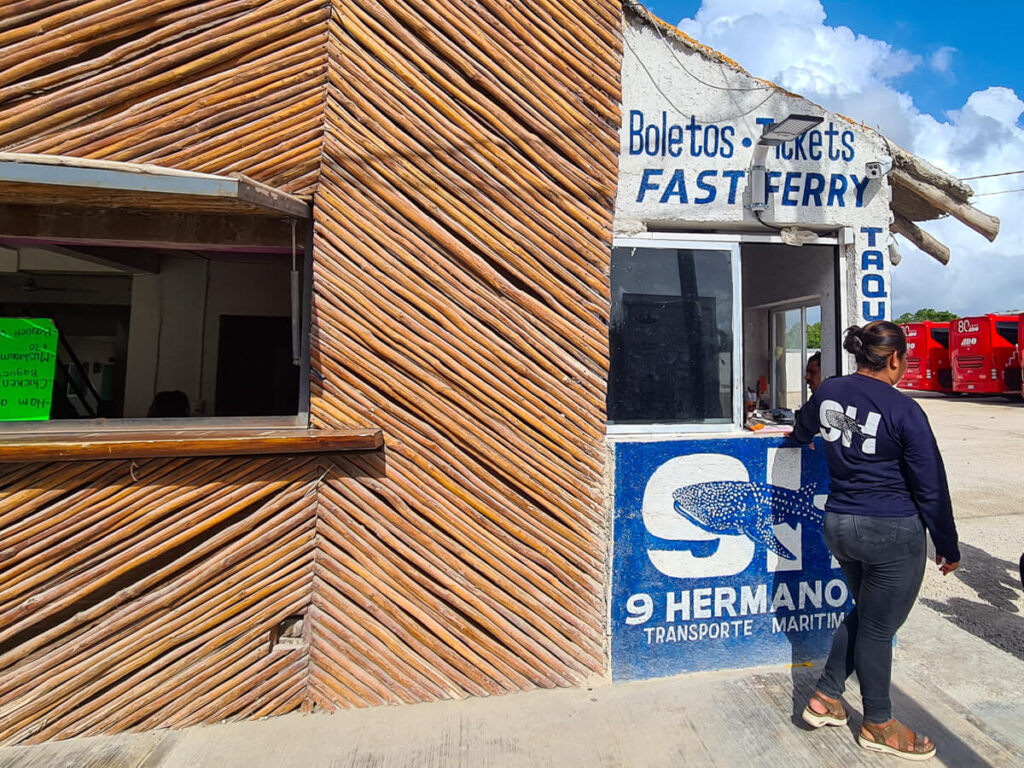
Once you reach Chiquilá, there’s actually a 9 Hermanos ticket booth at the ADO bus station, but it’s a simple 2-minute walk to the dock, where you’ll find ticket booths for both companies. The Chiquilá ferry terminal is pretty obvious, on the seafront at the end of the main road.
It’s simply a case of buying a ticket for the next passenger ferry to Holbox and boarding the boat as per the staff’s instructions.
The crossing takes around 20-25 minutes, and there are regular departures throughout the day.
It’s far less formal than taking the ferry to Cozumel. You can leave your larger luggage or big backpacks near the front of the ferry or hand them to the crew members, who stack and stow them in the designated storage space on the front deck. Then you can pick a seat – the lower deck is covered, while the top deck is open-air, which gives great views but is exposed to the sun.

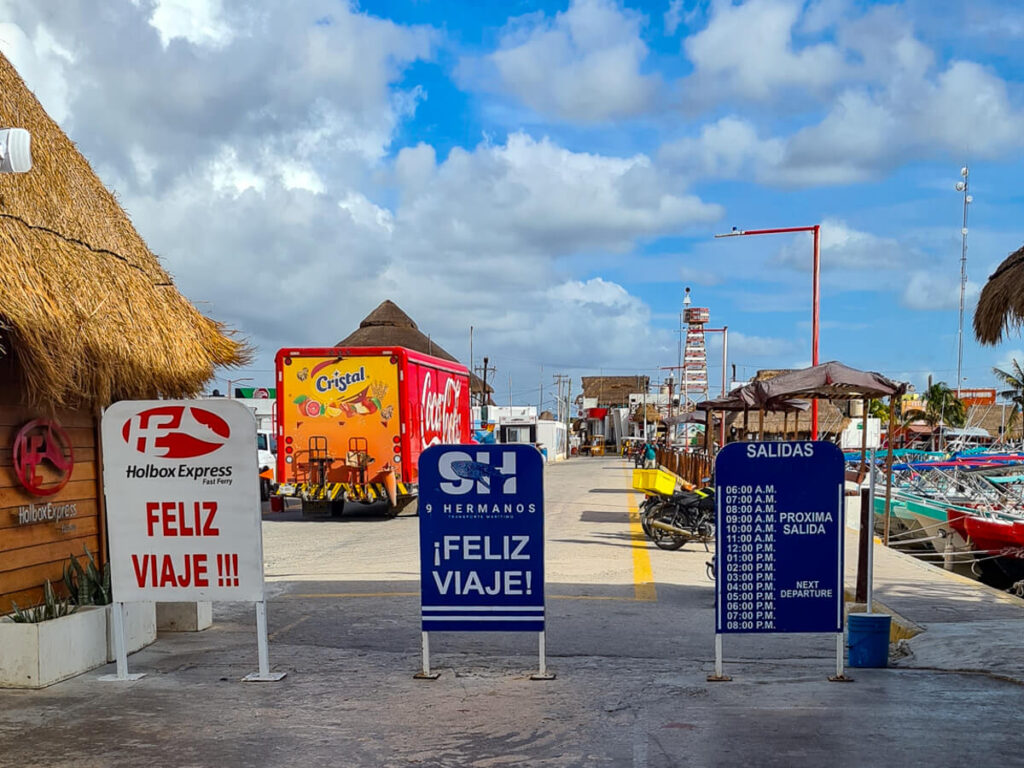
Holbox Ferry Schedule
The two ferry companies operate slightly different timetables, but together they provide frequent departures throughout the day.
9 Hermanos currently operates from Chiquilá to Holbox from 6:00 AM to 9:00 PM, once an hour, on the hour. The journey from Holbox actually starts earlier at 5:00 AM, which is useful if you’re trying to catch an onward bus or flight from the mainland.
Holbox Express operates from around 6:30 AM to 9:30 PM, also with hourly departures, on the half hour. It’s exactly the same schedule back from Holbox, but the last ferry is at 8:30 PM.
This means there is usually a ferry approximately every 30 minutes when both services are operating.
It’s best to try to arrive at least 15 minutes before your planned departure time, but as they’re so frequent, it’s not that big a deal.
Schedules can reduce to hourly departures during low season or bad weather, so it’s worth checking the up-to-date information when you arrive. There are usually boards on the dock with the timetable on.
Holbox Ferry Tickets
You can buy ferry tickets in person at the ticket offices in Chiquilá or Holbox, and both operators also offer online booking.
You can also buy the ferry tickets on Bookaway, and you can get an extra 5% off with our code THOROUGHLY5.
How much does the Holbox Ferry cost?
You can also book tickets on Bookaway, which is handy for pre-booking in the busy season and being able to pay in your home currency (get 5% off with our code THOROUGHLY5): book Holbox Express or book 9 Hermanos. You can just pick up your ticket by showing the confirmation email when you arrive.
Prices vary ever so slightly between the two ferry companies and can change, so we’d check the current fare before travelling. At the moment, both operators are charging 330 pesos (~18 USD) per adult one-way, and 170/200 pesos per child one-way.
Discounts also apply if you are a permanent resident of Quintana Roo, disabled, or hold an INAPAM senior card (with official IDs).
Tips for taking the ferry to Holbox
Here are our top tips for taking the Holbox ferry:

How to get around Isla Holbox?
Once you land on the island, getting around Holbox is pretty easy. As all the roads are unsealed, sandy roads, there are no cars, but most of the town is walkable, and there are a few vehicular options if you need help transporting your belongings.
On foot
If you’re staying in or around Holbox town, you can easily get around on foot. The centre is compact, with the main activities, restaurants, shops, beach, and ferry terminal all within walking distance.
Walking becomes less practical if you’re staying further from town or want to visit Holbox’s beaches like Punta Cocos or Punta Mosquito (although they are both walkable), particularly when it’s hot or the sand is soft.
Heavy rain can also leave the sandy streets muddy and full of puddles, which isn’t ideal if you’re trying to walk any distance.

Triciclos de carga
One thing you’ll notice when you arrive at the ferry terminal is the triciclos de carga, or cargo tricycles. These are used by local maleteros (bicycle porters), who transport luggage from the ferry to hotels and accommodation around the island.
If you’ve arrived with a suitcase, it’s a good, affordable option to transport your luggage without needing to rent a vehicle or dragging your bags through the sandy streets.
You can also arrange luggage transport through your accommodation if you’re not sure where to find a maletero, but you should see them milling around outside the ferry dock when you arrive.
It’s customary to tip them around $5 to $10+ USD (even better if it’s the equivalent in Mexican pesos), depending on how far your hotel is.

By golf cart
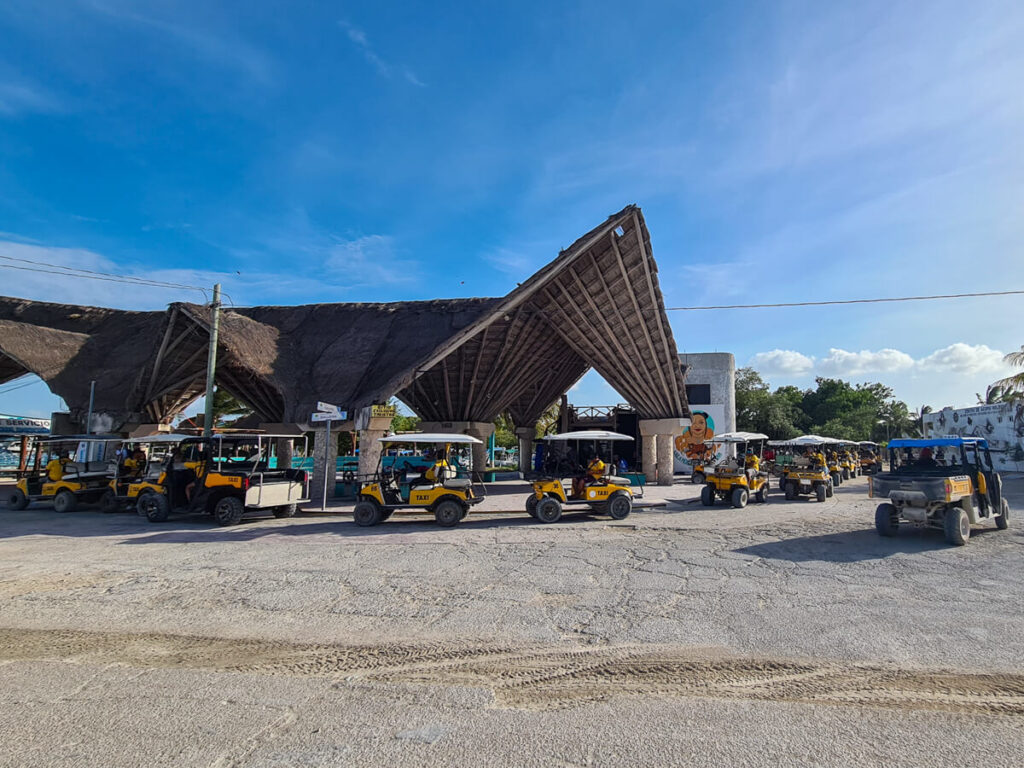
Golf carts are the main way to get around Holbox beyond the town centre, and you’ll see them everywhere. You can either rent one yourself if you’re staying for a while or use the local golf-cart taxis, which are particularly useful for getting to accommodation further from the centre, travelling with luggage, or heading out to the more distant beaches.
Isla Holbox is much smaller than San Pedro on Belize’s Ambergris Caye, where we last rented a golf cart to get around, so it’s not really necessary to rent your own unless you plan to do a lot of exploring or don’t want to walk a lot.
By bicycle
Renting a bicycle is another good way to get around Isla Holbox, especially if you want something quicker than walking without hiring a golf cart.
There are countless shops in town and off Playa Holbox offering bike rentals, and you can expect to pay about 200-250 pesos (~$11-14 USD) for a day (12-24 hours), with little discounts as you add more days for longer rentals.
By tour
If you’re heading further away from town, joining a boat or wildlife tour can be easier than arranging your own transport. This is a great option to see more of the island and surrounding Yum Blaam Nature Reserve, including visiting Cabo Catoche, the mangroves, Yalahau Lagoon, the nearby islands like Isla de la Pasión, and wildlife areas where you can see flamingos and crocodiles.
What to know before visiting Isla Holbox
Holbox is an easy place to visit once you know what to expect, but the island’s sandy streets, limited infrastructure, and reliance on golf carts mean it’s a little different from other Mexican beach destinations. Here’s what you should know before you go:
Read next:
A Traveller’s Guide to Isla Holbox: Where to Stay, Eat & Play
