Ultimate Guatemala Travel Guide: Volcanoes, Lakes & Ancient Mayan Sites

Everything you need to know about travelling Guatemala, from backpacking basics and budget tips to highland highlights and historical hidden gems.
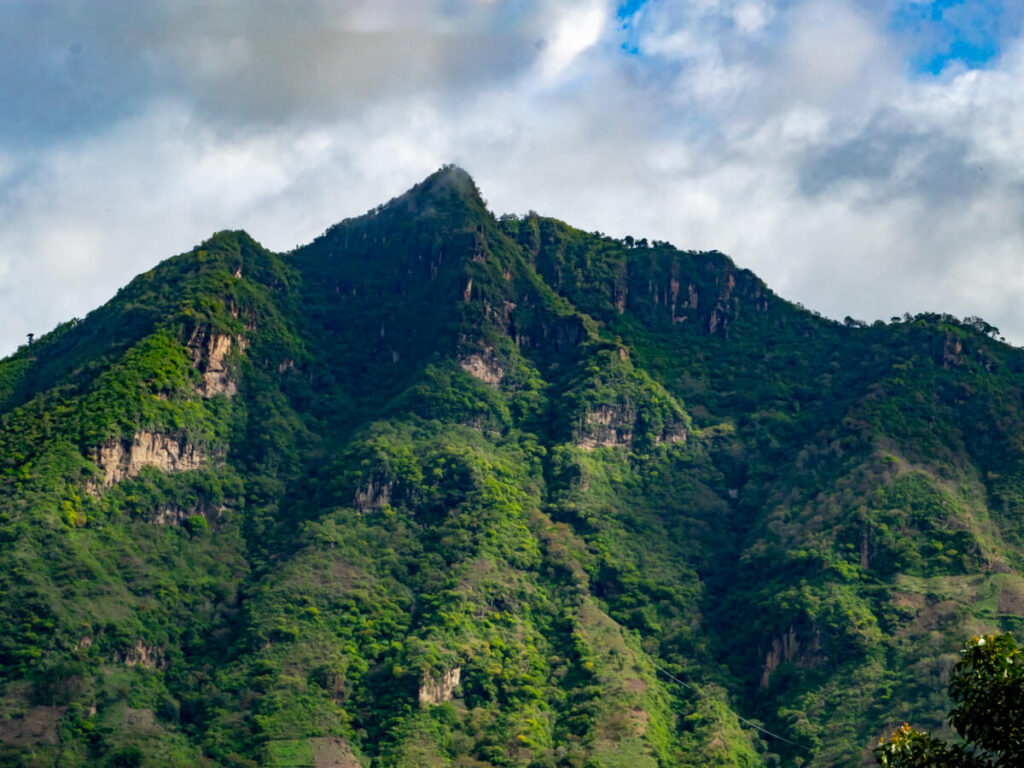
This post may contain affiliate links, which means we might earn a small commission on anything purchased through these links at no extra cost to you. Learn more on our disclaimer page.
When people ask us which country in Central America surprised us most, we have the same answer: Guatemala. A country marked by its dangerous reputation, what we found was a land of stunning natural landscapes, authentic adventures, diverse wildlife, kind and welcoming people, and meaningful cultural experiences. It was a country of firsts for us – from hiking active volcanoes and exploring ancient Mayan ruins to sipping coffee in the highlands and learning to surf.
In fact, we fell so hard for Guatemala that we knew we needed to come back before our first trip was even over. A week just wasn’t enough, so we returned for a longer backpacking trip, slowly making our way from north to south. We made our way all across Guatemala, from the colonial streets of Antigua, villages around Lake Atitlán, and black-sand beaches of El Paredón to the jungles of Petén and Semuc Champey, winding waterways of Río Dulce, and the Caribbean coast.
Part of why we love Guatemala is exactly what makes it harder than your average country to plan a trip to. It’s a country of contrasts, shaped by its dramatic landscapes and rich cultural heritage – you’ll find everything from volcanic highlands and dense jungles to expansive lakes, winding rivers, and tropical coastlines. But with long travel times, varied climates, and a mix of transport options, putting together a smooth Guatemala itinerary takes a bit more planning and effort than you might expect.
In this travel guide, we’ve included everything you need to know about visiting Guatemala, from transportation and accommodation information to the best places to visit and things to do, covering not only the highlights but also our favourite hidden gems, to help make your trip planning a smooth and enjoyable process.
Guatemala at a glance
More from Guatemala
Where is Guatemala?
Guatemala is located in northern Central America, bordered by Mexico to the north and west, Belize to the northeast, Honduras to the east, and El Salvador to the southeast.
It has coastlines on both the Pacific Ocean and the Caribbean Sea, although most travellers focus on the inland destinations, which contain thick jungle, colonial cities, and Maya towns.
Its central location makes it a popular stop on longer trips through Central America, particularly when combined with Belize or southern Mexico’s Yucatán Peninsula, but it’s also possible to follow a standalone Guatemala itinerary, too.

Guatemala Map
As you can see from the map below, there’s far more to Guatemala than just a couple of cities. Most routes follow a loop between Antigua, Lake Atitlán, Flores/Tikal, and Semuc Champey, but you can go linearly, too.

Why visit Guatemala?
Guatemala is one of the most underrated destinations in Central America. It was our first country in the region and blew us away with its diversity, offering a mix of culture, adventure, and natural beauty that’s hard to match. There are lots of activities on offer, and you can explore ancient Mayan ruins, hike active volcanoes, swim in jungle pools, wander colourful colonial towns, and relax on black-sand beaches, all within what’s a relatively small country.
It’s established on the gringo trail – the classic backpacking route through Central America – so it’s an ideal destination for travellers on a budget, with affordable accommodation, food, and transport. But most travellers rush through it in a week or two, experiencing the popular highlights but missing out on some of the most rewarding parts. We actually made this mistake the first time round, and were so glad we were able to go back a second time and see it properly.
Landscapes
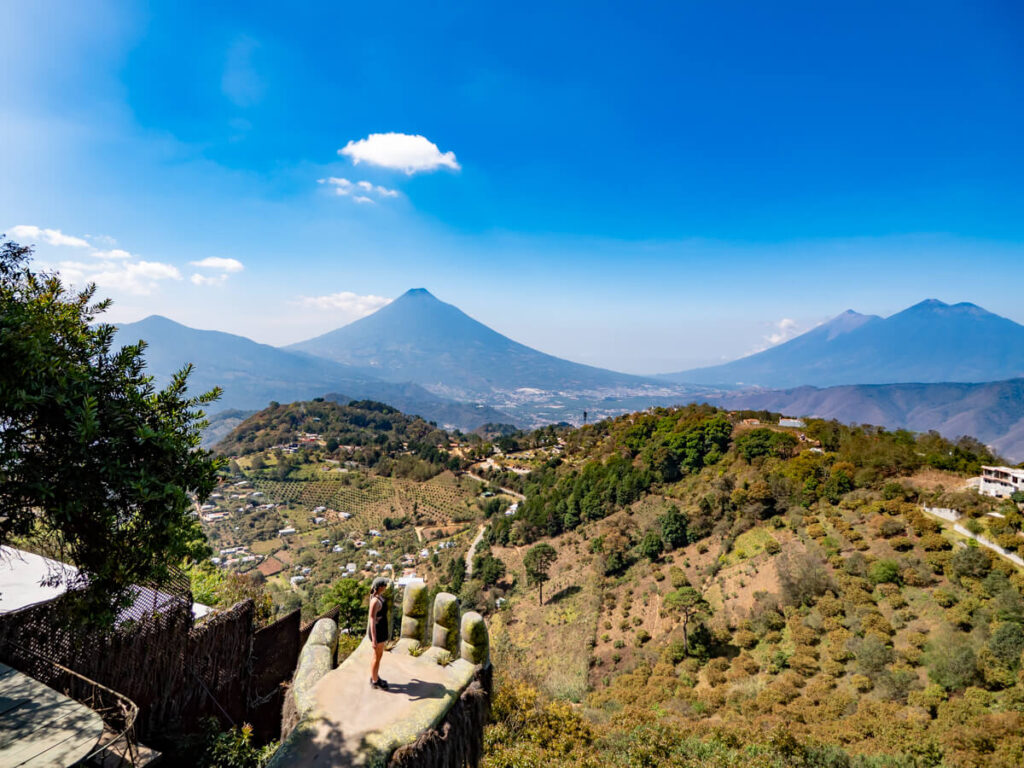
It’s not an understatement when we say Guatemala’s landscapes are incredibly varied. We’ve never been anywhere else where you can go from the jungle to the city to the beach in such a short amount of time.
The highlands are defined by mountains, valleys, and volcanoes surrounding Antigua and Lake Atitlán, while the northern Petén and central Alta Verapaz regions are home to dense tropical jungle. You can see lots of animals in Guatemala, too – we saw species we’d never spotted before.
The colourful cities are some of the most beautiful we’ve seen, home to crumbling echoes of Spanish colonisation, while smaller towns and villages are brimming with character and indigenous culture.
Even the coasts are polar opposites – on the Pacific side, you’ll find long black-sand beaches, while the Caribbean coast features rivers, mangroves, and white-sand beaches.
Despite its natural beauty and cultural richness, Guatemala is still a developing country, so infrastructure can be basic in places. However, this was part of the appeal for us, as we tend to find places that haven’t been developed to the point of overtourism more authentic.

Volcanoes
If you already have an idea of what Guatemala has to offer, you’ll know volcanoes are one of the key highlights. The country sits along the Pacific Ring of Fire and is home to 37 volcanoes, several of which are still active.
These volcanoes have shaped the country’s landscape, its history, and its modern-day tourism industry, with eruptions influencing settlement patterns, agriculture, and tourist activities.
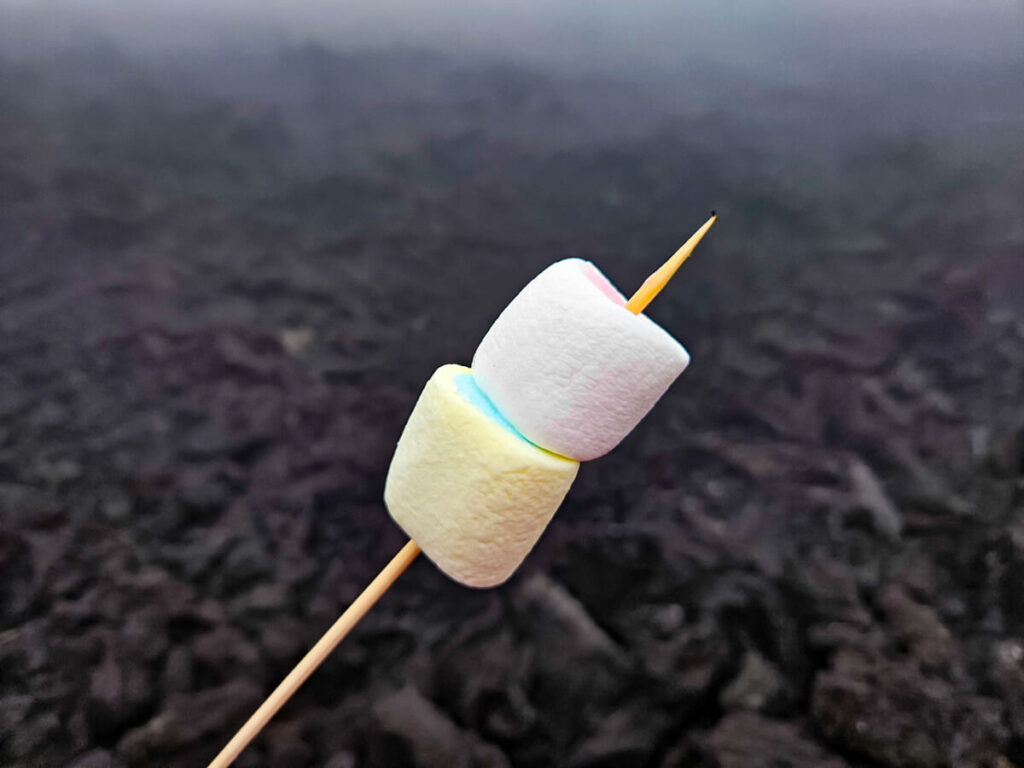
Popular experiences include hiking Acatenango Volcano, where you can watch eruptions from nearby Fuego, and Pacaya Volcano, an active volcano that’s accessible on a shorter day trip.

Maya culture
What really sets Guatemala apart for us is its authenticity. One thing we were really keen to experience in Latin America was the culture, and nowhere displays it more proudly than in Guatemala. It’s the heartland of the ancient Mayan civilisation, which flourished here for thousands of years. But it’s not just evident in the ancient ruins – cultural heritage is still very much alive here.
The population is made up of a mix of Ladino (mixed heritage) and indigenous communities, with over 20 different Mayan languages still spoken across the country. This strong indigenous presence is a big part of what makes Guatemala so unique.
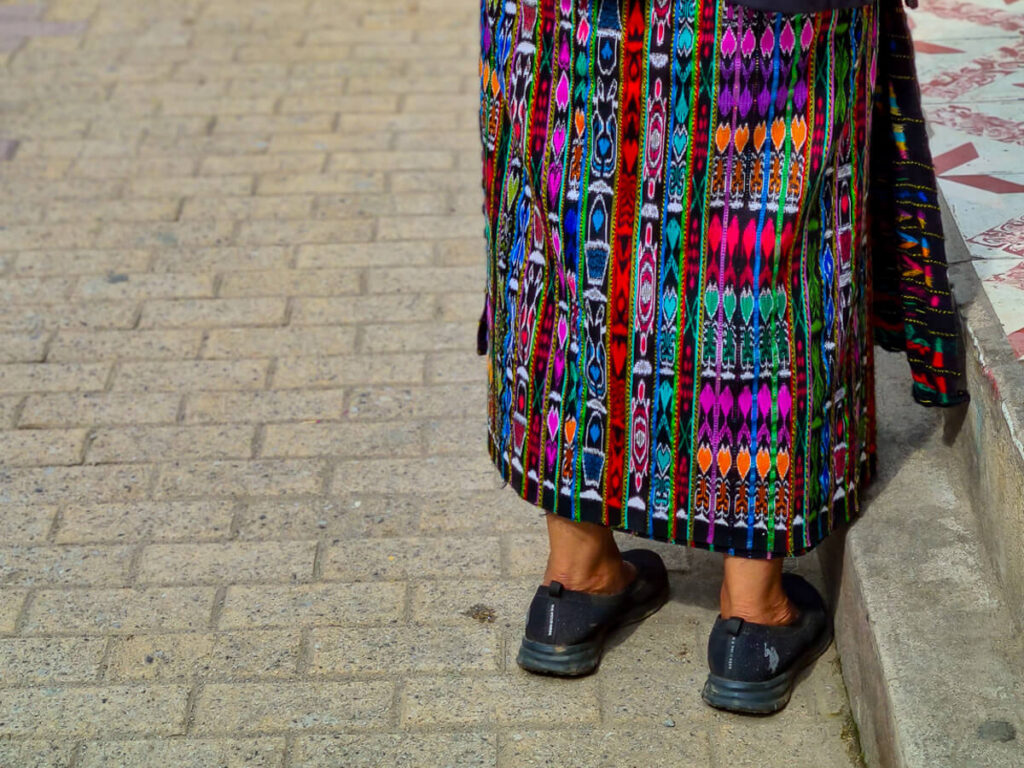
Guatemala is home to one of the largest indigenous populations in the Americas, with over 20 distinct Maya groups, each with their own language, traditions, and dress. You’ll see the culture in local markets, traditional textiles, ceremonies, and daily life, particularly in the highlands around Lake Atitlán and towns like Chichicastenango.
Lack of crowds
While Guatemala is becoming more popular, it still feels less developed than neighbouring countries like Mexico or Costa Rica, which means fewer crowds, lower prices, and more meaningful travel experiences.
It’s still easy to find quieter areas and more local experiences, particularly if you venture beyond the main route. Even within popular destinations, choosing the right village, visiting early in the day, or travelling in shoulder season can make a noticeable difference. In wet season, we felt like the only gringos in town.

Guatemala History
Guatemala has a long and complex history that dates back thousands of years. It was once at the heart of the ancient Mayan civilisation, with impressive cities like Tikal thriving as early as 200 CE. Many of these ruins are still scattered across the country, particularly in the northern Petén region, where Flores is the best base.
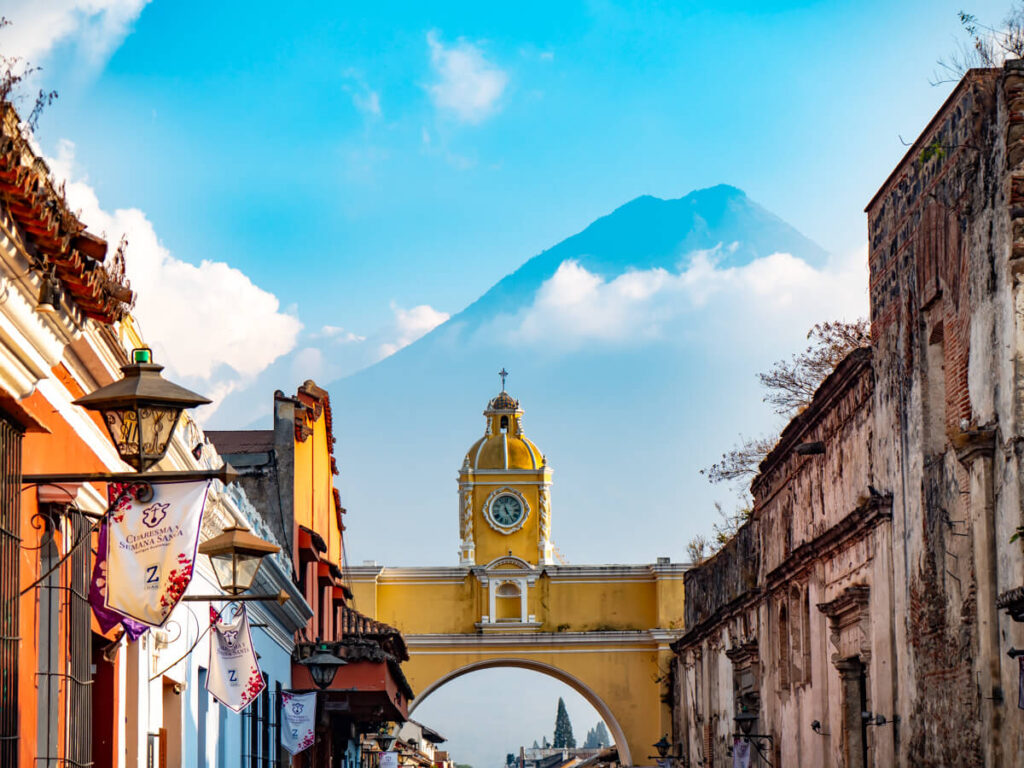
In the 16th century, Guatemala was colonised by Spain, which had a lasting impact on its culture, architecture, and language. Colonial cities like Antigua still showcase this influence today, with cobbled streets, crumbling churches, and pastel-painted architecture.
Guatemala gained independence from Spain in 1821, but much of its modern history has been marked by political instability and a 36-year civil war that ended in 1996. The conflict disproportionately affected indigenous communities and has had lasting social and economic impacts.
Today, Guatemala is a democratic country that continues to develop while holding on to its strong cultural traditions, especially in the villages around Lake Atitlán. Tourism is slowly increasing throughout the region, and while the country still carries a reputation for being dangerous, we found it to be safe, welcoming, and easy to explore with a bit of common sense and planning.

Top experiences in Guatemala
There are lots of fun things to do in Guatemala, and it’s a country that’s literally packed with adventures, from bucket list outdoor activities to slower, more cultural experiences. These are some of the highlights that should be on your radar:
These experiences are spread across the country, so planning your route in advance will help you make the most of your time. Click the images below to read our Guatemala activity travel guides.



Where to go in Guatemala
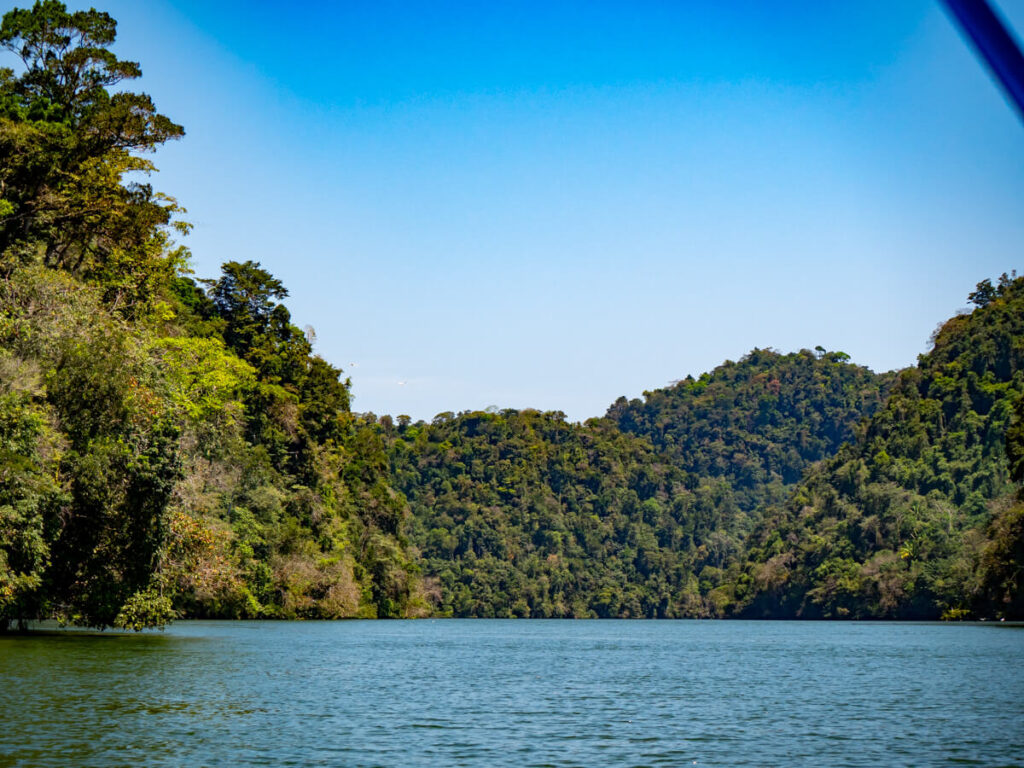
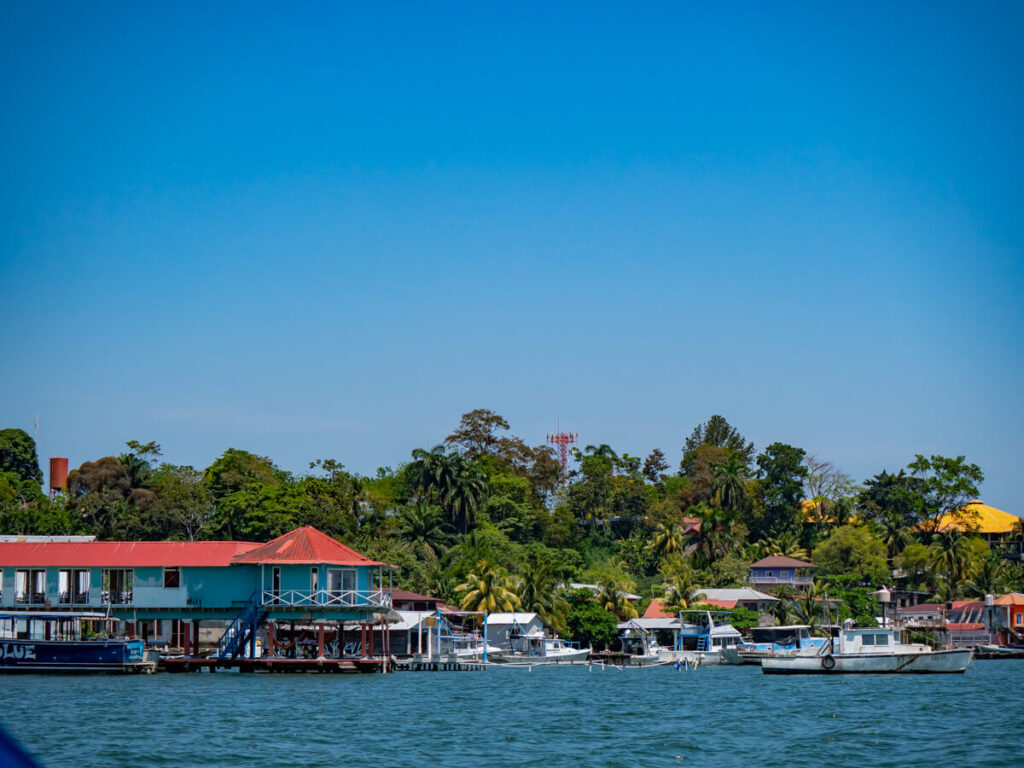
There are way more beautiful places to visit in Guatemala beyond just Antigua and Lake Atitlán, with each region offering something completely different. Most travellers follow a similar route, linking together a handful of key destinations. We’d recommend visiting:
Click the images below to read our dedicated Guatemala destination travel guides, where you’ll find detailed things to do, where to stay, and travel tips to help you plan your trip.


Guatemala hostels and hotels
Guatemala has a wide range of accommodation options to suit all budgets, from affordable backpacker hostels to boutique hotels and luxury eco-lodges.
Hostels in Guatemala are particularly good value, often including breakfast, shared kitchens, and organised tours. You’ll find them in most destinations throughout the country. Dorm beds cost around $10-20 USD a night, while a private room is around $30-50 USD a night, depending on the location and season.
Hotels in Guatemala range from boutique stays in beautifully restored colonial buildings in Antigua to mid-range and basic but comfortable accommodations in more remote regions like Flores. You’ll also find basic riverside lodges in Río Dulce, rustic eco-lodges in Semuc Champey, and luxury lakeside resorts in Lake Atitlán. At the lower level, a hotel room costs between $40-80 USD a night, depending on the location and season, while boutique and luxury stays can go up to $150+ USD a night.
Certain accommodations can be really popular, so it’s worth booking ahead, especially in the busier peak season and during holidays like Semana Santa.
We found Booking.com and Expedia really handy for finding affordable hotels in Guatemala, as they have filter functions, and we could search the map to make sure the location and amenities worked for us.
Discover the best bases to stay in and the top hotels in Guatemala in our accommodation travel guides:

What to eat in Guatemala
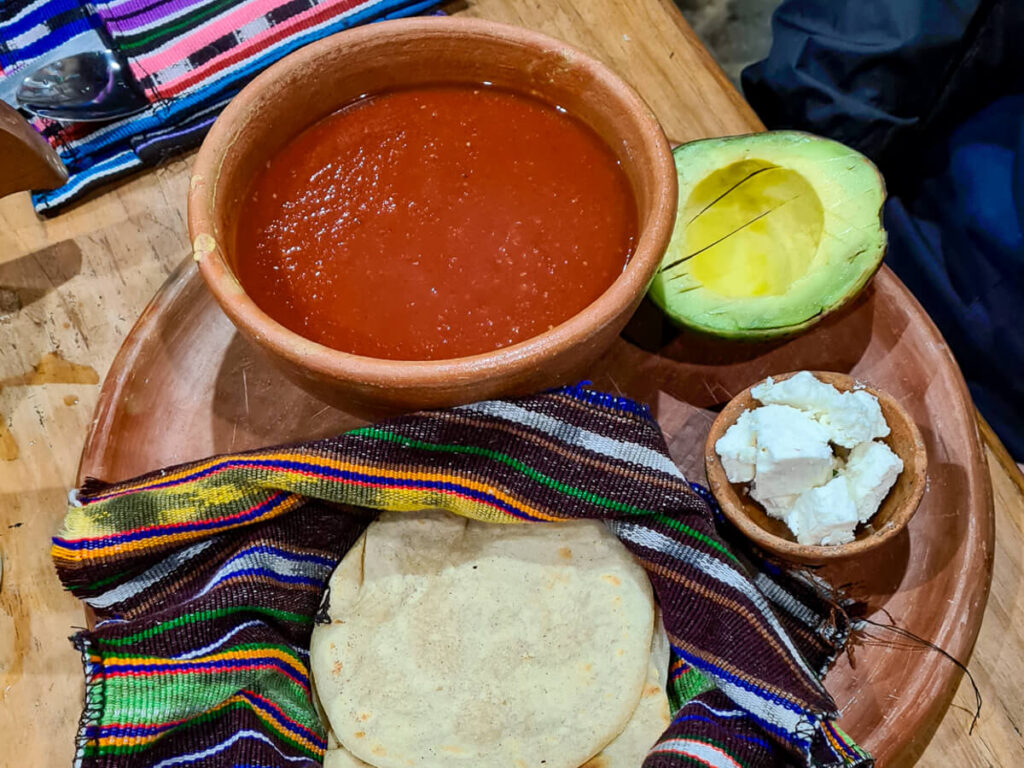
Guatemalan food is simple, hearty, and heavily influenced by Mayan traditions, with a focus on fresh, local ingredients.
Even as veggie/vegans, we were well-fed, with lots of local dishes catering to dietary preferences. Larger cities have their fair share of international spots, too – we were never short of somewhere incredible to eat in Antigua’s restaurants.
Some dishes to try include:
Of course, Guatemalan coffee is famous, so you should try that, too. We sipped our way around Antigua’s coffee shops, trying various blends, but you could also visit a finca (coffee farm) to learn more about the production process.
Cacao is also deeply ingrained in Guatemala’s history and culture. Considered sacred to the Maya, it is often referred to as the “Food of the Gods”.


How to get to Guatemala
Guatemala is easy to get to by air, land, and sea. It’s one of the most accessible countries in Central America, with good flight connections and multiple overland border crossings from neighbouring countries.
By plane
The main international airport is La Aurora International Airport (GUA), located in Guatemala City. This is the easiest and most common way to enter the country, and is how we arrived on our first trip.
The airport has strong connections across North and Central America, as well as Europe, with daily direct flights from US cities like Miami, Houston, Dallas, and Los Angeles, as well as other cities in Central America like Mexico City and San José. Flight times are relatively short from the US (around 2-5 hours) and longer from Europe (around 10-11 hours direct).
To get to Antigua or other destinations, you can transfer to a shuttle, private transfer, or taxi.
There’s a second international airport, Mundo Maya International Airport (FRS) in Flores, which is mainly used for accessing Tikal in the north. It’s not a practical entry point for most travellers unless you’re starting your trip there, in which case you can fly in directly, or get a domestic flight from Guatemala City.

Overland
Guatemala is well connected to neighbouring countries, and overland travel into Guatemala is very common, especially for backpackers moving through Central America.
You can cross into Guatemala from:
The easiest way to cross borders is by tourist shuttle, which handles most of the logistics and drops you directly at your destination. These are widely available and can be booked online on platforms like Viator, GetYourGuide, and Bookaway (get 5% off with our code THOROUGHLY5).
On some routes, it’s possible to cross the border by local bus (chicken bus), which is cheaper but more complicated, often requiring multiple changes on either side of the border, plus navigating immigration independently.
On our first trip, we flew into Guatemala City airport and got a private transfer straight to Lake Atitlán. We exited via the El Florido crossing into Honduras on a group tour with Intrepid. On our second trip, we crossed the Belize-Guatemala Border by shuttle and later crossed the Guatemala-Honduras border.
Border crossings can take anywhere from 30 minutes to several hours, depending on the location, time of day, and how busy things are. It’s best to give yourself a full day for the transfer, and opt for a shuttle for a smoother crossing.

By sea
It’s possible to enter Guatemala by boat, although it’s far less common than flying or crossing overland.
The main route is between Belize and Guatemala, where you can take a boat from Punta Gorda to Livingston or Puerto Barrios on Guatemala’s Caribbean coast. From there, you can continue inland toward Río Dulce or further into the country.
There are also ferry connections between Belize’s islands – Caye Caulker and Ambergris Caye – and the Mexican mainland, which can be used as a slower route between the two countries. This is what we did on our second Central America backpacking trip, crossing the Belize-Guatemala Border by water taxi from Chetumal, before following a 3-week Belize itinerary prior to entering Guatemala.

How to get around Guatemala
Getting around Guatemala is relatively easy once you understand the different transport options available. There’s a mix of tourist-friendly services and local transport, and what you choose will depend on your budget, time, and comfort level.
Transportation methods for getting around Guatemala include:
It’s worth noting that distances can look short on a map, but journeys often take longer than expected due to traffic, winding mountain roads, and road conditions.
By domestic flight
Domestic flights are limited but useful for long distances, particularly between Guatemala City and Flores in the north.
Flights take around 1 hour and save you from an 8-10 hour bus or shuttle journey. Airlines like TAG and Avianca operate this route regularly.
For most other destinations within Guatemala, flying isn’t an option.

By tourist shuttle
Shared tourist shuttles are the most popular way to get around Guatemala. They connect all major destinations like Antigua, Lake Atitlán, Flores, and El Paredón, and are particularly useful for remote regions, like getting to Semuc Champey and Lanquín or Río Dulce.
Prices are pretty decent, especially considering some journeys take up to 11 hours, usually around $20-60 USD, depending on the route. They’re easy to book online or through your accommodation.
They’re not necessarily the most comfortable option – the roads are usually windy and bumpy, and the minivans can be cramped or hot – but they’re safe, comfortable enough, reliable, and remove the stress of navigating local transport.
Bookaway is amazing for booking shuttles and transport throughout Central America. You can get 5% off with our code THOROUGHLY5.

By bus
Chicken buses are Guatemala’s main form of public transport. They’re old US school buses that have been repainted and repurposed, and they run almost everywhere in the country.
They’re extremely cheap (often just a few quetzales), but they’re also:
They’re a great cultural experience and fine for short journeys, but for longer routes or with bags, they can be hard work. Some bus terminals, particularly in Guatemala City, also have a reputation for petty crime, so it’s worth researching your route beforehand.
For certain routes, especially between major cities or international destinations, you can take more comfortable coach-style buses.
Companies like Fuente del Norte and Linea Dorada operate routes with reclining seats, air conditioning, and onboard luggage storage. These are commonly used for longer journeys, such as between Guatemala City and Flores or Río Dulce. They’re more comfortable than chicken buses but still more local in feel than tourist shuttles.

By taxi/Uber
Uber operates in Guatemala City, Antigua, and Quetzaltenango (Xela), and it’s one of the easiest ways to get around in those areas. It’s generally affordable (typically cheaper than taxis) and safer than hailing a random taxi, as your journey is tracked in-app.
Elsewhere, traditional taxis are widely available, but standards vary. Always agree on a price before getting in, as meters are rarely used.
For longer intercity journeys, taxis and Ubers are usually less practical or affordable than pre-booked transfers.
By boat
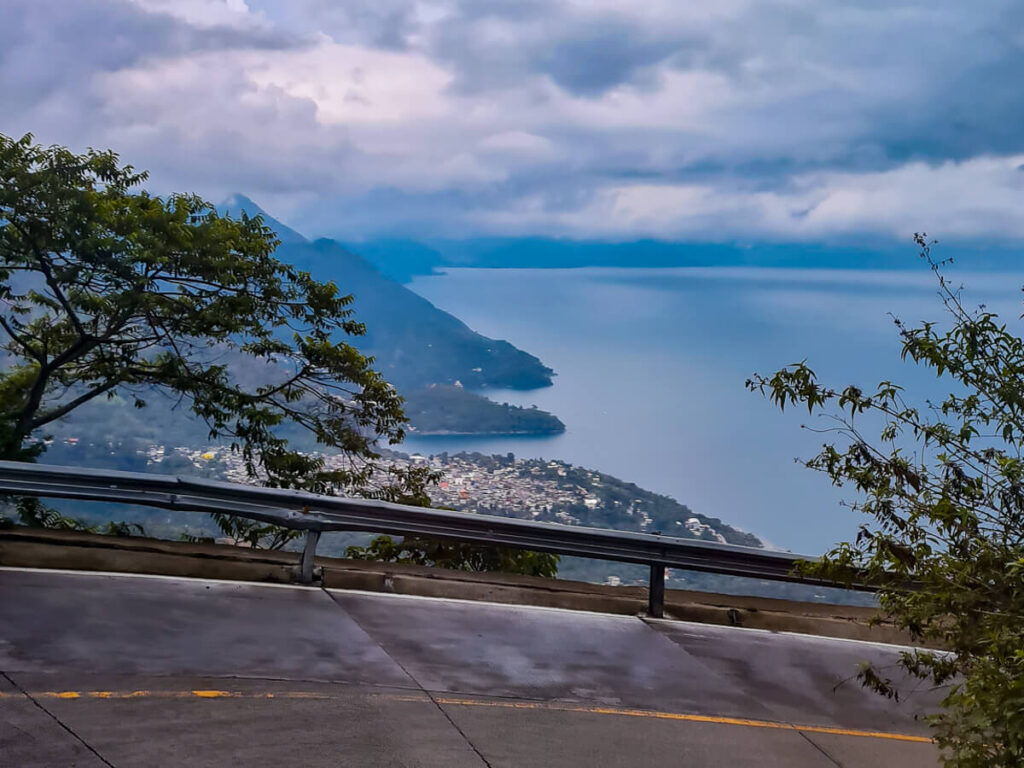
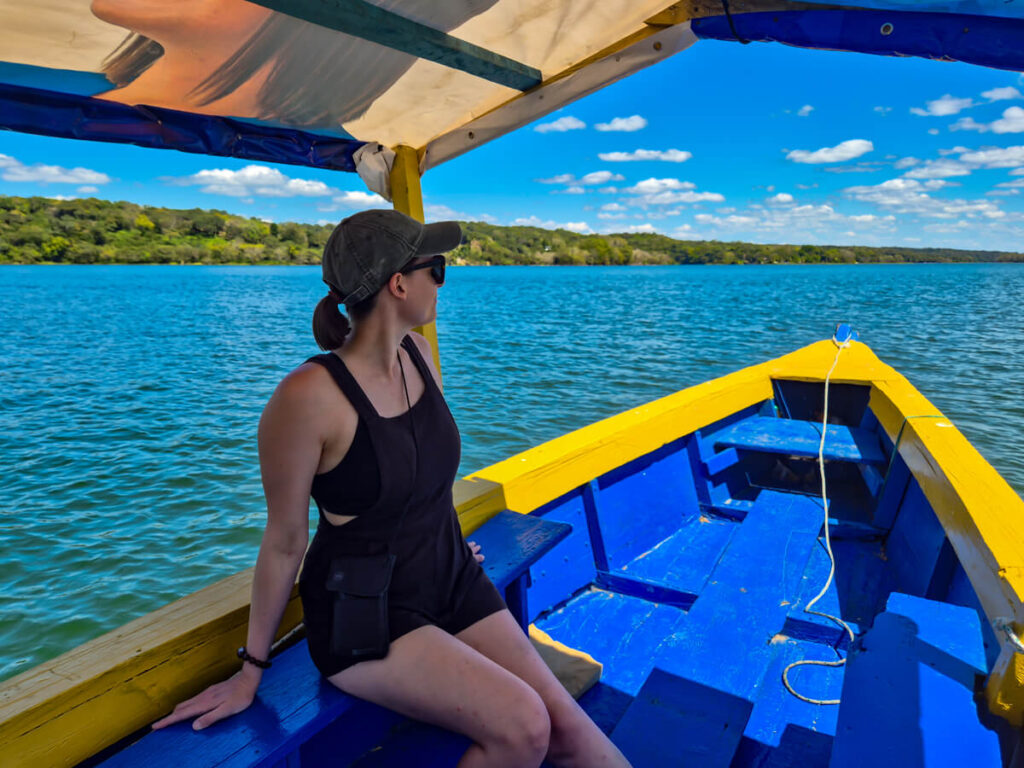
Small motorboats called lanchas are essential in certain parts of Guatemala, particularly around Lake Atitlán, Lake Petén Itzá near Flores, and Lake Izabal to the Caribbean coast near Río Dulce.
These public lanchas are the main way to get around Lake Atitlán and connect the lakeside villages throughout the day. On the Caribbean side, they’re used to travel between towns and river lodges, often replacing roads entirely.
By tuk-tuk
Tuk-tuks are common in cities like Antigua and Santa Elena (the city by Flores), as well as in smaller towns and villages, including Lake Atitlán villages, and places like Lanquín near Semuc Champey.
They’re ideal for short journeys and navigating narrow streets, and are pretty affordable. Always agree on a price before setting off.

By 4×4 pickup truck
In more rural or remote areas, especially around Semuc Champey and Lanquín, 4×4 pickup trucks (camionetas) are used as shared transport.
You’ll often sit or stand in the bed at the back with benches or rails. While it’s not the most comfortable ride, it’s sometimes the only way to reach certain lodges or attractions, and it’s certainly a quintessentially Guatemalan experience.

By walking
Walking is one of the best ways to explore Guatemala’s towns and villages. Places like Antigua, Flores, and many Lake Atitlán villages are compact and easy to navigate on foot. Just be prepared for some uneven pavements, cobblestone streets, and hills, especially around the highlands.

By car rental
Renting a car gives you flexibility, especially if you want to explore more remote areas or travel at your own pace. We’re usually pro rental car (we even drove in Belize and rented a car in Costa Rica), but the driving we saw in Guatemala was so shocking (people overtaking on blind corners, drivers scrolling TikTok) that we wouldn’t risk it.
If you’re keen to rent a car in Guatemala, expect:
Rental prices start around $30-50 USD per day, but insurance is essential, and hidden fees are common if you don’t book carefully. We’d also highly recommend opting for fully comprehensive insurance.

When to visit Guatemala
Guatemala is considered a year-round destination, but the best time to visit depends on what you want to do and where you’re going – and there are certain times of the year that we’d personally avoid.
In general, the dry season (November to April) is the most popular time to visit, with sunny days and ideal conditions for hiking and exploring. The rainy season (May to October) brings lush landscapes and fewer crowds, but also afternoon downpours and more challenging travel conditions.
For a full breakdown of weather, seasons, and the best months to visit, read our dedicated guide on the best time to visit Guatemala, where we’ve broken down all the different locations and activities and covered when’s best to visit for each.

Is Guatemala safe?
You’ve probably heard the stories of violent crime and drug cartel shoot-outs that plague most Central American countries, so whether Guatemala is safe to travel to is one of the most-asked questions when it comes to planning a trip. Guatemala has a reputation for being unsafe, but this is often blown out of proportion by foreign media, especially when it comes to the main tourist routes.
Like anywhere, there are areas to avoid (particularly parts of Guatemala City), but most travellers stick to well-established destinations like Antigua, Lake Atitlán, Flores, and Semuc Champey, where tourism infrastructure is good, and it generally feels safe.
We found Guatemala to be welcoming and safe to travel around, but it’s important to use common sense – avoid travelling at night, keep valuables out of sight, and use reputable transport. Booking tours and shuttles through trusted providers also adds an extra layer of security, too.
Surprisingly, the main risks to think about are actually environmental, rather than human-made.
Where we enjoyed independent hiking in countries like Costa Rica, it’s much safer to hike with a guide in Guatemala, both because of the risk of robberies on remote trails and to keep you safe on the trails, which can have tricky terrain and even volcanic activity that needs to be navigated with local knowledge.
It’s also worth considering altitude, which can also be an issue in highland towns like Quetzaltenango at 2,330 metres (7,640 ft) or Antigua at 1,545 metres (5,069 ft) above sea level. We tend to suffer from mild altitude sickness pretty easily, and while we didn’t have a problem in the cities, as we travelled slowly, we for sure felt it on the Acatenango Volcano overnight hike, where basecamp is 3,750 metres (12,300 ft) above sea level.
Sun exposure in the highlands or on lakes can be deceptively strong, too, so sunscreen, hats, and hydration are essential.
Health-wise, Guatemala requires a bit more thought than some other Central American countries. Mosquito-borne illnesses such as dengue, chikungunya, and Zika are present, particularly in lowland and jungle areas, so long sleeves, insect repellent, and mosquito nets are worth bringing with you.
Tap water is generally unsafe to drink outside major hotels. Some accommodations provide clean drinking water, but we found our filter water bottles absolutely life-savers. And while most meals in reputable restaurants are fine, food-borne illnesses can happen if you’re not careful with street food or unwashed produce.
Consider basic vaccinations before travelling (check with your doctor – we got quite a few before going), and pharmacies are widely available in tourist areas, but facilities can be limited in more remote regions.
Travel insurance can save you $$$ if things go wrong
Don’t forget to buy travel insurance! From lost luggage to emergency medical care abroad, travel insurance gives you peace of mind so you can solely focus on the adventure. It might not be exciting, but you’ll be very glad you have it if something goes wrong. A few of our favourite companies are:
Get 8 weeks of electronic theft coverage free with SafetyWing Travel Insurance with our code: THOROUGHLY8 (new members only). Simply click the pink camera and laptop icon on the Nomad Essential page to redeem the reward before creating a new account.
Find out more: 6 Best Travel Insurance Companies for Every Kind of Trip

Is Guatemala cheap?
Guatemala is one of the most affordable destinations in Central America. Accommodation, food, and transport are all relatively inexpensive, especially if you’re backpacking and opting for the cheaper options, like hostels, street food, and chicken buses.
Even on a mid-range budget, you’ll find affordable hotels and guesthouses, local restaurants, and shared tours, perfect for those on a budget.
That said, prices can be slightly higher in popular tourist areas like Antigua and around Lake Atitlán, particularly for boutique stays, organised tours, and Western-style restaurants.
Here’s a rough idea of budget:
And some average costs:
Guatemala Travel Information
To help you plan your trip to Guatemala, here’s some quick-fire, helpful travel information.
Guatemala Language
Spanish is the official language of Guatemala, but the country is incredibly linguistically diverse, with over 20 Indigenous Mayan languages spoken across different regions, including Tz’utujil, Kaqchikel, and K’iche’.
In tourist areas like Antigua and around Lake Atitlán, English is widely spoken, especially in hotels, restaurants, and tour companies. However, in more rural areas, Spanish (or local Mayan languages) is the only sound you’ll hear. Learning a few basic Spanish phrases will go a long way and is appreciated by locals.

Money and Tipping in Guatemala
The local currency is the Guatemalan quetzal (GTQ / Q), and cash is still widely used, especially in smaller towns and local markets. US dollars are accepted in some hotels and tourist-focused businesses, but exchange rates can be unfavourable, and change is often given in quetzales.
Like most other countries, Guatemala’s money consists of notes (1, 5, 10, 20, 50, 100, and 200 quetzales) and coins (1 quetzal and 1, 5, 10, 25, 50 centavos). There are 100 centavos in a quetzal.
ATMs are easy to find in places like Antigua and Flores, but it’s a good idea to carry cash when travelling to more remote areas, especially in Semuc Champey (where the only ATM is in Lanquín) and Río Dulce (where many river hostels are cash-only, but the ATMs are in town).
We found the most reliable ATM machines are those operated by Cajero 5B, BAC, Banrural, or Banco Industrial – withdraw from ATMs inside banks or shopping areas for security.
Withdrawals are usually in quetzales only, and fees can be high (usually about 40 GTQ / $5 USD), so it’s wise to take out larger amounts at once (but split it up, so it’s not all in one place). You can normally withdraw up to 2,500Q (~200 USD) in a day.
Some tourist businesses accept card payments, but often with an added fee. Visa and Mastercard are widely accepted, but American Express may be less so.
Tipping isn’t mandatory (or even common) in Guatemala, but is appreciated. A basic guide is:
Tipping in quetzales is preferred, as it’s easier for locals to use.

Phones and SIMs in Guatemala
Staying connected in Guatemala is relatively easy and affordable. You can buy a local SIM card from providers like Tigo or Claro, with prepaid data packages available at a low cost. SIM cards are sold at the airport, supermarkets, and convenience stores in cities like Antigua and Flores.
If your phone supports eSIMs, you can purchase data packages online before arriving, which is a more convenient option. We used an Airalo eSIM, and it was perfect for looking at reviews of restaurants, using Google Maps, and researching things to do, without needing to take time out of our trip to set up a local SIM.
Wi-Fi is widely available in hostels, hotels, and cafés, particularly in toursity areas like Antigua. But it’s less reliable in more remote regions and even smaller Lake Atitlán villages, which are also prone to power cuts.
If you’re working remotely or accessing sensitive information, a VPN is sensible when using public networks – we use Surfshark VPN. It’s also handy for watching UK TV shows when we’re away from home and finding cheaper transport in local currencies.

Guatemala Visas
Most travellers, including those from the UK, US, and EU, do not need a visa to visit Guatemala for stays of up to 90 days.
*You may need a separate visa to enter Honduras (as UK citizens, we had to apply for one).
If you enter Guatemala from a different CA-4 country, you’ll need to show your entry stamp for your original date of entry into the region, which helps calculate your remaining days available.
Your passport must have an expiry date at least 6 months after the date you arrive and at least 2 blank pages.
There are no entry fees to enter Guatemala. Occasionally, you may be asked for one by a border guard, especially at land border crossings, which is a scam. You can ask for a written receipt, which usually makes them back down.
You need to complete an electronic Immigration form before entering Guatemala. However, there’s a huge flaw in it – it only has options for entering by air or sea, so if you’re crossing overland, you cannot fill it in. Instead, you may be asked to complete it in person at the border, but you likely won’t even need to do it – we weren’t even asked for it, so we entered without doing it.
You may be asked to show proof of onward travel when entering the country, although this isn’t always enforced. This is most common if you arrive by air in Guatemala City, although we flew in here on our first trip and weren’t asked for proof.
If you have no onward plans and are asked for them, you could be denied entry. It’s best to use a service like Onward Ticket, where you can buy a cheap flight ticket that’s automatically cancelled after 48 hours.
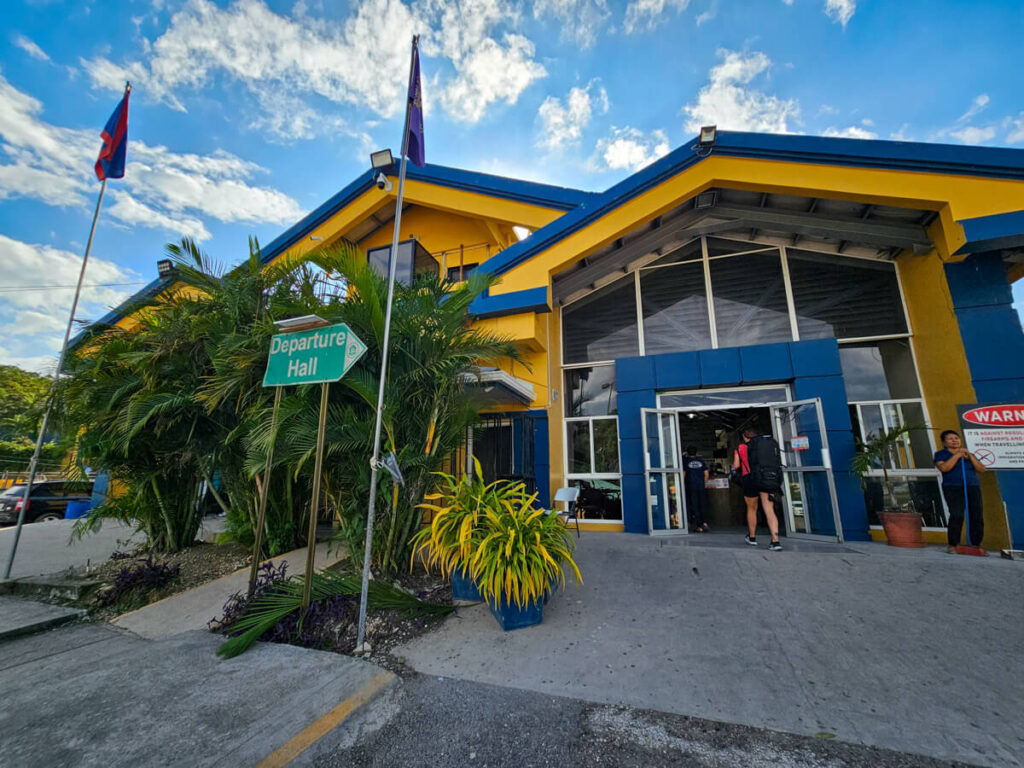
There’s no exit fee for travelling overland, but there is an airport departure tax of 30 USD (or equivalent in GTQ) – it’s normally included in the cost of your ticket.
It’s best to check the full list of requirements before travelling to Guatemala, as well as advice from your home country.
What to pack to visit Guatemala
Since Guatemala has everything from high-altitude volcanoes to tropical beaches, you need to consider what to pack carefully. Here’s a practical list so you don’t forget the essentials:
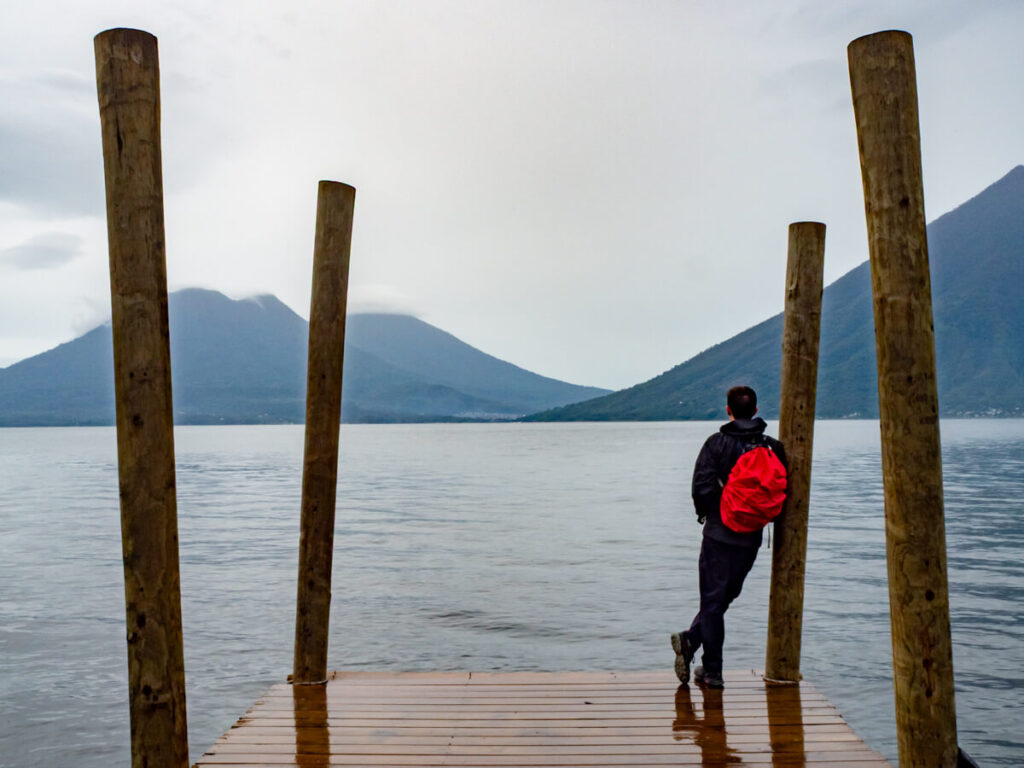
Is Guatemala worth visiting for tourists?
What stands out to us most about Guatemala is its sheer diversity. We did the highland highlights of Antigua and Lake Atitlán on our first trip, but barely scratched the surface of what the country has to offer. On our second trip, more recently, we went slower, travelled further, and explored more deeply.
Guatemala is absolutely worth visiting. It’s quickly become one of our favourite countries, and we think it’s so underrated. It’s got everything from volcanoes spewing red-hot lava, steamy jungle landscapes, and beautiful beaches to colourful colonial towns and small towns filled with authentic Maya culture. It’s like no other country we’ve ever visited. If you’re looking for epic landscapes, challenging yet rewarding outdoor adventures, and kind and friendly people, it’s unmissable.
Having said that, it’s not for everyone, and we wouldn’t want you to go with the wrong expectations.
Pros
Cons
If you’re willing to plan your trip carefully and embrace the more rugged side of Central America, Guatemala is the ideal destination – full of colour, culture, and bucketlist experiences.

Sustainability in Guatemala
Guatemala is a destination where your travel choices can have a real impact, both positive and negative. With its rich ecosystems and strong indigenous communities, responsible travel plays an important role in protecting the country’s natural and cultural heritage.
Eco-tourism is growing, particularly in places like Lake Atitlán and around Semuc Champey, where you’ll find eco-lodges, community-run tours, and conservation projects. Choosing to stay in locally owned accommodation and booking tours with responsible operators helps support the local economy directly, combatting tourism leakage.
One of the biggest challenges in Guatemala is waste management, especially plastic pollution in rural areas. You can help by carrying a reusable water bottle (many hostels and cafés offer filtered water refills), avoiding single-use plastics, and disposing of waste properly.
It’s also important to be respectful of local cultures, particularly in rural areas or traditional communities. Ask before taking photos of people, dress modestly in villages, and support local artisans by buying handmade goods rather than mass-produced souvenirs.
Wildlife experiences are another area to be mindful of. Always choose ethical operators, especially when visiting natural sites or taking part in activities around rivers, lakes, or jungle regions.
Travelling more slowly, spending money locally, and making small conscious choices can go a long way in helping preserve what makes Guatemala so special.

Tips for travelling Guatemala

Read next:
3 Week Guatemala Itinerary with 2 + 4 Week Adaptations
Top 20 Places to Visit in Guatemala + Where Not to Go
Top 20 Unique Things to Do in Guatemala
21 Animals in Guatemala and Where to See Them
The Best Time to Visit Guatemala: Land of the Eternal Spring
Our Guatemala Destination Guides:
