The Truth about Swimming with Turtles in Akumal

Everything you need to know about why you shouldn’t book a swim with turtles tour in Akumal and the best places to ethically swim with turtles in Mexico instead.
This post may contain affiliate links, which means we might earn a small commission on anything purchased through these links at no extra cost to you. Learn more on our disclaimer page.
You may have heard and read contradictory things about Akumal (the land of turtles in Mayan). Some articles, blogs and reviews herald Akumal as one of the best places in the world to swim with turtles. For this reason, tourists flock from all over the Riviera Maya, from Cancún to Tulum, to Akumal to swim with turtles.
But other reviews report aggressive locals, unethical practices, privatisation of a public beach and a decline in the environment and welfare of the turtles due to over-commercialisation. So, when we were in Tulum, we decided to make the 20-minute journey to see for ourselves what’s really happening in Akumal.

Why do turtles come to Akumal?
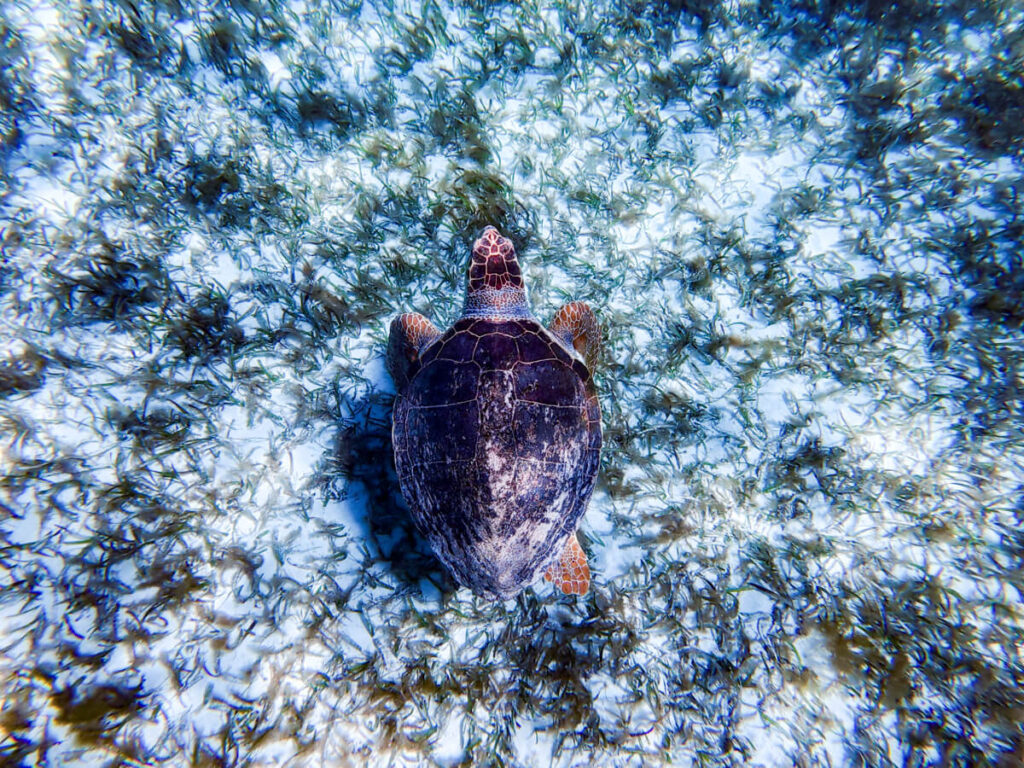
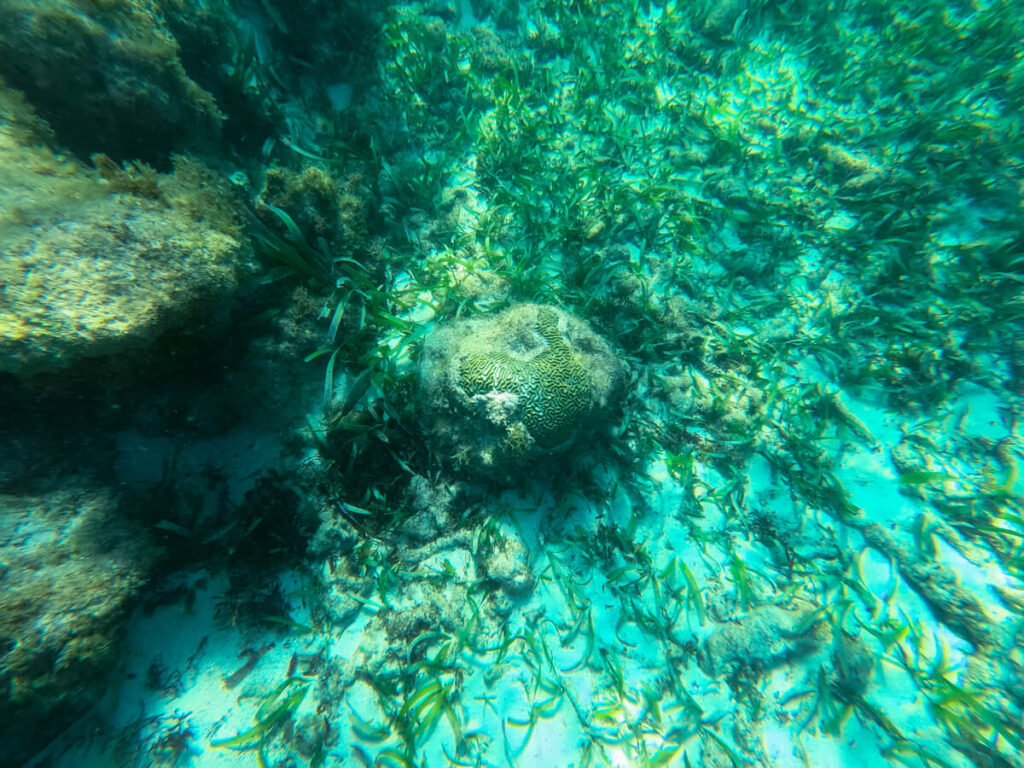
Sea turtles are drawn to Akumal Bay to feed on the abundance of seagrass, which grows on the sandy bottom of the bay. It is a popular spot for juvenile turtles who need calm, protected waters in the early stages of their development. The U-shaped bay, as well as the coral reef system which runs along the outer perimeter, provide this.
Akumal Beach’s turtle season is the same as along the rest of the coast. Nesting takes place from April to October, while the majority of the hatching takes place in the latter three months of August, September and early October.
If you’re still keen to take an Akumal turtle tour after reading this post, please do so with a licensed operator like:

What issues do Akumal’s turtles face?
Those who visited Akumal 10 years ago claim the bay was an untouched haven with a pristine, white sand beach and lots of free-roaming turtles. But the bay has suffered over the years due to a steep rise in tourism.
A 2013 study by Opwal, in conjunction with Akumal Dive Centre and Centro Ecologico Akumal, found an increase in water contamination (due to sun cream, insect repellent and human pee), significant damage to the seagrass habitat and a severe decline in the health of the turtles. Many of Akumal’s turtles had developed early signs of Fibropapillomatosis (FP), including tumours around the face, body and on internal organs. This was a direct result of chronic stress, being touched by tourists and being in contact with chemicals and human pee.
The findings, which were presented to Mexican authorities in 2014, showed that each turtle was being grabbed by tourists on average 4 times an hour, every hour, 7 days a week.
The bay was closed in low season, but due to pressures from the local community, a large portion of whom earn income through turtle tours, it was later reopened in the next high season. It wasn’t until March 2016 that the Department of Protected Areas (Comisión Nacional de Áreas Naturales Protegidas, known as CONANP) announced that Akumal was to be made into a protected area. Zones were created within the bay, and new rules and regulations were put in place. In 2017, the bay was designated a marine reserve, the Akumal Bay Refuge Area, by SEMARNAT. Sadly, “tensions between conservation and commercialisation are prevalent in Akumal“, with friction between balancing tourism and conservation.

What other issues are there at Akumal Bay?
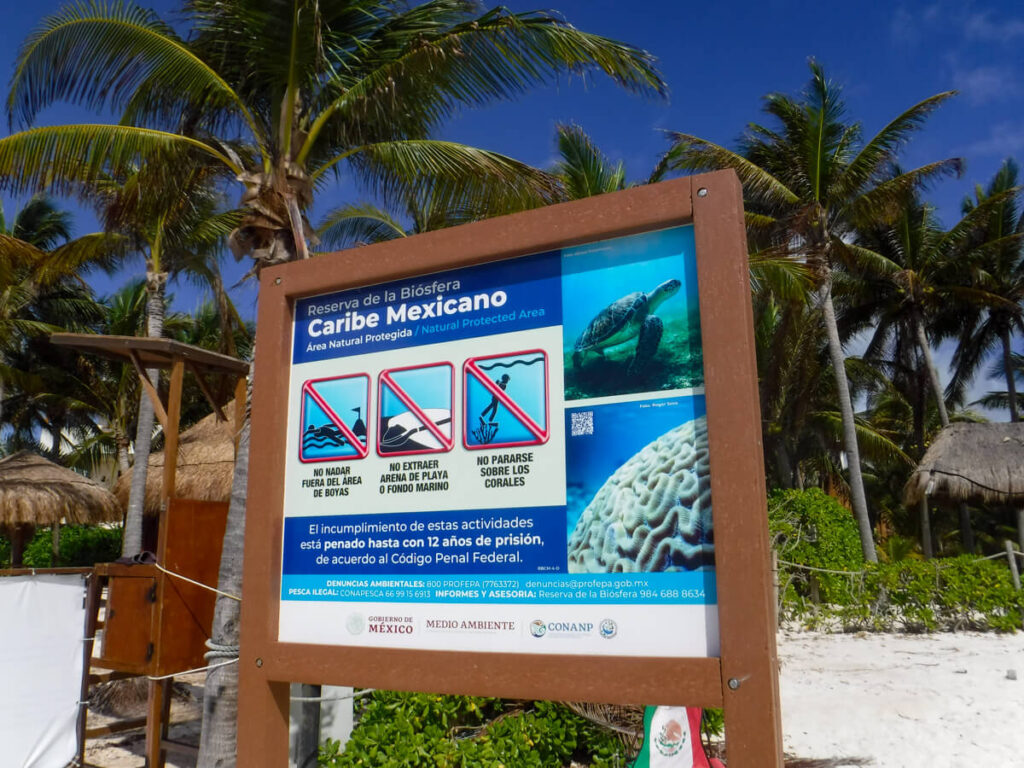
Local businesses on the seafront have banded together and begun charging entry to the beach. The beach is public and legally free to enter, but it’s now very difficult to access without paying for entry through a private establishment. The fee is 140 pesos or $8 USD. Like many attractions in Mexico, you will be provided with a paper wristband to prove you paid.
Online reviews complain of harassment when visitors have tried to access the beach via other paths. There are also complaints of aggressive behaviour from salespeople and guides, trying to intimidate anyone who decides not to buy a turtle tour but hopes to see one independently.
More from Akumal
What restrictions are in place in Akumal Bay?
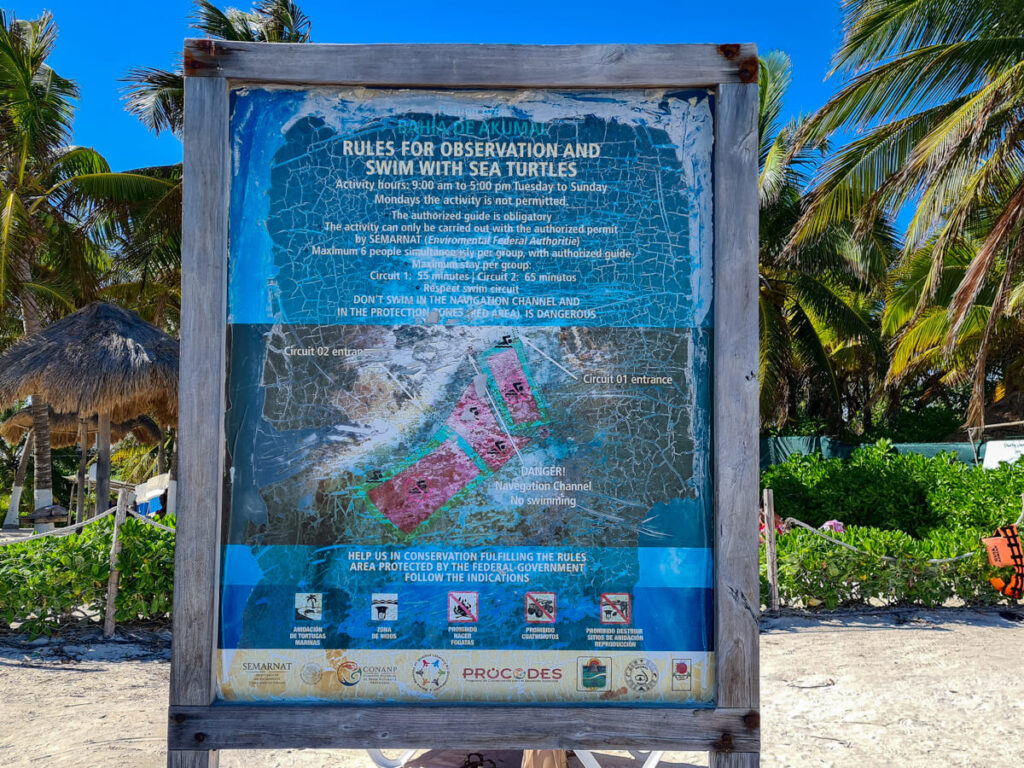
As part of the regulations that were put in place, Akumal Bay was split into zones. The red areas mark the ‘turtle zones’, where the seagrass that they feed on lies. You cannot enter the red zones without a certified guide. The channels between these areas are for boats, so are dangerous for swimmers to enter. And the green area around the coastline marks the free swimming area.
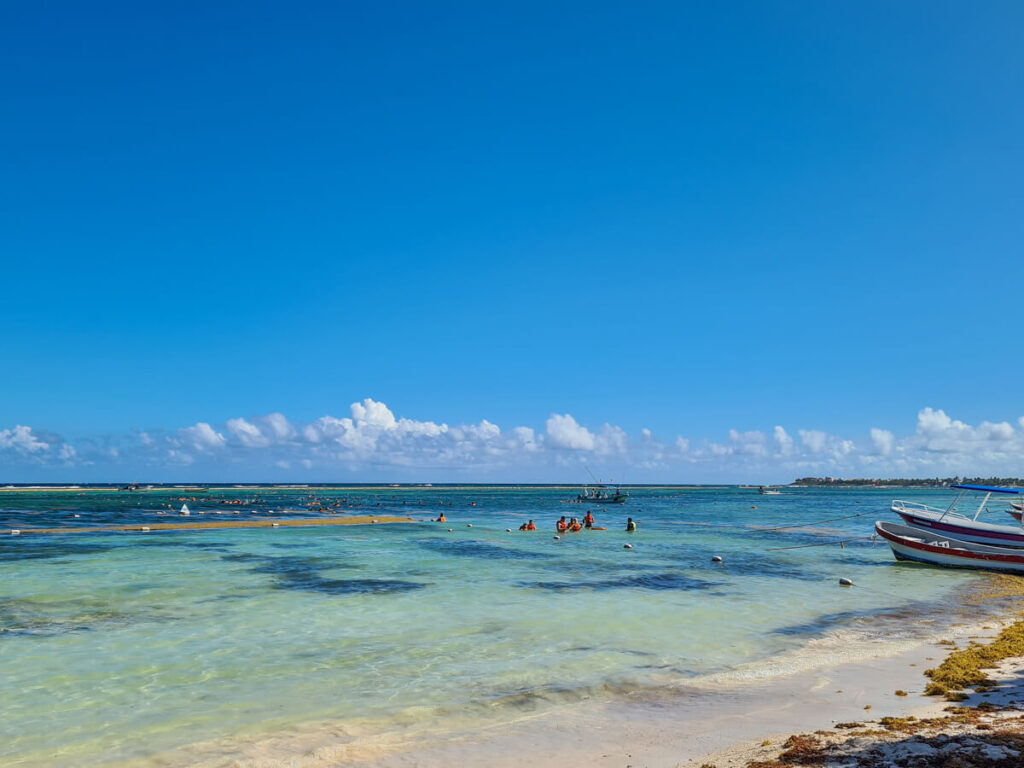
As the turtles are largely concentrated in the deeper red areas, it is very difficult to see turtles independently. Of course, as they are wild animals and can go where they like, it’s possible you’ll see a turtle while swimming in the green zone. But it’s unlikely. People on kayaks patrol the perimeters of the turtle zones, ensuring that any free-swimmers don’t get close to the turtle zone. Tourists have complained about aggressive behaviour from these patrols.
There are indications that it’s been made as difficult as possible to see turtles independently to force visitors to pay for turtle tours. We’d support these conservation efforts if it seemed they were really done for the benefit of the turtles, but unfortunately, that wasn’t our experience. In contrast, it seemed to us that the rules were brought in as a consequence of over-commercialisation and now benefit tour operators at the expense of the turtles.

Are the rules followed in Akumal?
In the following section, we’re going to list each rule, explain why it’s important, and state whether we saw it being followed.
Spoiler: We saw almost every single regulation be broken during our six-hour trip to the bay.
You can only go into the turtle zone with a guide who has been certified by SEMARNAT
According to a press article on the Mexican Government’s website, SEMARNAT (Mexico’s environment ministry, Secretariat of Environment and Natural Resources) originally delivered 20 permits for non-extractive use in Akumal Bay.
Why? This regulates the number of guided tours in the bay, as well as ensuring guides can regulate tourists’ behaviour. Guides can also brief and educate tourists on turtle conservation before and during the tour.
Is the rule followed? No. Firstly, the permits were apparently granted without verifying or requiring the guides to have proper instruction or training, meaning anyone could become a guide. Secondly, there are numerous unlicensed operators who act as tour guides without consequence. It is almost impossible for the average tourist to tell the difference between a certified tour guide and a local looking to make some money. Therefore, far more guides than just those who are certified operate turtle tours in the bay. And many of those who are certified have no credentials that actually mean they know or care about conservation.
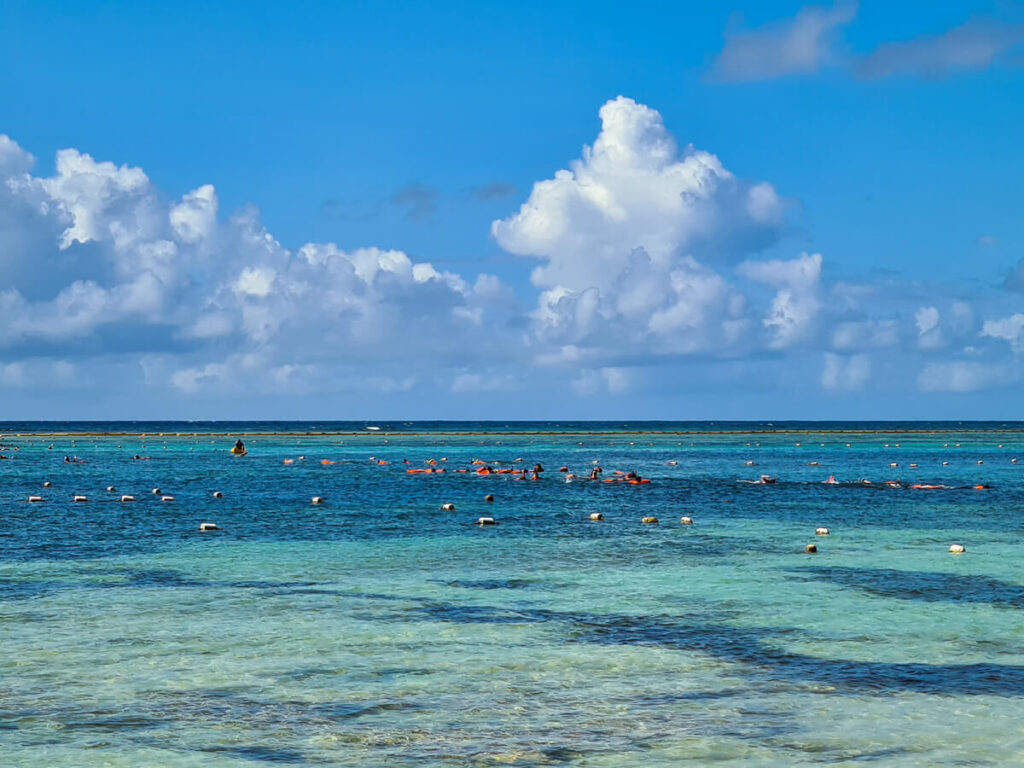
You have to stay with your guide and follow a dedicated path around the zone
Why? To ensure people don’t spread out around the zone and come into unsupervised contact with a turtle. By viewing a turtle as a group, it can be left alone once the group moves on.
Is the rule followed? From our view on the shore, this rule seemed to be followed. But in practice, it means that turtles are observed by large groups at once, which can be stressful. And, once one group leaves, another takes its place, giving the turtle no break.
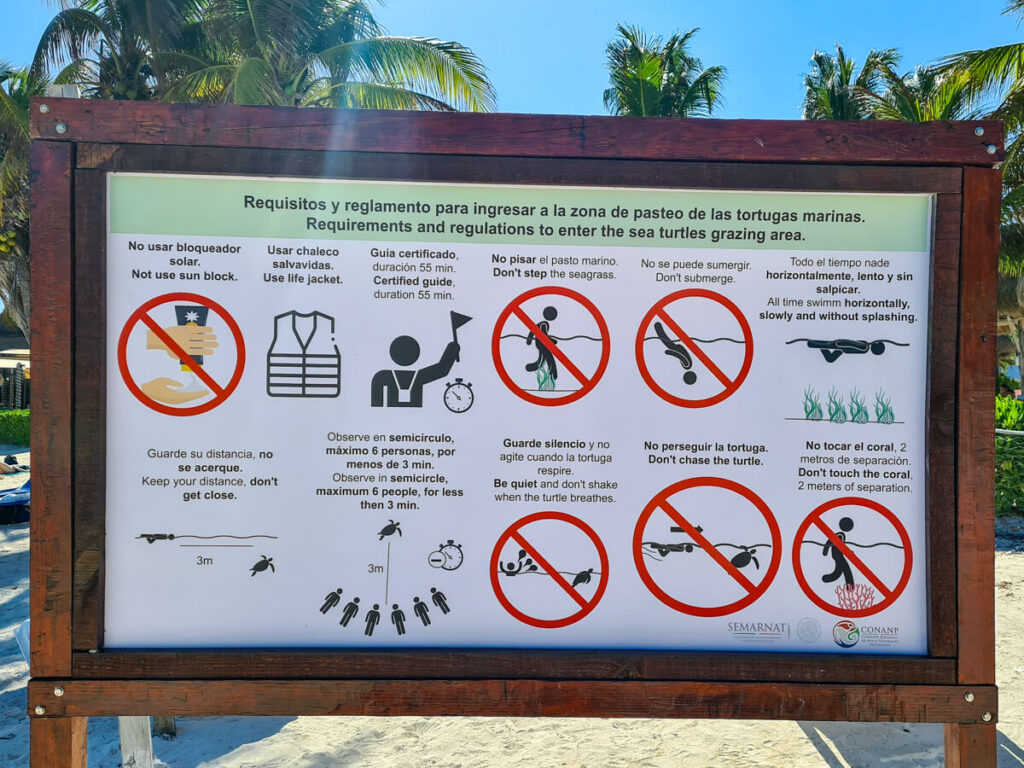
You’re not allowed to wear suncream
Why? This rule is in place to protect the seagrass and coral, which can be severely harmed by the chemicals within suncream. Even reef-safe, biodegradable suncream can be harmful to marine flora and fauna before it has time to break down.
Is the rule followed? No. We saw both tourists and guides topping up their suncream right before entering the water. There is no way to know or regulate whether someone has put suncream or insect repellent on before entering the water.

You’re not allowed to wear flippers
Why? Flippers (fins) can churn up sediment from the seafloor and make visibility really poor. And more importantly, many tourists can accidentally kick turtles with their flippers.
Is the rule followed? No. Again, we saw both tourists and guides wearing flippers.
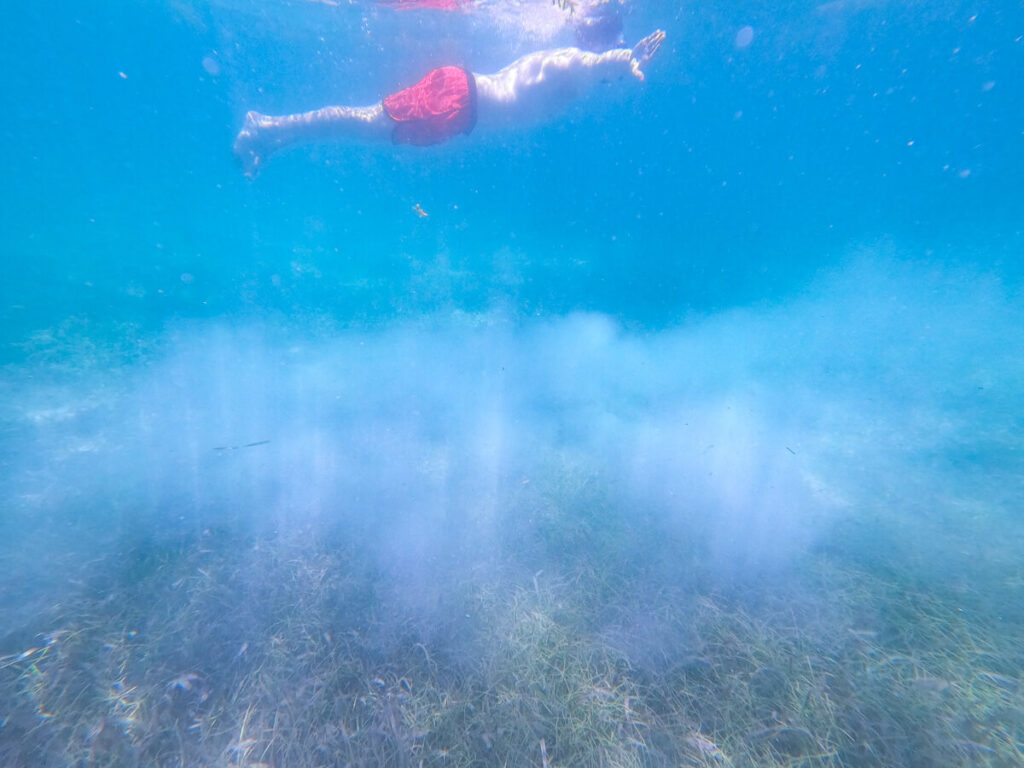
You must remain horizontal and wear a life vest
Why? To stop duck diving (diving under the water) to the bottom of the bay, where the turtles eat the seagrass.
Is the rule followed? No. We saw quite a few tourists treading water vertically, putting them at risk of kicking a turtle or stirring up sediment. The life vest rule was followed. It makes sense that it helps tourists tire more slowly as they expend less energy on swimming. It also makes it easier for the patrols to recognise who has paid for a tour and who hasn’t.
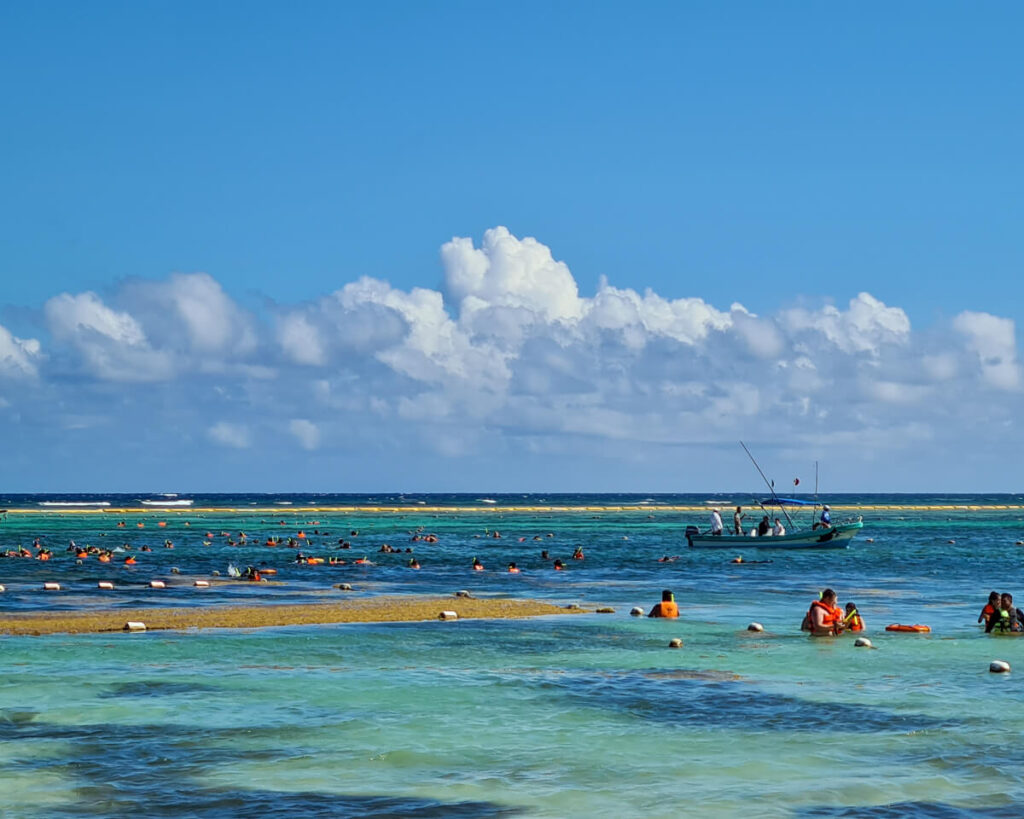
Guides can take a maximum of 6 people in a group
Why? This ensures the turtles aren’t crowded by too many people at once, which can disturb them and cause them tremendous stress. It also helps to regulate the number of people in the zone at one time, as well as the number of visitors per day.
Is the rule followed? Absolutely not. We saw groups of 10+ people getting into the water with 1 guide.
Tours can’t run on Mondays
Why? All tours are forbidden from running on a Monday, and nobody is allowed in the red turtle zones to give the bay and the turtles a break.
Is the rule followed? Nope! We visited on a Monday and saw countless tours run in the bay. We even saw that the national guard was present and just looking on. There seems to be nobody actually regulating what happens in the bay.

Tours must be run between the hours of 9:00 AM and 5:00 PM
Why? Again, this means that turtles get a break from human presence in the mornings and evenings.
Is the rule followed? No. We arrived at the bay at 08:00 and saw the first tour go out shortly after. We’ve also heard that tours continue running after 17:00.
A maximum of 400 people are allowed in the bay in one day
Why? This restricts the number of people who enter the turtle zone, meaning the turtles aren’t exposed to too many people and overwhelmed or severely disturbed by human presence.
Is the rule followed? Absolutely not. We saw more than 400 people go through the zone in the space of 4 hours! We asked the ‘guide’ who told us this fact what happens when the day’s count reaches 400 people – do the tours stop for that day? We were told that no, the tours continue running all day, despite the number being exceeded.

Don’t get within 3 metres of a turtle
Why? This distance is to give the turtle space, ensuring it doesn’t get stressed out by human presence.
Is the rule followed? No, we saw lots of tourists swimming within 3 metres of a turtle, and you can find videos and photos on social media that have clearly been taken within 3 metres of a turtle at Akumal.

A maximum of 6 people should observe a turtle for no longer than 3 minutes in a semi-circle to one side
Why? This is an important rule to give the turtle room to swim away. It ensures it has enough space to behave naturally and also gets a break from humans after 3 minutes.
Is the rule followed? Nope. As groups often exceed 6 people and swim around the zone together, there are often more than 6 people per turtle. Also, because there are so many people in the water at one time, when one group moves away, another one takes its place, meaning the turtles get no break.
Don’t chase or touch the turtles
Why? This one should be obvious, but unfortunately, it’s still necessary to tell many tourists to respect turtles as living animals and not harass them.
Is the rule followed? As we didn’t go into the zone, we can’t attest to this one. We’d hope that the guides who operate do actually care about the turtles, despite the questionable practices we witnessed, and would enforce this.
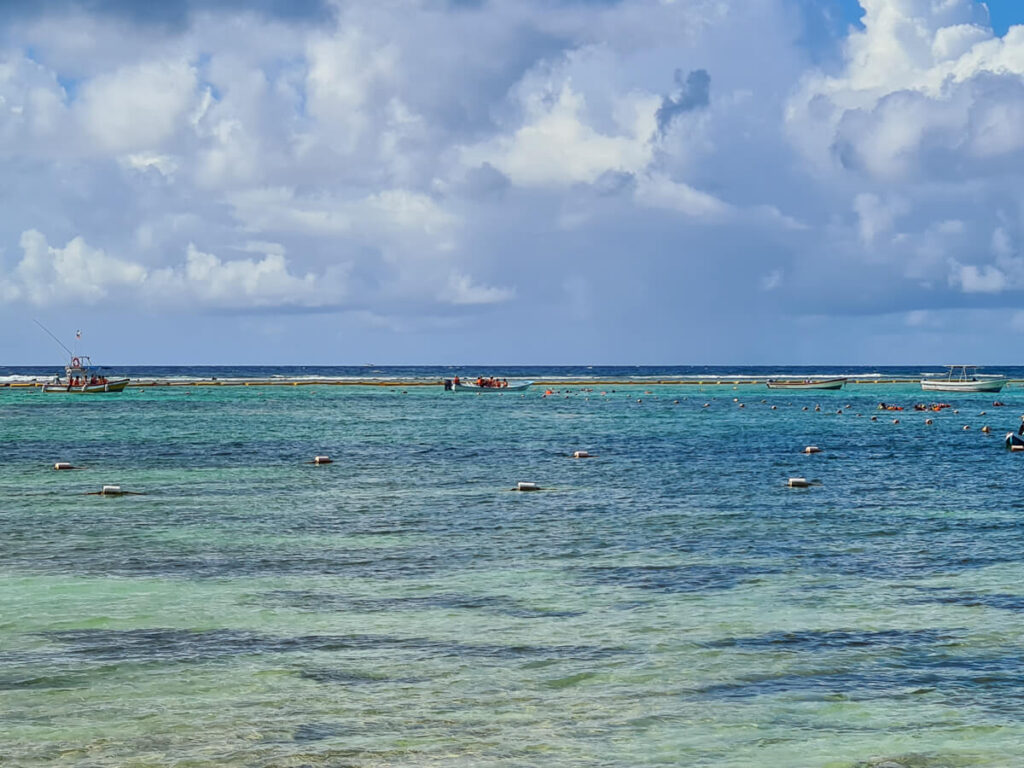
We were also disappointed to see several boats drive right through the red turtle zone, dodging tourists as they went. If the red zones are protected areas for turtles, how are boats allowed within them? One of the biggest causes of injuries to turtles is from boat propellers, yet they drove right through the ‘protected’ zone.
Is snorkelling with turtles in Akumal ethical?
It took us a while to process what we’d seen in Akumal. On the one hand, it seemed like a well-intentioned conservation effort, but there were so many discrepancies that didn’t sit right with us. There are too many people per tour group, there are too many people in the zone, there’s no way to know who is a licensed guide and who is not, and almost all the rules are broken.
We’re not angry people, but the situation at Akumal makes us angry. At best, it’s poorly regulated eco-tourism, and at worst, it’s greenwashing. It’s so sad to see the turtles and their environment suffer for the sake of money.
It really doesn’t feel like the regulations are in place for the benefit of the turtles. If they really were, more would be done to enforce them. There would be inspectors ensuring the regulations are followed, and penalties for breaking the rules. Or the zones where the turtles feed would be completely no-swim zones.
We’re advocates of wildlife experiences that observe and don’t disturb. It seems counterintuitive to put regulations in place to protect a species, which includes an exclusive zone for the animal, and then take thousands of tourists into that zone to see them. Additionally, this zone is an important feeding ground, meaning any encounter in the zone runs the risk of disturbing a turtle feeding. This can have catastrophic consequences for turtles’ health.

What could be done instead?
We respect that tourism is a very large part of Akumal’s residents’ income and that many of the locals earn their salaries through these turtle tours. But we believe there are so many ways the turtles could be protected properly while still bringing money into the bay through tourism.
Truly sustainable tourism can still provide a source of income for the local community. For example, talks and demonstrations could be held to educate tourists on the turtles’ needs and behaviours, explaining why the rules are in place to protect them. The narrative needs to be shifted from ‘swim with turtles’ to ‘learn about why the turtles are being protected here’.
Ultimately, if something is to change, the government needs to provide the local community with more resources. If conservation efforts in Akumal were truly committed to, the turtle population should begin to increase again. Akumal could be a success story for eco-tourism, like other places in the region, such as Sian Ka’an Biosphere Reserve and Isla Contoy, that are genuinely protected.
Read next: Let’s Talk About Ethical Wildlife Tourism

Where can you see turtles ethically?
Unfortunately, 6 of the 7 species of sea turtle are classified as threatened or endangered. And with only 1 in 1000 babies making it to adulthood, the odds are already stacked against their survival. Turtles face a multitude of problems, from pollution to poaching to injury and death from human causes. With their decline, it’s becoming increasingly more difficult to see them in the wild without negatively impacting their lives. But it’s not impossible.
The best places to snorkel and dive with turtles in Mexico
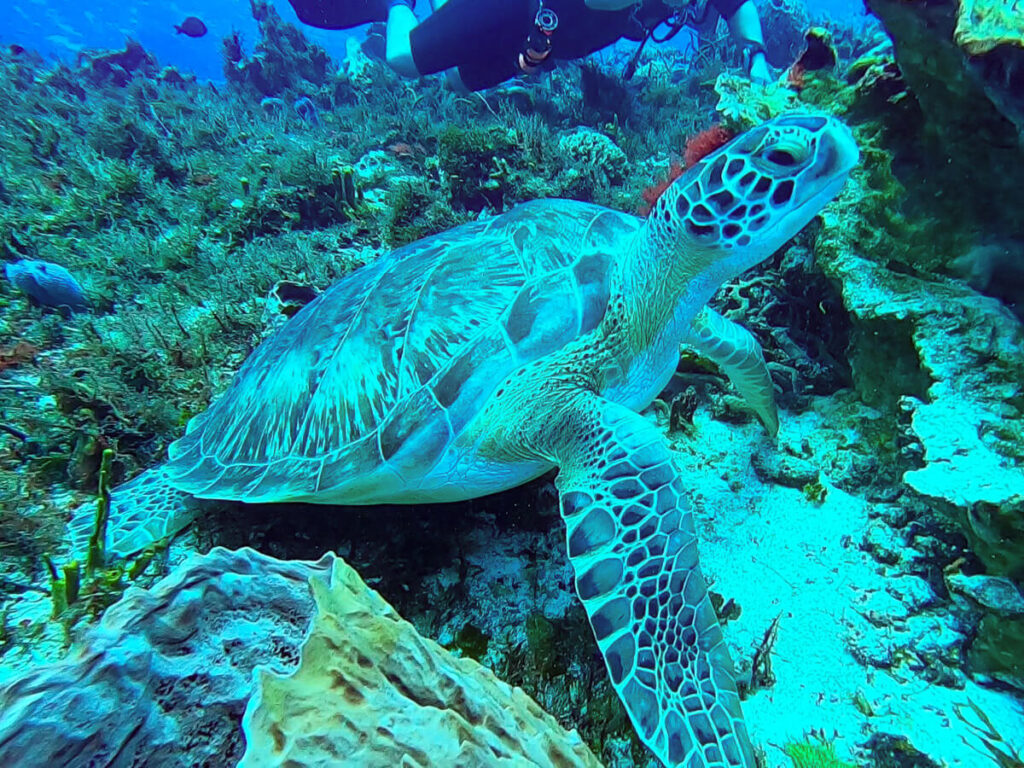
Don’t worry if you’re in or planning to visit Mexico, you don’t have to miss out. You can see turtles on both the Pacific Coast in Baja California Sur and all over Mexico’s Caribbean coast.
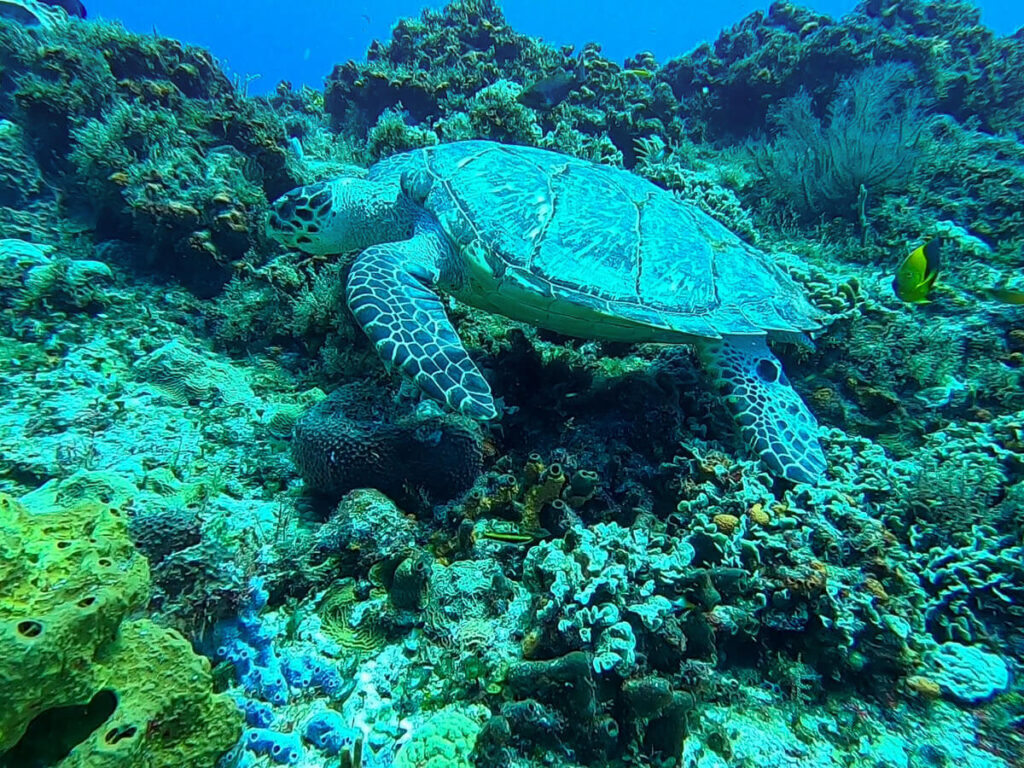
We’d highly recommend taking a snorkel or dive tour on the Mesoamerican Barrier Reef, the largest barrier reef in the Western Hemisphere. It’s easy to access from the north east – we saw a turtle SCUBA diving in Cancún at a reef near the MUSA underwater museum. You can also often see turtles snorkelling in Cancún, snorkelling in Isla Mujeres, and SCUBA diving in Isla Mujeres.
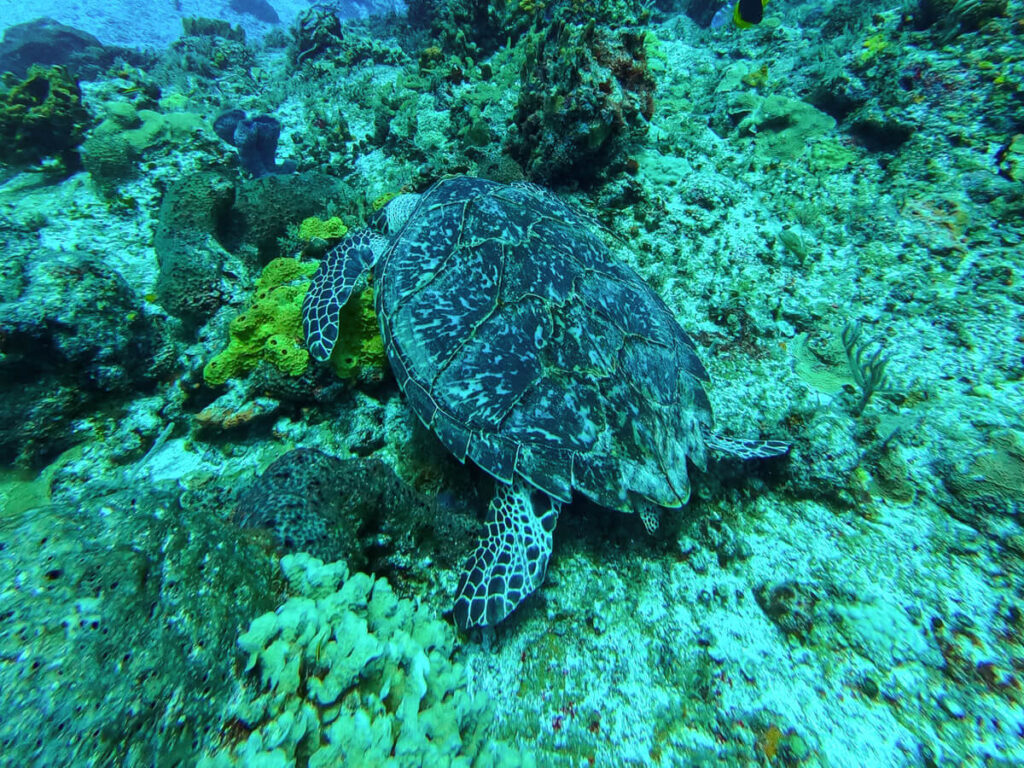
Further south, just off Playa del Carmen, Cozumel is an island on Mexico’s Caribbean Coast, not too far from Akumal, which is one of the best places to see turtles in Mexico. We couldn’t recommend Cozudive more. They really care about the wildlife and its conservation, are very professional and offer competitively affordable dives. The team – Marilyn, Alvaro and Memo – are all fantastic, and we can guarantee you’ll have an incredible time with them.
How to visit Akumal responsibly
Obviously, we’re not going to sit here and tell you to never visit Akumal Bay, having been there ourselves. We wouldn’t recommend taking a turtle tour, but it is still possible to enjoy Akumal Bay’s beautiful beach for free. If you’re really keen to visit, or happen to already be there, here is how to visit with the least impact possible.
If you’re still keen to take an Akumal turtle tour, do so with a responsible operator like:

There are several points you can enter Akumal beach from:

To enter Akumal Beach for free, you can walk around the northern headland along the Akumal Trail. There are some useful instructions on how to do this in the reviews of this location pin in Google Maps. Following the coast path into the bay means you don’t have to put money into businesses that offer turtle tours.

To get to Akumal from Tulum, you can take a colectivo. They pass along the main road to and from Downtown Tulum and Playa del Carmen from 5:00 AM-11:00 PM every 5 to 10 minutes every day. It’s 40 pesos (~$2 USD) per person. Alternatively, you can drive yourself and park in one of the car parks in Akumal.

Is snorkelling in Akumal worth it?
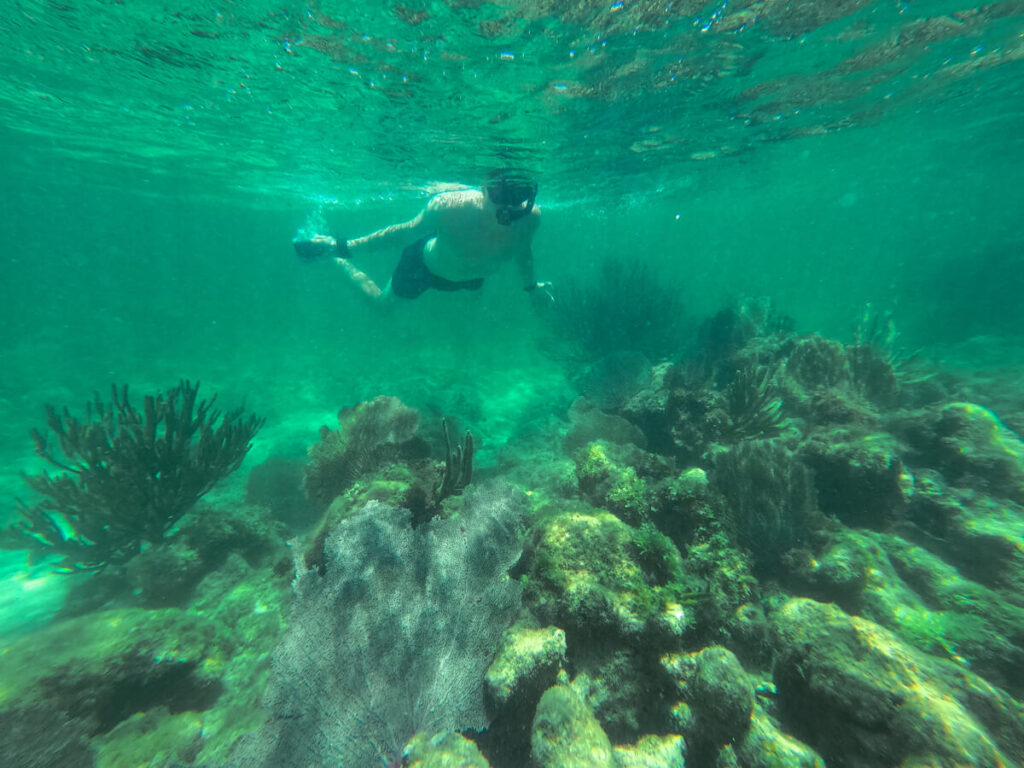
To be honest, though, the snorkelling at Akumal isn’t the best in eastern Mexico. To see the Mesoamerican Reef near Akumal, you need to take a boat out to the entrance to the bay (which requires taking the turtle tour, or hiring a guide or captain). The coral within the bay itself doesn’t compare, and there are very few fish, although we did see some species of reef fish and a barracuda. Visibility is poor as the sand gets churned up by all the swimmers and the current.
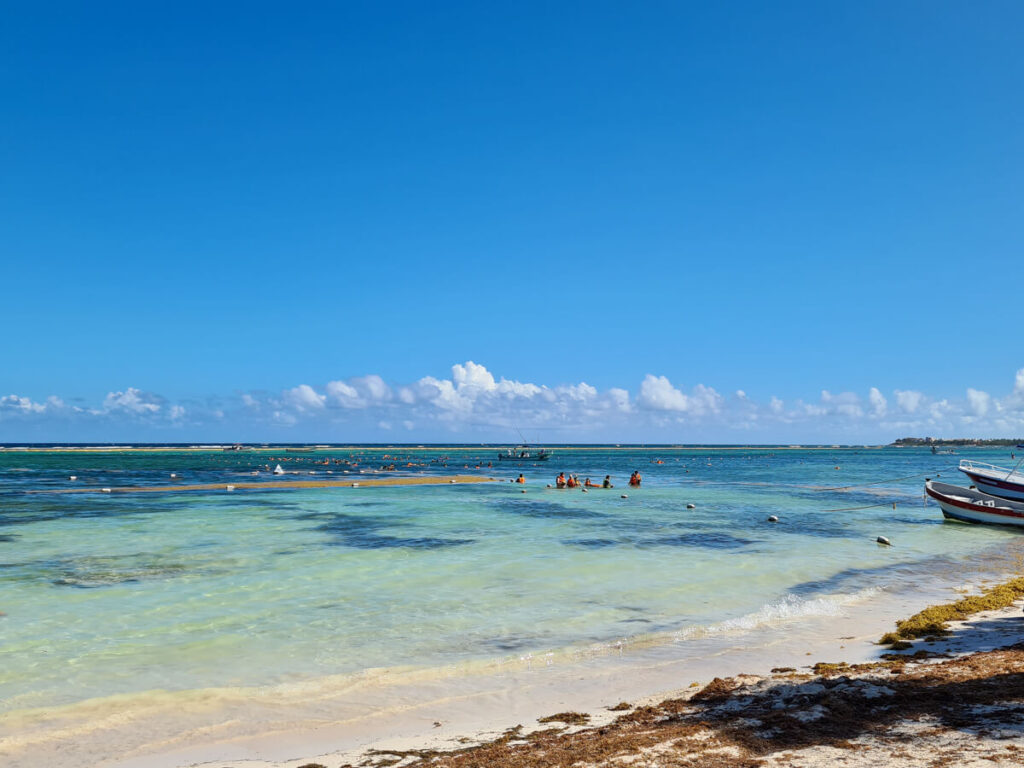
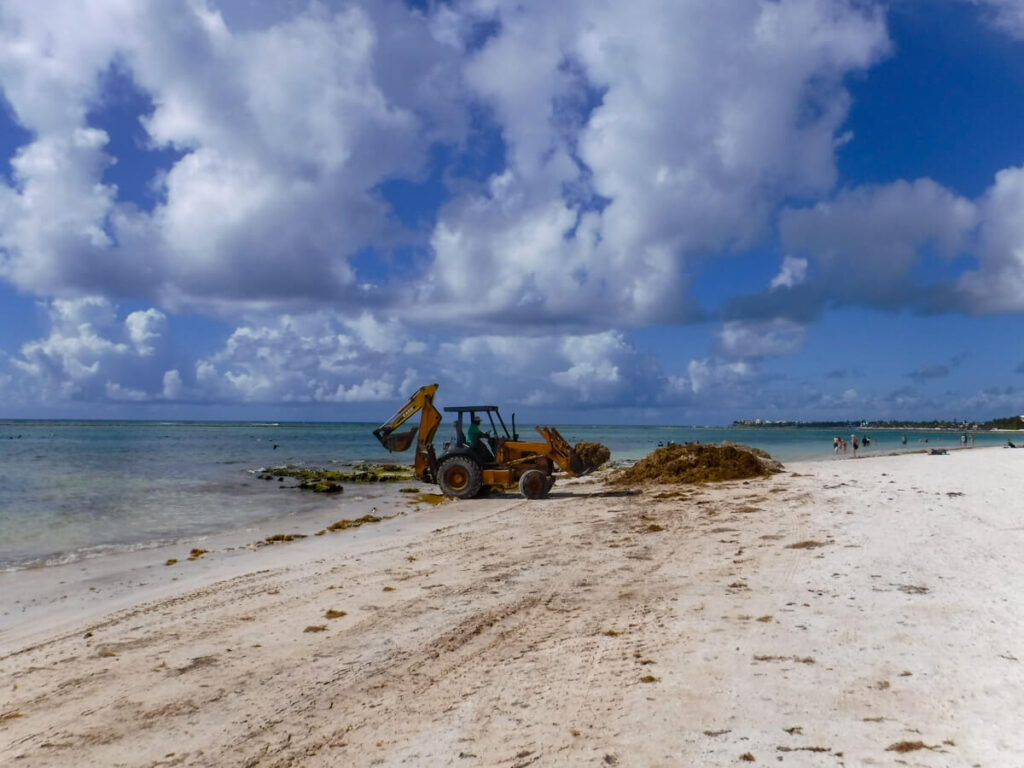
Akumal also suffers from the same sargassum problem that hits the rest of the Riviera Maya between April and October. Despite digger-loads of seaweed being carried off the beach, there’s too much to completely clean up.
Map of Akumal, Mexico
We’ve highlighted Akumal’s main areas and attractions on the map below.

The bottom line
Mexico is definitely not the worst place in the world for wildlife tourism. In fact, we observed a lot of conservation efforts and sustainable initiatives in the four months we spent there. But we hope that, with more public discussion, more will be done to protect the wonderful species we share this planet with. If you’re planning to visit Mexico’s Caribbean coast, maybe give Akumal a miss.
Akumal turtles FAQs
To close off, we’ve answered these frequently asked questions about swimming with turtles in Akumal.
What time of year can you see turtles in Akumal?
Sea turtles are present in Akumal Bay year-round because the shallow water and seagrass beds provide consistent feeding grounds, but activity increases during the warmer months. They are one of the most exciting animals to see in Mexico’s Yucatán Peninsula. The traditional peak season for turtle sightings is roughly May through November, when adult turtles are most active feeding and nesting on nearby beaches, and hatchlings begin their journey to the sea. Visiting early in the morning, before crowds build and winds stir up sediment, also improves visibility and your chances of seeing turtles in the water.
Can you swim with turtles in Akumal for free?
While it’s technically possible to snorkel near the shore on your own without paying for an Akumal turtle tour, the areas where turtles are most likely to be – the deeper seagrass beds farther out – are regulated and typically only accessible with a guide. Independent snorkellers can sometimes spot turtles closer to the beach, but the odds are lower and local guides often patrol to keep people out of restricted zones.
Do you need a tour to see turtles in Akumal?
At this point, if your goal is to swim where turtles are feeding in Akumal, you need to take a tour (although we wouldn’t recommend it). Mexican conservation rules and local enforcement limit access to the prime turtle-sighting areas of the bay, and guided tours with authorised guides are the main legal way to enter those zones. These tours are structured to reduce stress on the turtles, although there’s also a significant commercial aspect involved that contradicts this.
How much to swim with turtles in Akumal?
Prices vary depending on the operator and season, but organised snorkelling tours in Akumal Bay with guides into the core turtle areas often cost in the range of about $30-40 USD per person (around 700-750 MXN), usually including snorkel gear and life jackets. There are separate beach access and parking fees.
Where is the best place to swim with turtles in Mexico?
Akumal is far from the only place to swim with turtles in Mexico. Other great spots include Isla Cozumel, which has amazing SCUBA diving, Isla Mujeres and Cancún, which have access to the Manchones Reef, and Costa Maya or around Mahahual Beach for quieter reef environments with diverse marine life.
Read next:
Let’s Talk About Ethical Wildlife Tourism
A Traveller’s Guide to Akumal Beach Town & Bay: 10 Things to Do + 5 to Avoid
A Complete Guide to Visiting Sian Ka’an Biosphere Reserve
How to Visit Tulum Mayan Ruins: Worth it?
A Responsible Travel Guide to Tulum: Worth Visiting or a Tourist Trap?
25 Unique & Non-Touristy Things to Do in Tulum + 4 Activities to Avoid
How to Get to Tulum: The Easiest & Cheapest Ways
How to Get Around Tulum: 12 Transportation Methods
Where to Stay in Tulum: Neighbourhoods & Top Hotels For Every Budget
