Let’s Talk About Ethical Wildlife Tourism

A discussion on wildlife tourism: what it is, the signs of an unethical encounter and how you can choose ethical wildlife experiences when you travel.

This post may contain affiliate links, which means we might earn a small commission on anything purchased through these links at no extra cost to you. Learn more on our disclaimer page.
Seeing animals in the wild can be one of the best parts of travel. Witnessing animals behave in ways we’ve only seen on TV is definitely one of our favourite parts of travelling, and we often actively seek out wildlife encounters. But it wasn’t until we started participating in wildlife tourism that we started to consider the negative impacts that witnessing and interacting with wildlife can have. Wildlife tourism accounts for between 20-40% of global tourism, and unfortunately, not all of these encounters have positive effects for the animals involved. In fact, right now more than 500,000 wild animalsworldwide, including elephants, sloths, tigers and dolphins, are suffering for tourist entertainment.And most tourists involved don’t even know they’re a part of questionable wildlife encounters.
So what can we do about it? It’s easy to get excited over the prospect of seeing an animal you’ve never seen before and forget to question your impact on it in that moment. We want to open up a discussion about ethical wildlife tourism in the hopes we can identify how to choose ethical wildlife experiences and encourage more people to consider the impact their next wildlife encounter will have.
What is ethical wildlife tourism?
Put simply, ‘wildlife tourism‘ is any activity that involves an animal. It’s a form of tourism that can involve watching, photographing, or interacting with animals, either wild in their natural habitats or in captivity. Riding a camel in Jordan, going on a whale watching boat tour in Mexico, and observing wild turtles in Hawaii are all examples of wildlife tourism.
These activities can involve more or less interaction with the animal, ranging from observation to touching, feeding and holding. The problem with wildlife tourism is that, depending on the scenario or tour operator, it can either support conservation and animal welfare or contribute to exploitation and harm.
‘Ethical Wildlife Tourism‘ provides the opportunity to observe, learn about, or support wild animals without causing harm or distress to them or their ecosystems. It prioritises animal welfare, conservation, and local community benefit, while minimising exploitation and environmental impact.
The way we see it:
That might not have made it much clearer for you, so we’ll elaborate throughout this post.
What is an unethical animal encounter?
An unethical animal encounter is any human-animal interaction that harms, exploits, or stresses the animal – often for the sake of profit, entertainment, or convenience.
These encounters usually prioritise tourist experience over animal welfare and may involve tactics like abuse and neglect. They may also leave long-term negative impacts on wildlife behaviour, health, or habitat.
There are several characteristics and hallmarks that can indicate an unethical animal encounter, but, as every encounter is context-specific, they can be hard to identify without understanding the animal’s natural behaviour, the facility’s practices, and the broader impact on conservation and welfare.
The main issues with wildlife tourism
One of the main issues with wildlife tourism is that the animals’ best interests aren’t at the heart of the company operating the experience. Many tour operators care more about tourists’ money than the welfare of the animal, and therefore don’t treat the animal with the respect it needs during the activity.
Examples of this can range from getting too close to a wild animal, approaching it too quickly, or chasing and harassing it by blocking its exit. Feeding and touching the animal can be encouraged in certain situations, too. The negative impacts of this are two-fold:
1) The animal is put in a position of stress at a time when it might need to be resting, feeding or migrating.
2) Your experience with the animal will be worse as it tries to escape your presence or shows signs of stress rather than its natural behaviours. This can, of course, be avoided by booking with a certified company that prioritises responsible wildlife experiences.
While in captivity, many places don’t offer animals the sufficient space and resources they need to live naturally. Often, animals have been taken from their natural habitat and are treated incredibly poorly. Animal cruelty and abuse are widespread in the wildlife tourism industry, and many countries have poor laws and regulations in place to protect animals.
Unethical wildlife tour operators will, at best, scare away or stress the animal and at worst, cause psychological and physical trauma. This level of suffering is, unfortunately, rife throughout the wildlife tourism industry.
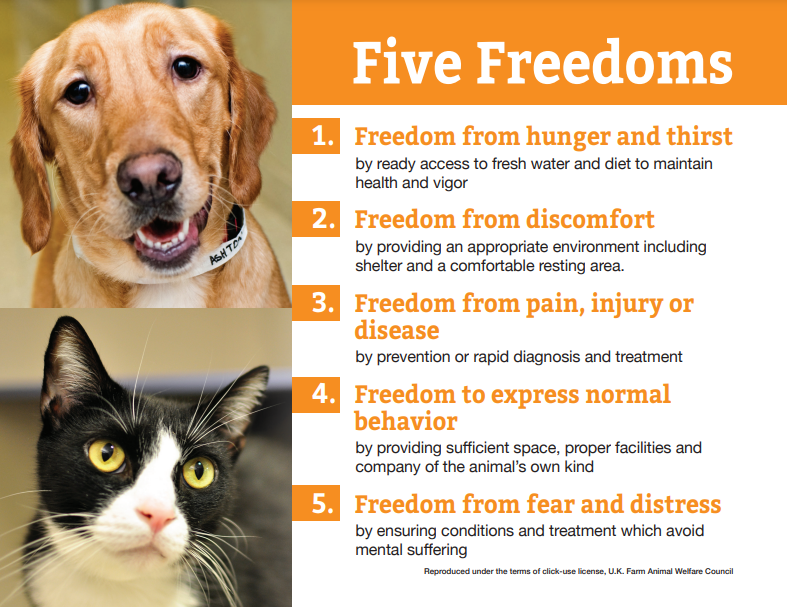
The image below depicts The Five Freedoms, a set of globally recognised standards for animal welfare. It’s a sad fact that a lot of wildlife encounters around the world don’t meet these basic criteria.
Why is it important to only choose ethical wildlife experiences?
Firstly, it’s better for the animals. By booking a wildlife encounter with a certified company that cares for the wellbeing of the animals, you can be sure you will observe and not disturb.
This also means there is less demand for the dodgier companies, who will then operate less or (hopefully) cease operating altogether – leaving wildlife to flourish in its natural habitat.
Secondly, it’s better for you. Without unethical companies hounding and scaring away wildlife, there will be more animals present for you to observe. They will also be less stressed and display natural behaviours more openly – think spinner dolphins leaping and jumping, whales breaching, cheetahs hunting, baby elephants coming out to play! Your experience will be categorically better, and you’ll witness more magical moments.
Thirdly, it’s better for the planet. With animals being allowed the space they need to rest, feed and mate, we can reverse the decline in endangered species, help protect animals from extinction and create a sustainable wildlife tourism industry.
Read next: Ethical Wildlife Tourism in Hawaii
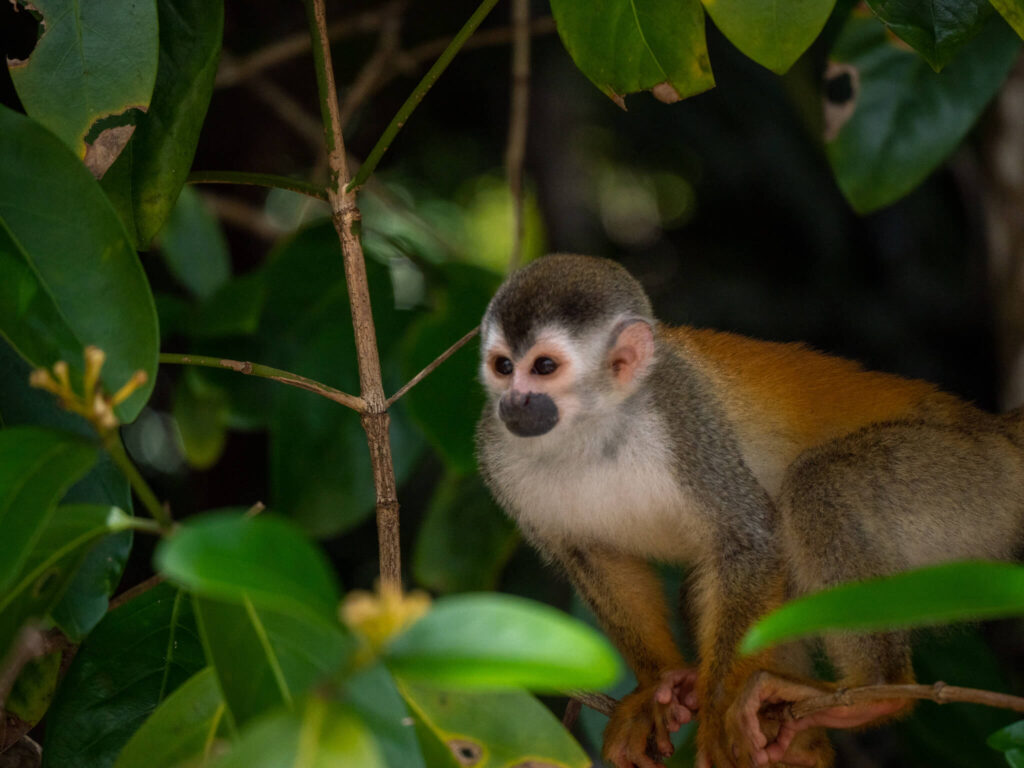
Responsible wildlife tourism is not a case of can you – can you pet a tiger, can you ride an elephant, can you swim with dolphins – it’s a case of should you. You can swim with dolphins in captivity in locations globally, but should you?
In the wild, dolphins can travel up to 80 miles in a day at speeds of almost 20 miles per hour. Being trapped in a tank that is smaller than the attraction’s car park causes stress, trauma and neurotic behaviours, such as swimming in endless circles. You can watch whales and dolphins perform in shows in SeaWorld, but should you?
When the experience is detrimental to the animal in question’s health and wellbeing, we’re going to go with a strong no.
When we travel, we have the power to choose where to spend our money. Skipping an experience in the place you’re travelling and waiting until you can undertake the activity ethically in another part of the world means that there is less demand for unethical wildlife experiences. With less demand, there can only be fewer unethical tour operators and fewer animals put in positions of stress and harm. Choosing ethical wildlife experiences is the biggest difference tourists can make to the wildlife tourism industry.
Read next: Everything you need to know about (ethically) snorkelling with Sea Lions in La Paz

What to look out for when booking your wildlife encounter
There are certain activities that we can confidently say should be avoided in all circumstances. These include elephant rides, tiger petting, monkey performances, and captive whale and dolphin shows. These animals have been taken from their natural habitat, incentivised to perform for human entertainment and are often kept in cramped conditions and treated poorly.
Always be wary of animals held in captivity – unless it is for rescue, rehabilitation and release purposes, or the animal was born in captivity and can’t be released back into the wild – it is likely the experience is an unethical one.
Other activities are murkier. For example, can you swim with dolphins in the wild? Well, in some circumstances, yes! There are certain locations in the world where you can swim with wild dolphins without causing them any harm. We’ve swum with wild dolphins ethically in numerous places around the world. The company we swam with dolphins on Kangaroo Island with Kangaroo Island Marine Adventures, use a propeller-free boat as propellers can be extremely harmful to marine life. And more than this, the boat creates a sympathetic acoustic pattern (vibrations) that the dolphins love. They also really care for the conservation and wellbeing of the dolphins and are the only KI marine tourism business with an Advanced Eco Certification.
But in other circumstances, no, it’s really not a good idea to swim with dolphins in the wild. For example, spinner dolphins need to rest during the day to ensure they have the energy to avoid predators and fish at night. Swimming with them in places like Hawaii can disturb them during this period of rest, meaning they aren’t able to feed themselves properly. Human interaction with spinner dolphins is one of the leading causes of their decline in several parts of the world. So you should never swim with spinner dolphins in the wild.
Find out where you can see Hawaii’s spinner dolphins without disturbing them in our article Ethical Wildlife Tourism in Hawaii

Animal Encounter Green Flags
Here are some green flags that indicate an ethical and responsible animal encounter.
Looking for companies with legitimate accreditation and certification, and who have undergone third-party inspections, is always a good sign, too. Some common certifications that demonstrate a commitment to animal welfare include:

Animal Encounter Red Flags
While there are sometimes clear warning signs, unethical animal encounters aren’t always obvious at first glance, especially when marketed as “sanctuaries,” “rescues”, or “eco-tours” (a lie known as Greenwashing).
There are several tell-tale signs that an experience is unethical, and we have listed these key factors below to make it easier to avoid booking unethical experiences.
Below, we expand on how to spot unethical wildlife experiences and key things to look out for when booking.
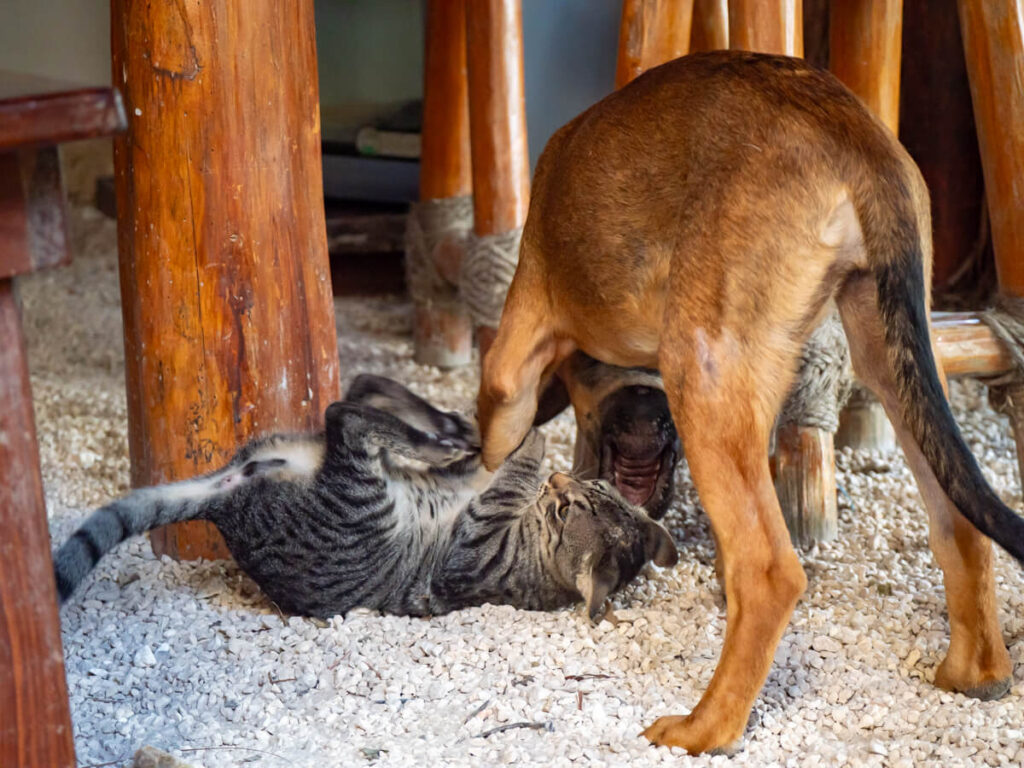
The animal is incentivised
Animal incentivisation refers to the practice of using rewards, stimuli, or conditioning to influence an animal’s behaviour, typically to make them perform a task, pose for photos, interact with tourists, or comply with human demands. While this can be seen as positive reinforcement, it’s often more commonly exploitative coercion.
Feeding is the best example of incentivisation. Often, animals are fed by humans to attract them to an area or in exchange for interaction. There’s a whole host of reasons why it’s bad to feed wild animals, from disrupting natural behaviours to increasing conflict risk.
A good example of this is the whale sharks in the Philippines. Home to the second-largest known whale shark population in the world, the Philippines proudly boasts over 1,950 whale sharks. Tourists flock to Oslob, which lies in the south of the Cebu province, in droves for the chance to swim with the largest fish in the ocean. But unfortunately, swimming with whale sharks here is highly unregulated, which can be dangerous for both whale sharks and tourists alike. There is no protection in place, so the whale sharks have no break from human presence, and they are often touched and bumped into, leading to stress and trauma. The local fishermen also feed the whale sharks in a bid to bring more tourists to the area and make money off their encounters. But feeding animals can lead them away from their natural feeding grounds, disrupt the food chain and cause long-term damage to the species, as key hunting and fishing skills are no longer passed down through the generations. Becoming reliant on humans as a source of food can lead to animals no longer being afraid of humans, making them easier prey for poachers and hunters who will harm them. It also means, if the source of food ever stops, they might struggle to feed themselves naturally, having lost the key skills they need to survive.
If you are interested in swimming with whale sharks, there are many places in the world where you can do so ethically. You can read about our experience swimming with whale sharks in La Paz, Mexico, where boats are highly regulated, and you can be certain that you have no negative impact on the whale sharks. Other locations which sport well-regulated zones for swimming with whale sharks include Western Australia, Tanzania and Mozambique.

The animal is exploited
Animal exploitation is the use of animals for human benefit in ways that cause harm, suffering, or violate their natural behaviour and wellbeing. It occurs across industries, including within entertainment, tourism, fashion, food, and research, but in the context of wildlife tourism, it typically involves using animals for profit or amusement at the expense of their welfare.
If animals are doing tricks or performing unnatural behaviours, like dolphins jumping through hoops or monkeys riding bicycles, it often involves harsh training methods and is exploitative.
Probably the most famous example of animal exploitation is elephant rides in Thailand. Once seen as a must-do activity in Thailand, recent studies have exposed the damage humans can cause elephants – they can bear intense pain and spinal damage from carrying tourists – as well as the abuse elephants undergo during ‘training’ and the horrific living conditions they are kept in.
A study of 3,000 elephants in the wildlife tourism industry by World Animal Protection (WAP) found that 75% lived in ‘severely cruel’ conditions. The remaining 25% were still likely taken from their mothers as babies, forced to endure harsh training and then suffered poor living conditions throughout their lives. Essentially, it is absolutely never ok to ride an elephant – ever.
This sparks one of the questions you should ask each time you contemplate a wildlife encounter: How did the animal get here? If this is not its natural environment, or it is held in captivity, was it taken from its mum? Was it taken from its home? How is it then treated by the people who took it? And why did they take it?
Regarding elephants, there are two ethical ways to experience them for yourself: in the wild or in a sanctuary. If you are considering visiting Thailand, be sure to visit Phuket Elephant Sanctuary. This sanctuary IS actually a sanctuary, not just by name but also by nature. It provides a final home for retired elephants that have been victims of cruelty within the animal tourism industry and focuses on education and conservation. Or take a visit to Africa, where you can join a certified company on a safari to witness elephants behaving naturally in the wild.
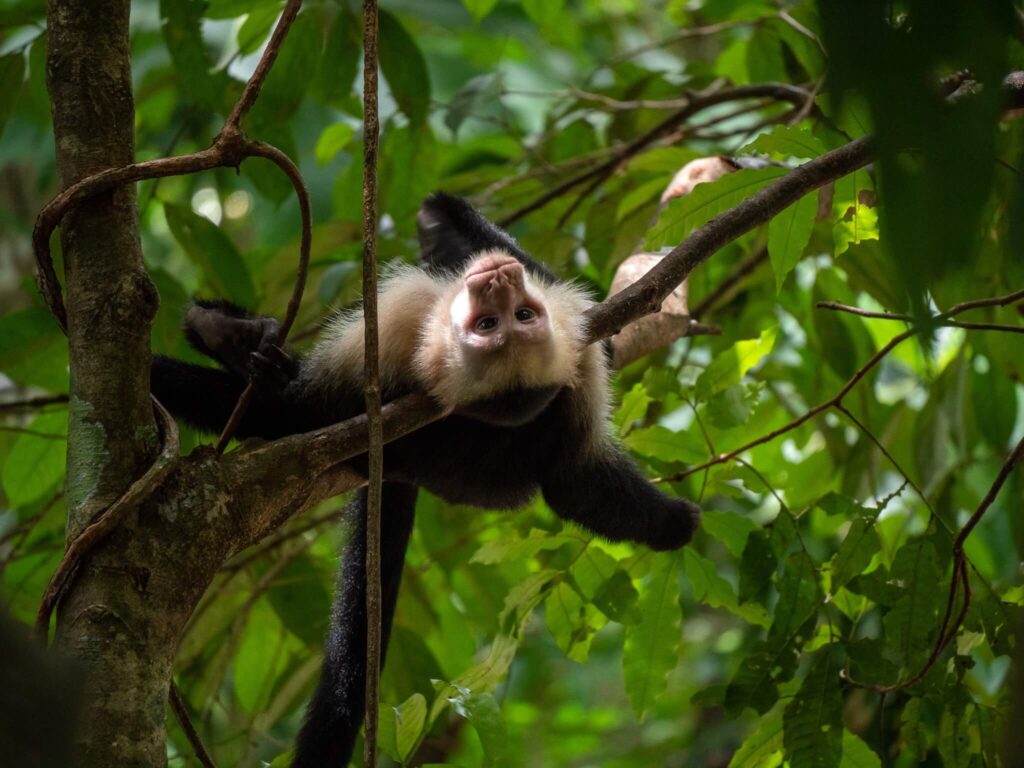
The animal is not respected
Animals, particularly large animals, need space. They can be unpredictable, change direction or speed at a moment’s notice and need space to be able to get away from you if they wish.
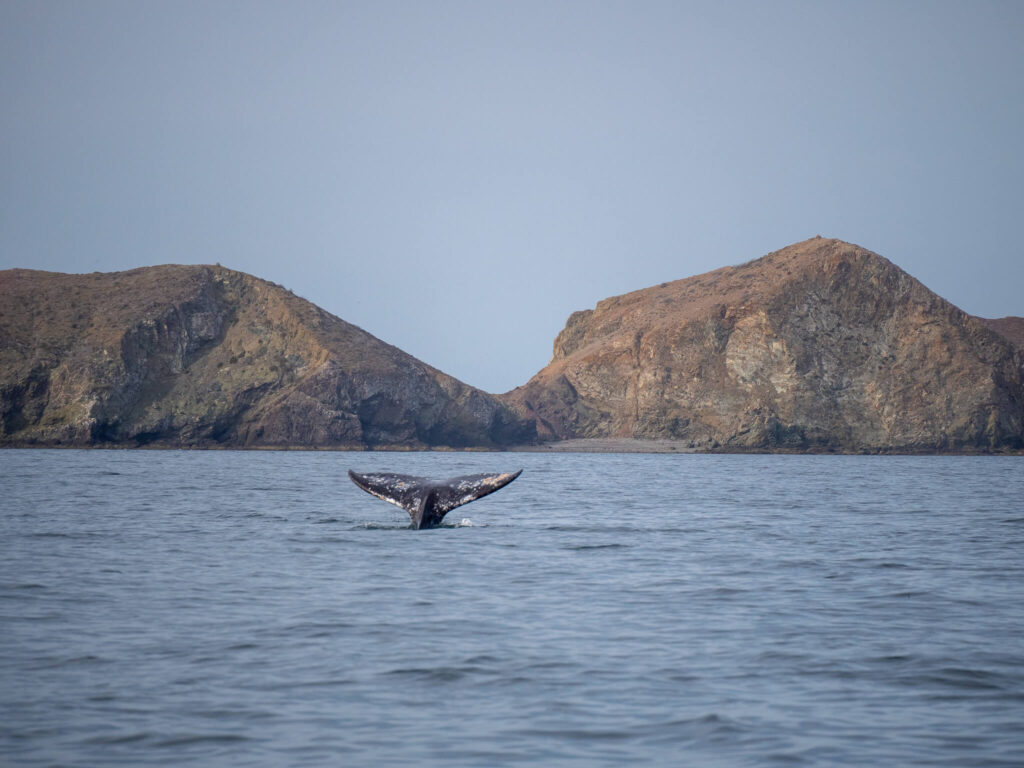
For example, in some parts of the world, there are much tighter restrictions for whale watching than in others. We recently spent 3 weeks whale watching around the shores of Baja California Sur, Mexico. We saw grey whales in Magdalena Bay, fin and blue whales in Loreto, and humpback whales in Cabo. And each time we came across the same experience, we would witness a boat from another company speeding towards the whale we had spotted, cutting the engine too late and getting too close. And each time the whale, rather than stick around, would dive and swim away.
Each boat trip we took was well-researched and always with a company that prioritised the wellbeing of the whales and adhered to the local whale watching guidance. And when we were away from other boats, we saw whales breaching, spy hopping, tail slapping and feeding – all signs that they were completely unbothered by our presence. Our boat always kept a distance and approached slowly from the regulated angle. We were able to witness far more natural behaviours and have more time with the whales than boats that just cared about making money off some tourists.
You can touch or hold the animal
This is another big red flag within wildlife tourism. Animals being touched or held by humans is highly unnatural for most species, so you have to ask how the animal came to be ok with the interaction.
In the case of tiger petting, the tigers are drugged so are docile enough to act as props for tourists’ selfies. I’m sure we’ve all seen Netflix’s Tiger King and were shocked by the lack of rules and regulations in place to protect tigers in the USA. Animals used for handling are often taken from their mothers too young, sedated, or subjected to cruel training to make them compliant.
Wild animals do not naturally seek human contact. There are rare exceptions to this, but you need to research them on a case-by-case basis.
Read next: The Truth about Swimming with Turtles in Akumal (Tulum), Mexico
The animal does not display natural behaviour
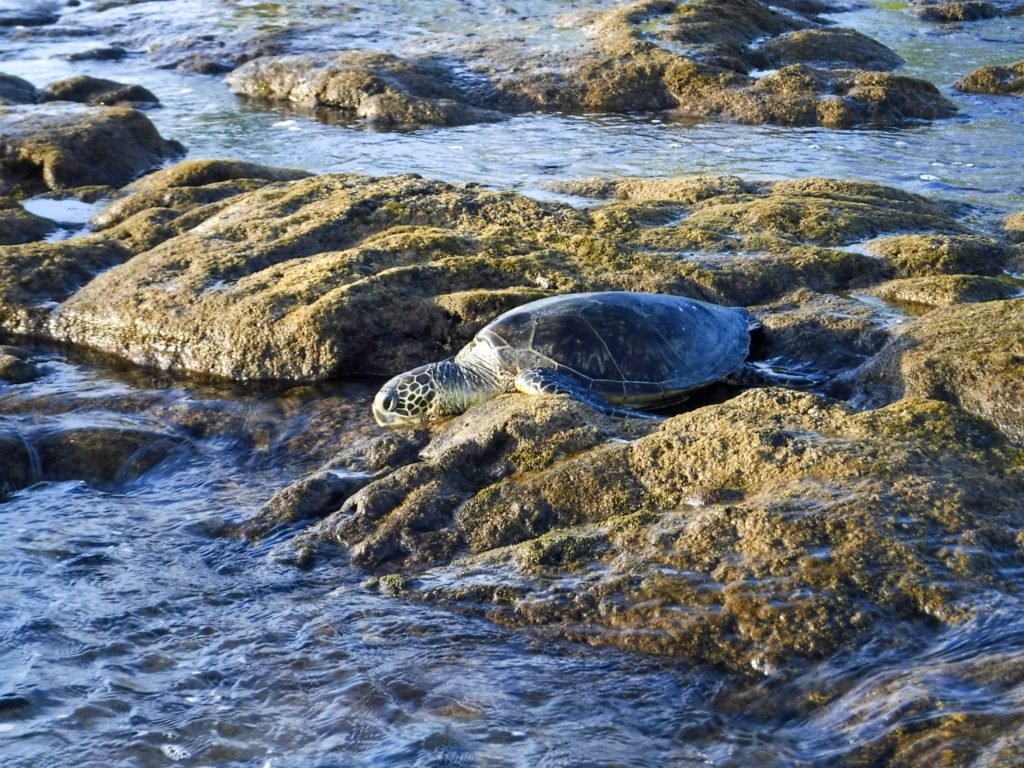
If an animal is behaving in ways that seem unnatural, like staying still for long periods, appearing overly tame, performing tricks, or constantly seeking human interaction, it’s likely a sign of stress, conditioning, or confinement.
Wild animals are naturally cautious, curious, or territorial, and their instincts rarely involve passive or submissive behaviour around humans. When they don’t act as they would in the wild, it often means they’ve been trained, sedated, or habituated to interact unnaturally. This suppression of natural behaviour can cause long-term psychological harm and is a strong indicator that the animal’s welfare is being compromised for tourism.
Unnatural environments (like living conditions being too small, overcrowded, unsanitary, or unsuitable for the species) can also lead to unnatural behaviours. If an animal is pacing, rocking, or showing signs of aggression, it’s a red flag that it’s under distress or discomfort from human interaction or poor conditions.
It’s not on the animal’s terms
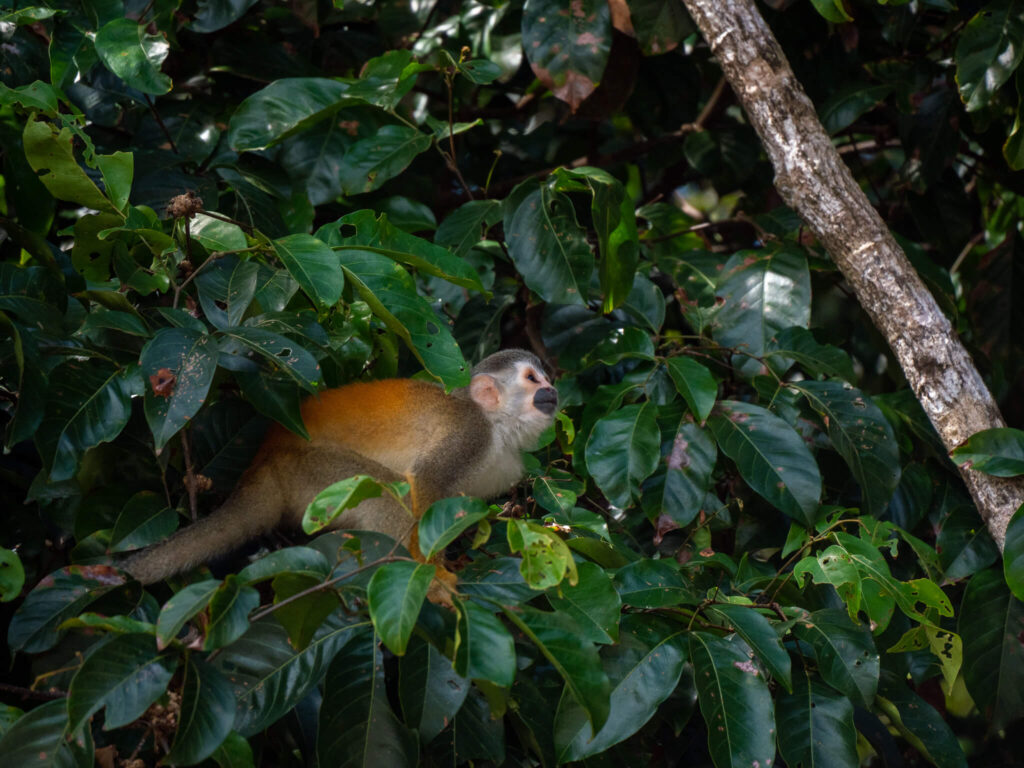
Any ethical wildlife encounter must happen on the animal’s terms, not ours. If the animal is unable to walk away, hide, say no, or choose whether to engage, then the interaction is not respectful or fair.
When animals are leashed, chained, confined, or otherwise restricted for our convenience or entertainment, it strips them of agency. If an animal is being coaxed, restrained, or conditioned to interact, it’s a clear sign that the encounter is about human wants, not animal welfare.
Ethical wildlife experiences allow animals to act freely and naturally, with minimal human interference.
Profit is prioritised over conservation
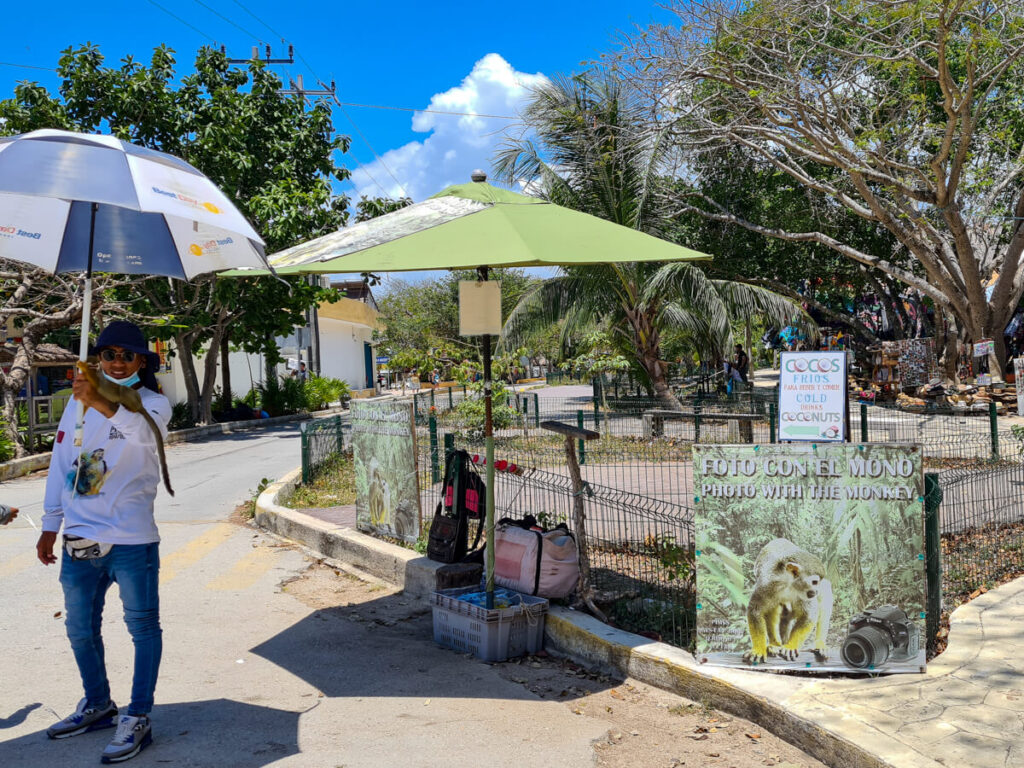
When an animal encounter prioritises making money over protecting wildlife and their habitats, it’s a major warning sign. Businesses focused on profit often cut corners on animal care, force unnatural interactions, or keep animals in poor conditions just to attract tourists.
Instead of supporting genuine conservation efforts, these operations exploit animals for quick financial gain. If the tour operator or facility refuses to answer questions about the animal’s care, origin, or the ethical standards they follow, it’s likely that they’re hiding exploitative practices.
Ethical wildlife tourism puts animal welfare and habitat preservation first. If profit comes before the animals’ needs, the encounter is likely exploitative.
Our top tips for booking ethical wildlife encounters
Read next: The Best Wildlife Photography Camera Settings
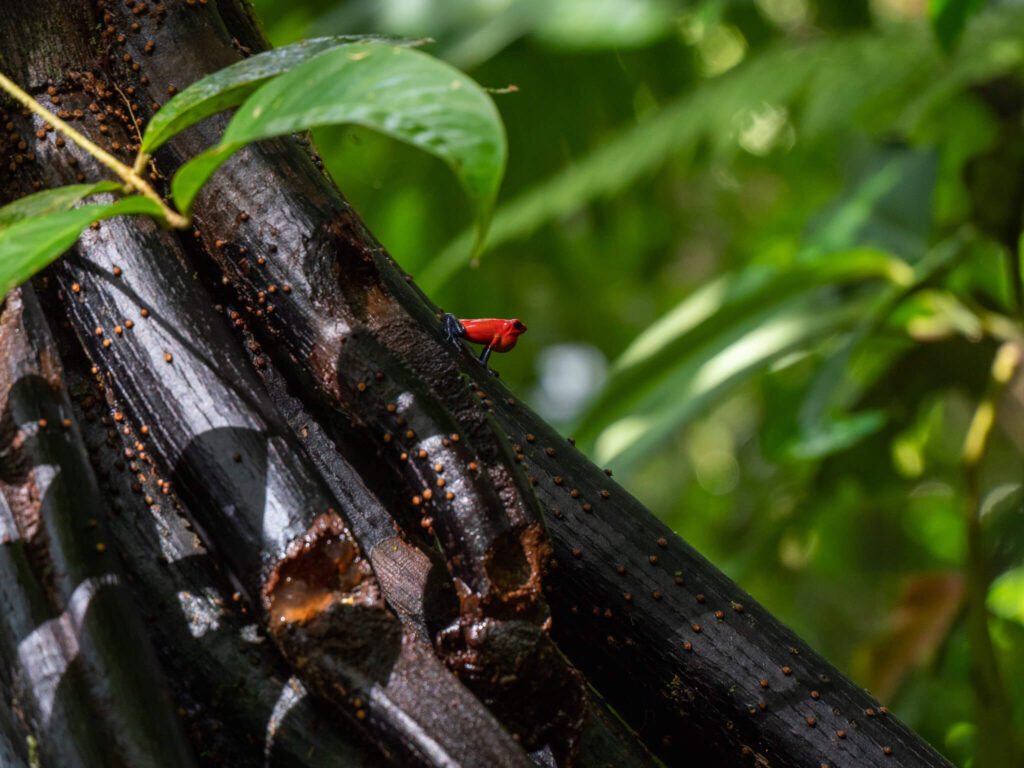
To simplify this whole article, make sure your next wildlife experience involves at least one of the following three things:
And if you still want to have closer wildlife encounters or simply learn more about a species, consider volunteering. Make sure to do your research and choose a legitimate volunteer programme that has the animals’ best interests at heart. We’d highly recommend Projects Abroad, which is a leading provider of international volunteering, internships and meaningful travel experiences.
Useful resources

Read next:








Check us out on social media!
