Where to Stay in Lake Atitlán: 12 Towns & Top Hotels

Discover where to stay on Lake Atitlán, from the best hotels on the lake to the top towns to explore, plus what to do and where to stay and eat in each village.

This post may contain affiliate links, which means we might earn a small commission on anything purchased through these links at no extra cost to you. Learn more on our disclaimer page.
Choosing where to stay on Lake Atitlán isn’t just about picking a hotel, but choosing the right town. It’s an even more important decision when you realise that the villages that line the lake’s edge all have very different atmospheres, budgets, and types of travellers they attract – so your base and accommodation will shape your whole stay.
Lake Atitlán was the first place we visited in Guatemala (and Central America), so we were really thrown in the deep end. We spent hours researching villages, hotels, activities, and restaurants before visiting, and days on the ground moving between the towns to see if they matched what we’d read online. We experienced both the peaceful side of the lake and the more hectic, tourist-heavy spots.
In this accommodation guide, we break down the main villages around Lake Atitlán and explain who each one is best for, along with accommodation options for different budgets. We’ve also listed our favourite things to do in each town, where to eat, and how to get around. Whether you’re looking for nature, culture, or a place to slow down, this will help you decide where to stay and what to prioritise around the lake.
Lake Atitlán Towns at a glance

More from Lake Atitlán
The best Lake Atitlán hotels
Instead of choosing a town or village to add to your Guatemala itinerary, you might find yourself drawn in by Lake Atitlán’s hotels themselves. There are some viral hotels that we see on Instagram all the time, while others remain quietly luxurious. Some accomodations aren’t even in towns, perching on the hillsides in secluded coves along the lake instead. If you just want a peaceful place to stay to enjoy the volcano views, paddle on the lake, and simply enjoy where you’re staying, here are the top hotels on Lake Atitlán.
Top Lake Atitlán Hotels
Top Lake Atitlán Hostels

The best towns to stay in Lake Atitlán
Choosing where to stay on Lake Atitlán can be really overwhelming, especially when there’s no chance you’ll be able to visit all the different villages around the lake on one visit. So when planning a Guatemala trip, you need to choose where to use as a base, where to visit on day trips, and where to skip.
The main 11 towns on Lake Atitlán are:
Set slightly back from the shoreline, you’ll also find Santa Clara La Laguna, a highland town above the lake, San Pablo La Laguna, known for its weaving cooperatives, and Sololá, between Panajachel and Santa Cruz La Laguna.
We’re going to delve into each of the villages, their differences, pros, and cons, along with the other towns on the lake that are quieter alternatives or better day trip options.

Lake Atitlán Villages Map
Lake Atitlán is one of the best places to visit in Guatemala, so it’s often referred to as one destination. But in reality, it’s a collection of around a dozen small towns and villages dotted around the lake’s shore, each with its own appeal. We’ve highlighted them all on the map of Lake Atitlán villages below.
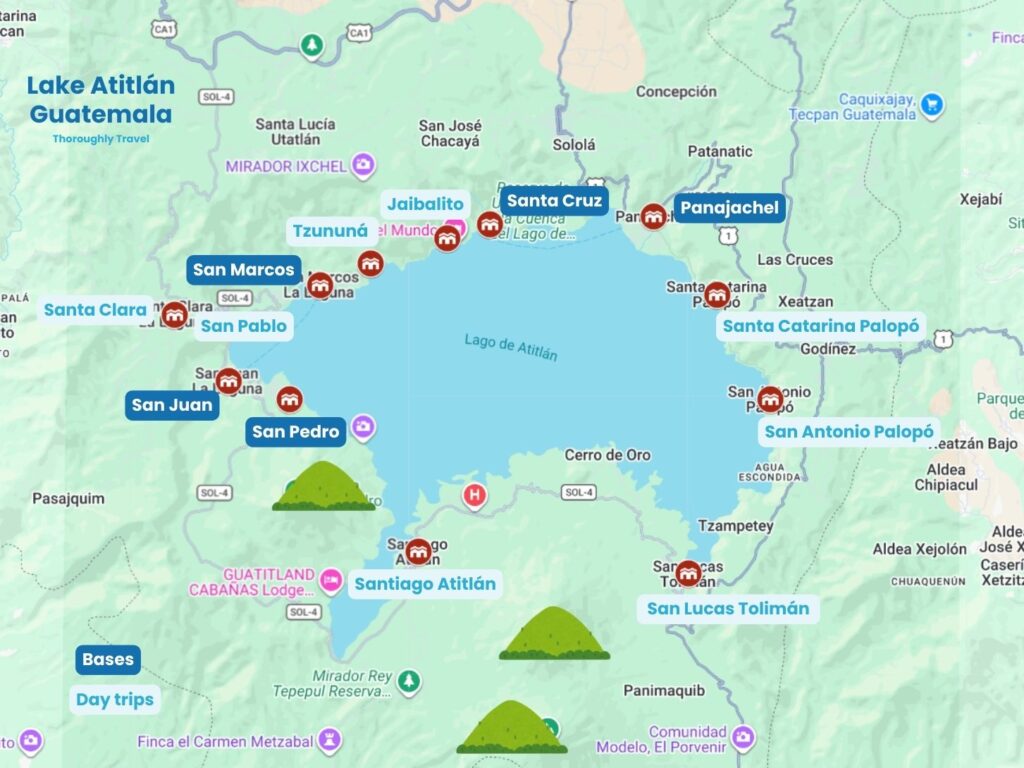
Where to stay on Lake Atitlán
There are over a dozen towns and villages on the shores of Lake Atitlán, but tourists only really visit a couple of them on each trip. It’s best to choose one or two to stay in, and then a handful to take day trips to.
Most visitors to Lake Atitlán stay in one of the five main towns:
Each town in Lake Atitlán has its own feel, amenities, and access to activities, so your choice depends on what you want to do, how social or quiet you like your evenings, and whether you plan to move around the lake frequently.

1. Panajachel
Nestled on the northern shore, Panajachel (or Pana as it’s nicknamed) is the most developed and accessible town and the gateway to Lake Atitlán. It’s the transport hub for chicken buses and boats to other villages, and most tourist shuttles from around Guatemala arrive here.
Pana is home to a variety of accommodation, from budget hostels to boutique lakeside hotels, and plenty of restaurants, cafés, and shops. If you need access to amenities like ATMs, supermarkets, WiFi, and shops to buy SIM cards, this is the place to be.
The town itself has a lively street market and a waterfront promenade, the malecón, perfect for walking, sunset views, and photography. It has a main street, Calle Santander, which is lined with souvenir shops, restaurants, market stalls, and travel agencies selling tours around Lake Atitlán and shuttles around Guatemala. It ends at Playa Publica, the main viewpoint on the shoreline, with views of the lake and volcanoes. Panajachel is also a great base if you’re interested in adventure activities like paragliding, taking an ATV tour, or visiting the Atitlán Nature Reserve (which you can even stay in).
While the pros cover amenities and adventure tours, the cons of staying in Panajachel are that it’s busy, noisy, and touristy. It’s more built up than other villages, most accommodation isn’t on the water, and it’s not got that super authentic Mayan feel other villages have. You can still find quiet spots along the lake if you’re willing to walk a few blocks from the centre, though.
Its ease of access makes Pana a natural base for first-time visitors, as you’ll likely arrive here after getting to Lake Atitlán, but it’s not the most exciting town (in our opinion). You can get a similar level of amenities in San Pedro, without the hecticness. Though vibe-wise, San Pedro leans more towards backpackers, whereas Pana is more multicultural.
Best things to do in Panajachel
Top restaurants in Panajachel
Where to stay – top hotels in Panajachel
2. San Pedro La Laguna
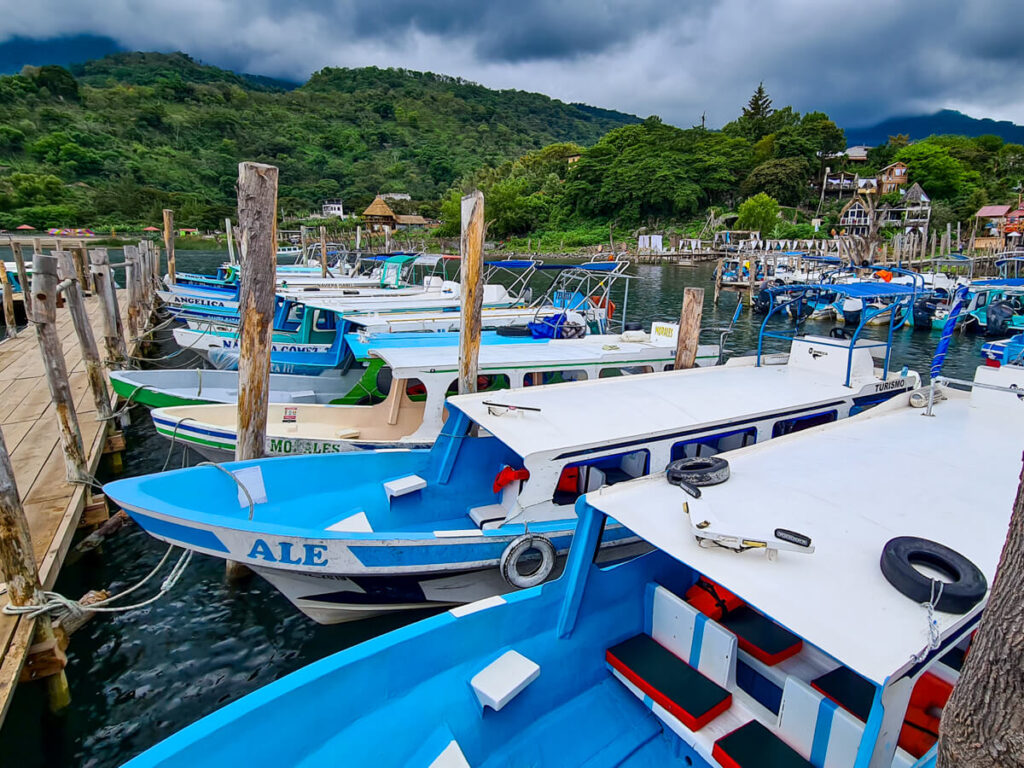
San Pedro La Laguna is the backpacker hub of the lake, attracting younger travellers and those looking for nightlife, social hostels, and Spanish schools. It’s one of the most popular towns on Lake Atitlán, with a great range of amenities. Accommodation ranges from dorms to mid-range boutique hotels, and there are plenty of cafés, yoga studios, and local eateries.
It has a bit of a reputation for being noisy, but it’s spread out enough that you can find peaceful parts on the outskirts, too. Maybe it’s because we visited in the wet season, but we really didn’t find it that lively. The party vibe is mostly centred on the lake’s shoreline, and as you climb uphill towards Parque La Puerta Hermosa, it gets quieter and more local.
The town is set on the southwest shore, beneath the looming San Pedro Volcano (Volcán San Pedro), giving it dramatic scenery and excellent hiking options. Of course, this does mean that you don’t get those classic volcano views across the lake, but we found its vistas of the misty mountains just as impressive. Plus, hiking the volcano itself is one of the top things to do in Guatemala.
San Pedro is the place to go to meet fellow travellers and join group hikes. San Pedro also has a small but notable community of Israeli expats, which influences the town’s café scene, restaurants, and social vibe – you’ll often hear Hebrew spoken alongside Spanish and English, and you can find amazing falafel at local eateries.
Layout-wise, the village is steep, so be ready for hills and stairs. The centre’s pretty compact, so it’s easily walkable, with everything you need all in one place. It has a maze of streets, all interconnecting, but that does mean it can feel a bit claustrophobic if you’re not on the lake or the edges of town. It’s also decorated in street art (although not as much as San Juan), which is super pretty.
San Pedro is a great base to explore other towns on Lake Atitlán, including San Juan, San Marcos, and Santiago Atitlán. It’s full of operators you can book tours through, and is one of the key pickup points for the Indian Nose Hike. It’s also one of the few towns that tourist shuttles stop in, so you could arrive and depart from here without needing to go to Panajachel.
Best things to do in San Pedro La Laguna
Top restaurants in San Pedro La Laguna
Where to stay – top hotels in San Pedro La Laguna

3. San Juan La Laguna
Set on the southwest shore, a short boat ride or tuk-tuk from San Pedro, San Juan La Laguna is our favourite village on Lake Atitlán. It’s quieter and more arts-focused than other places on the lake, known for its local art projects, weaving collectives, and local cooperatives.
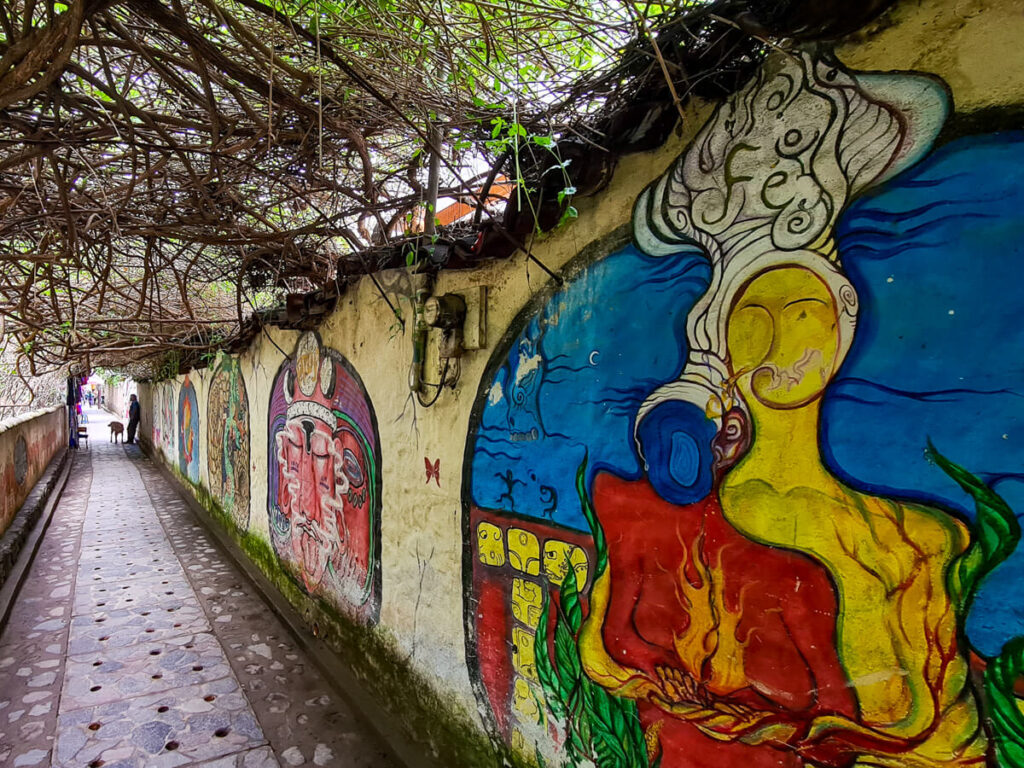
San Juan is the most beautiful town in Lake Atitlán, with countless murals, rainbow-coloured avenues, and the iconic umbrella street, which runs uphill from the dock. San Juan is even more colourful than the rainbow town of Flores in northern Guatemala. It’s home to painters, textile artists, and woodworkers who sell directly from small studios and cooperatives rather than mass-produced souvenir shops. Many pieces are one-of-a-kind and come with explanations of symbolism, dyes, and techniques used.
San Juan is predominantly Tz’utujil Maya, and the community is known for actively protecting its language, traditions, and cultural identity. Many cooperatives are women-led and focus on preserving traditional weaving methods using plant-based dyes like indigo and cochineal.
Accommodation here is modest but comfortable, with small lakeside guesthouses, boutique stays, and eco-hotels tucked into the hills. We spent a gorgeous few days in Eco-Hotel MayAchik’, a rustic, sustainable hotel set back from the town and surrounded by lush nature.
The downsides of staying in San Juan are that there are fewer amenities, cafés, and restaurants than in Panajachel or San Pedro, lanchas leave less frequently (so you might have to wait a little while for the boat to fill before setting off), and the town is prone to power cuts (we experienced two in the week we spent there).
However, the town is perfectly positioned for the Indian Nose hike (El Rostro Maya), has its own mirador (viewpoint) called Mirador Kaqasiiwaan, and is a great base for exploring towns like San Pedro, San Marcos, and Santiago Atitlán without needing to stay somewhere busier.
We were honestly shocked to read so many people recommend you DON’T stay in San Juan. For us, it’s the top pick for where to stay in Lake Atitlán. It has the most authentically Mayan vibe of all the towns and is ideal for travellers interested in culture, local art, and a quieter lakeside experience. We don’t regret choosing it as our base one bit.
Best things to do in San Juan La Laguna
Top restaurants in San Juan La Laguna
Where to stay – top hotels in San Juan La Laguna

4. San Marcos La Laguna
San Marcos La Laguna sits on the western side of Lake Atitlán and has built a reputation as the lake’s spiritual and wellness hub. It attracts a steady flow of yoga teachers, healers, long-term expats, and travellers on everything from meditation retreats to cacao ceremonies. The town itself is small and mostly pedestrian, with steep paths, stone steps, and greenery everywhere, giving it a tucked-away, almost jungle-like feel.
Unlike Panajachel or San Pedro, San Marcos doesn’t revolve around nightlife or backpacker culture. Instead, days here are shaped by yoga schedules, sound baths, breathwork sessions, and sunset swims in the lake. It’s also one of the best places around the lake for swimming, with several dedicated lake access points and platforms where the water is deep, clean, and calm.
Accommodation in San Marcos ranges from simple guesthouses and eco-lodges to higher-end retreat centres and boutique hotels, many hidden in the hills or perched directly above the water. Restaurants and cafés lean heavily toward plant-based, organic, and international cuisine, often catering to gluten-free, vegan, and raw diets. Traditional Guatemalan food is available, but it’s not the focus here.
San Marcos is not for everyone. Some travellers find the town’s spiritual scene inspiring and grounding, while others feel it lacks authenticity and connection to local Maya culture. We love yoga, eat predominantly plant-based, and were looking for a place to unwind on Lake Atitlán, so on paper, San Marcos ticks all the boxes. But sadly, San Marcos is a classic example of extractive tourism, where the town’s popularity has grown largely at the expense of local communities. Almost all visible indigenous culture has been diluted or pushed out of the centre, replaced by retreat centres, wellness businesses, and foreign-owned cafés that cater almost exclusively to international visitors. Many of the people who stay here are more interested in drugs and ecstatic dance than culture, and are not engaged with the local economy beyond renting property and attending retreats, which has driven up rents and made housing less accessible for local families. Traditional livelihoods have been replaced by service roles tied to tourism, and Spanish is often secondary to English in daily interactions. Visiting San Marcos from San Juan was a real culture shock, and we didn’t want to stay long.
It’s not all bad, though. The town does have some of the best volcano views in Lake Atitlán, it’s got a good local chocolate scene led by small-scale producers, and is the base for the beautiful Cerro Tzankujil Nature Reserve, one of the most beautiful public swimming spots on the lake.
If you’re seeking stillness, self-reflection, and lake swims between yoga classes, San Marcos can be a beautiful base. Just be mindful of how you travel here: choose locally owned accommodation, eat at places that employ local staff, and avoid retreat centres that operate as closed bubbles disconnected from the community.
Best things to do in San Marcos La Laguna
Top restaurants in San Marcos La Laguna
Where to stay – top hotels in San Marcos La Laguna
5. Santa Cruz La Laguna
Perched dramatically on the northwest shore, Santa Cruz La Laguna clings to the cliffs above Lake Atitlán and feels worlds away from the busier towns, despite being relatively close to Panajachel. It’s split into two distinct areas: the upper village (where the local Kaqchikel Maya community lives) and the dock/lakeside area, where most hotels and restaurants are located. Most visitors never venture uphill, which means the town retains a quieter, more local feel than places like Panajachel or San Pedro.
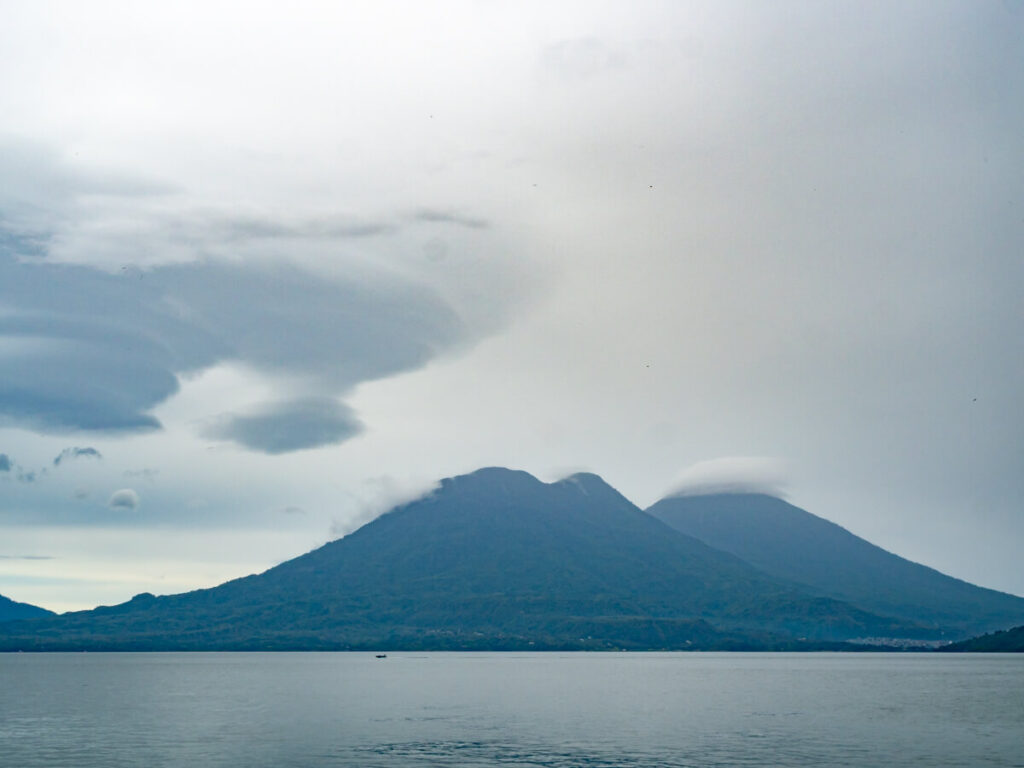
Accommodation here is more mid-range to luxury, with gorgeous boutique hotels, eco-lodges, and lakefront stays that make the most of the views. Many places are only accessible by boat and small footpaths, giving Santa Cruz a secluded, private feel. It’s not the place for nightlife or social hostels, but if you want to wake up to still water and volcano silhouettes (you can see all three volcanoes at once), this is one of the best spots on the lake.
Santa Cruz is also one of the best bases for hiking around Lake Atitlán. Trails connect the upper village to neighbouring towns like Jaibalito and Tzununá, passing through coffee fields, forested slopes, and viewpoints that most travellers never see. Swimming and kayaking are excellent here too, thanks to calmer waters and fewer boats than the main hubs.
The main downsides to Santa Cruz are price (it’s not the most budget-friendly town) and accessibility. The village is steep, with lots of stairs, and getting around almost always involves walking uphill or catching a lancha. There are very few amenities like shops, ATMs, or late-night options, so it pays to plan ahead. You’ll also have limited restaurant options, unless you self-cater, with a few on the shoreline and a couple more in the town (a trek or tuk-tuk uphill).
If your idea of Lake Atitlán involves slow mornings, book-in-hand afternoons, and uninterrupted volcano views, this is a great choice. Santa Cruz offers the classic lake experience, and if you’re more interested in a nice accommodation option than the town itself, this is hard to beat. Plus, Santa Cruz arguably has the best volcano views in Lake Atitlán.
Best things to do in Santa Cruz La Laguna
Top restaurants in Santa Cruz La Laguna
Where to stay – top hotels in Santa Cruz La Laguna

6. Jaibalito
Jaibalito is a tiny, quiet hamlet tucked into the north-west shore of Lake Atitlán, sitting between Santa Cruz La Laguna and Tzununá. It’s one of the smallest settlements on the lake, and most visitors arrive either on foot via the lakeside hiking trails or by lancha for lunch and a swim.
It has similar views and vibe to Santa Cruz, but harder access and fewer amenities, so there’s not much reason to stay in Jaibalito if you’re not super in love with your accommodation. We’ve only included it as a recommendation of where to stay because it’s home to the famous La Casa del Mundo, which is widely considered one of the top hotels on Lake Atitlán.
There are almost no amenities, shops, or nightlife, and very limited transport options, which can feel isolating. If you’re keen to stay here, we’d recommend combining it with another town like San Pedro, so you get to experience both sides of the lake.
Best things to do in Jaibalito
Top restaurants in Jaibalito
Where to stay – top hotels in Jaibalito

Where not to stay on Lake Atitlán
While every village around Lake Atitlán has its charm, some are better suited for day trips than as a base. Limited infrastructure, longer lancha rides, and fewer activities can make longer stays less convenient in some places. That said, we’ve included standout accommodations in each village in case a place particularly speaks to you.
7. Santiago Atitlán
Santiago Atitlán sits on the southern shore, tucked inside a sheltered inlet beneath San Pedro and Tolimán Volcanoes. It’s one of the largest towns on the lake and culturally one of the most significant, home primarily to the Tz’utujil Maya. While you’ll see local women dressed in colourful embroidered huipiles in towns like San Juan, Santiago Atitlán is one of the few places where you can also see some men wearing traditional Maya attire.
The town is known for its colourful market, religious processions, and the unique cult of Maximón, a controversial folk saint blending pre-Hispanic Maya beliefs with Catholic elements introduced during Spanish colonisation. Maximón (also known as San Simón) is a syncretic deity and is often portrayed as a cigar-smoking, alcohol-drinking figure dressed in scarves and a suit. He’s represented as a life-sized effigy that resides in a private home within the village’s alleyways, which changes annually. You can ask local residents where he is or hire a tuk-tuk driver upon arrival to find his current location, where you can enter the shrine, take photos (usually for a small fee), and see locals bringing offerings of cigarettes, alcohol, and money.
Visiting Santiago Atitlán without a guide can feel disorienting, so many travellers opt for a guided cultural day tour, rather than using Santiago Atitlán as a base to stay in. Staying overnight can be challenging anyway, due to limited accommodation options, fewer restaurants, and a lack of tourist-orientated amenities. But the town is an easy day trip from the southern villages like San Pedro and San Juan.
The main reason you might wish to stay here is its close proximity to the trailheads for climbing Atitlán and Tolimán Volcanoes. Staying here is best for early starts to catch sunrise from the summit, and most accommodations can help arrange guides and transport for the treks.
Best things to do in Santiago Atitlán
Where to stay – top hotels in Santiago Atitlán

8. Tzununá
Tzununá sits on the western shore, roughly halfway between Jaibalito and San Marcos. It’s more of a scattered lakeside settlement than a defined village, with homes, yoga centres, and guesthouses spread out along the road and shoreline.
Many people visit Tzununá while hiking between towns on the Lower Mayan Trail or as a calmer alternative to San Marcos for a swim or café stop. The lake access here is excellent, and the vibe is noticeably quieter and more grounded than in San Marcos. The town also has more local roots, with a strong sustainability scene, with the popular permaculture farm Atitlán Organics being a popular day trip.
That said, Tzununa lacks a centre, has minimal transport links, and very few shops or restaurants. Staying here can feel inconvenient unless you’re attending a specific retreat or already know the area well.
Best things to do in Tzununá
Where to stay – top hotels in Tzununá
9. Santa Catarina Palopó
Santa Catarina Palopó sits on the north-east shore of the lake, just a short drive or boat ride from Panajachel. It’s famous for its brightly painted buildings, part of the Painting the Change (Pintando el Cambio) community-led art project that has transformed the town into one of the most photographed spots on Lake Atitlán.
You can comfortably see Santa Catarina in an hour or two. Wander the streets, take photos of the artwork, admire some of the 850 houses and buildings that have been decorated, and enjoy the views from the shoreline.
There’s very little in the way of shops or activities beyond this, which is why it works best as a day trip, but if you’re keen to stay here, Tzampoc Resort is one of the most luxurious resorts on the lake, with elegant rooms and an infinity pool, while Hotel Casa Palopó offers stylish boutique accommodations and a renowned restaurant overlooking the water.
Best things to do in Santa Catarina Palopó
Where to stay – top hotels in Santa Catarina Palopó

10. San Antonio Palopó
Located on the eastern shore, San Antonio Palopó is best known for its distinctive blue-and-white pottery, which you’ll see sold across Guatemala. The town itself is traditional and conservative, with a strong Kaqchikel Maya presence. It’s not geared towards tourism, which makes it interesting to visit but less comfortable to stay in unless you’re very intentional about it.
This is one of the best places to take part in a cultural workshop, like a hands-on pottery-making class.
San Antonio Palopó is frequently overlooked in favour of its more vibrant neighbour, Santa Catarina Palopó, but since they are small and close together, you can easily visit both in one day, either from Panajachel or Santa Cruz.
Best things to do in San Antonio Palopó

11. San Lucas Tolimán
San Lucas Tolimán lies on the south-eastern shoreline, nestled into a peaceful inlet with Tolimán Volcano towering above it. It’s a working town with strong agricultural roots, particularly in coffee production.
Many people visit on organised day trips focused on community development projects, coffee cooperatives, or church-run initiatives. It’s also a scenic place to wander, with lake views, gardens, and far fewer tourists than other southern shore towns.
However, as a base, it can feel isolating. There are only a handful of places to eat, limited accommodation, and fewer boats than in the main hubs.
You probably won’t make it here unless you’ve got absolutely ages or it particularly appeals to you.
Best things to do in San Lucas Tolimán

12. Santa Clara La Laguna
We’ve covered the 11 lakeside villages, but there are a couple more towns on Lake Atitlán, from San Pablo La Laguna, which sits just uphill from Santa Clara La Laguna and is a quiet, traditional Tz’utujil village, to Sololá, the departmental capital perched above the lake near Panajachel.
Santa Clara La Laguna is the most notable town left to mention. It sits above the lake, uphill on the western side, and unlike most towns listed here, it doesn’t sit directly on the shoreline, which immediately changes the experience.
You might wonder why you’d bother visiting if it’s not lakeside, but Santa Clara La Laguna stands out for its hiking. The town is close to the Indian Nose trail and offers stunning views over San Juan towards San Pedro, especially at sunrise.
The cooler climate and elevated position make Santa Clara feel very different from the lakeside villages. As a base, it’s pretty impractical for most travellers due to limited accommodation and transport, but as a day trip for hiking and viewpoints, it’s one of the most rewarding spots around Lake Atitlán.

How to choose where to stay on Lake Atitlán
There are a few things to consider before booking Lake Atitlán accommodation, from location and accessibility to budget and amenities.
Accommodation
Lake Atitlán has a surprisingly wide range of accommodation for such a rural area, from backpacker hostels and family-run guesthouses to boutique hotels and high-end eco-lodges.
It’s worth considering whether you’re more interested in the accommodation itself or the town that it’s in. If you’re going to be spending all day out and about, you might want to go for a cheaper hotel somewhere more central. If you want to chill in your resort, it’s worth spending a little more on a comfortable base.
In quieter villages, accommodation options can be limited, making advance booking important, especially in high season. If lake views are a priority, be prepared to trade a bit of convenience for scenery – the best time to visit Guatemala for views of the lake and volcanoes is the dry season, between November and April.
Amenities
Access to amenities varies hugely depending on the village you choose. Some towns have ATMs, pharmacies, laundries, and well-stocked mini-markets, while others have little more than a handful of cafés and a dock. Hot water, air conditioning in the warm season, and heating at night in the rainy season aren’t always guaranteed, even at higher price points, so it’s worth checking the reviews before booking.
Power cuts and water shortages do happen, especially in more remote areas, and some eco-lodges intentionally limit electricity overnight – both of which we experienced in San Juan.
Reliable Wi-Fi is common in digital nomad-friendly villages like San Marcos, but much spottier elsewhere. If you need to work, take online classes, or rely on regular cash access, this should be a major factor in your decision.
Many properties are built directly into the hillside or perched right on the water, which means incredible views but also plenty of stairs, which isn’t great if you have mobility issues.
Activities
Different villages naturally lend themselves to different activities. Some are well placed for volcano hikes (San Pedro and Santiago Atitlán), others for kayaking, swimming, or paddleboarding (Panajachel, Santa Cruz, and Jaibalito), and a few are hubs for yoga, meditation, and wellness retreats (San Marcos). Language schools are clustered in certain towns (Panajachel and San Pedro), while guided hikes and cultural tours are easier to arrange from larger villages (Panajachel, Santiago Atitlán, San Pedro, and Santa Cruz La Laguna).
If you’re planning day trips, remember that boats don’t run late at night and can be cancelled due to weather. Some tours only run from certain villages, like the Indian Nose hike (Rostro Maya), where tour guides only pick up from San Juan, San Marcos, and San Pedro. Staying close to the activities you care about most will save you time, money, and a lot of logistical friction.
Atmosphere
Lake Atitlán’s villages really diverge when it comes to vibes. Some places are social and lively, with backpacker bars, live music, and a steady flow of short-term visitors (San Pedro).
Others are deeply traditional, quiet, and conservative, where nightlife is minimal and daily life revolves around local routines (San Juan and Santiago Atitlán).
A few villages attract long-term expats, spiritual seekers, or retreat-goers, which can feel either grounding or gentrified depending on your perspective (San Marcos). It’s worth considering each town (we’ve got a full breakdown below) and choosing the base that best matches your interests.
Travel times
Getting around Lake Atitlán takes longer than it looks on a map. The shoreline is around 60 miles (100 km) in perimeter, so circumnavigating it takes a while, not to mention all the mountains around the lake’s edge that you add to the journey time.
Public boats (called lanchas) are the main form of transport, but schedules (if there are any) vary by village, weather conditions, and time of day. A crossing that takes 15 minutes in the morning can double in the afternoon once the wind picks up.
Road travel is possible between some villages, but routes are steep, winding, and slow, with limited public transport options. Tuk-tuk is the main mode of transport here, which isn’t fast. If you plan to move around frequently, staying near a well-connected dock can make a big difference.
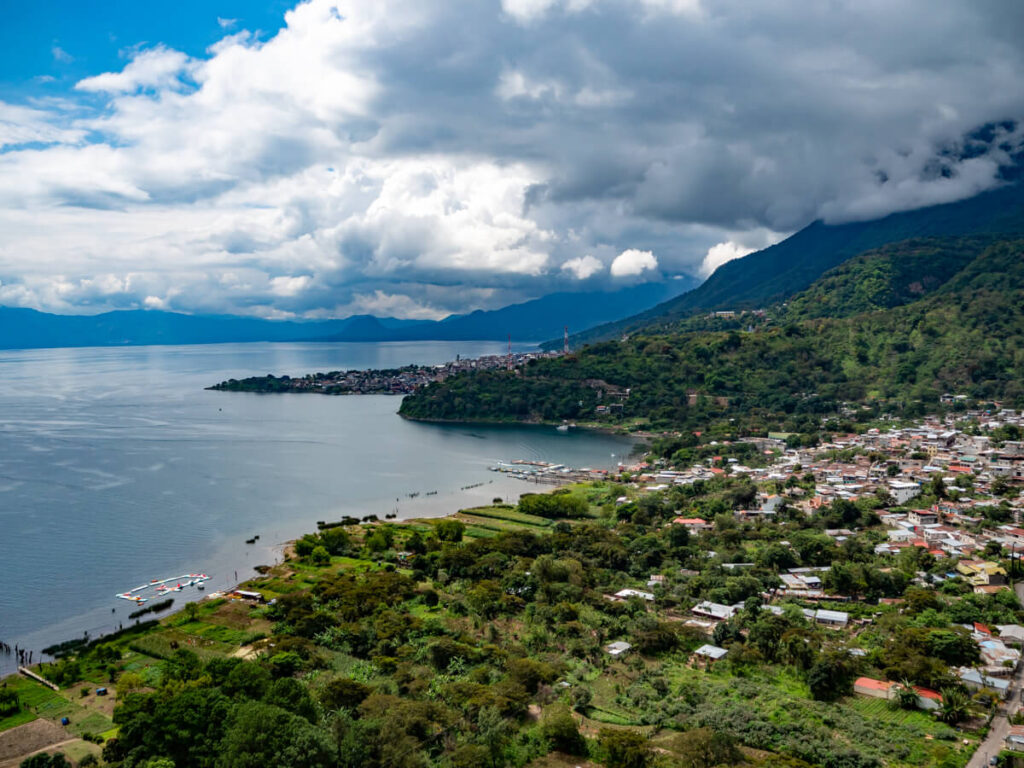
Our experience staying in Lake Atitlán
Generally, these kinds of Lake Atitlán accommodation guides all recommend the same places to stay – there are only a few main towns for tourists, Panajachel, San Pedro, and San Marcos, with Santa Cruz being the classic lakeside option, after all. But we really think that San Juan is slept on and couldn’t have picked a better base for our trip.
We’re so shocked when we hear people say San Juan’s not worth staying in – to us, it’s the best place to stay in Lake Atitlán. It’s super pretty, has easy access to San Pedro for bars, restaurants, and amenities, and San Marcos for yoga, but it’s small enough that there are no tourist crowds and it still feels authentically Guatemalan. It’s close to the Indian Nose hike, the volcano hikes, and day trip towns like Santiago Atitlán and Santa Catarina Palopó, without being overcrowded or too touristy. If we went back, we’d probably go back to San Juan, but we’d combine it with a few nights in Santa Cruz to have closer access to the northern shore, too.
My diary entry for Lake Atitlán said that it was so good for the soul, and that’s what most people visit for – the magic of the water and environment that allows you to slow down, when so much of Central America is hectic.

Lake Atitlán Villages & Hotels FAQs
To help you decide where to stay in Lake Atitlán, we have answered some frequently asked questions below.
How many towns does Lake Atitlán have?
Lake Atitlán has around 11 main towns and villages dotted along its shoreline, and a further 3 lesser-visited villages, each with its own character. Some are larger transport hubs, while others are small, quiet communities with just a handful of guesthouses and cafés, so you need to choose the base with the right vibe for you.
What is the main town on Lake Atitlán?
The main town on Lake Atitlán is Panajachel. It’s the primary transport hub, with direct shuttle connections to Guatemala City and Antigua. Panajachel has the widest range of hotels, restaurants, tour agencies, and ATMs, making it the most practical base, especially for first-time visitors.
Which town is best to stay in Lake Atitlán?
There’s no single best town on Lake Atitlan, as it depends on what you’re looking for. San Pedro is social and budget-friendly, San Marcos is quieter and wellness-focused, San Juan feels more local and creative, Santa Cruz is a lakeside retreat, and Panajachel is the most accessible. If you can, split your stay between two places to experience different sides of the lake (we’d choose San Juan and Santa Cruz).
Where is the best budget place to stay in Lake Atitlán?
The best budget place to stay in Lake Atitlán is usually San Pedro La Laguna. It has the highest concentration of hostels, cheap guesthouses, and long-term stays, making it popular with backpackers and Spanish students. We also found San Juan La Laguna very affordable, as it’s more local and less catered to international tourists.
Where to stay in Lake Atitlán for backpackers?
Backpackers typically stay in San Pedro La Laguna for its social atmosphere, affordable accommodation, and nightlife. Panajachel is another option for those wanting easier transport connections while still keeping costs down.
What is the party town on Lake Atitlán?
The party town on Lake Atitlán is San Pedro La Laguna. It has the most bars, late-night venues, and social hostels, especially around the lakeshore. While it’s not a full-on party destination, it’s the liveliest option on the lake.
What is the hippie town on Lake Atitlán?
The hippie town on Lake Atitlán is San Marcos La Laguna. It’s known for yoga studios, meditation centres, cacao ceremonies, and plant-based cafés. The atmosphere is slower, more introspective, and centred around wellness and alternative lifestyles.
Where to stay in Lake Atitlán for couples?
For couples, San Juan La Laguna and San Marcos La Laguna are both strong choices. San Juan offers a quieter, artsy feel with eco-lodges and lake-view cabins, while San Marcos leans toward romantic retreat-style stays. Santa Cruz La Laguna and Jaibalito are other peaceful options with boutique hotels and fewer crowds.
What are the best hotels in Lake Atitlán?
The best hotels in Lake Atitlán depend on your style and budget. You’ll find boutique eco-lodges with private lake access, mid-range hotels with volcano views, and higher-end retreats offering yoga decks and on-site restaurants. La Casa del Mundo is a famous hotel on Lake Atitlán, while Eagle’s Nest Atitlán is a great option for yoga. If you’re on a budget, Mr. Mullet’s, Free Cerveza, and Socialtel Atitlán are popular. And Eco-Hotel MayAchik’, Eco Hotel Uxlabil, and Fuego Eco Hotel are great sustainable stays.
How to get between towns in Lake Atitlán?
To get between towns in Lake Atitlán, you’ll mostly use public lanchas (small motorboats) that run regular routes along the shoreline. Tuk-tuks operate within individual villages, and colectivos connect some towns by road. Boats are the most common and scenic way to travel around Lake Atitlán – find out more in our guide to getting to and around Lake Atitlán.

Read next:
A Traveller’s Guide to Lake Atitlán: Itinerary & Essential Travel Information
25 Amazing Things to Do on Lake Atitlán
How to Get to Lake Atitlán & Getting Around by Boat + More
A Complete Guide to San Juan La Laguna: Lake Atitlán’s Artistic Town
A Succinct Guide to San Pedro La Laguna: Lake Atitlán’s Backpacker Town
A Short Guide to San Marcos La Laguna: Lake Atitlán’s Hippie Town
10+ Best Lake Atitlán Hikes & Trails From Easy to Expert
How to Hike to Mirador Kaqasiiwaan & El Rostro Maya (Indian Nose)
Our Eco-Hotel MayAchik’ Review: Sustainable Hotel in Lake Atitlán
Our Guatemala Destination Guides:
Our Guatemala Travel Guides:
