Where to Stay for Durmitor National Park: Top Hotels in Žabljak & Beyond

Discover the best places to stay near Durmitor National Park, including best bases and top accommodations from budget hostels and boutique hotels to wooden cabins and Eko Katuns.
This post may contain affiliate links, which means we might earn a small commission on anything purchased through these links at no extra cost to you. Learn more on our disclaimer page.
Choosing where to stay in Durmitor National Park can make a huge difference to your experience. While most visitors base themselves in Žabljak for its convenience, staying further afield can offer a quieter, more immersive experience, from remote mountain cabins surrounded by nature to traditional etno villages.
We stayed in two parts of Durmitor while exploring the park and realised that accommodation here is part of the experience. Waking up to views of the mountains, sitting outside our wooden cabin with a coffee before a long hike, and having a cosy place to return to after a day outdoors made us appreciate the area even more.
In this accommodation guide, we’ve rounded up the best places to stay for Durmitor National Park, including cosy cabins, unique mountain stays, budget hostels, boutique hotels, local guesthouses, and the best options for every budget. Whether you’re visiting for hiking, a Montenegro road trip, or simply want to experience one of the country’s most beautiful regions, we’ll help you find the perfect base.
Top hotels in Durmitor National Park

More from Durmitor National Park
Where to Stay for Durmitor National Park
Choosing where to stay in Durmitor National Park depends on the type of experience you’re looking for. Here are the most popular places to stay near Durmitor National Park:
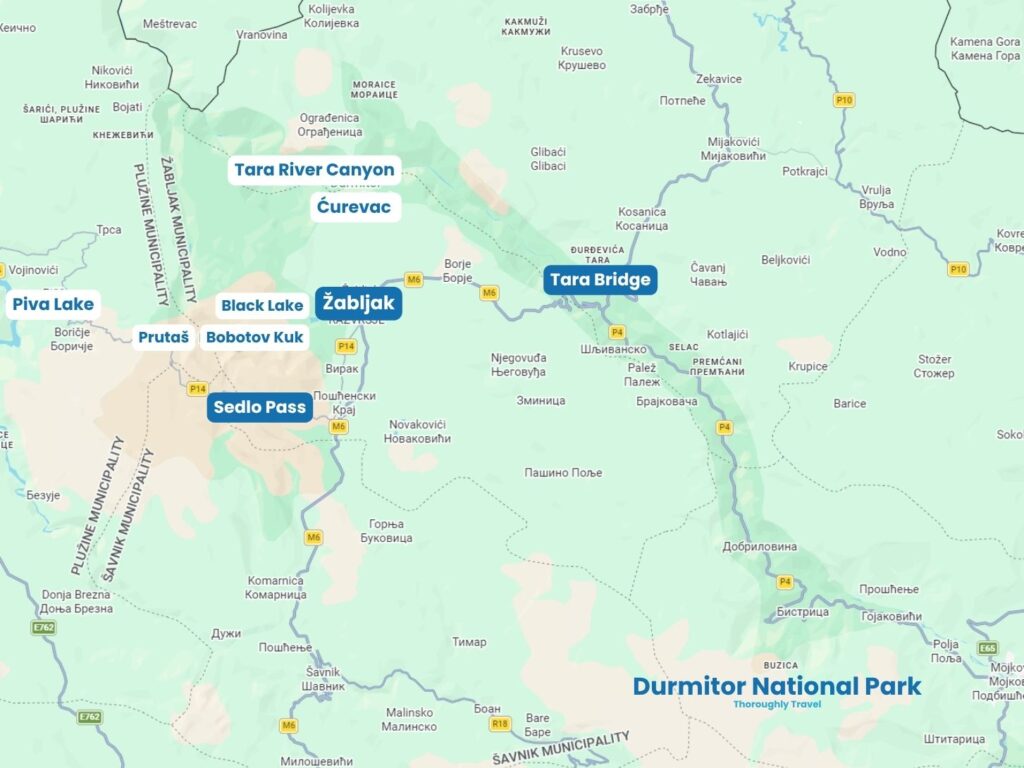
1. Žabljak
Žabljak is the most popular place to stay when visiting Durmitor National Park, and for good reason. Sitting at around 1,456 metres (4,777 ft) above sea level, it is the highest town in the Balkans and the main hub for exploring the surrounding mountains.
Its biggest advantage is convenience. From Žabljak, you can easily reach the Black Lake, the Durmitor Ring Road, Savin Kuk, and many of the park’s most popular hiking trails, while still having access to supermarkets, restaurants, cafés, and tour operators.
That said, Žabljak is much more of a practical mountain base than a charming alpine town. We didn’t really vibe with the centre, which feels quite built around tourism and can become chaotic and congested in summer, with cars parked wherever people can squeeze them and drivers making some questionable manoeuvres. There also isn’t a huge amount to do in the town itself once you’ve finished exploring the mountains.
If you’re travelling without your own vehicle, Žabljak is by far the easiest place to stay, thanks to its bus connections and range of accommodation options.

2. The Countryside
For a quieter and more authentic experience, consider staying in the countryside surrounding Durmitor National Park. Small villages and rural properties offer a completely different atmosphere from Žabljak, with open landscapes, traditional homes, and uninterrupted views towards the mountains.
Areas around villages such as Bosača and Njegovuđa allow you to slow down and experience the mountain lifestyle rather than simply using the area as a base. We stayed in a beautifully remote cabin with views of Savin Kuk near Novakovići for the first part of our stay, transferring to Guesthouse Planinarski dom Neviđen’o near Pitomine for our final few days.
This is where you’ll find some of the most memorable stays, from wooden cabins surrounded by forests to family-run guesthouses where homemade meals and local hospitality are part of the experience.
However, without your own rental car, reaching these remote stays can be difficult, and you’ll need to plan ahead for food, supplies, and getting to attractions. However, if you’re road-tripping Montenegro and value peace over being close to restaurants and services, this is arguably the more rewarding option.

3. Inside the national park
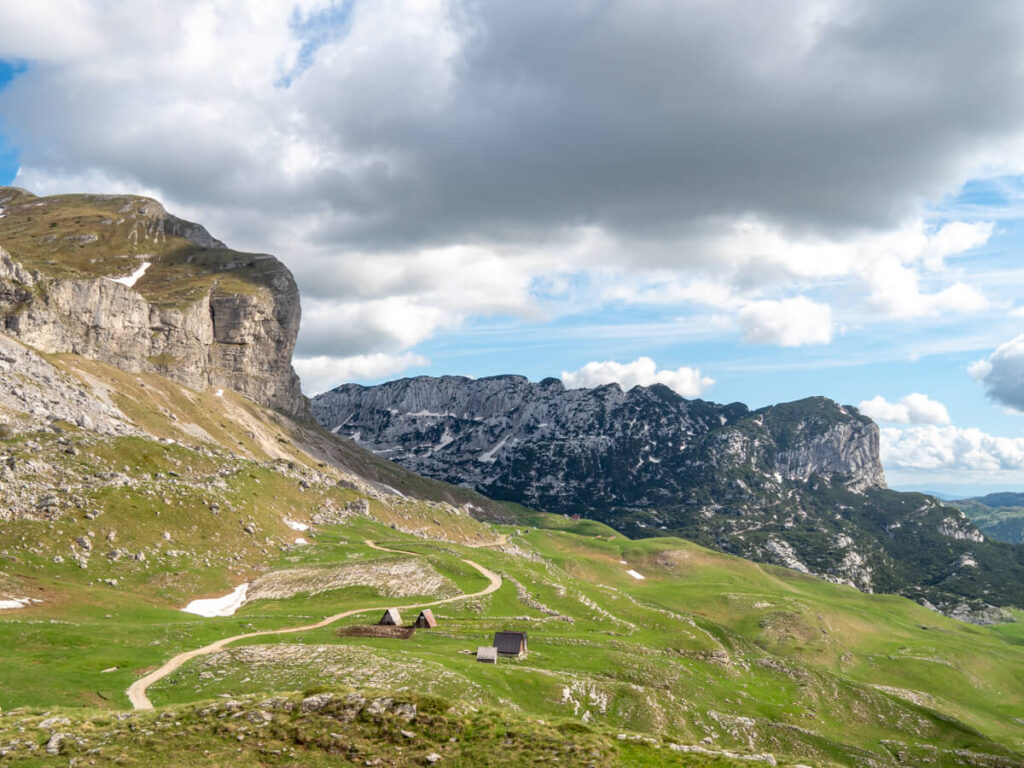
Staying inside Durmitor National Park is a completely different experience from staying in town. Accommodation here is very limited and carefully regulated, with no large hotels or developments within the protected area.
Instead, overnight stays are mainly available in mountain huts and traditional katuns used by hikers and shepherds. These provide a much simpler experience, but the reward is waking up surrounded by mountains, with the trails and viewpoints right on your doorstep.
This option is best suited to experienced hikers or travellers who are comfortable with basic facilities. You won’t have restaurants, supermarkets, or transport nearby, and you’ll need to be prepared for changing mountain conditions.
4. Plužine
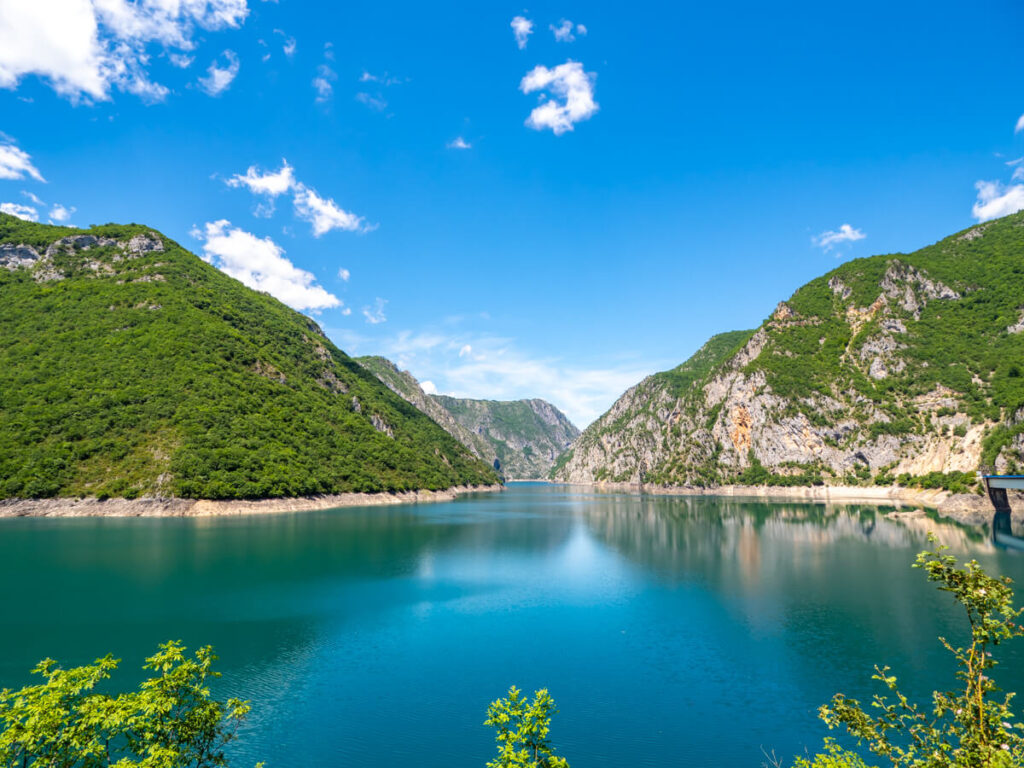
Plužine offers a completely different way to experience the mountains around Durmitor National Park. Located beside the turquoise waters of Piva Lake, this small town is surrounded by steep cliffs, dramatic reservoirs, and some of Montenegro’s most impressive (and slightly scary) mountain roads.
While Žabljak is the better base for exploring the classic Durmitor highlights, Plužine is ideal if you want to combine the national park with the Piva region. From here, you can explore Piva Lake viewpoints, visit the Piva Monastery, try rafting, take a boat trip, or drive some of the spectacular roads through the surrounding canyon landscape.
The best hotels in Žabljak
Although it’s a small mountain town, there’s a surprisingly wide range of accommodation in Žabljak. Don’t expect large international resorts, but you will find everything from cosy guesthouses and wooden cabins to small hotels, A-frame lodges, eco-retreats, and a good selection of apartments. Here are our top choices of where to stay.
Žabljak Hotel Prices Key
Hotel prices fluctuate due to seasonal demand, occupancy levels, current events, and other external factors. To provide a general idea of costs, we’ve categorised the average room price per night using the following price ranges in Euros:
€ – less than €40 a night
€€ – between €40 and €75 a night
€€€ – between €75 and €150 a night
€€€€ – between €150 and €250 a night
€€€€€ – over €250 a night
1. Hostel Hikers Den
A favourite among hikers and backpackers, Hostel Hikers Den is the best budget accommodation option in Žabljak. It has a relaxed, homely atmosphere and is designed around helping travellers explore Durmitor National Park, with hiking advice, trail information, offline maps, and organised activities available for guests. It even has a shuttle bus to the trailhead for the Bobotov Kuk hike.
Rooms consist of 8-, 6-, and 4-bed dorms, as well as private double and twin rooms with shared bathrooms. There’s also a shared kitchen, communal area, garden, and bikes and e-bikes are available for rent.
Located close to the centre of Žabljak and just a short walk from the bus station, Hostel Hikers Den is especially convenient for travellers arriving without a car. The appeal here is the community aspect – it’s perfect for backpackers and solo travellers looking to meet others to hike with, swap route ideas, and plan adventures together.
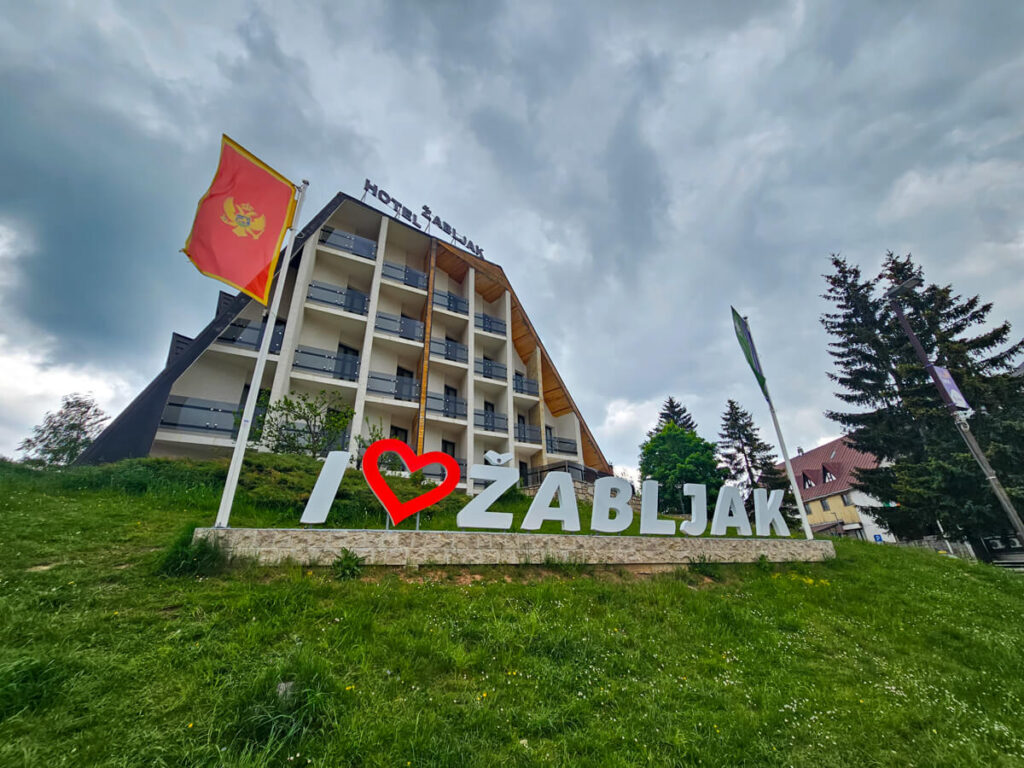
2. Casa di Pino EcoLodge Hotel
Casa di Pino EcoLodge Hotel is one of the most stylish stays in Žabljak, combining alpine-inspired design with modern comfort. The family-owned property opened in 2021 and focuses on a boutique experience, with natural wood interiors, warm lighting, local touches, and a cosy lodge feel rather than a traditional hotel atmosphere.
They offer a variety of four-star apartments with balconies, private bathrooms, kitchens, and free WiFi. On-site, you’ll also find a lounge bar, and the restaurant grows some of its own ingredients on a farm while sourcing seasonal produce from local farmers.
The spa and sauna are also a huge highlight, with massage services and facilities perfect for unwinding after a day of exploring Durmitor National Park.
If you’re looking for somewhere modern, comfortable, and a little boijee, this is a great option. We particularly love their sustainable ethos, using renewable energy systems, providing EV charging stations, and prioritising waste reduction and partnerships with local artisans.
Its location is also ideal for visitors who want convenience without being right in the busiest part of town. It is within walking distance of Žabljak’s restaurants and shops, while the Black Lake is only a short drive away.

3. Hotel Soa
Hotel Soa is one of the most luxurious hotels in Žabljak, offering a contemporary take on traditional Montenegrin architecture. The four-star hotel takes inspiration from the surrounding Durmitor landscape, with lots of natural wood, stone details, and contemporary interiors that feel cosy rather than overly luxurious.
Rooms range from standard doubles to larger apartments and suites, many with balconies overlooking the mountains. The hotel also has an on-site restaurant serving Montenegrin and international dishes, a bar, winery, sauna, massage services, and a small wellness area, making it a great place to relax after hiking or exploring the Durmitor Ring Road.
We very nearly splashed on a stay here for the spa facilities alone, dreaming of resting our post-hike aching muscles in the sauna after long days exploring Durmitor’s trails.
It sits just outside the centre of Žabljak, along the road towards Black Lake, meaning you’re close enough to walk into town but away from the busiest streets. If you want somewhere comfortable after long days outdoors, Hotel Soa strikes a nice balance between a mountain retreat and a proper hotel experience.

4. Boutique Hotel Rezident
Boutique Hotel Rezident is one of Žabljak’s newest and most stylish hotel options, designed for travellers looking for a more refined stay in the mountains. The small boutique property focuses on modern design, with elegant interiors, warm lighting, natural materials, and a minimalist style that feels very different from the traditional guesthouses found throughout the region.
The hotel has a limited number of rooms, ranging from studios to apartments, creating a more intimate atmosphere than larger hotels. Each features air conditioning, private bathrooms, free WiFi, high-quality furnishings, and garden or mountain views.
This is one of the few hotels in Žabljak with a pool, as well as a fitness centre, sauna, sun terrace, and garden. Breakfast is buffet-style, with vegetarian, vegan, and halal options, and there’s also an on-site bar, coffee shop, and outdoor seating area.

Where to stay near Durmitor National Park
If you’re not up for staying in Žabljak itself, there are several excellent alternatives nearby that offer a quieter, more scenic experience.
Mountain View A-Frame Cabins
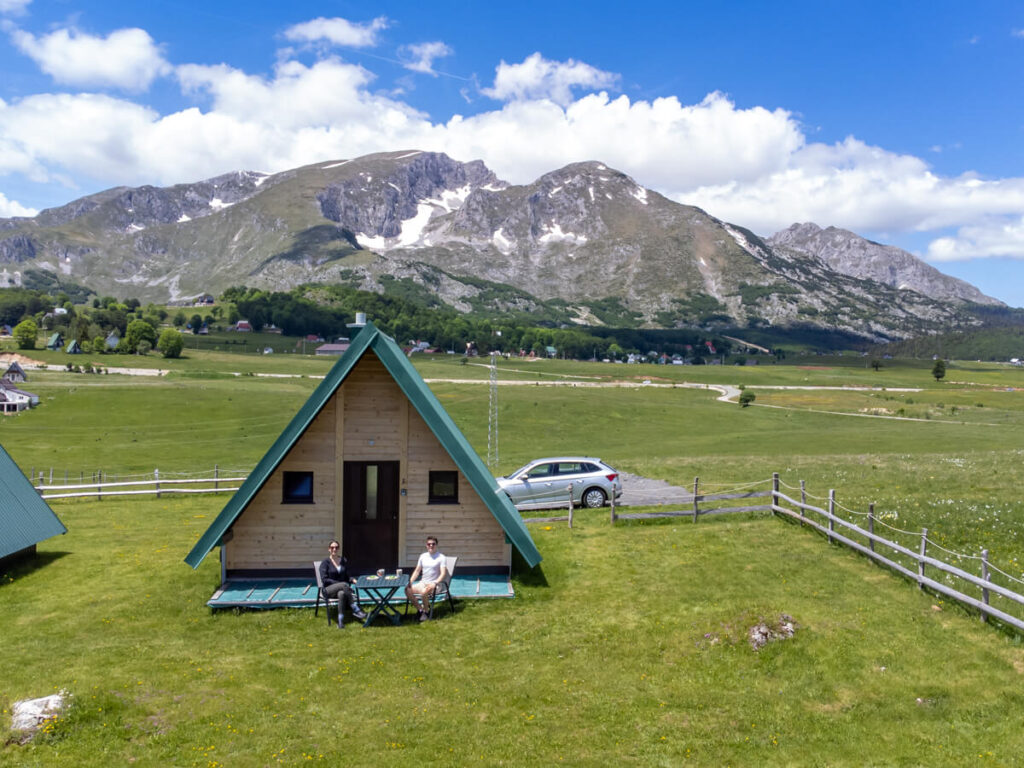
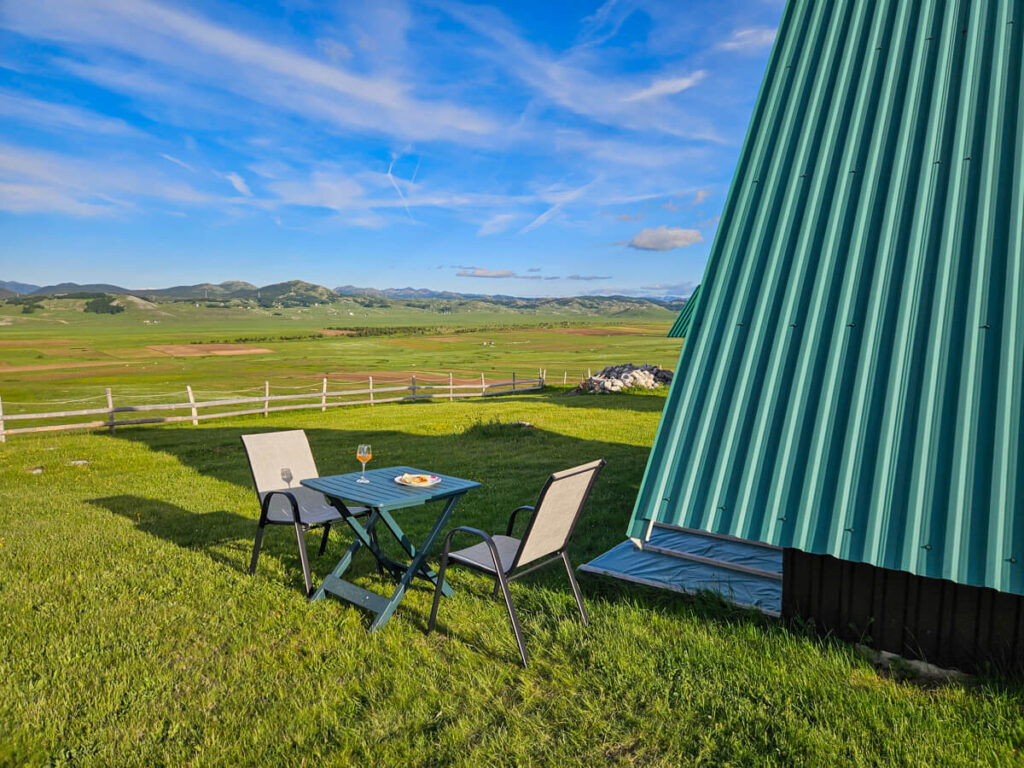
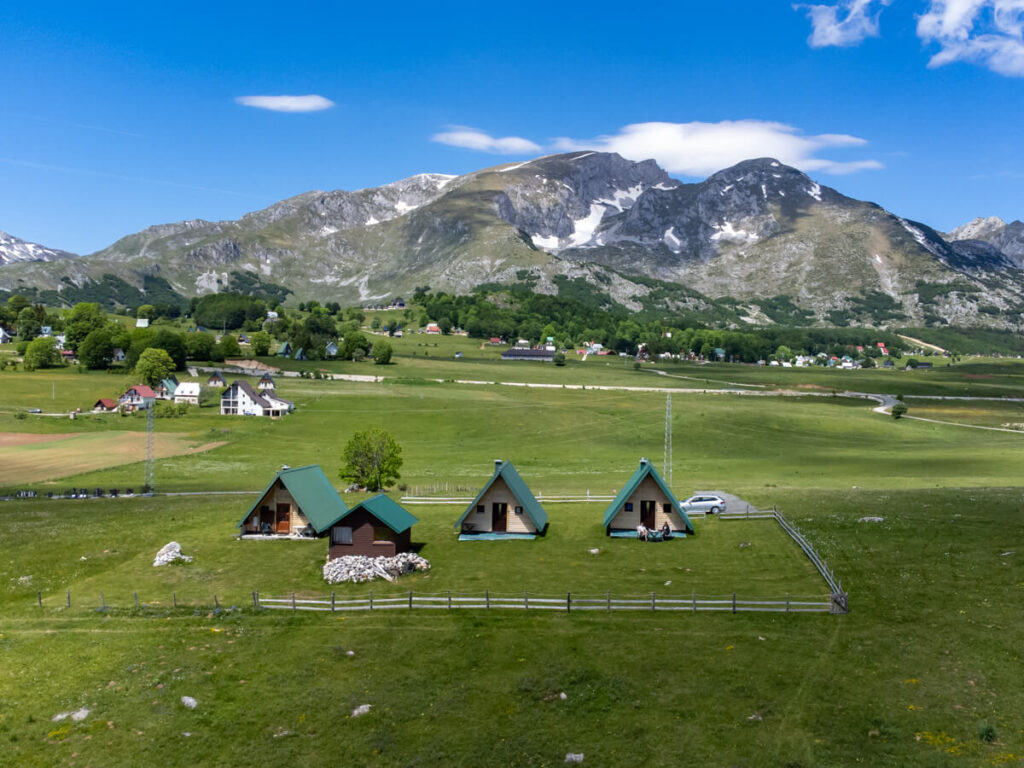
When we started planning our Montenegro trip, we had this vision of wooden cabins and remote mountain settings that was completely different to what we’d previously experienced in Europe. We found a set of three peaceful mountain A-frame cottages on the east side of Durmitor National Park that were absolutely perfect.
The cabins are designed with a cosy chalet-style interior, featuring a fully equipped kitchen, en-suite bathroom, double bed, dining table, garden area, free WiFi, and views across the surrounding landscape.
The location was also amazing. We were equidistant between Žabljak and the southern portion of the national park, being closer to Sedlo Pass and Montenegro’s popular hiking trails than the town. We were also very close to overlooked spots like Devil’s Lake and the stećci.
Guesthouse Planinarski dom Neviđen’o
Guesthouse Planinarski dom Neviđen’o is a great option if you want the mountain atmosphere without staying right in the centre of Žabljak. The property is located near Pitomine, around 2 miles (3 km) from the town centre and offers a peaceful setting with epic mountain views from its restaurant area – one evening, we sat with a wine and beer listening to the thunder roll off the mountains.
Guesthouse Planinarski dom Neviđen’o has a traditional alpine feel, with handcrafted wooden interiors, soft lighting, a cosy shared lounge, bar, and plenty of outdoor spaces.
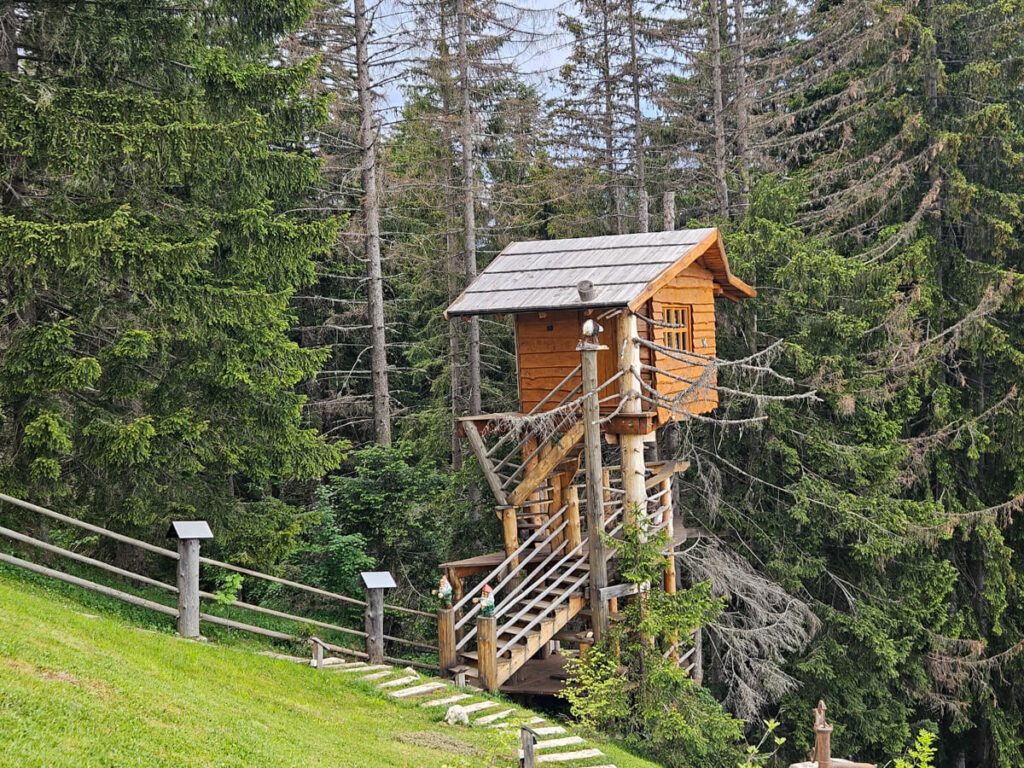
Rooms range from simple double and twin rooms to larger apartments, with some options offering balconies and mountain views. They also have a unique treehouse if you’re looking for somewhere special to stay.
It is particularly popular with hikers thanks to its relaxed atmosphere, helpful hosts, and easy access to the outdoors, plus handy maps are provided in the communal areas.
The biggest appeal here is the location. Sitting in the countryside, the guesthouse is close enough to reach the Black Lake in less than an hour via a secluded trail from the car park, while Savin Kuk and the hiking trails of Durmitor National Park are a short drive away. We also found the guesthouse a great base for exploring the northern portion of the park, including Ćurevac Peak, and the start of the Durmitor Ring Road is about 2 minutes’ drive away.
Etno Villages and Eko Katuns
For a more traditional way to experience the mountains around Durmitor National Park, consider staying in an etno village or eko katun. These properties are inspired by Montenegro’s historic mountain settlements, where shepherds would move their livestock to higher pastures during the summer months, and offer a slower, more authentic alternative to hotels and apartments.
We absolutely adored this experience in Eko Katun Rosi on the border of Prokletije National Park. Here are some well-rated katuns in Durmitor National Park:
Camping in Durmitor National Park
Camping is one of the best ways to experience the wild landscapes of Durmitor National Park, allowing you to wake up surrounded by limestone peaks, alpine lakes, and quiet mountain valleys. While wild camping is illegal in Montenegro, it is officially permitted in Durmitor National Park.
There’s a limited range of designated camping areas, from simple lakeside spots for those enjoying Durmitor’s hikes to more established campsites suitable for tents, campervans, and road trippers.
Campsites
Bear in mind that you need to pay for the entrance fee if you plan to camp in Durmitor National Park.
Mountain huts
For hikers wanting to spend more time in the mountains, Durmitor National Park also has mountain huts and shelters along some of its longer routes. These are simple, functional places designed around hiking rather than comfort, so expect no facilities and bring your own sleeping bag and supplies.

How to choose where to stay in Durmitor National Park
Accommodation in Durmitor National Park ranges from budget hostels and family-run guesthouses to mountain cabins, eco-lodges, boutique hotels, and remote countryside stays. The best option depends on whether you prioritise convenience, mountain views, hiking access, or a more authentic rural experience.
We’d recommend considering the following:

Tips for booking accommodation in Durmitor National Park
Here are our top tips for booking accommodation in Durmitor National Park:
Where not to stay to visit Durmitor National Park
Although Durmitor National Park is one of Montenegro’s most spectacular destinations, it is not somewhere we would recommend visiting as a rushed day trip from the coast.
We would avoid using the Bay of Kotor or coastal towns like Budva as a base for visiting Durmitor National Park. While the distances may look manageable on a map, the winding mountain roads mean the journey takes several hours each way, leaving limited time for hiking, scenic drives, and enjoying the landscapes.
The south of Montenegro is also not ideal. Areas around Lake Skadar and even Podgorica are closer than the coast but still too far away for a comfortable day trip. From Podgorica, the drive to Žabljak takes around 2.5 hours each way, meaning you would spend roughly five hours on the road before even starting your adventure.

Durmitor National Park Accommodation FAQs
To help you choose where to stay near Durmitor National Park, we’ve answered the most common accommodation questions.
Is Žabljak worth visiting?
Yes, Žabljak is worth visiting, but mainly as a base for exploring Durmitor National Park rather than as a destination in itself. The town is practical rather than picturesque, but its location, restaurants, supermarkets, accommodation options, and transport links make it the easiest place to stay.
Where to stay in Žabljak, Montenegro?
The best area to stay in Žabljak depends on your priorities. The town centre is most convenient for restaurants, shops, and buses, while the outskirts offer quieter stays with mountain views, cabins, and easier parking. For hikers, staying somewhere with good trail access can save time each day.
What is the closest town to Durmitor National Park?
Žabljak is the closest and most convenient town for visiting Durmitor National Park. It sits on the edge of the park and provides easy access to Black Lake, the Durmitor Ring Road, and many of the main hiking routes.
Where is it best to stay in Durmitor National Park?
In our opinion, the best place to stay near Durmitor National Park is in the countryside with your own car. While Žabljak is the most convenient base, staying in a mountain cabin, rural guesthouse, or etno village gives you a much more memorable experience, with quieter surroundings, better views, and a stronger connection to the landscape.
Can you stay in Durmitor National Park?
You can stay in Durmitor National Park, but accommodation within its boundaries is limited. There are no large hotels within the protected area, with overnight options mainly consisting of mountain huts and traditional katuns.
How many nights should you stay in Durmitor National Park?
We recommend spending at least 3-4 nights in the area to properly experience the mountains. This gives you enough time for a scenic drive, a couple of hikes, and time to enjoy the landscapes without constantly rushing between sights.
Do you need a car to stay near Durmitor National Park?
You don’t need a car if you stay in Žabljak, as the town has bus connections and many activities can be arranged locally. However, having your own vehicle gives you much more freedom, especially if you want to stay in rural cabins, explore the Durmitor Ring Road, or visit less accessible viewpoints.
Is it better to stay in Žabljak or Plužine?
For visiting the main sights of Durmitor National Park, Žabljak is the better base. Plužine is a great choice if you are also exploring Piva Lake, Piva Canyon, and the western side of Montenegro, but it is less convenient for classic Durmitor hikes and attractions.
Can you camp in Durmitor National Park?
Yes, camping is possible in Durmitor National Park. Campsites range from simple mountain spots to more established areas near places like Ivan Do and Sedlo Pass.
Is accommodation in Durmitor National Park expensive?
Accommodation around Durmitor National Park is generally good value, although prices rise significantly during the summer months. Budget travellers can expect dorm beds from around €15-25 per night, private rooms and apartments typically cost around €40-100 per night, while boutique hotels, eco-lodges, and luxury cabins often range from €100-200+ per night depending on the season and facilities.

Read next:
An Ultimate Guide to Visiting Durmitor National Park
15 Best Things to Do in Durmitor National Park + Our Itinerary
Driving the Durmitor Ring Road Route Guide
12 Best Hikes in Durmitor National Park From Easy to Expert
What It’s Really Like Hiking Bobotov Kuk
A Complete Guide to Hiking Ćurevac Peak
A Comprehensive Guide to Visiting the Black Lake
