How to Visit Pacaya Volcano + Is it Even Worth it?

Everything you need to know about visiting Pacaya Volcano National Park from Antigua, Guatemala’s easiest volcano hike – is it worth visiting?
This post may contain affiliate links, which means we might earn a small commission on anything purchased through these links at no extra cost to you. Learn more on our disclaimer page.
One of Guatemala’s most active and accessible volcanoes, Pacaya Volcano is renowned as one of the best day trips from Antigua. It has been continuously active since the 1960s, with small eruptions, smoke plumes, and glowing lava often visible from its slopes. Standing at around 2,552 metres (8,373 ft), Pacaya is lower and less strenuous than the Acatenango Volcano trek, making it one of the most popular volcano hikes in Guatemala.
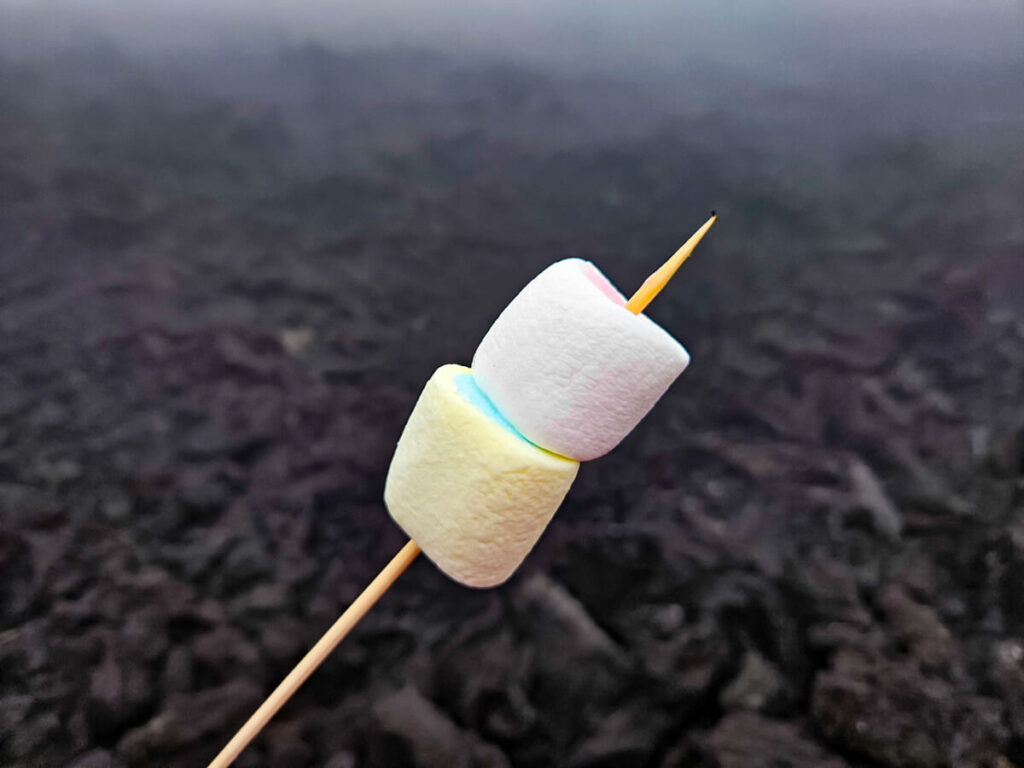
What makes Pacaya especially unique is that you can often get close enough to the geothermal lava fields to toast marshmallows over the hot rock. You may have seen images of lava trickling down Pacaya, but we want you to have a realistic idea of what to expect to avoid disappointment.
Visiting Pacaya Volcano was one of the most underwhelming experiences during our Guatemala trip (and that we had in Central America). That’s not to say you shouldn’t go, but you should learn from our mistakes to ensure your visit is enjoyable. In this guide, we’ve included everything you need to know about visiting Pacaya volcano, from the best tours and operators, what time of day to book, and who to go with, to how difficult the hike is and if the trip is even worth it.
Pacaya Volcano at a glance
More from Antigua
About Pacaya Volcano
Pacaya Volcano (Volcán de Pacaya in Spanish) is not only one of the 37 official volcanoes in Guatemala, but also one of only 3 active ones, alongside Fuego (also near Antigua) and Santiaguito (in Xela). It’s a conical volcano, nestled in a protected national park, Parque Nacional Volcan de Pacaya, and is a highlight of many Guatemala itineraries.
Most visitors join a Pacaya day tour to hike the volcano to viewpoints, winding through lava fields, and toasting marshmallows or cooking pizza in the hot earth. The hike takes you across petrified lava fields from historic eruptions, through pine forests, and to lookouts where you can often see steam rising from Pacaya’s cone. On clear days, you’ll get panoramic views of Pacaya’s peaks and Antigua’s surrounding volcanoes. But if you time your visit wrong or get unlucky like we did, you won’t even be able to see the volcano you’ve travelled an hour and a half to hike.
Pacaya Volcano formed about 23,000 years ago, meaning it’s ‘young’ in volcano terms. It rises to 2,552 metres (8,373 ft) and is known to be continuously active – although that doesn’t mean you’ll see lava. In 1961, it erupted without warning after a dormancy of about 70 years. More recently, it went through an active period from 2006, during which time it formed the lava flows you see today.
The 2010 eruption was one of its most powerful in modern history – it sent ash clouds more than nearly a mile (1.5 km) into the air, forcing the temporary closure of Guatemala City’s La Aurora International Airport and prompting the evacuation of nearby villages. The 2021 eruption also caused ashfall across several departments and led to the temporary evacuation of residents in San Vicente Pacaya.

Where is Pacaya Volcano?
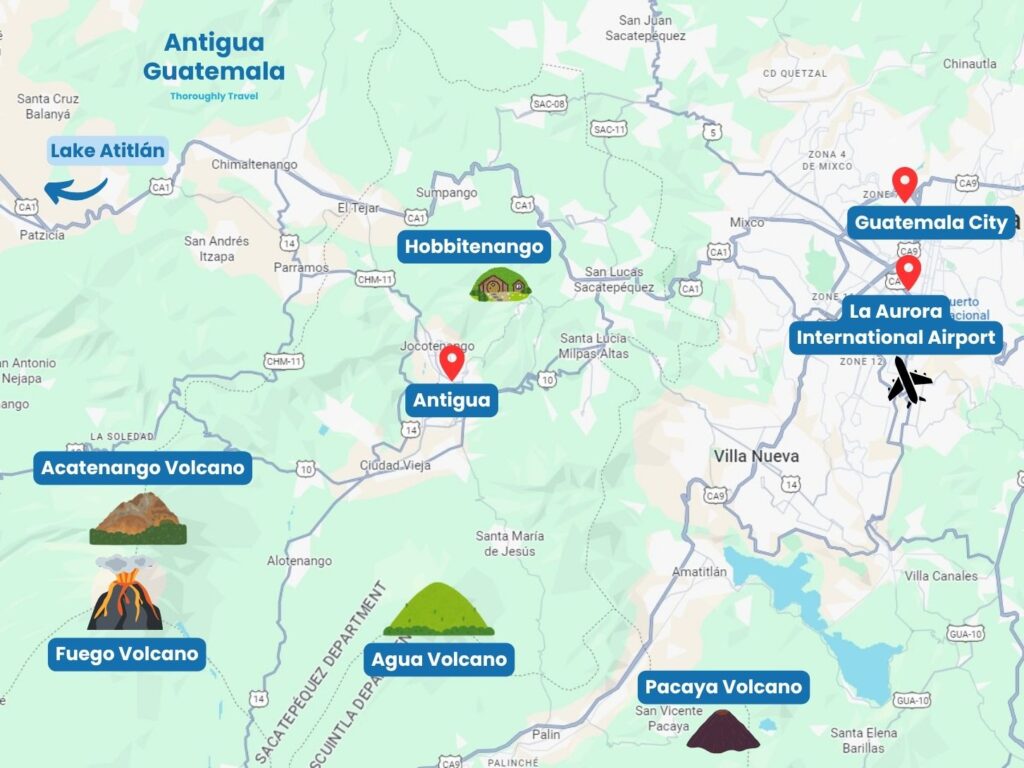
Pacaya Volcano is located about 29 miles (47 km) south of Guatemala City and roughly 25 miles (40 km) from Antigua, making it an easy day trip. The drive from either destination takes around 1.5 hours, depending on traffic and road conditions.
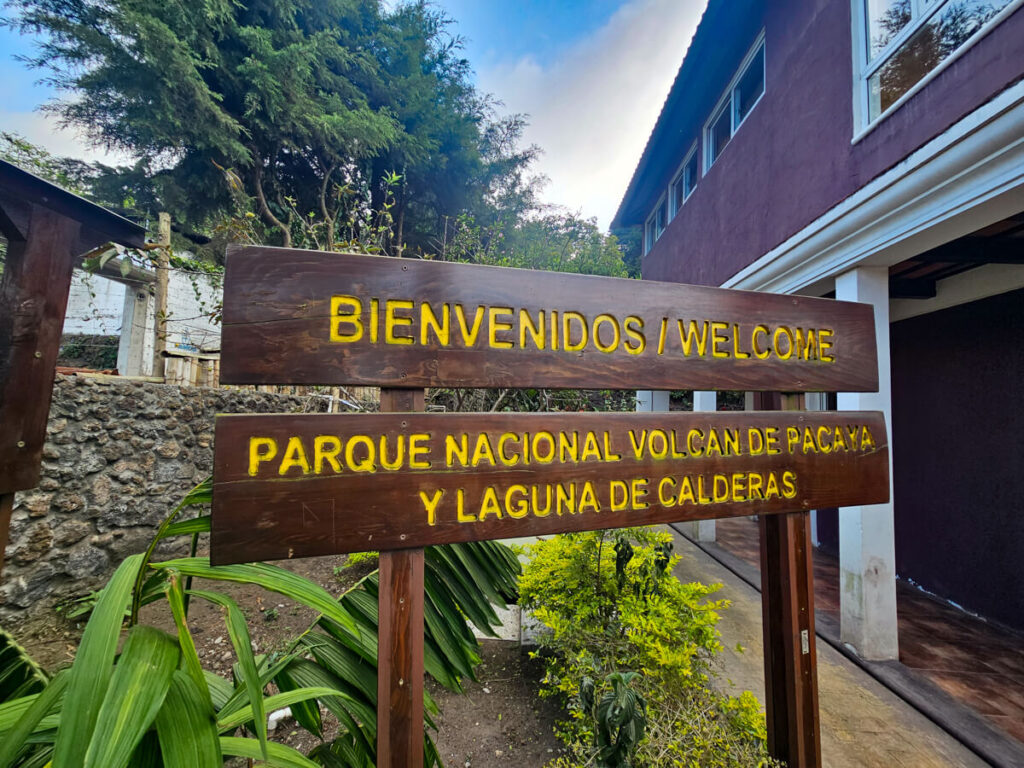
The volcano itself sits in a national park of the same name, in the department of Escuintla in Southern Guatemala. The hike begins near the small town of San Vicente Pacaya, where local guides and community-run tour groups manage most access.
Pacaya Volcano Map
You can see the locations of Pacaya Volcano on the map of Antigua below.
Why visit Pacaya Volcano?
Pacaya Volcano is one of the few volcanoes in the world where you can safely approach warm lava rocks and feel the earth’s geothermal energy beneath your feet. Some say the rocks get so hot they melt the soles of your shoes! So it’s widely considered one of the best things to do in Guatemala.
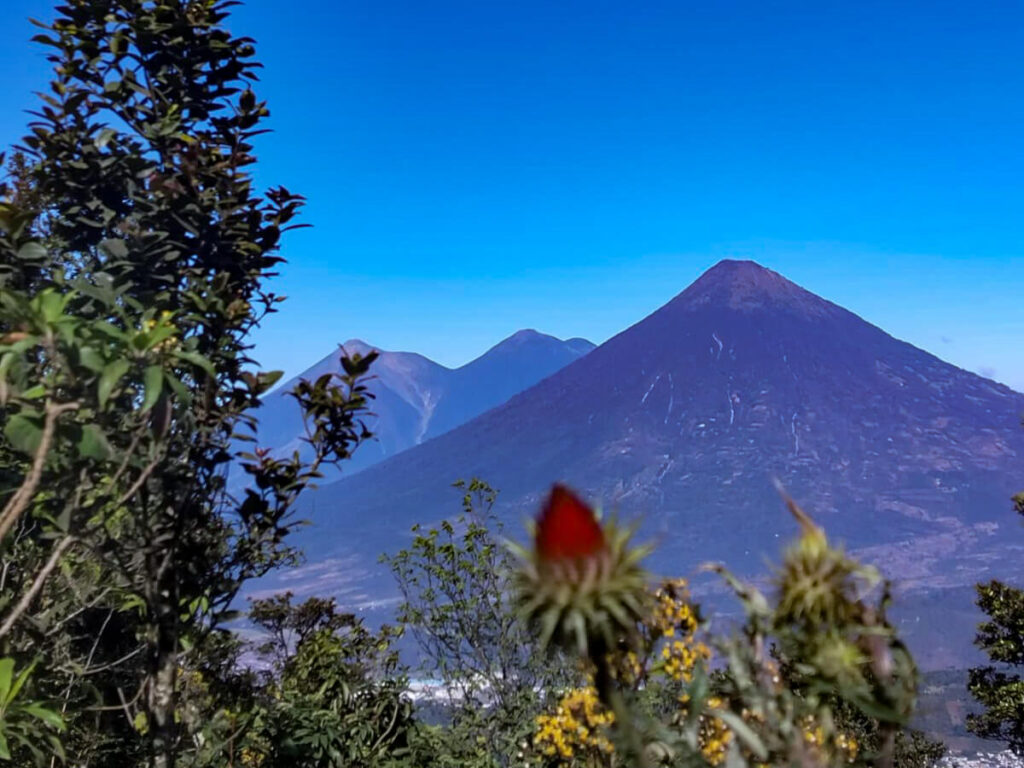
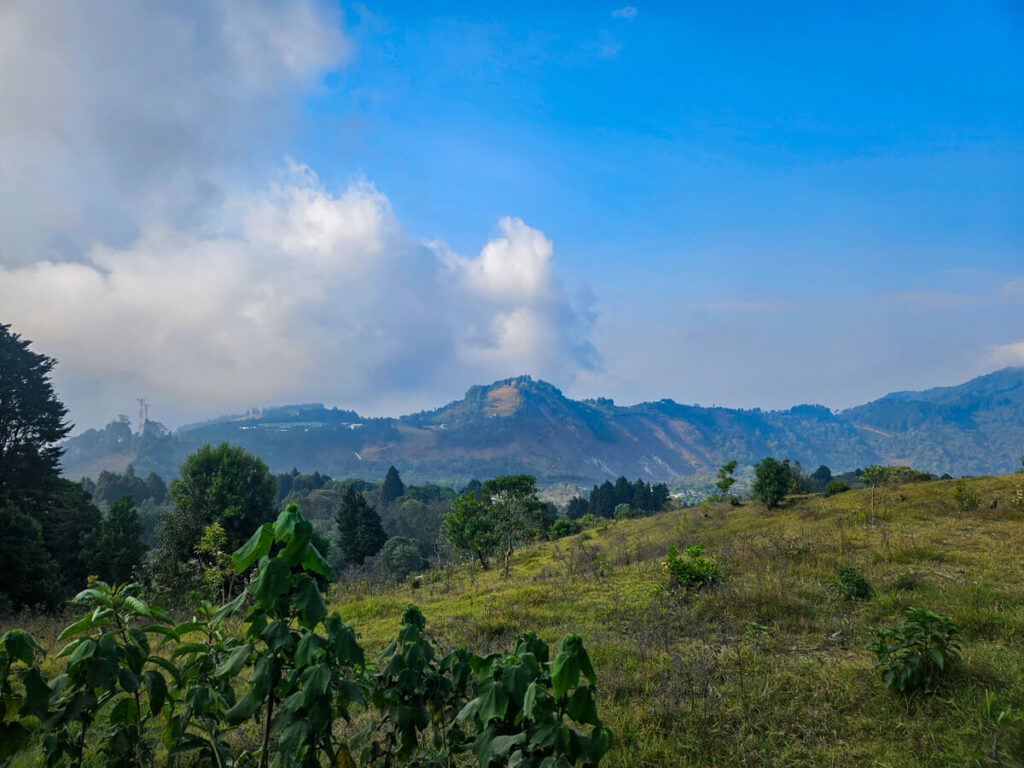
The views are expansive – on clear days. From the viewpoints, you can see across to Agua, Fuego, and Acatenango Volcanoes, as well as the Pacific lowlands. Plus, you’ll walk through dramatic landscapes of black volcanic rock and see the volcano’s slopes, which is something you can only experience in a few places on Earth.
The trail is a much easier climb than Acatenango, so it’s ideal for those who don’t think they can complete the more gruelling trek, but still want to get up close to a volcano. It only takes about 2 hours to reach the top, and you’ll do around 3 hours of hiking in total.
But, if you’re keen to visit Pacaya because you’ve seen images of lava flowing down its slopes, you may be disappointed. There hasn’t been red-hot lava on Pacaya since 2021, but you might still see small puffs of smoke trailing from vents near its crater if it’s active on the day you visit. There is some geothermal activity at the base of Pacaya, where tours stop to toast marshmallows and cook pizza in the warm earth. But for red-hot lava, your best bet is to hike Acatenango Volcano for views of Fuego – but even that has been more unpredictable recently.

How to visit Pacaya Volcano
Pacaya is one of the coolest places to visit in Guatemala, but visiting takes a little bit of planning. There are two ways to experience the Pacaya Volcano hike:
You can visit Pacaya as part of a half-day or full-day guided tour from either Antigua or Guatemala City.
Most tours include transport and a local guide, with options for morning or afternoon departures (we break down the pros and cons of each later in this post). Some also include a stay overnight.
Can you hike Pacaya without a guide?
Technically, you can get to Pacaya Volcano without a tour, but hiring a guide is mandatory to do the hike. Honestly, arranging it yourself is just a huge faff.
You can get to the trailhead using chicken buses, but you’ll need to change a couple of times. You could also use Uber or a taxi, but it’d be pretty pricey, and you might end up stranded if you’ve not arranged a return trip, too. You could also rent a car, but it’s not a popular option for international travellers, as the driving behaviours in Guatemala are simply crazy.
Once at the entrance, you’ll need to hire a guide – there are usually some milling around the entrance, but there’s no guarantee. Official park rules state that visitors must be accompanied by a certified guide, so if no one’s there, you won’t be able to enter. Some people complain it’s a scam, as you could probably follow the trail yourself without a guide, but the rules are the rules. It also supports the nearby communities that depend on tourism for income.
There are safety concerns to consider, too. The trails can be confusing, and volcanic activity can change the landscape quickly. Guides have local knowledge and are experienced in navigating the volcanic landscape, helping identify active lava areas and avoiding unsafe areas. Most guides don’t speak a lot of English, so it can be frustrating to pay for one and not learn much about what you’re seeing. But if you opt for an organised day tour, you can ensure you have a guide who speaks your language, learning about the volcano’s history and even finding the best spots to toast marshmallows or take photos.
If you hire a guide at the entrance, expect to pay around 200Q (~$25 USD). When you consider that tours from Antigua are as cheap as $35 USD, it’s really the easier option and works out barely more expensive than organising it yourself.
Hiking Pacaya Volcano
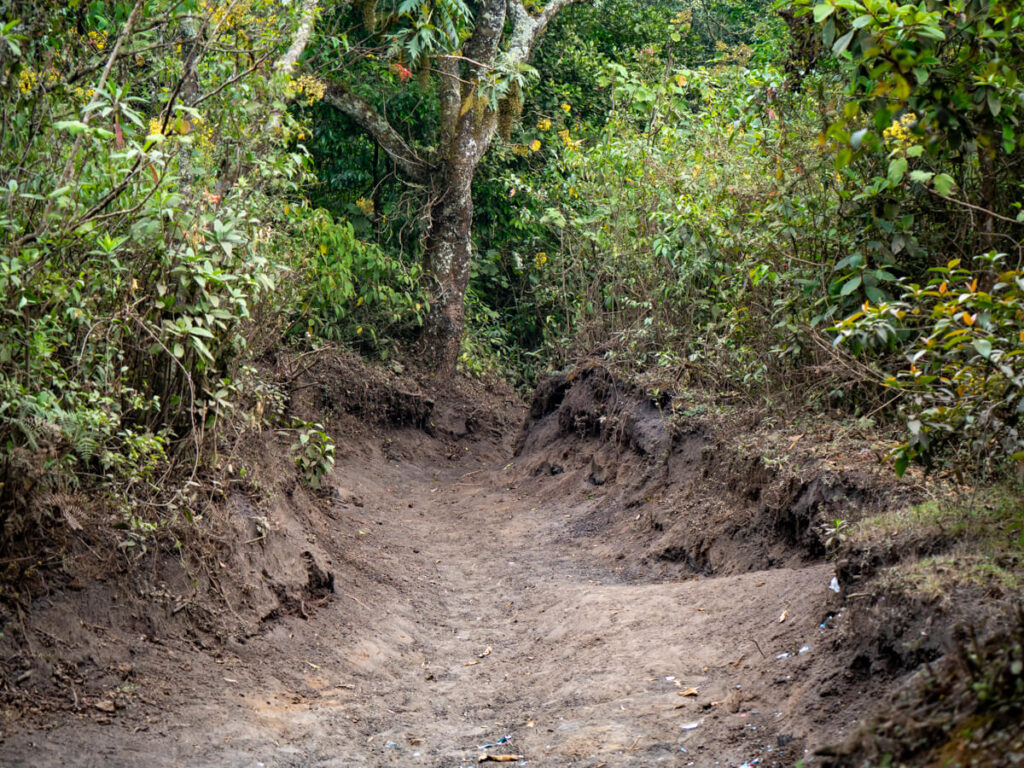
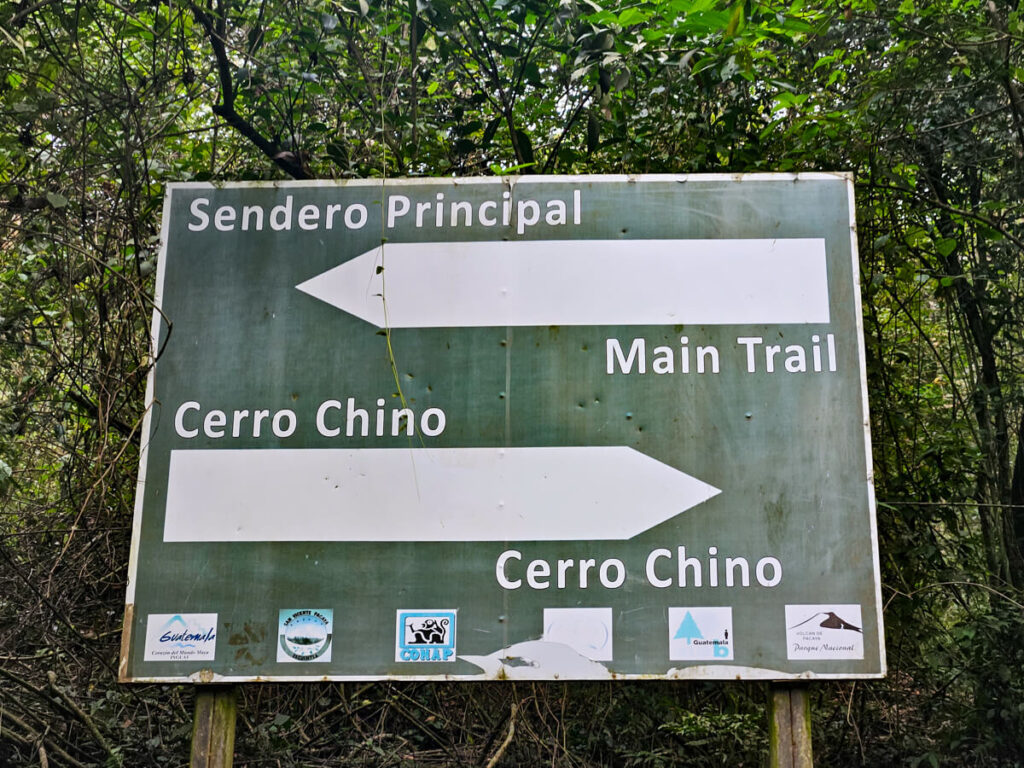
You don’t actually summit Pacaya Volcano – the hiking trail takes you to the top of Cerro Chino, an adjacent hill, before looping around the base of Pacaya. Here are the hike stats:
There are two official entry/exit points to hike Pacaya Volcano. The most popular one is at San Francisco de Sales, which is where most tours start and where you can buy tickets. The other one is at La Corona. Some tours end here, while others end back at the park entrance in San Francisco de Sales. The route you take might change, depending on the activity of the volcano that day.
The hike takes around 1.5-2 hours up to the main viewpoint. From there, you descend into the lava fields, where tours usually stop to toast marshmallows. Then, it’s about 1 hour down, depending on the pace of the group.
How difficult is the Pacaya Volcano hike?
Don’t let other accounts fool you. Hiking Pacaya isn’t easy. While it’s nowhere near as challenging as the Acatenango trek (physically and mentally), it’s still no walk in the park.
Difficulty is subjective. If you don’t ever hike, it might be difficult for you. If you’re super fit, it could be a breeze. Statistically, it’s a 3.5-mile (5.6 km) loop with an elevation gain of around 350 metres (1,150 ft). We’d call it a moderate level of difficulty.
One thing’s for sure, it’s much easier than the Acatenango hike. It has a similar incline and topography, with volcanic ash trails, but it’s much shorter, at a lower altitude, and only the first half is uphill – then it’s flat and downhill. It’s comparable to the Indian Nose in Lake Atitlán or the Cerro Negro hike in Nicaragua without the volcano boarding.
Most people reach the summit in 1-2 hours. This is the main portion of the hike, where you’ll be met by views of the volcano (on a clear day). From here, you descend into the geothermal area before winding your way back to the entrance.
We’re fit and had been doing a fair bit of hiking leading up to this trip, but we’re not gym bunnies or anything. The tour guide periodically stopped to let people catch their breath, which we were grateful for, but it wasn’t super hard. Going up is a steep incline, so it’s harder generally, but going down is harder on the legs and knees, so bear this in mind if you have problems.
One thing we don’t see people mentioning is that, even at the lower altitude, you can still feel symptoms of altitude sickness, like shortness of breath and dizziness. It was nowhere near as bad as at the top of Acatenango, and we think we feel it worse than most people, but we could feel a little of it on this hike too, in the way that normal things just seemed a little more difficult.
Are there horses to ride up Pacaya?
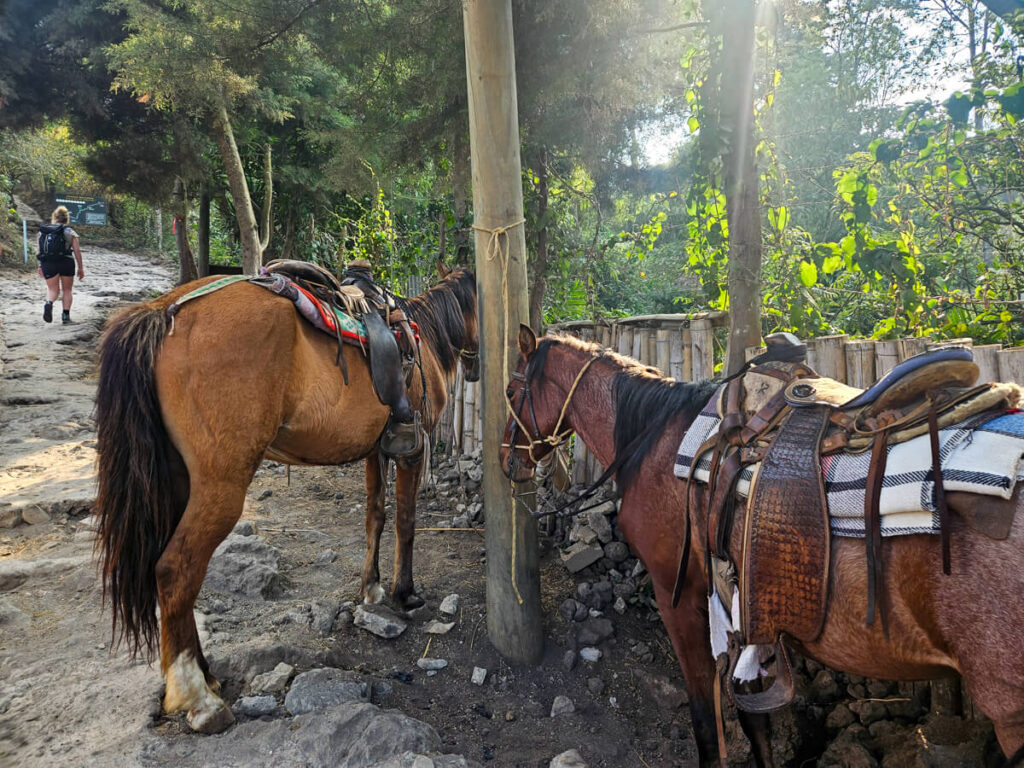
There are local horse owners at the trailhead, and they tend to follow the tour groups, hassling struggling hikers to pay for a horse.
Unfortunately, these animals are often overworked, underfed, and forced to carry heavy loads on steep volcanic terrain. They all looked small, skinny, and we’d argue it’s quite unethical to take one.
A woman in our group struggled with the ascent and ended up paying for a horse. The poor thing looked exhausted, struggling up the hill. The horses don’t go any faster than walking speed, and the guys that own them are notorious for charging excessively high prices.
We watched a poor, heavily laden horse stumbling and sliding down a slope of volcanic ash, and dread to think how many injure their legs or go lame because of the terrible conditions (and then what their fate is since they can no longer walk properly).
The hike itself is relatively short at around 1.5 to 2 hours up, and you’ll appreciate the experience much more on foot.
Honestly, we’re hoping this will improve in the future. In our opinion, banning horses from the volcano hikes would be an all-round improvement, advancing animal welfare standards and cleaning up the trail instead of it being littered with horse poo. By choosing to avoid the horses, you can help remove the demand for the practice.
What to expect when climbing Pacaya Volcano
To be frank, there’s not really any point in reading accounts of travellers who climbed Pacaya to see flowing lava – because there isn’t any anymore. The tour experience today is very different to the social media buzz of getting close to red-hot lava that brought Pacaya into the spotlight.
Here’s what a typical tour looks like:
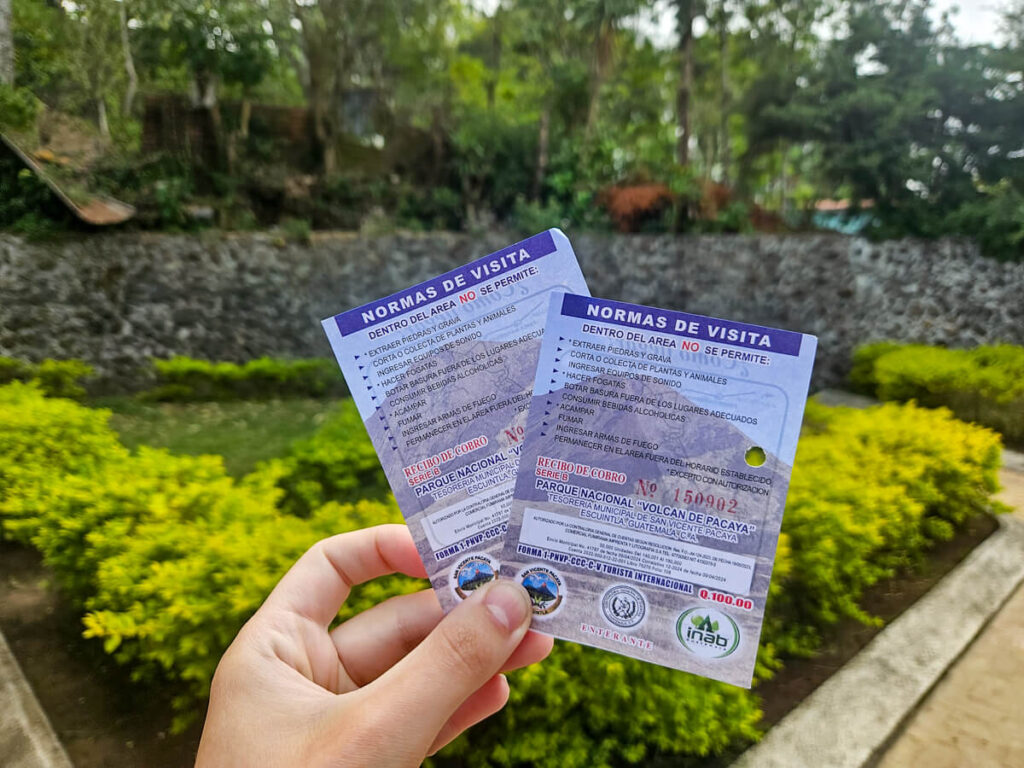
When you get out of the shuttle, you’ll queue to buy your entrance ticket (100Q) – bring cash. You’ll receive a paper ticket. At the entrance, there’s the ticket booth, amenities like restrooms, and a few vendors selling drinks and snacks.
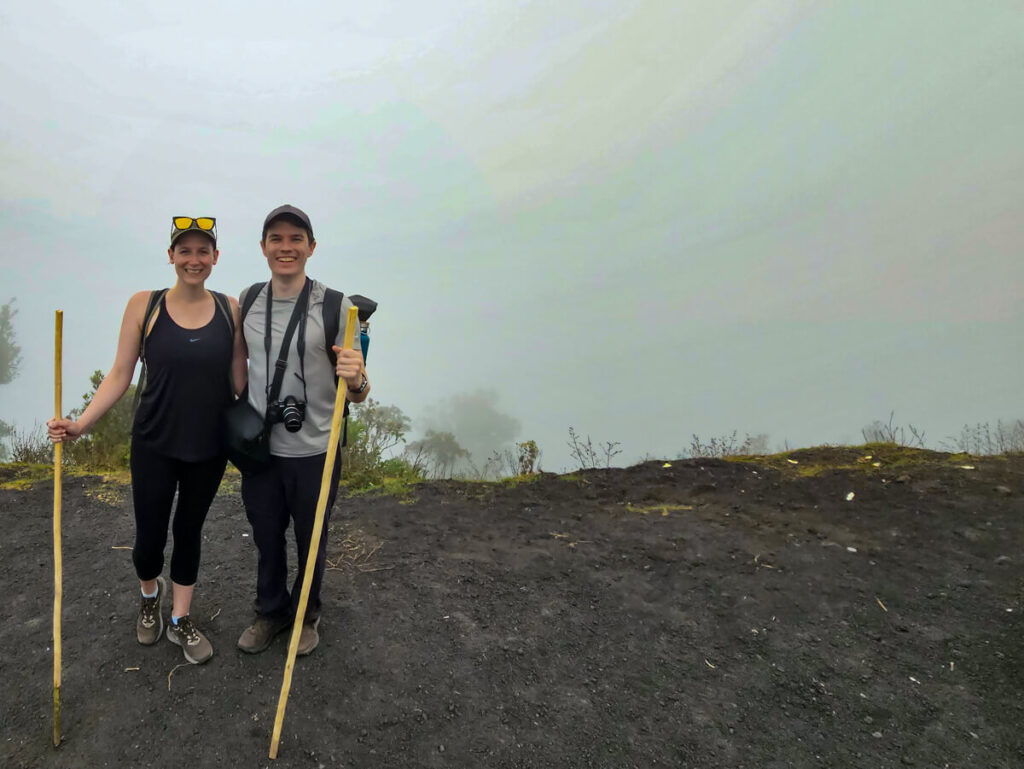
There will be people milling about trying to sell you stuff. You don’t need a guide if you’re on a tour, and we’ve said why we don’t think you should hire a horse, but you can rent sticks and buffs. We don’t think you need a buff – the dust isn’t as bad as Acatenango, but we DO recommend you rent a stick if you don’t have your own trekking poles.
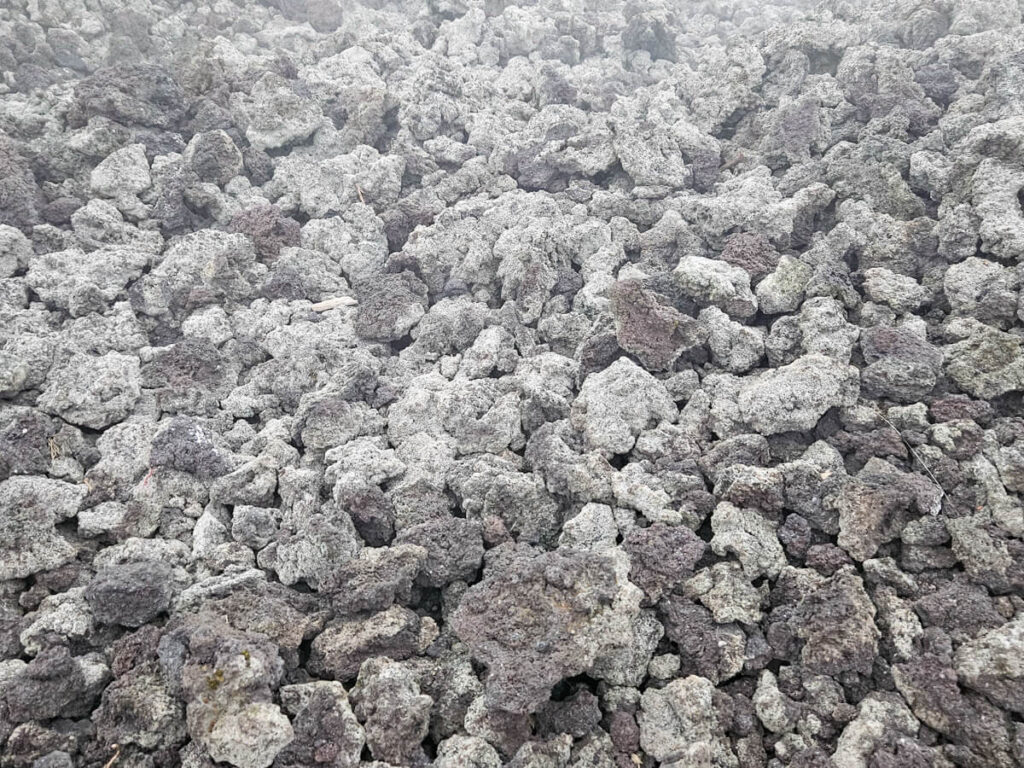
After about 1.5-2 hours of hiking up a steep and dusty incline, you’ll reach the summit of Cerro Chino, where you’ll get views of Pacaya if it’s a clear day. Then, you descend into the lava fields, walking among hardened magma. At the bottom, your guide will know where warm steam vents are and pop marshmallows on sticks into the openings in the earth. Then, you can enjoy toasty marshmallows with views of the surrounding petrified lava fields.
It’s about a 1-hour hike back to the entrance, depending on the route you take. It’s a bit of a slip and slide, with lots of volcanic ash and dust, so expect to get dust in your shoes.
We ummed and ahhed about getting a stick, since we knew it was going to be easier than the Acaetnango hike. And we felt a bit silly carrying them up the incline, as we didn’t need them for the ascent. But they were absolutely necessary for the decline, which is slippery in ankle-deep volcanic ash at points, and especially treacherous in the dark. Then, you hop back into the shuttle to return to your accommodation.
What is the best time to hike Pacaya?
The best time to hike Pacaya Volcano is in the dry season, between November and April, with clearer skies, less mud, and a better chance of seeing volcanic activity.
During the rainy season, between May and October, trails can get slippery, and clouds often roll in by mid-afternoon, hiding the views.
Is it better to hike Pacaya volcano in the morning or afternoon?
Both morning and afternoon tours have their advantages, depending on what you’re after. Tours typically leave at set times throughout the day, including:
Morning hikes usually offer the best visibility and cooler temperatures, ideal for photography and fewer crowds. Early morning tours are particularly great for sunrise. The afternoon tour, on the other hand, is more popular for its sunset views. But it’s often hazier on an afternoon, and clouds can roll in, obscuring the view completely.
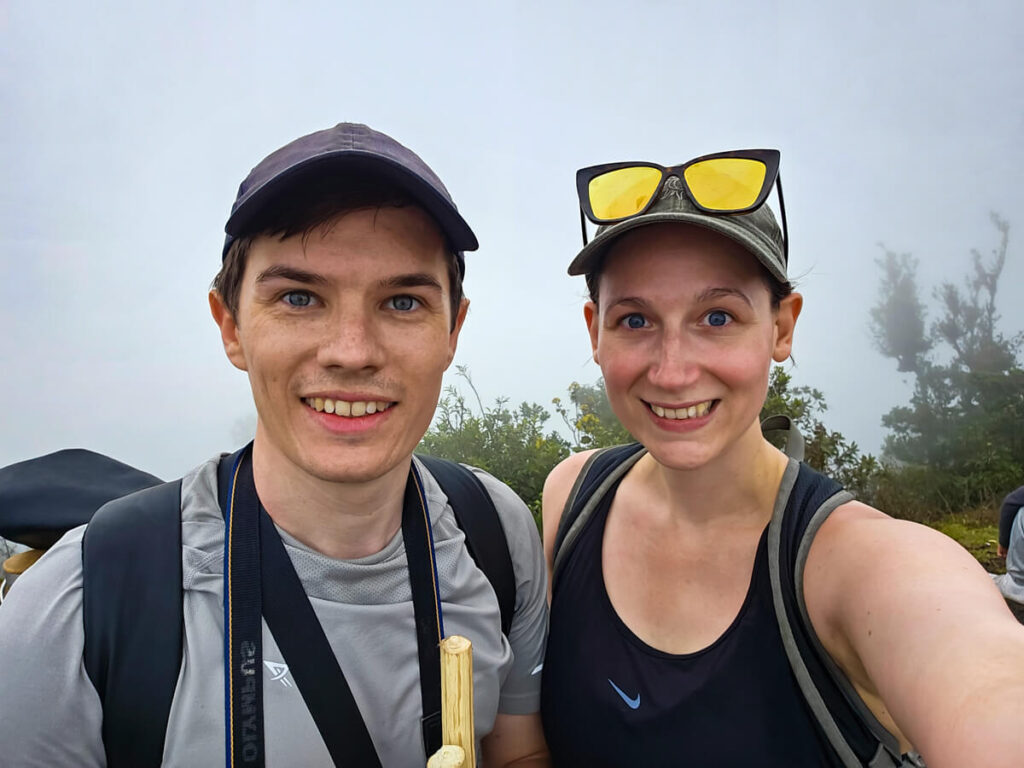
The cheaper tours typically depart in the afternoon, promising sunset views over the volcanoes. While you might get lucky and have a clear view, albeit with some haze, there’s no guarantee you’ll be able to see anything. We took an afternoon tour and had thick fog the whole time.
Most people actually recommend the afternoon tour. This leaves your morning free for sightseeing in Antigua, and it also means you don’t have to set an early morning alarm. But, we don’t recommend chancing it. We’d personally recommend the morning tours for clearer views – you’ll still have all afternoon free for sightseeing, and you’ll have less chance of wasting money on a tour to a volcano you don’t even see.
The best Pacaya Volcano Tours
Most tours to Pacaya Volcano depart daily from Antigua, although tours can also be arranged from Guatemala City and the surrounding villages. They generally last around 5-6 hours in total, with around 2-3 hours of hiking.
You can choose from sunrise, daytime, or sunset tours. Most tours include round-trip transport, a local guide, and marshmallows to toast on the volcano. You usually have to pay for your entrance ticket separately. More premium tours might include your entrance fee, as well as extras like snacks, gear rental, or even stops at nearby attractions, like hot springs or a coffee farm.
There is a BIG difference between tour experiences, depending on how much you spend.
Cheapest Pacaya tours
Budget tours to Pacaya are ideal for travellers who just want to tick off the experience without spending much. These typically cost between 150-250Q ($20-35 USD), plus the national park entry fee (100Q), and include shared transport and a local guide.
The cheap tours are all very samey, including:
You’ll hike in a larger group, timings can be a little rigid, and they can feel rushed and impersonal. But it’s a popular option if you’re short on time or cash. Don’t expect gear or food to be included – you’ll need to bring your own water, snacks, and a headtorch if you’re on the afternoon tour.
Mid-range Pacaya tours
Mid-range tours are the sweet spot for most travellers. Expect smaller group sizes, more flexible schedules, and thoughtful touches like hiking poles, snacks, or headlamps for sunset hikes.
Prices are usually around 300-450Q ($40-60 USD) per person, including transport, a bilingual guide, and an itinerary that looks like:
Many of these tours work with local guides from San Vicente Pacaya, helping support the nearby community. The extra comfort, especially transport in newer vehicles rather than cramped shuttles, makes a noticeable difference on the way up and down.
Private Pacaya tours
Private tours are perfect if you prefer to hike at your own pace or want a more personalised experience. These typically cost 800-1200Q ($100-150 USD) depending on group size and inclusions.
You’ll usually get private transport from your hotel in Antigua, an English-speaking guide, and the option to customise your departure time, which means you can visit in the early morning for better visibility or between the morning and afternoon group tour slots, and have the volcano to yourself without the crowds. We ended up on a private tour of Santa Ana volcano in El Salvador and were the only ones at the summit for around half an hour!
Some luxury operators even offer post-hike picnics with wine or access to private viewpoints for sunset photography. The pace is much more relaxed, and you can take your time exploring the lava fields and craters. This is the best option if you actually want to learn about the volcano, the surrounding area, its history, and local culture.

The best tour companies for hiking Pacaya Volcano
There are plenty of reputable operators running Pacaya hikes from Antigua and Guatemala City. Many of them are the same Acatenango tour operators we researched before our overnight hike, offering a range of volcano hiking experiences.
Here are some of the most reputable Pacaya Volcano tour companies:
Whichever you choose, make sure the company includes certified local guides, proper safety briefings, and reliable transport. Some companies even offer combo packages that include both Pacaya and Acatenango, letting you experience two of Guatemala’s most famous volcanoes in one trip.

How much does a Pacaya Volcano Tour cost?
Pacaya tours range from around 150-220Q ($20-26 USD) for a basic shared tour in a large group to 1200Q ($150 USD) for a fully private hike with extras.
Most travellers opt for mid-range group tours in the 350-450Q ($45-60 USD) range, which include transport, a guide, and often some gear.
There’s an entry fee of 100Q (~$13 USD) per person, which is usually paid separately at the ticket booth at the trailhead.
You can also rent a walking stick at the entrance for around 10-20Q (~$1.50 USD). We’d highly recommend it, especially for the slippery descent. Bring small bills in quetzales.
You might have heard of the famous volcanic pizza. With some tours, it can be over 300Q (~$40 USD) for a small pizza, while others charge around $25 USD for 4 slices. It’s pricey, but some people think it’s worth it for the experience. The pizza usually needs to be arranged in advance, as there’s only one guy who makes them and your tour company will likely put an order in before you go.
Our experience at Pacaya Volcano
We booked onto one of the cheapest Pacaya tours, since we’ve already seen quite a few volcanoes and had just descended Acatenango the day before. We were happy to sacrifice comfort to save a little money, only wishing to see the volcano and get some nice photos.
Like all tours, we met at a central meeting point in Antigua. There were loads of people there waiting for different tours, with shuttle buses pulling up frequently. The staff would call names off a sheet, tourists were packed into various shuttles, and then driven off. Like much of the driving in Guatemala, the journey was fast, windy, and hectic for about 90 minutes, but we’re pretty comfortable with shuttles, having taken loads all over Central America, so we didn’t find it too uncomfortable.
At the entrance, we met our guide, were offered sticks (Dan and I got one each), queued up and paid the entrance fee, used the bathrooms, and then it was time to hike.
The ascent was steep, starting on cobblestones, before becoming a compact dirt path. It was nowhere near the incline at the start of the Acatenango hike, but it was enough to have us out of breath, so we were grateful for the rest breaks we took every so often. Despite being lower, we still felt the altitude, too, which just makes things a little harder than normal.
Our guide did speak some English, so we ended up at the front of the group, badgering her with questions about the volcano and its history. She was lovely and shared lots of interesting tidbits with us, but commentary wasn’t really included in the tour as standard, so we wouldn’t have learned much without asking.
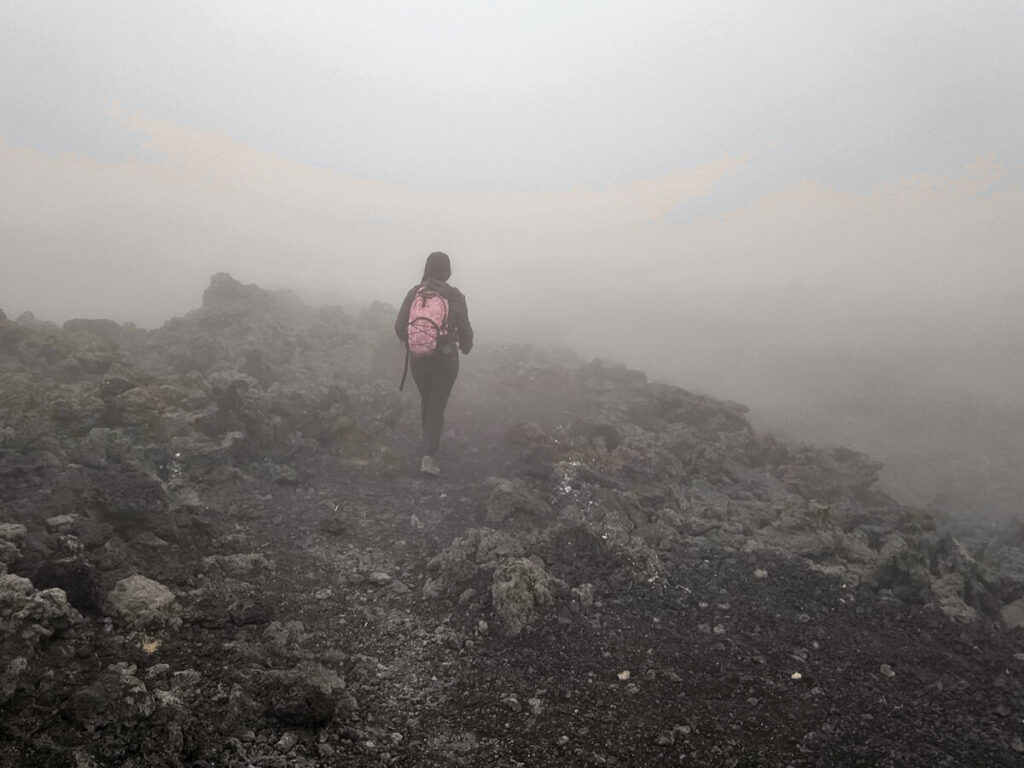
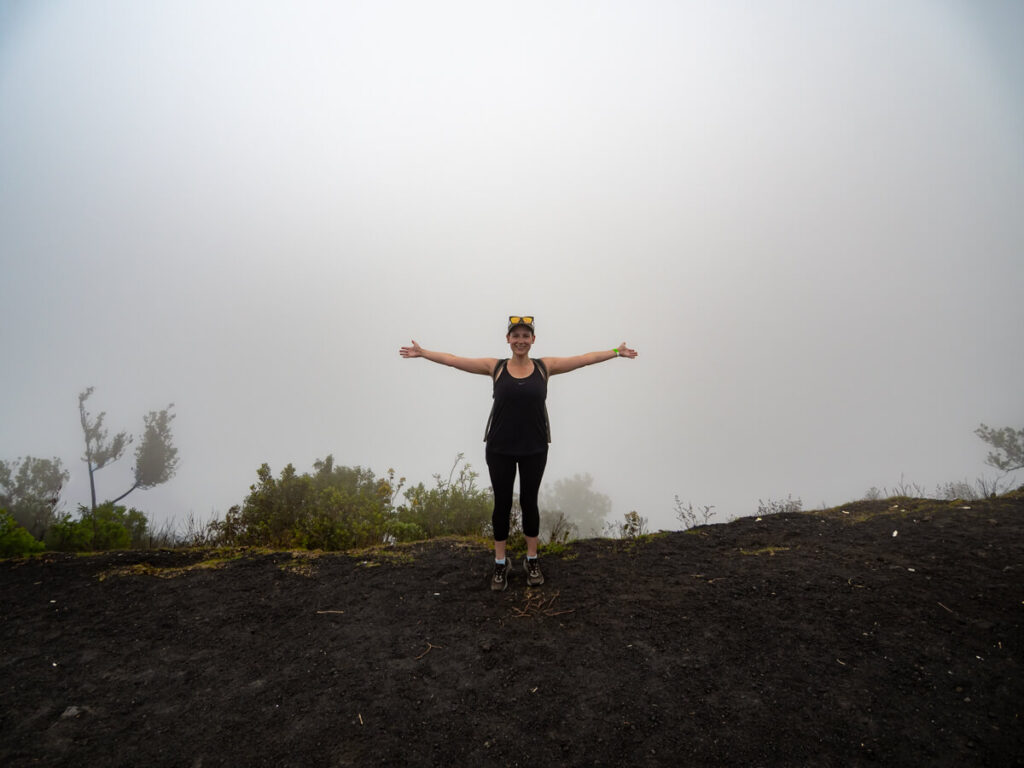
We had quite limited time left in our Antigua itinerary and made a mistake, booking onto the afternoon Pacaya tour. We knew we’d have less chance of seeing the view, but we weren’t expecting to be met with a blanket of thick fog – for the entirety of our visit. We reached the viewpoint and could see absolutely nothing.
Walking in the clouds was pretty cool, but we felt very grateful to have had a variety of volcano experiences all over the world, because we honestly barely even knew we were on one at Pacaya. The landscapes were similar to those we’d seen at Masaya in Nicaragua and in Hawaii Volcanoes National Park, but we just had no views. It was disappointing to see the sign of what we should be able to see, and be able to see nothing but wispy clouds. Since we’d literally spent the previous night on top of Acatenango with clear views of Fuego, this was rather unerwhelming.
Toasting marshmallows in the hot earth is unique for sure, but as vegetarians, we couldn’t even eat them (gelatin). We could have spent a bit more on the pizza cooking experience, but we were more interested in the landscapes, the views and being able to do a bit more volcano photography, which clearly didn’t go our way.
Obviously, with no view, there was no sunset. And as it got dark, the hiking got much harder. We were so glad we’d come prepared with our headtorch, because phone torches just weren’t cutting it. Everyone was slipping and sliding about in the volcanic ash in the pitch black on the descent – walking poles or a stick are an absolute necessity.
Then, it was back in the shuttle for the journey back to Antigua. At least we’d packed snacks to cheer us up.
Is Pacaya Volcano worth visiting?
So was visiting Pacaya Volcano worth it? For us, not really. We’re not trying to be ungrateful or complain – we’re glad we gave it a shot and we made the most of our visit with a positive attitude. But based on our experience, we just don’t recommend an afternoon Pacaya tour, unless you’ve literally never experienced a volcano before. If we’d never experienced walking through lava rocks, the hike would probably have been a lot cooler. But without the views (and with no lava like in the past), we missed out on the main appeal of the tour. If you’re planning to visit, we highly recommend booking a morning tour for better visibility.
Most people don’t get this unlucky and would argue that Pacaya Volcano is one of Guatemala’s most rewarding volcano hikes. It definitely is the most accessible, making it a good option for those with less time or who don’t fancy tackling a more challenging climb. Plus, the tour is only half a day, meaning you can still fit in some sightseeing in Antigua in the same day.
Additionally, we’d recommend paying a little more for a more premium tour. If you don’t mind the tourist-trap feel, the cheaper tour is fine.
The Pacaya Volcano hike is absolutely worth it if you’re interested in:
But there are some really important factors to also consider, including:
Is it safe to visit Pacaya Volcano?
Visiting Pacaya Volcano is generally considered safe when done with a licensed guide or reputable tour company.
The volcano is active, but eruptions are carefully monitored by Guatemala’s geological institute (INSIVUMEH), and tours are paused if there’s any sign of danger.
Trails are well-established and frequently used, with local guides trained to adjust routes depending on current conditions. It’s smart to stay on marked paths and avoid venturing too close to hot lava rocks or steam vents.
The main risks usually come from heat, loose volcanic gravel, or windy weather near the top, so good footwear and caution are key. With a guide and a bit of common sense, hiking Pacaya is a safe and memorable experience.
What to pack to visit Pacaya Volcano
To ensure an enjoyable and safe experience in Pacaya Volcano, it’s important to pack the right things. Don’t forget to pack your:

Pacaya Volcano vs Acatenango Volcano
Pacaya and Acatenango are two of Guatemala’s most famous volcano hikes, but they offer very different experiences.
Pacaya is the easier and shorter option, taking around 2-3 hours to reach the summit, making it perfect for beginners or those short on time. The trail is moderate, with gradual climbs through farmland and volcanic rock fields, and it’s one of the few places where you can toast marshmallows over natural heat vents.
Acatenango is a challenging overnight trek that climbs to nearly 4,000 metres (13,000 ft) and rewards hikers with breathtaking views of neighbouring Fuego Volcano erupting (when active).
While Pacaya offers a fun and accessible taste of Guatemala’s volcanic landscape, Acatenango is the full adventure – tough, high-altitude, and a bucket list experience for those who make it to the top.
Many travellers choose to do both: Pacaya to warm up, and Acatenango for the ultimate challenge, which is great if you have time. Otherwise, choose Pacaya if you only have a day or aren’t physically fit enough to do Acatenango.
Pacaya Volcano FAQs
We’ve answered these frequently asked questions to help you plan your visit to Pacaya Volcano.
When did Pacaya last erupt?
Pacaya last erupted in early 2021, when a series of powerful explosions sent ash clouds over nearby towns and forced temporary evacuations. Since then, the volcano has remained active but relatively calm, with no visible lava flows in recent years.
Can you see lava at Pacaya volcano?
Although Pacaya was famous for its flowing lava between 2010 and 2021, the surface has since cooled. You’ll still see smoking vents and feel the volcanic heat underfoot, which makes the hike fascinating in its own right, but you won’t see lava.
How far is Pacaya from Antigua?
Pacaya Volcano is about 25 miles (40 km) from Antigua, taking around 1.5 hours to reach by car, depending on traffic and road conditions. Most tours include round-trip transport from the city.
How far is Pacaya from Guatemala City?
From Guatemala City, Pacaya is even closer than Antigua, at roughly 19 miles (30 km) south, taking just over an hour to drive. It’s a popular day trip for locals on weekends.
How long does it take to climb Pacaya?
The hike usually takes about 2 hours to reach the top and around 1 hour to descend, depending on your pace. Most group tours spend roughly 4-5 hours total, including transport and time to explore the lava fields.
Can you roast marshmallows on Pacaya?
Yes! It’s one of the highlights of the hike. Guides bring sticks and marshmallows so you can roast them over the natural heat vents, which is a fun and surreal experience you’ll only get on an active volcano.
How hard is the Pacaya volcano hike?
Pacaya is considered moderate – it’s uphill most of the way, but it’s relatively short and suitable for anyone with a basic level of fitness. The steepest sections can be challenging, especially in the heat, but there are rest stops and plenty of time to go at your own pace.
What to wear to Pacaya?
Wear light, breathable layers, sturdy shoes with good grip, and bring a jacket, as it can get windy and cool at the top. If you’re doing the sunset hike, pack a flashlight or headlamp for the descent.

Read next:
Traveller’s Guide to Antigua: Guatemala’s Colourful Colonial Town
10 Top Day Trips from Antigua + 4 Tours to Avoid
Where to Stay in Antigua: 18 Best Hotels From Budget to Boujee
28 Best Restaurants in Antigua
How to Get to Antigua + How to Get Around
A Complete Guide to Visiting Hobbitenango
How to Hike to Cerro de la Cruz in Antigua
A Practical Guide to the Acatenango Overnight Hike
Our Guatemala Destination Guides:
Our Guatemala Travel Guides:
