How to Spend One Day in Kotor & Our Free DIY Old Town Walking Tour Route + Map

Discover our one-day Kotor itinerary, plus follow our self-guided walking route of Kotor’s Old Town to see the highlights and hidden gems.
This post may contain affiliate links, which means we might earn a small commission on anything purchased through these links at no extra cost to you. Learn more on our disclaimer page.
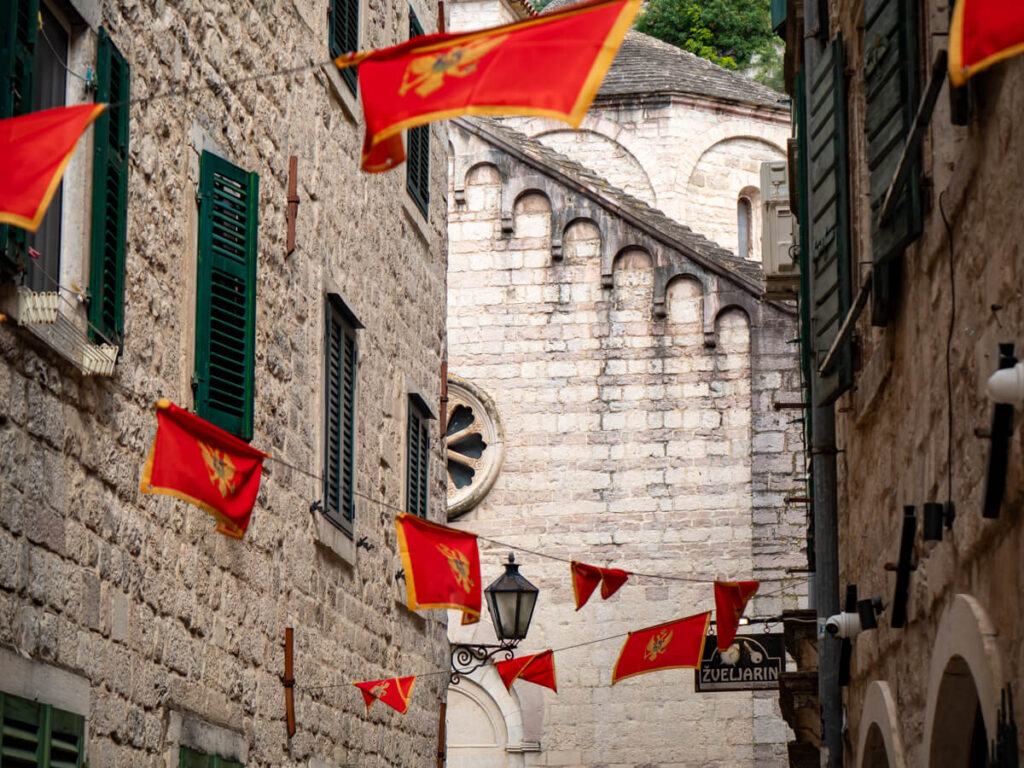
Surrounded by towering mountains and tucked into the dramatic Boka Bay, Kotor’s medieval Old Town is a network of narrow stone streets, tiny squares, historic churches, and atmospheric corners that are best explored on foot. But with so much packed into such a small area, it can be difficult to work out how to spend your time in the myriad of maze-like alleyways and surprisingly easy to miss the hidden gems, especially if you only have one day.
There is plenty of conflicting information online about what to see, where to start, how long different attractions take, and whether the Old Town is even worth visiting now that it’s become popular with cruise ship crowds. We spent 5 days exploring Kotor Old Town on foot and got to know every street and snicket (alleyway). We later returned with my family a few weeks later and led them on the exact DIY walking tour of Kotor Old Town that we’ve included in this post. Rather than simply listing the main sights, we’ve put together a complete one-day Kotor itinerary, including the stops we think are actually worth making and a few places you can easily skip if you’re short on time.
In this guide, we’ll show you exactly how to spend one day in Kotor, including our free DIY Old Town walking route, the best things to see along the way, where to stop for food and drinks, how to visit San Giovanni Fortress, and our practical tips for making the most of a short visit.
Kotor Old Town at a glance
More from Kotor
About Kotor’s Old Town
Kotor Old Town (Stari Grad) is the historic heart of the Bay of Kotor, tucked between the sparkling waters of the Adriatic Sea and the steep slopes of Mount Lovćen. Its labyrinth of narrow stone streets, small squares, cute churches, and old palaces is remarkably well preserved, which is one of the reasons the wider Natural and Culturo-Historical Region of Kotor has been a UNESCO World Heritage site since 1979.
The town’s history is particularly interesting because Kotor has spent centuries sitting at the crossroads of different cultures and powers. Settlements in the region date back to before the Romans, while the town was fortified as early as the Byzantine era, when Emperor Justinian I built a fortress above Kotor in 535 AD.
During the Middle Ages, Kotor developed into an important trading and maritime centre, connecting the Adriatic with the Balkans. The town was under the medieval Serbian state in the 12th-14th centuries, before seeking Venetian protection from the Ottomans at the turn of the 15th century. Kotor remained under Venetian rule for over 350 years, which is still obvious today throughout the architecture and fortifications in the Old Town – one of the first things we noticed was how similar Kotor felt to Venice.
The Old Town’s defensive walls were repeatedly expanded and strengthened over the centuries, now climbing dramatically up the mountainside towards San Giovanni Fortress.
After Venice fell in 1797, Kotor changed hands repeatedly. It passed to the Habsburg monarchy, briefly came under Russian control, was ruled by France from 1807 to 1813, and then returned to Austrian rule following the Congress of Vienna in 1814.
During its time under Austrian rule, later Austria-Hungary, from 1814 to 1918, the bay became an important naval base, particularly during the First World War.
After the collapse of Austria-Hungary in 1918, Kotor became part of the Kingdom of Serbs, Croats, and Slovenes, later known as Yugoslavia. After the Second World War, it became part of the Socialist Republic of Montenegro within Yugoslavia.
On 15 April 1979, a devastating earthquake struck Montenegro and severely damaged Kotor’s historic buildings and walls. The disaster affected much of the wider Bay of Kotor, and the Old Town subsequently underwent extensive restoration with international assistance, including support from UNESCO.
Montenegro declared independence in 2006, officially becoming a country of its own and making it one of the youngest countries in the world. We were lucky enough to be in Kotor for the 20th anniversary celebrations, which involved live music concerts and fireworks, which was fun.
Tourism has grown enormously in recent decades, and cruise tourism in particular has transformed the experience of visiting Kotor, putting the tiny Old Town under the strain of mass tourism. The city now regularly welcomes large cruise ships into the bay, which can mean the tiny Old Town becomes extremely crowded when several ships arrive at once. For us, that’s all the more reason to travel responsibly in Kotor.

Planning a trip to Kotor?
Montenegro is gaining popularity quickly, so be sure to book in advance as early as possible!
Top Experiences in Kotor
Top Hotels in Kotor
Rent a Car in Montenegro
Best eSIM for Montenegro
Where is Kotor?
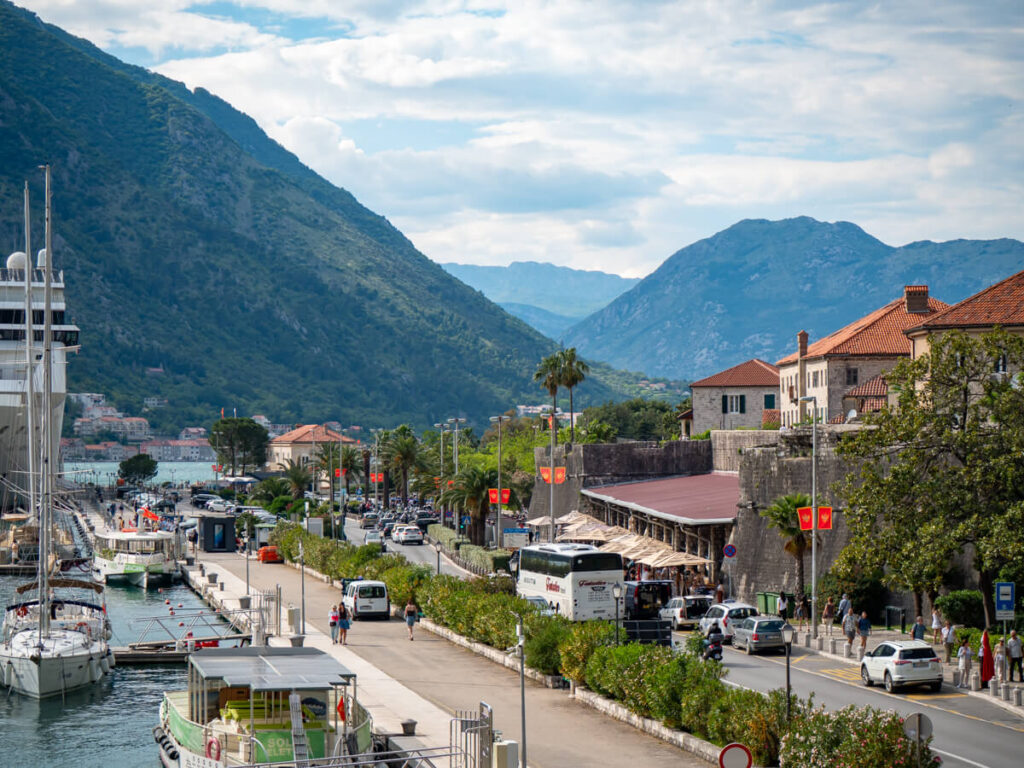
Kotor sits on the Adriatic coast of southwestern Montenegro, at the southeastern end of the Bay of Kotor. The Old Town sits directly beside the water, surrounded by steep limestone mountains that rise dramatically behind it.
Kotor is particularly easy to reach by air, with Tivat Airport (TIV) being the closest option. The airport is just 5 miles (8 km) from Kotor and around a 15-20 minute drive, depending on traffic. If you’re renting a car in Montenegro, Tivat is the better choice for Kotor, and is where we picked up our rental car.
Podgorica Airport (TGD), which serves the country’s capital, is further away but can be a useful alternative if you find better flights. Kotor is around 56 miles (90 km) from Podgorica by road, with the journey typically taking around 1.5-2 hours, depending on the route and traffic.
Flying into Dubrovnik Airport (DBV) in Croatia and then driving to Kotor is also a popular option, and what my family did when they met us in Montenegro. The airport is around 44 miles (71 km) from Kotor by road. However, you’ll need to cross the Croatia-Montenegro border, so journey times can vary significantly depending on traffic and border queues, especially in summer.
Its location makes Kotor an easy addition to a Montenegro road trip, particularly if you’re travelling between the coast and inland destinations.

Kotor Old Town Walking Route Map
We’ve pinned all the highlights of our Kotor Old Town walking route on the interactive map below.
How to spend one day in Kotor
If you’ve only got one day in Kotor, we’d focus on the Old Town and the hillside fortress rather than trying to see every attraction around the bay, which is actually home to numerous towns, and traffic gets incredibly congested.
The historic centre is compact enough to explore on foot in a few hours, and you can easily combine wandering its streets with a climb up the city walls, a leisurely lunch, and some time enjoying the waterfront, or even a boat trip.
Here’s how we’d recommend you spend a day in Kotor if it’s your first visit.
If you’re in Kotor for only a day, going all the way to another town like Budva is a silly suggestion when there’s already so much to see and do in and around the bay. But if you are really keen to skip Kotor completely and use it as a base to pick up a day trip to see wider Montenegro, we’ve also included a section covering the best day trips from Kotor, including places like Lake Skadar.
We’ve also included a couple of alternative options, like Lovćen National Park, if you’re not keen on a boat trip but want to stay in the wider Kotor area, as well as some suggestions for how you could restructure your day depending on what you want to see and do.
How to get to Kotor’s Old Town
If you’re not already staying in Kotor, you’ll first need to get here. Kotor Old Town is compact and completely pedestrianised, so wherever you’re arriving from, you’ll need to leave your car outside the historic centre and walk the final few minutes.
Kotor’s Old Town is easy to reach by car, bus, or boat, with the main bus station just a short walk from the historic centre and several pedestrian gates providing access to the Old Town.
If you’re driving to Kotor, the main approach is along the Adriatic Highway (E65/E80), with the road following the Bay of Kotor before reaching the town. From the north, you’ll approach via the winding road or use the Kamenari-Lepetane Ferry. From the south, you’ll take the Vrmac Tunnel to reach the Old Town.

Parking
If you’re driving to Kotor, don’t try to park inside the Old Town – there is no reason to battle the traffic when several car parks are within easy walking distance. Parking Autoboka is our preferred parking area, as we always manage to find a space and it’s considerably cheaper than many of the others in town and only a 5-minute walk away. If you’d like to be slightly closer to the town’s walls, you could try Parking Benovo.

Bus station
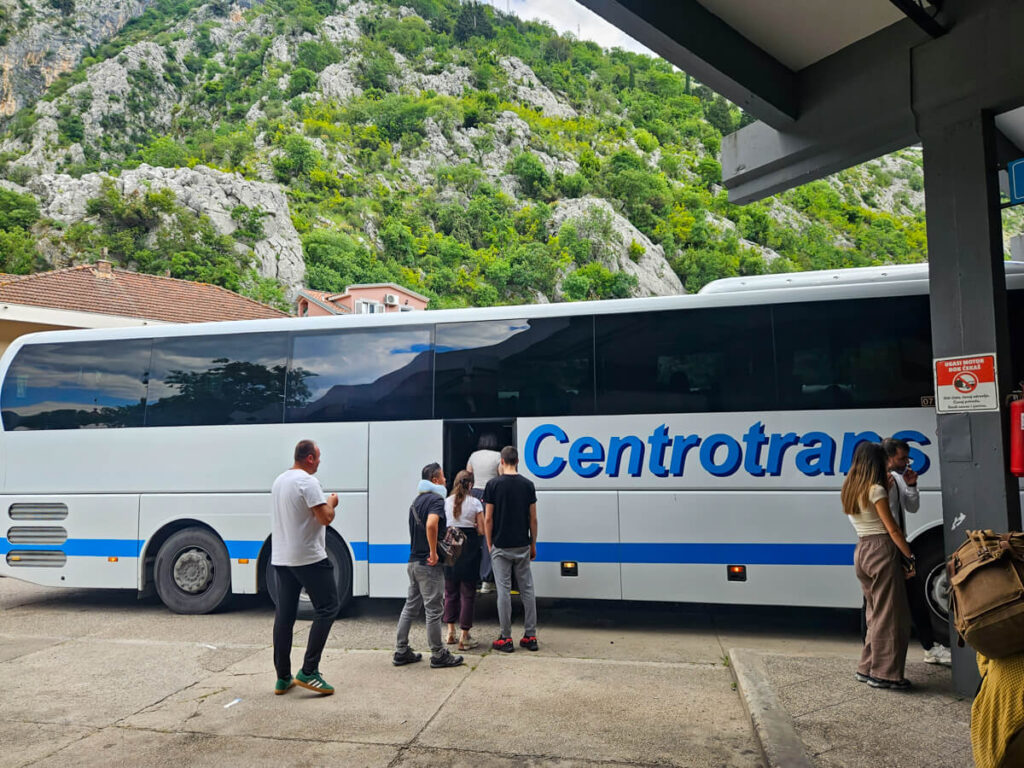
Kotor’s main bus station is conveniently located just outside the Old Town, making the city particularly easy to visit without a car. From the bus station, it’s only a 5-10 minute walk to the Old Town.
We arrived at the bus station when we got off the bus from Mostar. It’s small and pretty chaotic. It has regular services connecting Kotor with other parts of Montenegro, including Budva, Tivat, Podgorica, and Herceg Novi, as well as longer-distance services to neighbouring countries, which is handy if you’re backpacking or coming into Kotor for the day from nearby towns.
Morning: Follow our DIY Kotor walking tour
There are loads of fun things to do in Kotor and deciding on what order to do them is tricky. A Kotor walking tour is a great way to explore the narrow streets while learning more about the city’s history, landmarks, and hidden corners.
But if you like to explore independently, we’ve got you covered. Over five days of exploring the Old Town, we created a pretty comprehensive self-guided Kotor Old Town walking tour that we later took my family on to introduce them to the town – so it’s tried and tested. It takes in the main sights without sending you backwards and forwards through the same streets, and you can follow it at your own pace, stopping for coffee, photographs, and lunch along the way.
If you’re wondering what to see in Kotor Old Town, we’ve got you covered. The highlights of our route include:
The great thing about the walking route we’ve laid out below is that it’s essentially a loop, so you can pick it up at any point on the list if you’re already in the Old Town.

1. Ancient Roman Settlement in Kotor
If you’ve parked in the car park we recommended or are coming from the bus station, you’ll approach the Old Town from the south. Don’t miss the ruins of the Roman settlement on your right, once known as Ascrivium (Acruvium).
There aren’t a lot of obvious Roman ruins in Kotor like you’ll find in places like Split, but it’s an interesting site that almost every tourist misses. You can only appreciate it from over the chain-link fence, but it’s worth seeing as you head towards the Old Town and is a reminder that Kotor has been continuously shaped by different civilisations for more than two millennia.

2. Gurdić Gate
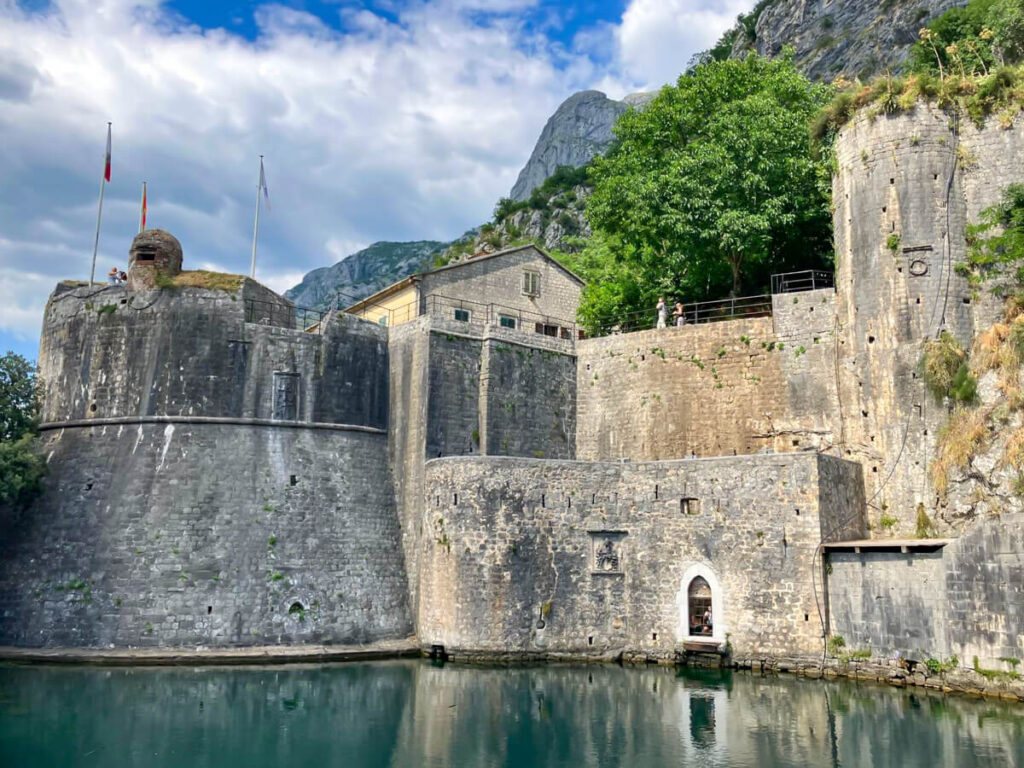
At the southern end of the Old Town, the Gurdić Gate is one of Kotor’s most interesting entrances and where we recommend entering. Parts of the fortifications here date back to the 13th century, although the entrance was modified repeatedly over the centuries.
Look out for the Gurdić Spring, which emerges beneath the walls and once helped supply the city’s defences with fresh water. The entrance was protected by a drawbridge and several layers of fortification, part of which you can see as you walk through the gate, making this a particularly formidable way into the medieval city.
3. The City Walls
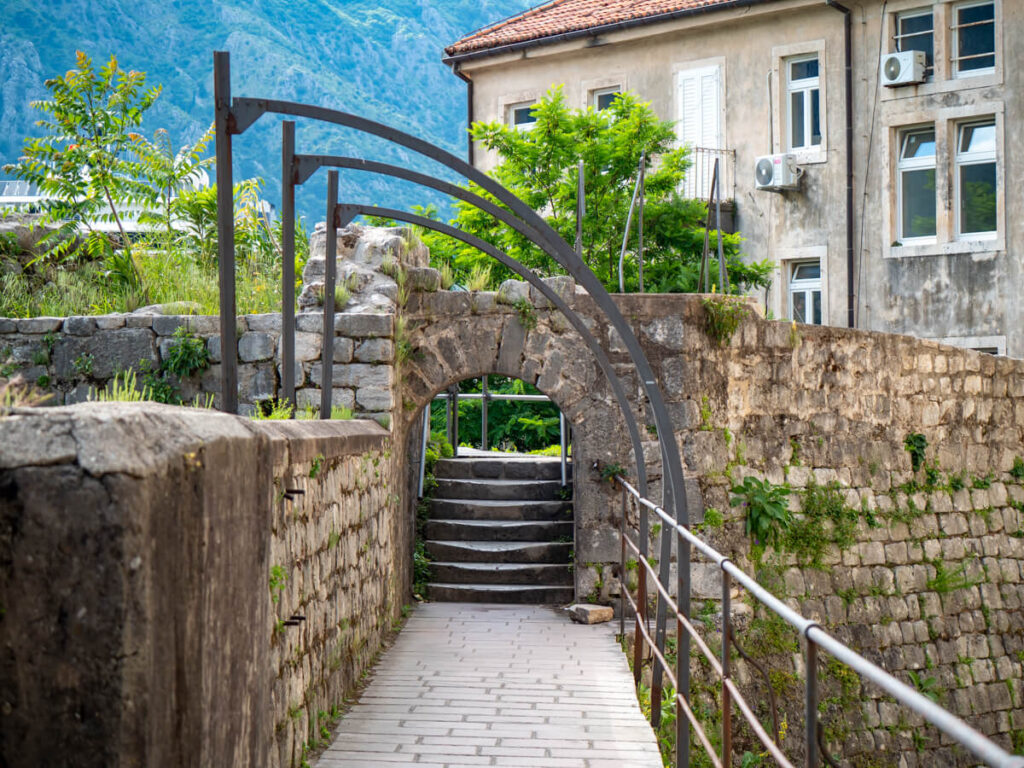
From the Gurdić Gate, you can take the staircase on your left up onto the city walls. One of the defining features of the Old Town, they stretch for around 2.8 miles (4.5 km) up the mountainside and around the historic settlement, completely encompassing the Old Town.
Some sections reach up to 20 metres (65 ft) high. The path can get a bit narrow, so we recommend walking it earlier in the day before they get busy, to minimise the amount of time you’ll spend standing aside for others to pass.
The best stretch of the walls to walk is between the Gurdić Gate and the Bembo Bastion, which takes you along the front of the town with views over red roofs on your right and the harbour and mountains around the bay on your left.
Optional: Climb to the Fortress
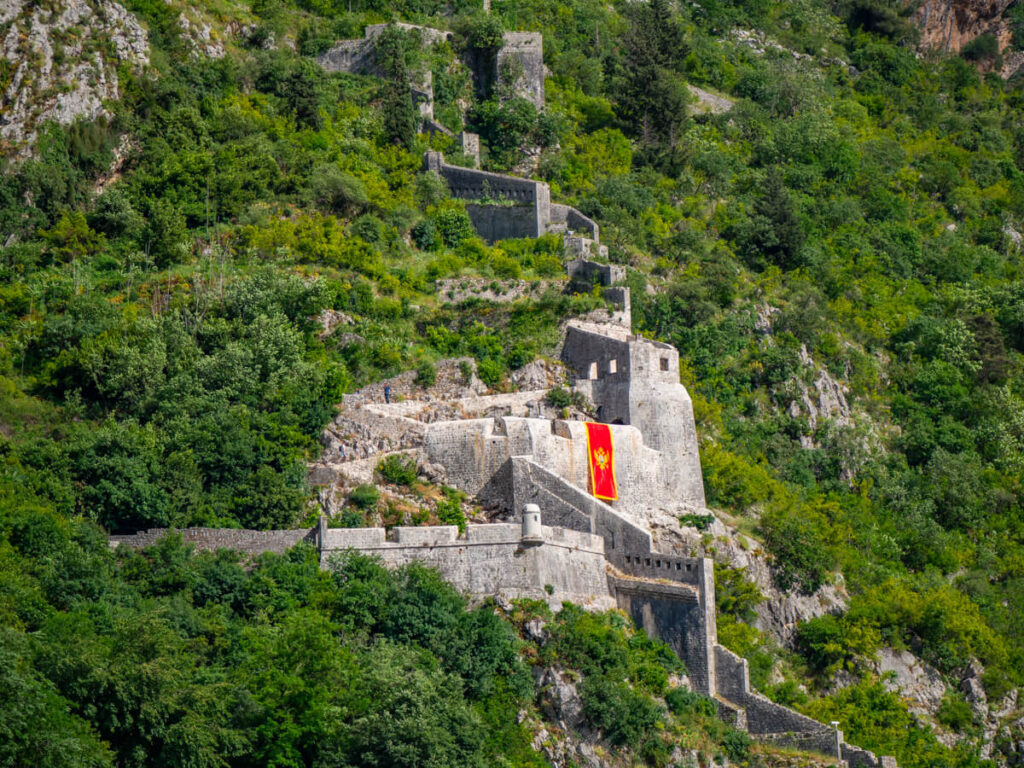
One of the reasons we recommend starting at the Gurdić Gate end of town is that you have the option to climb to the fortress before the crowds appear and the sun gets too hot. If you’ve got the time and energy, you can follow the walls to the left to one of the entrances to the San Giovanni Fortress, also called St. John’s Fortress (Tvrđava sv. Ivana).
It’s a steep climb with roughly 1,350 steps to reach the fortress, where you’ll be rewarded with some of the best views over the Old Town rooftops, harbour, and Bay of Kotor.
Personally, we weren’t keen to pay the €15 per person entrance fee, and experienced arguably better views from the Ladder of Kotor hike. But if you’re interested in history or only have a day in Kotor and are keen to get to an aerial viewpoint without a proper hike, the fortress is a good option.
4. Kampana Tower
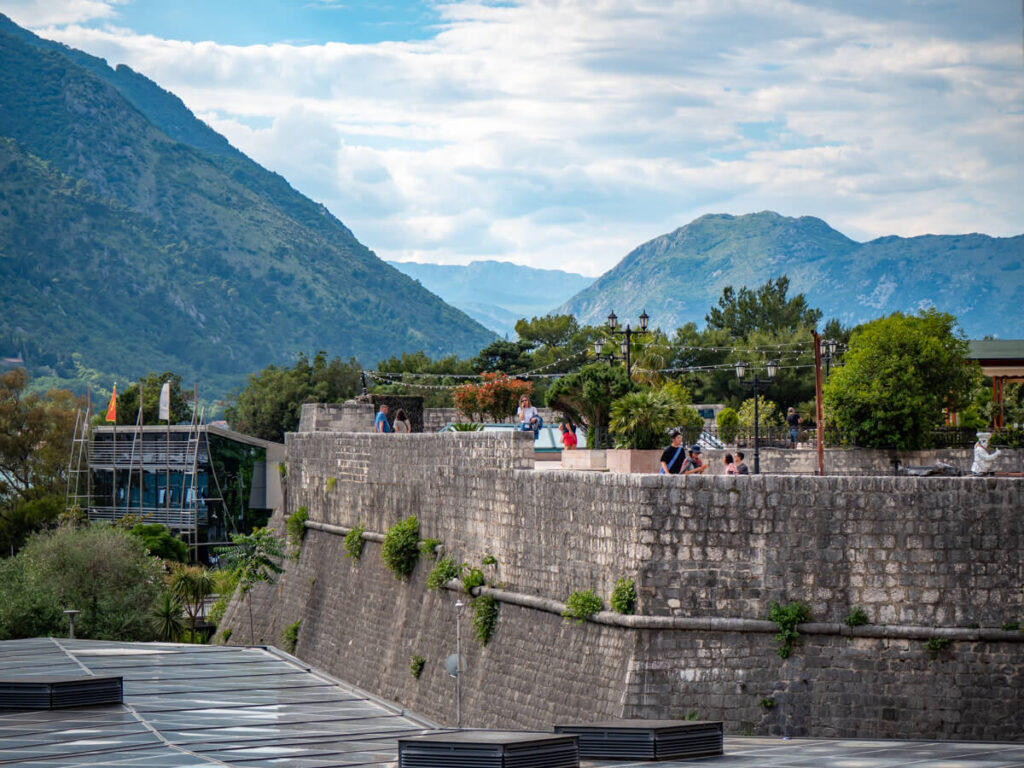
Whether you climb up to the fortress and back to the walls or choose to skip it, the next step is to continue following the wall along the seafront to the Kampana Tower. At the northwestern corner of the Old Town, it is one of the most recognisable parts of Kotor’s defensive walls.
The tower and surrounding fortifications date broadly from the 13th and 14th centuries, when Kotor’s walls were being expanded to protect the city from attack. The tower’s position beside the mouth of the Škurda River was particularly strategic, allowing defenders to protect both the northern approach and the entrance to the bay.
Nowadays, you’ll find a fairly popular restaurant there, and it’s also a good place to take the stairs back into the Old Town if you’ve had enough of the walls. There are also public toilets on the stairs here.
5. Arm’s Square
From Kampana Tower, you can head along the Square of Arms (Trg od Oružja), the largest and busiest square in the Old Town. Its name dates back to the Venetian period, when weapons and ammunition were produced and stored here.
Look out for the Clock Tower, which was built in 1602. The square is also surrounded by several important historic buildings, including the former Rector’s Palace and the building that became Napoleon’s Theatre.
You’ll also find quite a few souvenir shops in this area.

6. Sea Gate
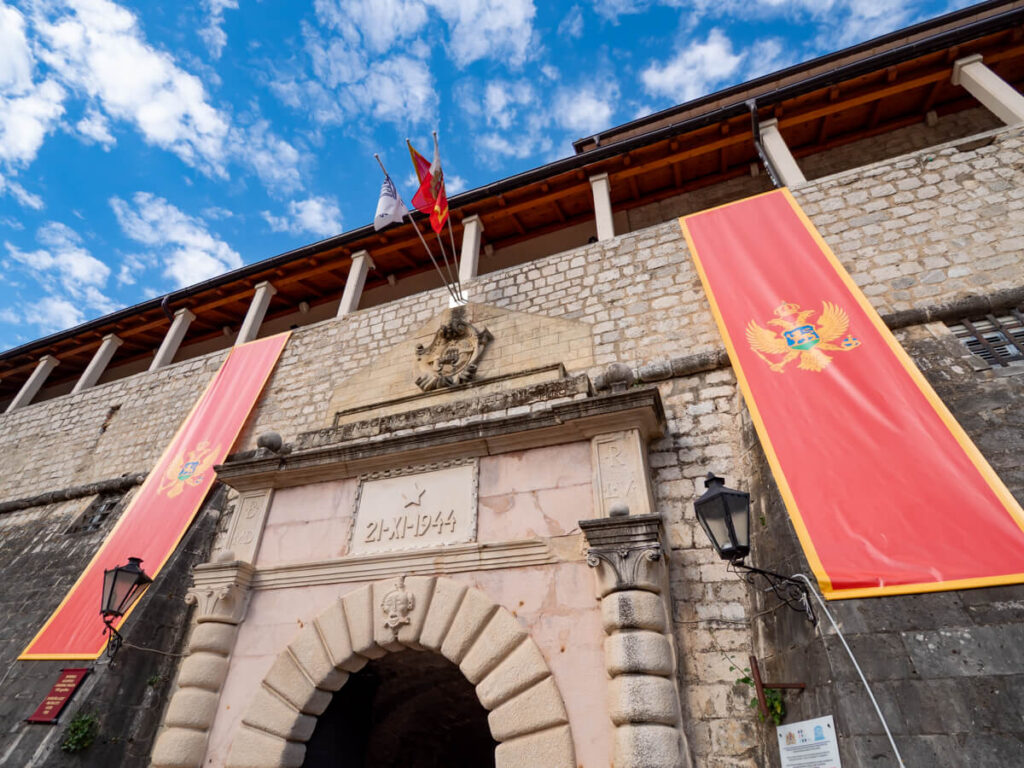
The highlight of Arm’s Square is the Sea Gate (Vrata od Mora) and you’ll know it when you see it because of the sheer number of people hanging around it. We recommend popping outside the walls to snap a quick picture before entering back into the square. Many walking tours actually start at the Sea Gate, but we didn’t because it’s usually just such a busy spot. There is a handy tourist information booth out here, though, if you need any information about buses or tours.
The gate was built in 1555 during Venetian rule and originally faced directly onto the water – the waterfront promenade in front of it didn’t exist at the time. Look above the entrance for the remains of its historic decoration and the later inscription commemorating the liberation of Kotor in 1944.
Optional: Kotor Cats Museum
Kotor is famous for its cats, so naturally there’s a museum dedicated to them. From Arm’s Square, pass through the archway and make your way up Ulica 1, and you’ll come to a square that’s home to the Kotor Cats Museum.
The small exhibition space consists of two rooms that contain a wonderfully odd collection of cat-related prints, books, postcards, advertisements, coins, and other memorabilia, with exhibits dating from the 16th century through to the 1970s. It’s tiny and decidedly quirky rather than a major historical attraction, but if you’re a cat person, it’s a fun addition to the walking tour.
The museum is seasonal, normally operating from May to October. It’s only €1 per person and the proceeds go directly toward feeding, medical care, and spay-neuter programs for Kotor’s local street cats.

7. Kotor Bazaar
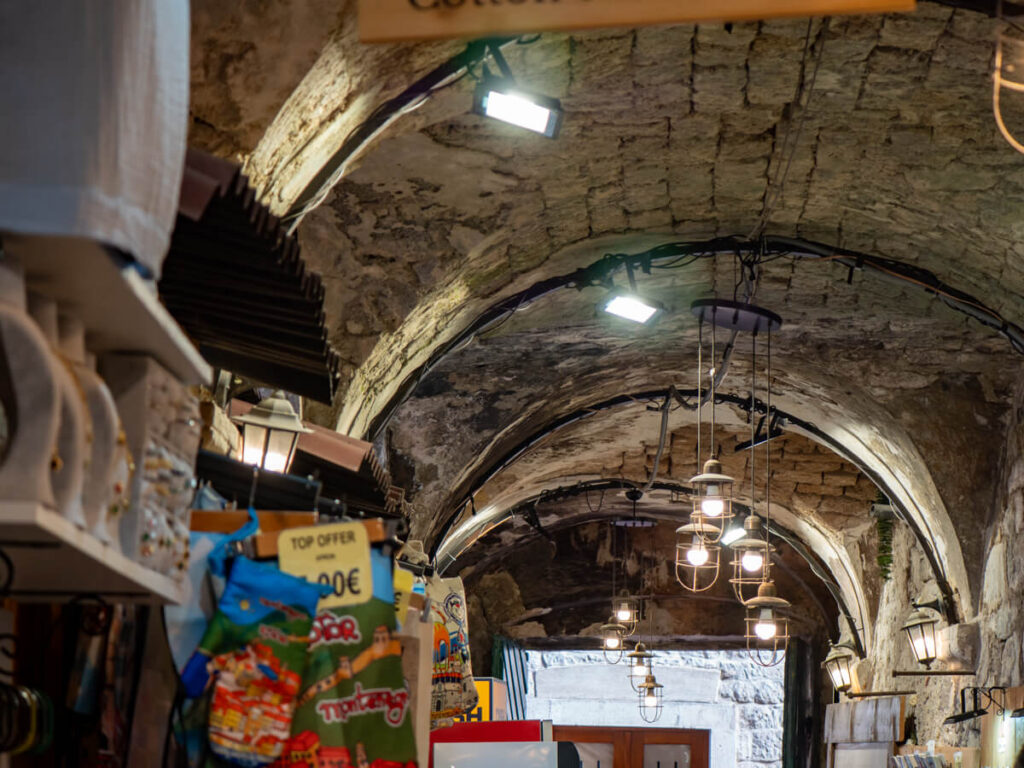
As you head deeper into the Old Town up Ulica 1, you’ll pass hidden Kotor hotels and tiny churches tucked between the narrow streets and stone buildings. Look out for the Kotor Bazaar on your left, tucked between Saint Clare’s Franciscan Church and Saint Nicholas’ Church.
A tiny marketplace filled with artisanal stalls, it occupies a cloister of the former Dominican Monastery of St Nicholas, which dates back to the 15th-16th centuries. The monastery was damaged by fire in 1662, rebuilt, then destroyed again in the 1667 earthquake.
8. Saint Nicholas’ Church
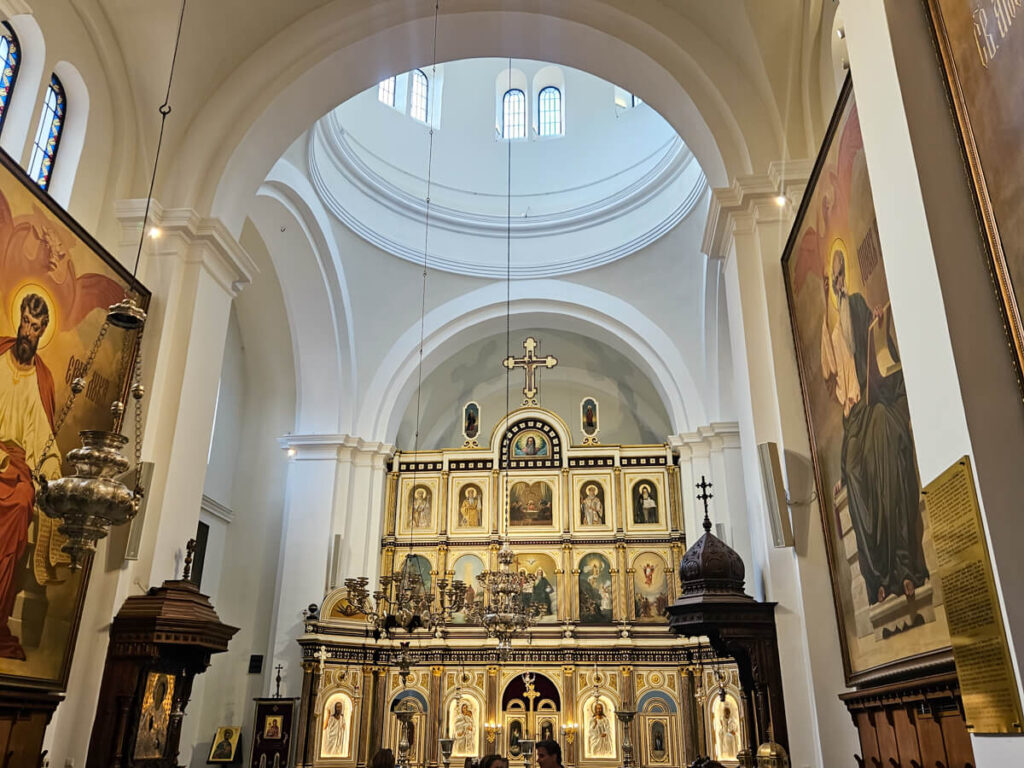
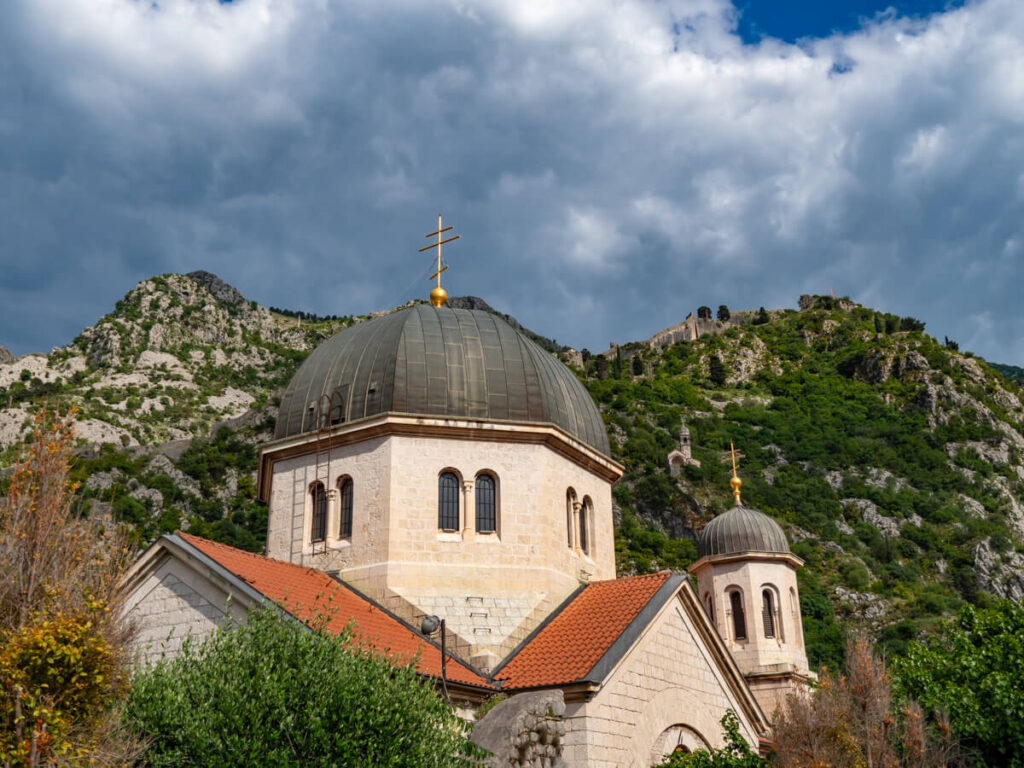
The next highlight is Saint Nicholas’ Church (Crkva Svetog Nikole), which stands on St Luke’s Square and is the main Serbian Orthodox church in Kotor’s Old Town.
Although it looks much older, the current building dates from the early 20th century – construction began in 1902 on the site of an earlier church and was completed in 1909. Inside, the church has an elaborate iconostasis made by Czech craftsmen, completed in 1908, while its exterior features an intricate gold mosaic of Saint Nicholas the Wonderworker himself.
It’s still an active place of worship, so remember to be respectful if you visit during a service.
9. Church of St. Luke
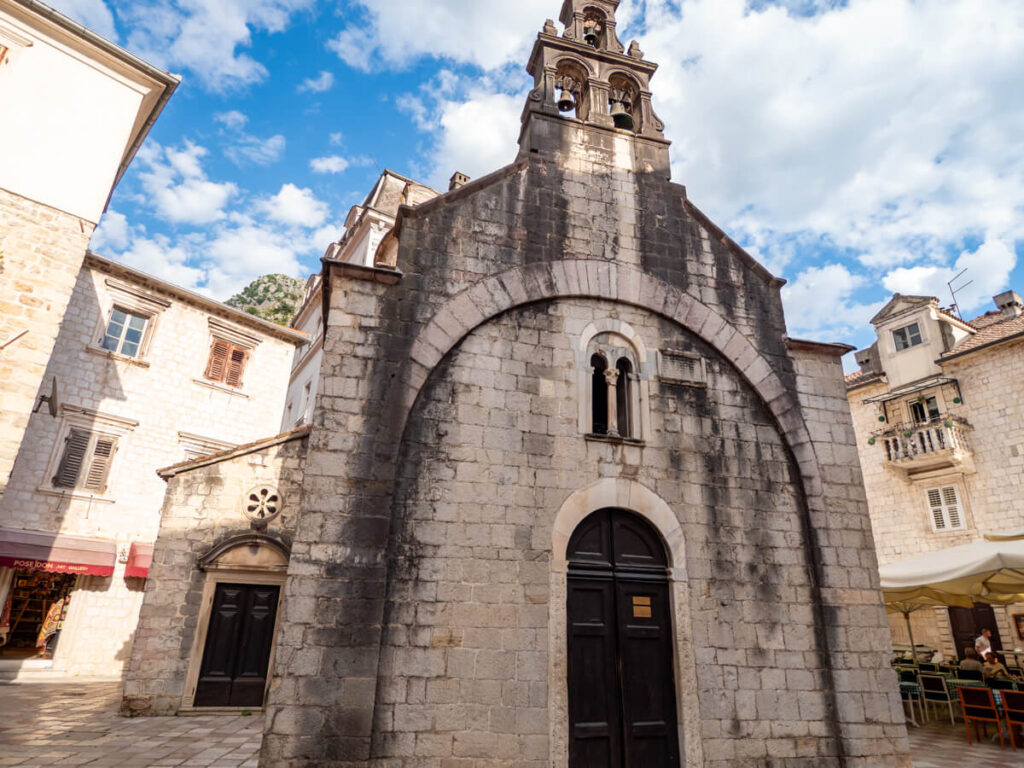
On the square of the same name, the small Church of St. Luke (Crkva Svetog Luke) is one of Kotor’s oldest surviving churches, dating to 1195. Its understated stone exterior makes it easy to walk straight past, but its history is interesting. It was originally Catholic before becoming Orthodox during the Venetian period, and for a time it contained both Catholic and Orthodox altars.
The church also contains old fresco fragments and a floor containing numerous burial places, giving you a real sense of how much history is packed into this tiny building.
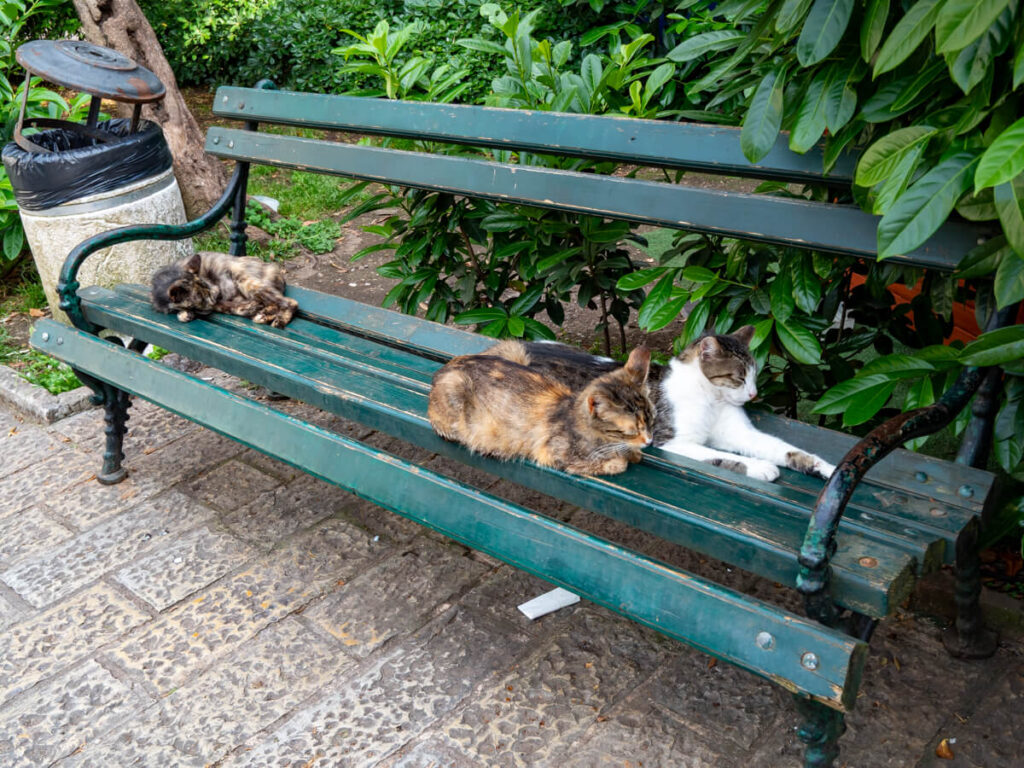
10. Cat Park
Kotor is famous for its free-roaming street cats, which you’ll see lounging on steps, windowsills, walls, and just about any sunny patch of stone they can find. Kotor’s cats have become something of an unofficial symbol of the city, with local groups now involved in feeding, veterinary care, and spaying and neutering programmes.
There are various stories about how Kotor acquired so many cats, including the idea that sailors brought them on ships to control rats and mice. We were just glad to see they are so well looked after, with locals leaving food and water out for them on every corner.
After exploring the more formal sights of the Old Town, Cat Park is a fun little change of pace and where my cat-obsessed family and I wanted to spend the most amount of time.
On the square, you’ll also see the small Church of St. Mary Collegiate and a drinking fountain, which is handy for refilling your reusable water bottles.
11. River Gate
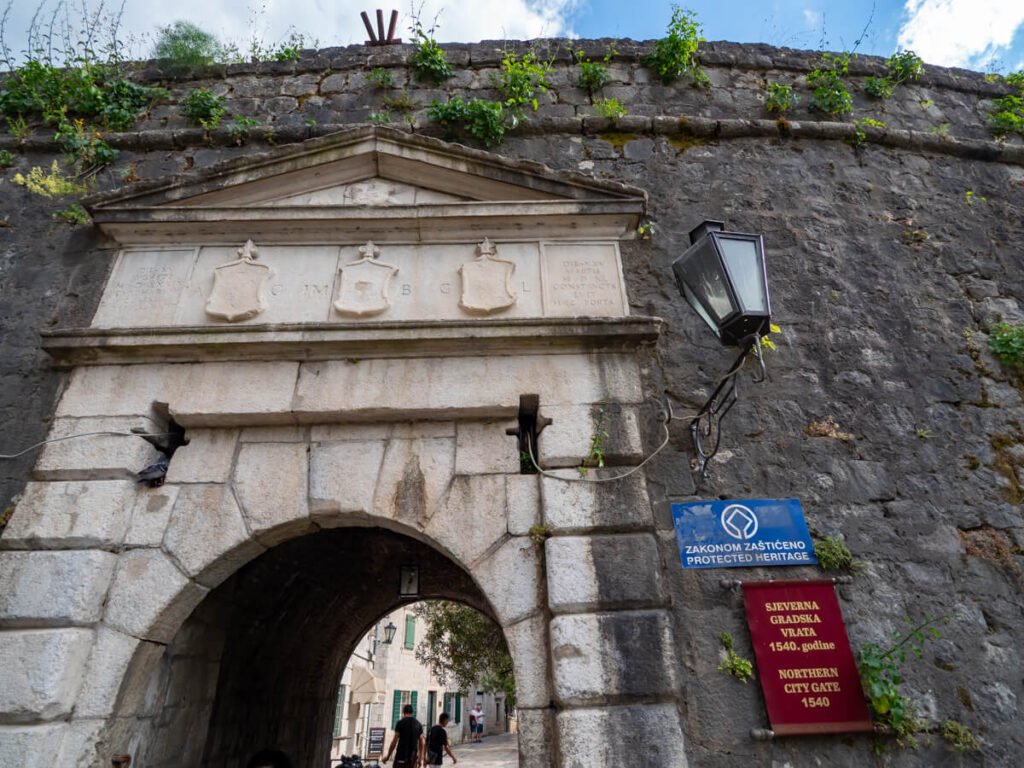
Just off Cat Park, you’ll find the River Gate (North Gate), the northern entrance to Kotor’s Old Town. It’s noticeably quieter than the grander Sea Gate.
Built in 1540, the gate commemorates the successful defence of Kotor against an Ottoman attack the previous year. It connects to a bridge across the Škurda River, whose clear mountain water forms a natural moat alongside this section of the fortifications.
From here, we’d recommend turning around and heading in a straight line along the east side of the Old Town.
Optional: Maritime Museum
As you meander your way past restaurants, bars, and tiny squares, you’ll be able to detour to the Maritime Museum if you’re so inclined. It’s housed inside Grgurina Palace, an impressive Baroque mansion built for the noble Grgurina family in the early 18th century.
The museum grew from the collection of the Boka Marine Fraternity, established around 1880, and eventually opened to visitors in 1900. Inside, you’ll find models of ships, portraits, weapons, uniforms, and other objects telling the story of Kotor and the wider Bay of Kotor’s maritime traditions.
Just opposite, you’ll also find Jazz Club Evergreen, one of the best bars in Kotor.
12. Saint Tryphon’s Cathedral
Next up, you’ll find yourself in Boka Navy Square (Trg Bokeljske Mornarice), where Saint Tryphon’s Cathedral (Katedrala Svetog Tripuna) is one of Kotor’s most famous landmarks. The present Romanesque cathedral was begun in 1124 and consecrated in 1166, although it replaced an earlier church dating from the early 9th century.
Look closely at the two bell towers and you’ll notice that they aren’t identical. Both have been rebuilt and altered over the centuries following earthquake damage. Inside, the Cathedral Museum (Muzej Katedrale) contains a remarkable collection of religious art and historic treasures, including the relics of Saint Tryphon, Kotor’s patron saint, and a 14th-century stone ciborium above the main altar.
On the same square, you’ll also be able to see Drago Palace, one of Kotor’s most striking Gothic buildings.

13. Flour Square
One square over, Flour Square (Trg od Brašna) is one of the smaller squares in Kotor, but it’s surrounded by some seriously impressive architecture. Its name comes from its former role in the city’s trade, with flour warehouses and businesses operating around the square.
The two buildings that really grab your attention are Pima Palace and Buća Palace, once homes of two powerful Kotor families. Pima Palace combines Renaissance and Baroque features, with an elaborate entrance and a long stone balcony, while Buća Palace has much older Gothic origins dating back to the 14th century. The latter was heavily altered after the 1667 earthquake, which is why it now looks more like a collection of connected buildings than a single grand palace.
Flour Square’s a bit of a detour, but the right direction if you want to head into the heart of the Old Town for lunch.

14. Craftsmen Street
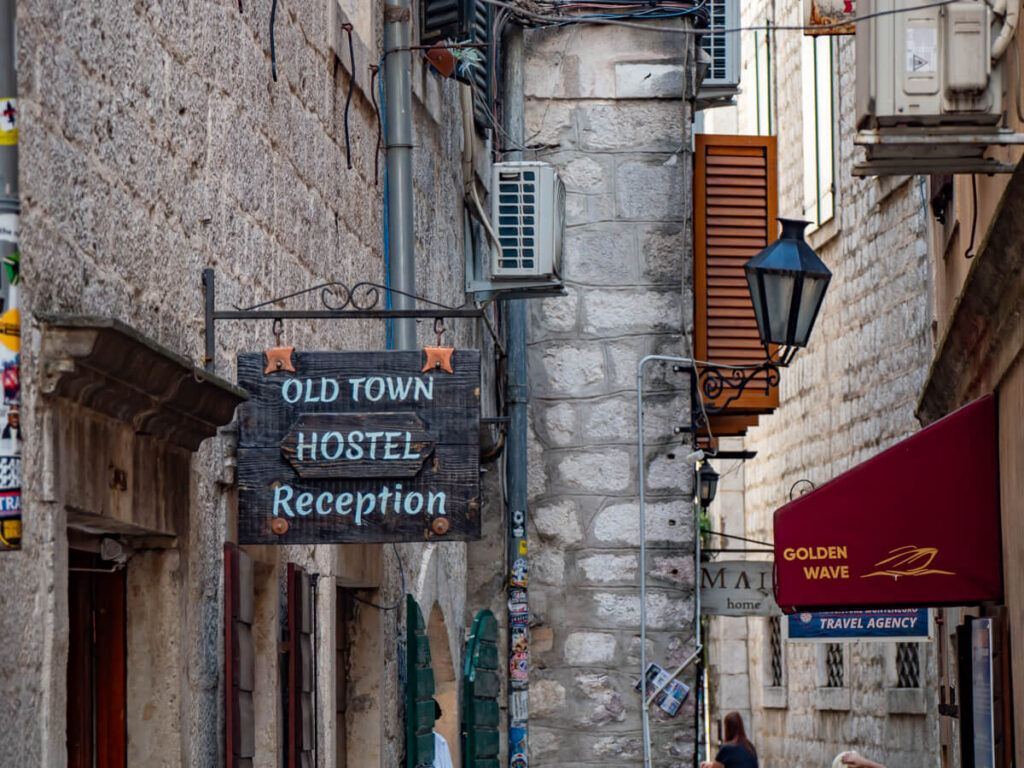
If you continue south through the Old Town, keep an eye out for the smaller lanes historically associated with Kotor’s trades and crafts. Street names like Kovačka ulica (Blacksmiths’ Street) and other traditional names reflect the practical side of the medieval town, when streets and squares were often named after the trades carried out there rather than famous people or grand buildings.
Follow Ulica 2 south and you’ll head back towards the Gurdić Gate where we started. You’ll be walking along one of the oldest streets in the town, known as Craftsmen Street. Rather than being lined with grand palaces, this narrow street was traditionally associated with the city’s tradespeople, with blacksmiths, stonemasons, goldsmiths, carpenters, shoemakers, bakers, and sword makers working here in the Middle Ages.
Afternoon: Perast & Blue Cave Boat Trip
After a light lunch (find our recommendations in our guide to our favourite cafés and restaurants in Kotor), we’d recommend taking a Perast & Blue Cave Boat Trip. It’s the most popular tour in Kotor and for a good reason.
A boat trip around the Bay of Kotor is a great way to see just how dramatic the surrounding landscape is from a completely different perspective than walking the Old Town on foot.
Most tours leave from Park Slobode and combine a visit to Perast with the iconic Blue Cave in a couple of hours. Perast is a beautiful little waterfront village with its distinctive stone buildings and the famous islands of Our Lady of the Rocks and St George just offshore.
From there, boat trips can continue out towards the coast, passing submarine tunnels and Mamula Island – once a prisoner-of-war camp and now a fancy hotel – to the Blue Cave, where you can swim in the incredibly clear blue water if conditions are suitable.
We recommend arranging your Blue Cave boat trip in advance, particularly if you’re visiting during the busy summer months. This means you can choose a departure time that fits around your morning exploring Kotor’s Old Town rather than wasting part of your day waiting for a boat with availability.

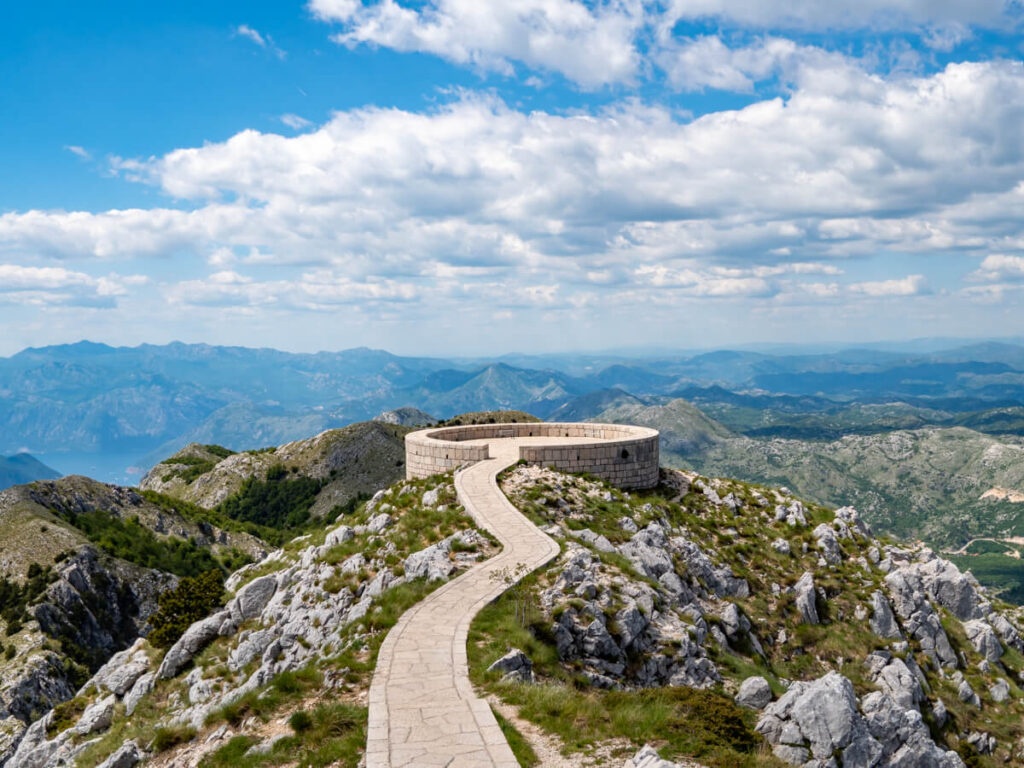
Alternative option: Lovćen National Park
If you’re not particularly interested in spending your afternoon on the water, we’d head into the mountains instead and explore Lovćen National Park. This is the better option if you’d rather see more of Montenegro’s dramatic mountain scenery and get away from the busy waterfront.
You can drive up from Kotor via the famous Kotor Serpentine, stopping at viewpoints along the way before continuing towards Njeguši and the Njegoš Mausoleum. The journey itself is part of the experience, with increasingly impressive views back across the Bay of Kotor as you climb.
Bear in mind, if you’re driving in Montenegro, that the Serpentine is a challenging route to tackle with 25 hairpin switchbacks, so it’s not for inexperienced drivers. It’s also a regulation in the summer months to drive up in the morning and down in the afternoon, so we’d wiggle your itinerary around to look like this:
If you don’t want the faff of a car, you can take the Kotor Cable Car up to the panoramic top station and enjoy a drink at Monte 1350 for sunset, before heading back into town for dinner. The top station is also home to theme-park-style rides, including the iconic alpine coaster.
Evening: Eat in a local restaurant
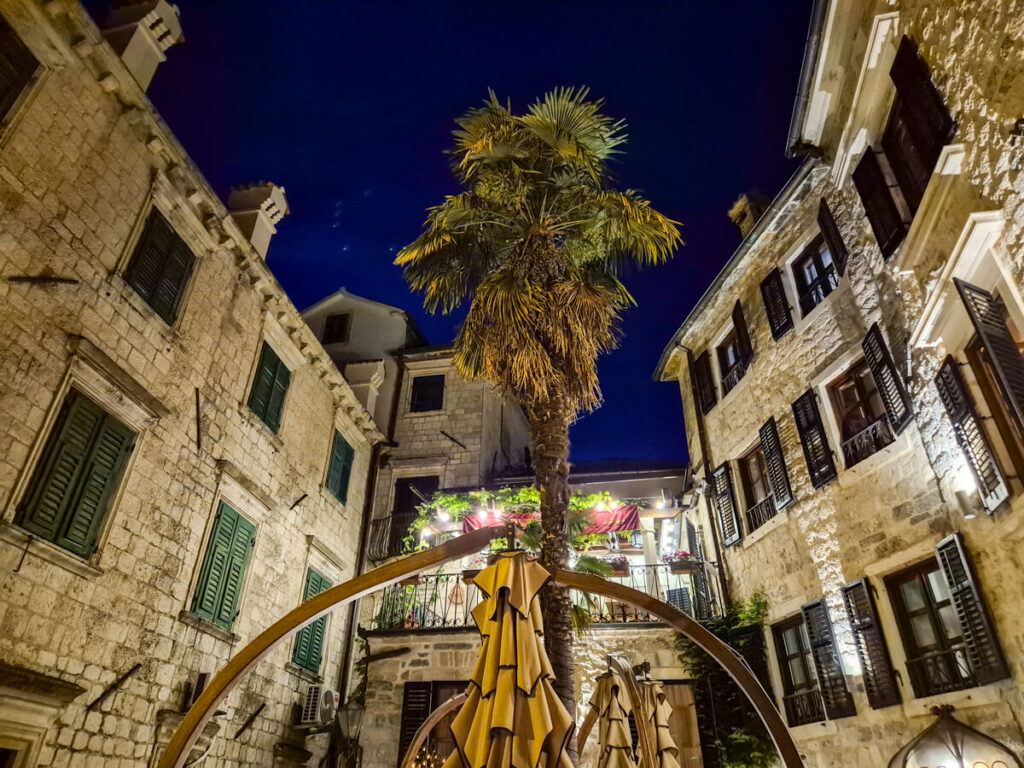
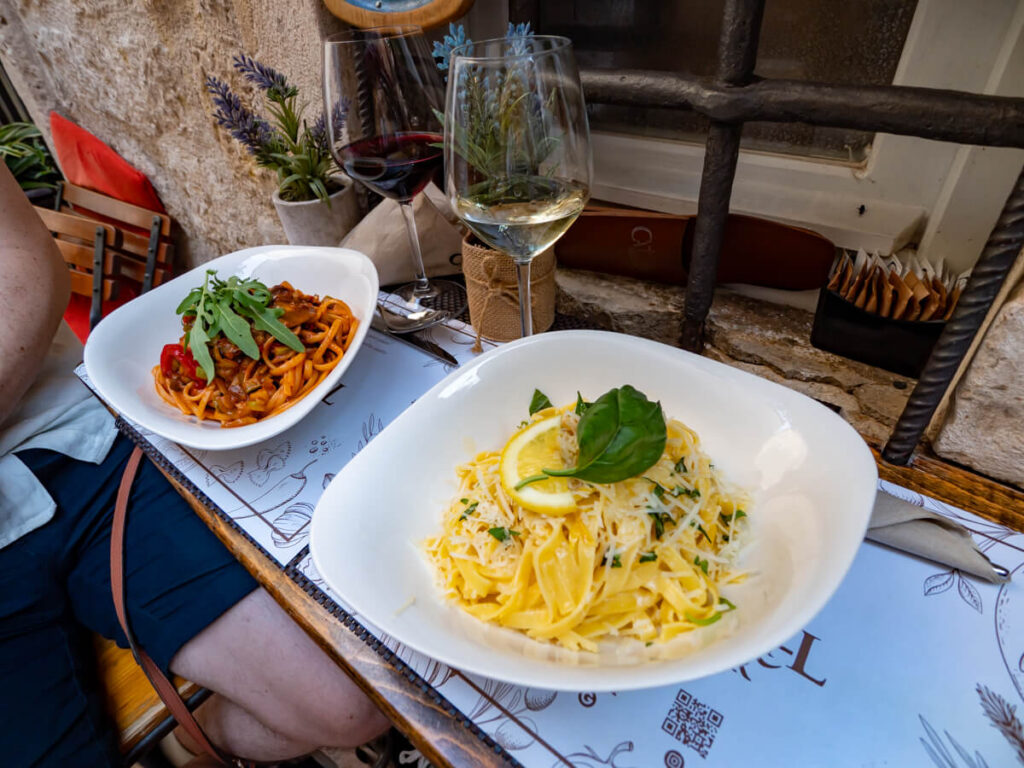
After a busy day, we’d keep the evening simple and stay in Kotor rather than heading somewhere else. There are plenty of restaurants tucked into the Old Town, from atmospheric spots in the little squares to quieter places hidden along the narrow side streets.
Local specialities worth trying include Njeguški pršut, local cheeses, seafood, and grilled meats or vegetables, and we found plenty of vegetarian and vegan dishes too. Being owned by the Venetians for so long, there’s a big Italian influence too, so you’ll easily find incredible pizza, pasta, and Aperol Spritzes.
Have longer in Kotor?
If you’re lucky enough to have more than just one day in Kotor from a cruise ship or nearby town, we’d highly recommend staying locally and exploring more of the bay. Perast is a great place to spend a few hours wandering along the waterfront, while Herceg Novi has a more laidback feel, with historic streets, fortresses, and beaches to explore. You could also head to Tivat for its marina and waterfront restaurants, or explore the Luštica Peninsula for quieter beaches, small villages and old military sites.
Kotor Old Town FAQs
To help you choose what to do in Kotor’s Old Town, we’ve answered these frequently asked questions.
How long does it take to walk around Kotor Old Town?
You can walk through the main streets of Kotor Old Town in around 1-2 hours, but we’d allow at least half a day if you want to visit churches, museums, stop for food, and explore without rushing. The Old Town is compact, but it’s surprisingly easy to spend longer wandering around its little lanes than you intended.
What to do in Kotor for a few hours?
If you only have a few hours in Kotor, we would recommend focusing purely on the Old Town area. Wander through the narrow streets, visit St. Tryphon’s Cathedral, see the squares and churches, stop for some local food and, if you have enough time, walk part of the waterfront fortifications.
Can I take a self-guided walking tour of Kotor Old Town?
Absolutely, and we’d actually recommend a self-guided walking tour of Kotor Old Town if you prefer exploring at your own pace. The Old Town is compact enough to navigate without a guide, and you can follow a route taking in the main gates, squares, churches, palaces, city walls, and Cat Park.
Is Kotor walkable from the cruise port?
Yes, Kotor’s cruise port is right beside the Old Town, so you can walk from the ship to the historic centre in just a few minutes. This makes Kotor particularly convenient for cruise passengers, as there’s no need to arrange a taxi or shuttle simply to reach the main sights.
Can I find a free walking tour in Kotor, Montenegro?
Yes, free walking tours in Kotor are available, although they usually work on a tip-based model rather than being completely free. We’d check the meeting point and schedule in advance, particularly if you’re visiting when cruise ships aren’t operating or during quieter months.
How many days in Kotor is enough?
We’d recommend 2-3 days to properly explore Kotor itself without rushing. You can see the Old Town in a day, but staying longer gives you time for a mountain hike, boat trip and some of the wider Bay of Kotor.
How to spend a day in Kotor?
Start early by exploring Kotor Old Town, including the main squares, churches and historic streets, then walk part of the city walls or tackle the Ladder of Kotor if you’re feeling energetic. Spend the afternoon eating, relaxing by the bay, or taking a short boat trip before returning to the Old Town for dinner.
What not to miss in Kotor Old Town?
Don’t miss St. Tryphon’s Cathedral, the Clock Tower, St. Luke’s Church, the old city gates, the waterfront fortifications, and Cat Park. We’d also leave some time simply to wander, as some of our favourite corners were the tiny streets we found when we weren’t following a map.
Is Kotor Old Town crowded?
It can be extremely crowded during the summer, particularly when cruise ships are visiting the bay. We’d explore early in the morning or later in the afternoon if you want a quieter experience, as the difference between a busy cruise day and a quiet morning can be enormous.
Is Kotor Old Town worth visiting at night?
Once the day-trippers and many cruise passengers have disappeared, the Old Town has a completely different atmosphere, with its stone streets and squares becoming much quieter. We’d recommend staying for dinner and having a wander after dark rather than leaving as soon as the sightseeing is finished.
Read next:
A Traveller’s Guide to the Bay of Kotor: Europe’s Southernmost Fjord
Where to Stay in Kotor Bay: Top Towns + Best Hotels From Budget to Boutique
27 Cool Things to Do in Kotor + What Not to Do
8 Fun Day Trips from Kotor + 2 Tours Not to Book
11 Best Montenegro Blue Cave Boat Tours + Is It Even Worth It?
How to Visit Lovćen National Park & Mausoleum of Petar II Petrović-Njegoš
Driving the Kotor Serpentine vs Taking the Kotor Cable Car
Our 15 Favourite Cafés, Bars & Restaurants in Kotor + Veggie/Vegan Options
What It’s Really Like to Hike the Ladder of Kotor
How to See & Support Kotor’s Cats
A Quick Guide to Taking the Kamenari-Lepetane Ferry in the Bay of Kotor
A Traveller’s Guide to the Luštica Peninsula
How to Find the Lipci Rock Art: Prehistoric Petroglyphs in the Bay of Kotor
