10 Marine Animals in Baja California Sur & Where to See Them

Discover fascinating animals in Baja California Sur that you can see, the best places to find them, and exactly where we saw them in this wildlife guide.

This post may contain affiliate links, which means we might earn a small commission on anything purchased through these links at no extra cost to you. Learn more on our disclaimer page.
Baja California Sur is one of the best places in Mexico to see marine wildlife. The peninsula is bordered by the Pacific Ocean on one side and the Sea of Cortez (also known as the Gulf of California) on the other, creating a remarkable variety of marine habitats. From sheltered bays and shallow reefs to deep offshore waters, there’s an incredible amount of life beneath the surface.
The peninsula is without a doubt one of the most biodiverse places we’ve ever visited, and every day we long to go back. We travelled here specifically for animal encounters we saw on David Attenborough documentaries, and we were not disappointed. Over a month, we saw all kinds of animals, from numerous whale species, dolphins and whale sharks to sea lions, rays, turtles, and countless kinds of fish. Discover the most interesting animals in Baja California Sur and where you’re most likely to see them in the wild in this wildlife watching guide.

More from Baja California Sur
What animals can you see in Baja California Sur?
While you might associate Mexico’s wildlife with the tropical forests and jungles in the east, the marine animals you might see in Baja California Sur are just as impressive as the animals in Mexico’s Yucatán Peninsula.
Lying on the west coast, Baja California Sur is famous for its dramatic desert landscapes, rugged mountains, cactus-covered plains, and beautiful coastline, but some of its greatest natural highlights lie beneath the surface.
The deserts and mountains provide habitats for reptiles, birds, and mammals, while its coastline, islands, and offshore waters support an abundance of marine life. Whether you’re exploring inland, watching wildlife along the shore, or heading out to sea, there’s plenty to discover throughout the region.

Planning a trip to Baja?
Mexico is a very popular destination, so be sure to book in advance as early as possible!
Top Experiences in Baja
Top Hotels in Baja
Transport in Baja
Best eSIM for Baja
Marine animals you might see in Baja California Sur
Sitting between the Pacific Ocean and the Sea of Cortez (also known as the Gulf of California), the peninsula is surrounded by incredibly biodiverse waters. Rocky reefs, offshore islands, sandy bays, mangroves, and sheltered lagoons create a variety of habitats that support an impressive range of marine life.
The region is specifically famous for its marine megafauna, from migrating whales and playful dolphins to whale sharks, sea lions, manta rays, and enormous seasonal gatherings of mobula rays. There are also sea turtles, colourful reef fish, and plenty of other fascinating species to look out for while snorkelling, scuba diving, or exploring the coastline. The Baja California Sur wildlife watching seasons vary throughout the year, so the animals you encounter will depend on when and where you visit.
Whether you’re interested in whale watching in Mexico or discovering the underwater world of ‘the world’s aquarium’, there’s an incredible variety of wildlife to discover. Here are some of the species you might be lucky enough to see.
1. Whales
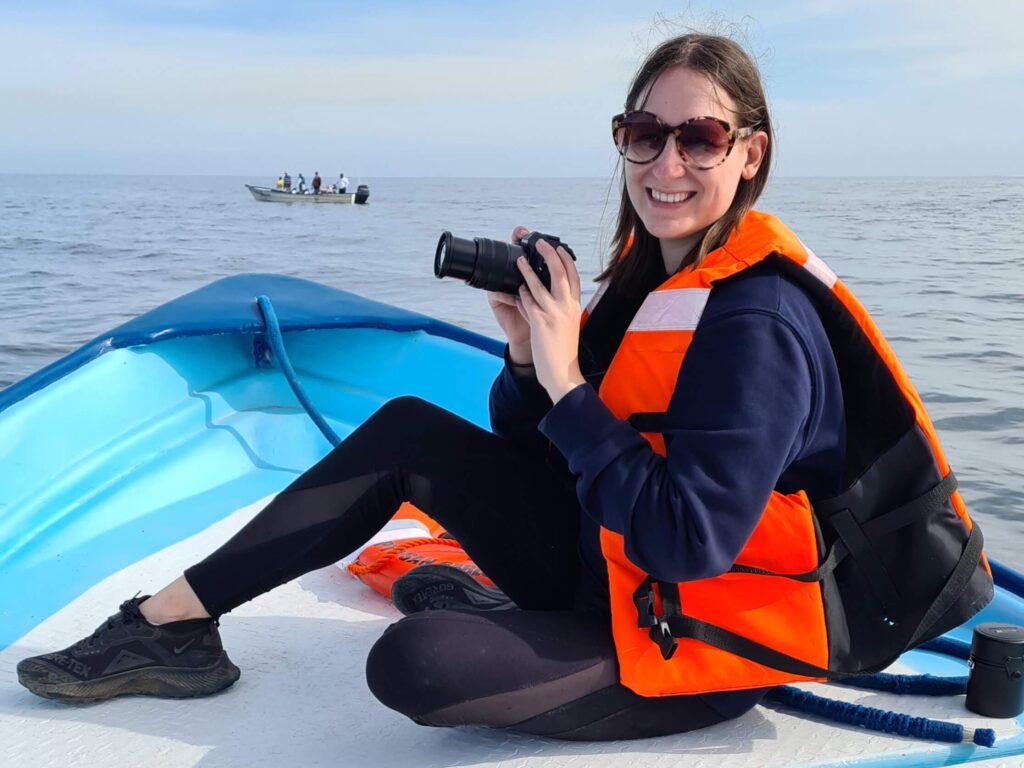
Whales are the reason that we travelled to Baja California Sur in the first place, and they were the animals that we were most excited to see. More than 30 species of cetaceans have been recorded in Mexican waters, although some are much more regularly encountered than others. There are three main species that are commonly found around the peninsula in the winter months, between December and April (with January and February being particularly good months to visit):
Over three weeks travelling around the peninsula, we saw countless whales, including the iconic trio: grey whales, humpbacks, and blue whales, plus some surprise fin whales in Loreto Bay. You might also see sei whales, sperm whales, minke whales, and Bryde’s whales if you’re lucky.
Having only ever seen the slightest hint of a whale tail disappearing off the coast before, being able to get up close to such incredibly large and gentle creatures was a mind-blowing and once-in-a-lifetime experience.
Planning your whale watching trip?
Whale watching is one of those experiences that really comes down to timing as well as location. Be sure to read our guides on where to see whales in Mexico and when to visit Mexico for whale watching, so you know where and when to go for each species. We’ve also written a master guide to whale watching in Mexico, which covers everything you need to know before you go, including times, regulations, and ethics, while our guide to the 8 Best Whale Watching Tours in Baja California Sur compares our favourite tours with our honest reviews, as well as covering who to avoid booking with.
If you’re building a trip around whales, it’s worth going a bit deeper than just choosing a destination. That’s why we’ve broken everything down into more detailed guides to help you plan properly:
If you’re still deciding where to go, start with Baja California Sur – it consistently offers the best mix of species, behaviour, and conditions anywhere in Mexico, and is easy to plan a full trip around.

2. Dolphins
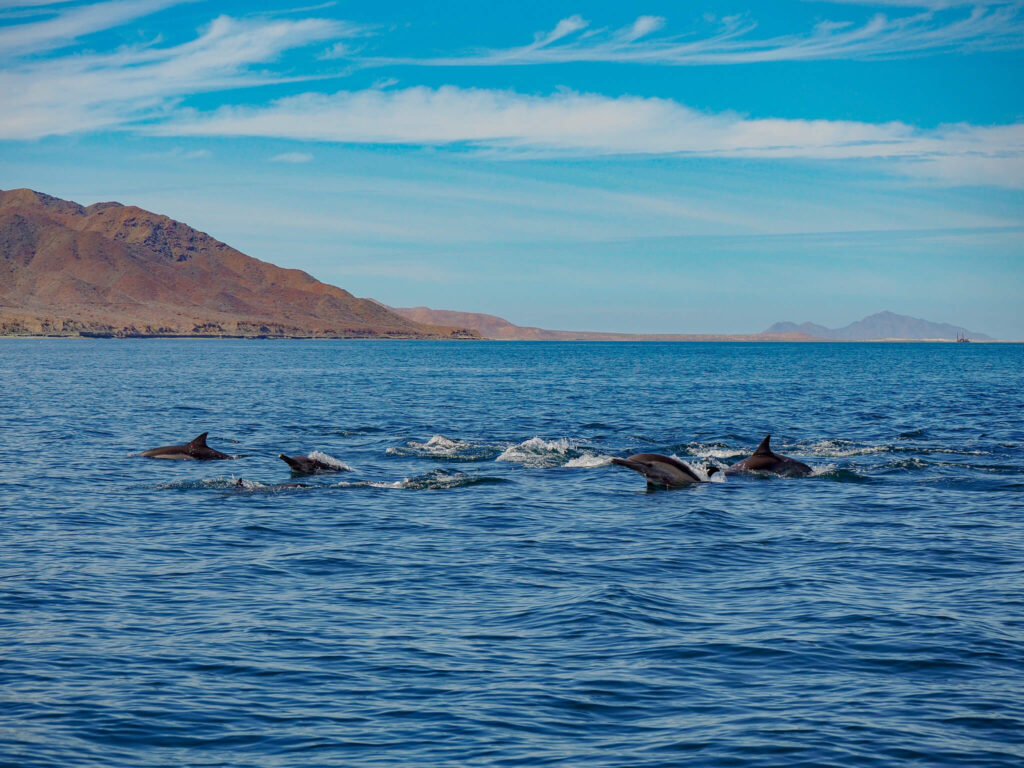
One of the most surprising marine animal encounters that we had in Baja California Sur was a super pod of common dolphins that appeared on our final day staying at Magdalena Bay Whales Camp. After a couple of days of endless grey whale sightings, suddenly hundreds of dolphins appeared and started playing all around our boat. It was a surreal and magical moment.
Dolphins are another common sight in the waters around Baja California Sur, and you may spot them almost anywhere along the coast. You might also see bottlenose dolphins, which we saw in Loreto Bay on a day trip to Isla Coronado. They’re often seen closer to shore than common dolphins.
3. Orca
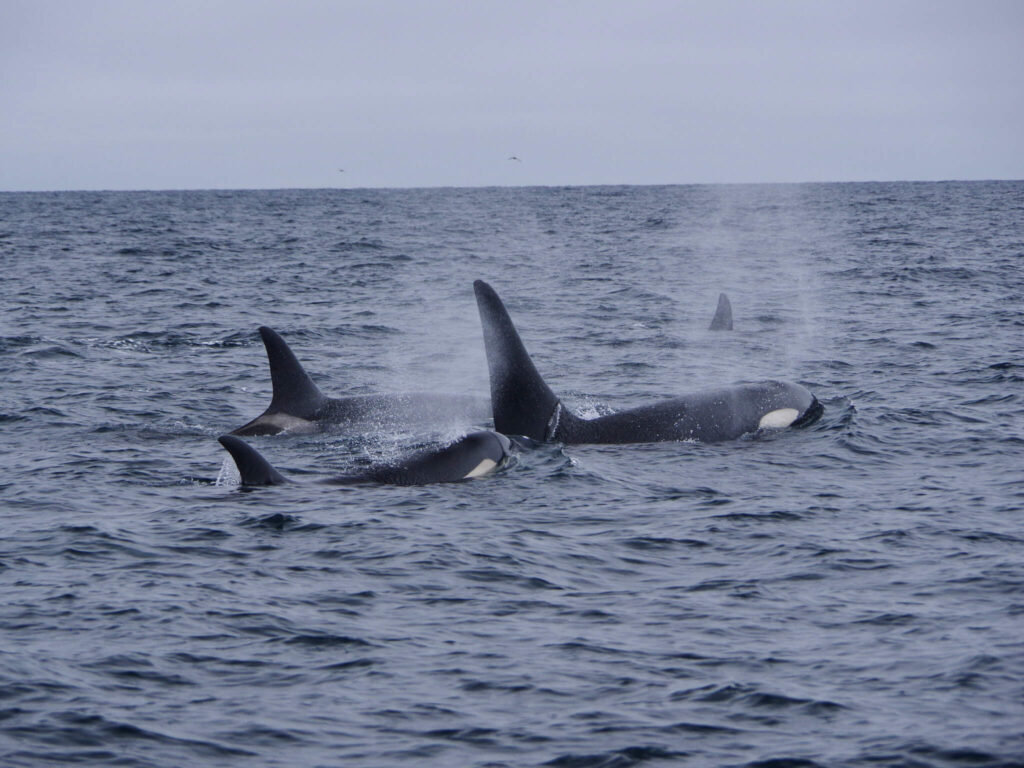
Although they’re commonly called killer whales, orcas are actually the largest members of the dolphin family. They’re instantly recognisable by their striking black-and-white markings and tall dorsal fins, and are among the most impressive predators in the ocean.
Orca are found in the waters around Baja California Sur, where they may be encountered around Loreto, La Paz, and the southern peninsula. Unlike grey, humpback, and blue whales, they don’t have such a predictable seasonal migration through the region, so sightings are much more sporadic.
Orca are sometimes spotted travelling in family groups, and you may even witness them hunting. They have a varied diet that can include fish, dolphins, sea lions, and other marine mammals, depending on the population and location.
The best way to look for orca in Baja is to join a wildlife-watching or marine safari trip with an experienced local operator. Some specialist excursions focus on searching for larger marine predators, with a trial period allowing you to swim with them (although it’s yet to be officially legalised), so it’s important to remember that orca sightings are never guaranteed. They’re wild animals moving through a huge area of ocean.
4. Whale sharks
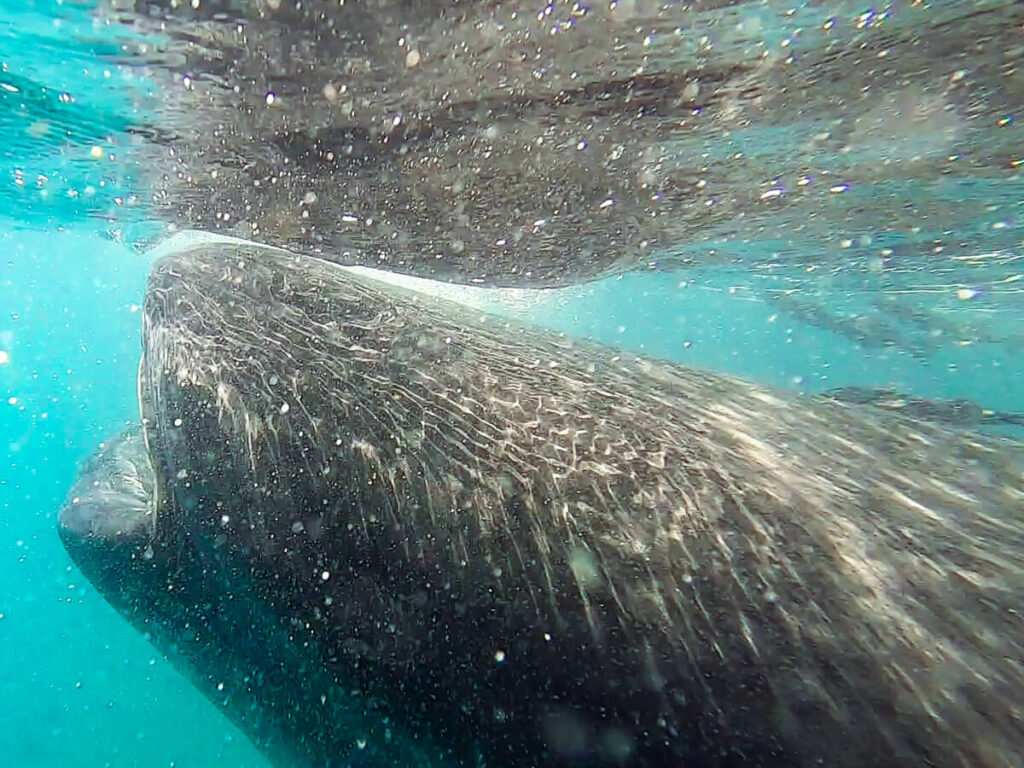
Swimming with whale sharks had been a dream of ours for absolutely years, and it finally became a reality for us in La Paz. We were so worried about supporting unethical wildlife tourism, having heard horror stories of whale sharks being fed and overcrowded tours in other parts of the world, so we did loads of research before going.
La Paz is one of the most ethical places in the world to swim with whale sharks – even more so than the East side in Cancún. You can also swim with whale sharks off Isla Mujeres and Isla Holbox, but we skipped it there and saved it for Baja for a few reasons: the whale shark zone here is highly regulated, there is a wide variety of responsibly minded tour operators, and La Paz itself is just such an incredibly biodiverse area.
These gentle giants are filter feeders, swimming through the water with their enormous mouths open to collect plankton and tiny marine organisms. You have to swim quite hard to keep up with them – they’re surprisingly fast, but it’s an experience like no other being in the water with them.
It’s important to choose an authorised operator when swimming with whale sharks in La Paz, as whale shark tourism needs to be carefully managed to avoid disturbing the animals.
5. Sea lions
We loved swimming with whale sharks, but what we weren’t expecting was how much we were going to love swimming with sea lions in La Paz (you can also swim with them in Loreto, too). California sea lions live in colonies around the islands and rocky outcrops of the Baja Peninsula, and in season (September to May), you can get in the water and encounter them in their natural habitat.
One of the best places to see them is Los Islotes, a pair of small rocky islands just north of Isla Espíritu Santo, near La Paz. The islands are home to a large sea lion colony, and boat trips from La Paz regularly visit the area for swimming excursions. You can also often see sea lions lounging on the rocks, popping their heads out of the water, or swimming around the boat.
While whale sharks are huge, they swim quite fast, so the experience of snorkelling with them is more about trying to keep up and observe them, whereas sea lions are incredibly curious and cheeky creatures and will approach you so you can have more of an intimate encounter with them. A couple in particular seemed really interested in us and would use their mouths to explore our equipment, like fins and cameras.
Dan also had a unique experience with a sea lion while SCUBA diving in Cabo, so you can see them all around the peninsula, but taking a dedicated tour in La Paz with a licensed operator is the best way to do it.

6. Rays
The waters around Baja California Sur are home to several species of ray, from smaller stingrays gliding across sandy seabeds to enormous ocean-going species. The most common species found here are:
Seeing mobula rays leap from the ocean is still on our bucket list, so we know that’s something we need to prioritise on a future trip.

7. Sea turtles
There are several species of sea turtle in the waters around Baja California Sur, including olive ridley, green, hawksbill, and leatherback turtles. They spend much of their lives at sea, but come into coastal waters to feed and, in the case of adult females, return to beaches to lay their eggs.
You may spot sea turtles while snorkelling or SCUBA diving, especially around reefs, seagrass beds, and sheltered bays. Cabo Pulmo, Loreto Bay (we saw one from a boat here), and the waters around La Paz are all places where turtles may be encountered.
Baja California Sur is also a great place to witness baby turtles hatching between August and December. Tortugueros Las Playitas A.C. is a great non-profit organisation that runs a protect-and-release programme just north of Todos Santos. If you’re keen to support a local initiative and see babies, it’s one of the best day trips from Cabo.

8. Sharks
Baja California Sur is an excellent destination for shark encounters, especially if you’re a keen SCUBA diver. The waters of the Sea of Cortez support a wide variety of shark species, from smaller reef sharks to large pelagic species that pass through deeper offshore waters, including:
Unlike in other places where sharks are baited, or you’re stuck in a cage, these encounters take place naturally.
Sadly, our SCUBA diving trip to Cabo Pulmo was cancelled due to bad weather, so this is something we’d highly recommend leaving some flexibility in your Baja itinerary for if you’re keen to do it.

9. Fish
It’s not just the large marine animals that make Baja California Sur such an exciting place to explore underwater. The Sea of Cortez was described by Jacques Cousteau as the ‘aquarium of the world’, and it’s packed with colourful fish.
Around rocky reefs and coral formations, look out for angelfish, parrotfish, pufferfish, triggerfish, damselfish, and wrasse. We saw so many different kinds of tropical fish snorkelling and diving around Baja California Sur, but perhaps our favourite was the happy little porcupinefish. They’re small fish with large eyes, round bodies, and spines that stand out when they’re threatened. We saw them off Cabo, and they’re so curious and characterful.
Striped and blue marlin are also found in the offshore waters around Baja, and you might see them on a boat tour in Cabo. They’re famous for their long, spear-like bills and are often associated with sport fishing, although you can actually snorkel with them as they feed on bait balls in Magdalena Bay.
Cabo Pulmo is also good for seeing schools of tropical fish, with its protected reef system supporting an abundance of marine life, while we loved the snorkelling and vibrant corals off La Paz.

10. Seabirds
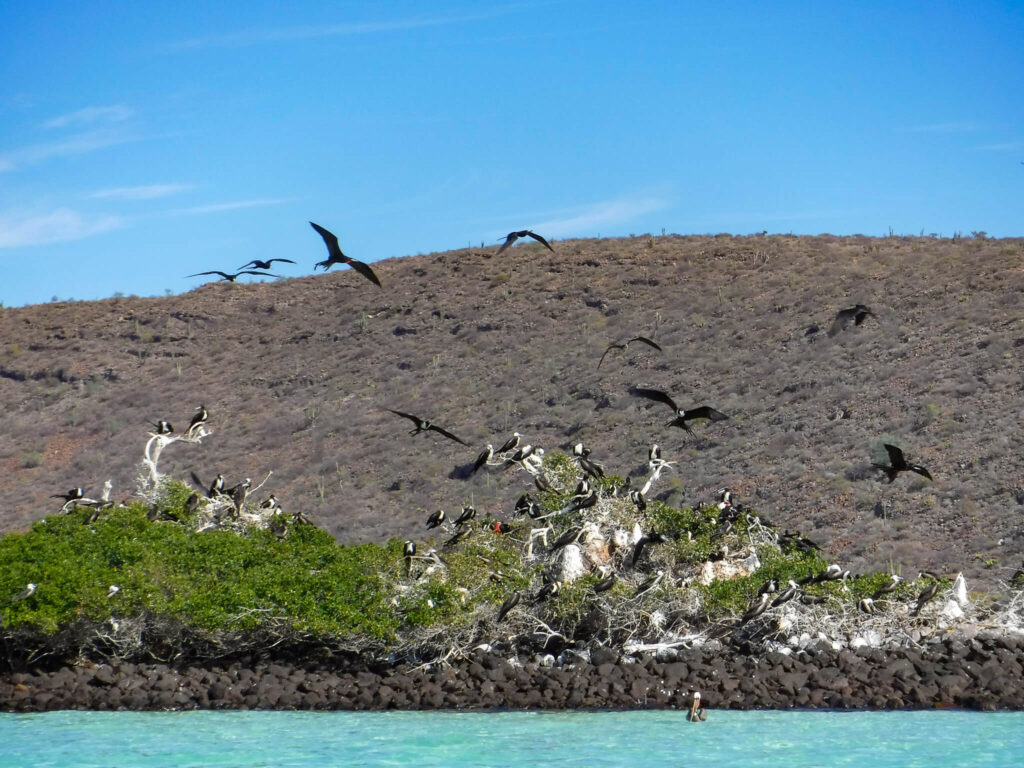
Although they’re not technically marine animals, seabirds are an important part of Baja California Sur’s coastal ecosystems and are almost impossible to miss when you’re out on the water. The peninsula’s islands, rocky shorelines, and productive fishing grounds attract a huge variety of birds, many of which rely on the ocean for food.
Some of the seabirds you might spot include:
Baja California Sur Animals FAQs
To ensure an enjoyable experience of wildlife watching in Baja California Sur, we’ve answered some frequently asked questions.
What animals are in Baja, Mexico?
Baja California Sur is home to an incredible variety of wildlife, including grey whales, humpback whales, dolphins, orcas, whale sharks, sea lions, manta rays, sea turtles, sharks, and hundreds of reef fish and seabirds. On land, you can also encounter coyotes, jackrabbits, bighorn sheep, roadrunners, and desert foxes.
What is the best time of year to see animals in Baja California Sur?
Winter (December to April) is one of the best times for wildlife watching, particularly for grey whales and humpback whales, while summer and autumn bring opportunities to see whale sharks, manta rays, and other marine life.
Can you swim with whale sharks in Baja California Sur?
Yes, seasonal guided whale shark encounters are available around La Paz, where these gentle filter-feeding giants gather, usually between autumn and spring, subject to local regulations and permits.
Are there orcas in Baja California Sur?
Yes, orcas are found in the waters around Baja California Sur, although sightings are less predictable than those of dolphins and migrating whales.
Can you see sea lions in Baja California Sur?
Sea lions are commonly spotted around the islands of the Sea of Cortez, with Los Islotes near La Paz being one of the best-known places to see them and, under permitted conditions, snorkel nearby.
Are there crocodiles in Baja California Sur?
American crocodiles are not naturally established in Baja California Sur, so they aren’t an animal visitors would normally expect to encounter in the wild.
Are there sharks in Baja California Sur?
Yes, several shark species inhabit the surrounding waters, including whale sharks, hammerhead sharks, bull sharks, and silky sharks, although sightings vary by location and season.
What is the biggest animal in Baja California Sur?
The blue whale is the largest animal found in Baja’s waters and the largest animal on Earth, reaching lengths of around 30 metres (100 ft).
Are there flamingos in Baja California Sur?
Yes, American flamingos can occasionally be spotted in Baja California Sur, particularly around coastal lagoons, salt flats, and wetlands, but they’re not as common as off Isla Holbox on the east coast.
What is the most famous animal in Baja California Sur?
The grey whale is arguably Baja’s most famous wildlife attraction, thanks to its annual migration into the region’s sheltered lagoons, where visitors can sometimes encounter mothers and their calves at close range.

Found this post useful? Pin it to Pinterest to save it for later!


Read next:
Ultimate Guide to Whale Watching in Baja California Sur
An Ethical Guide to Touching Grey Whales in Baja California Sur
8 Best Whale Watching Tours in Baja California Sur + Who to Avoid
A Comprehensive Guide to Travelling Baja California Sur
When to Visit Baja California Sur by Month and Interests
A Budget Baja California Sur Backpacking Itinerary
Ethical Mexico Whale Watching Guide: Our Experience
How to Ethically Swim with Whale Sharks in La Paz
7 Best Ethical La Paz Whale Shark Tours + Who to Avoid
How to Snorkel or Dive with Sea Lions in La Paz, Mexico
An Ethical Guide to Humpback Whale Watching in Cabo
A Complete Guide to Blue Whale Watching in Loreto
Loreto Bay National Marine Park: Islands and Wildlife Guide
An Essential Guide to Grey Whale Watching in Magdalena Bay
Our Magdalena Bay Whales Camp Review: Glamping on an Island in a Grey Whale Lagoon
