La Paz vs Cabo: Which to Choose?

Discover why we think La Paz is better than Cabo (but shhh, don’t tell anyone, so they don’t ruin it!) in this comparison of La Paz vs Cabo San Lucas vs San José del Cabo.

This post may contain affiliate links, which means we might earn a small commission on anything purchased through these links at no extra cost to you. Learn more on our disclaimer page.
When visiting Baja California Sur, choosing between La Paz and Cabo can be tricky. Both promise crystal-clear waters, dusty desert landscapes, and blazing sunsets, but they offer very different travel experiences. Cabo San Lucas is known for its luxury resorts, lively nightlife, and high-end dining, and San José del Cabo is its more sophisticated, artsy little sister, while La Paz offers a more authentic Mexican feel with stunning natural beauty.
We had no idea what to expect from visiting both La Paz and Los Cabos, so we were super glad that we spent time in both. Overall, we’d say we prefer La Paz, but we’d have been absolutely gutted if we’d also missed Cabo. Each town is completely unique and offers a variety of activities that can be done nowhere else in the world. But if you’ve only got time for one, find out whether La Paz or Cabo is right for you, from atmosphere and activities to cost and crowds, in this comprehensive comparison.
More from La Paz
What La Paz and Cabo have in common
Before we get into the differences between La Paz and Cabo, let’s start with their similarities.
Location
La Paz and Cabo are both located at the southern end of Mexico’s Baja California Peninsula, hugging the coast of the Sea of Cortez. They’re about 100 miles (160 km) apart, roughly a 2 to 2.5-hour drive via Highway 19. Despite being relatively close together, you’ll probably want to choose one or the other to base yourself in (unless you have more time during your Baja itinerary to stay in both).
They both have international airports, so getting to La Paz or Cabo is quite easy, either internationally or by taking a domestic flight within Mexico.
La Paz is nestled in a bay on the east coast, while both Cabo San Lucas and San José del Cabo sit on the southern tip. Due to their locations, La Paz tends to have calmer waters in a protected bay, whereas Los Cabos is more open to the elements. Cabo San Lucas and San José del Cabo sit where the Sea of Cortez meets the Pacific Ocean, so they’re more exposed.
La Paz feels more central for exploring both the northern and southern parts of Baja. Cabo is closer to the tip, ideal for surfing and big tourist resorts. While there are plenty of fun day trips from Cabo, you won’t be able to reach some of the more northerly destinations in a day.

Currency
In both towns, the Mexican peso is the official currency. Most hotels, restaurants, and shops also accept credit cards, especially in tourist-heavy areas. You can easily withdraw cash from ATMs in either city, though fees may vary. Small local vendors and markets may prefer cash, so it’s good to carry some pesos.
In Cabo, prices tend to be slightly higher than in La Paz due to its resort-heavy economy. We also found that a lot of establishments in Cabo will not only accept US dollars but also price things in US dollars. While this might seem like a benefit to American travellers, it usually means that prices are inflated or that the place is simply less authentically Mexican.

Language
Spanish is the official language in both La Paz and Cabo. In most tourist spots, you can get by easily with English, although learning a little Spanish will enhance your experience.
Menus, signs, and services in both Cabo and La Paz are often bilingual due to an established international travel tourism sector. La Paz feels local, so you may encounter fewer English speakers outside of hotels and main attractions.

Weather
Both Cabo and La Paz enjoy warm, sunny weather most of the year. Summers can be hot and dry, while winters are milder and very pleasant.
La Paz tends to be slightly calmer with less humidity, whereas Cabo can feel hotter during the peak summer months. We were travelling in the height of winter, and while some early mornings or late evenings were slightly chilly, we had glorious sunshine and hot weather all the time.
Rain is rare, mostly falling between July and September. We were actually told La Paz can go an entire year without rain. Water temperatures are comfortable for swimming, snorkelling, and other activities nearly year-round in both areas.

Landscapes
La Paz and Cabo both showcase Baja’s signature desert-meets-ocean scenery. You’ll find rugged cliffs, rolling dunes, and expansive beaches in both locations. Both towns have opportunities for desert adventures, like hiking or ATV tours, as well as boat trips and SCUBA diving.
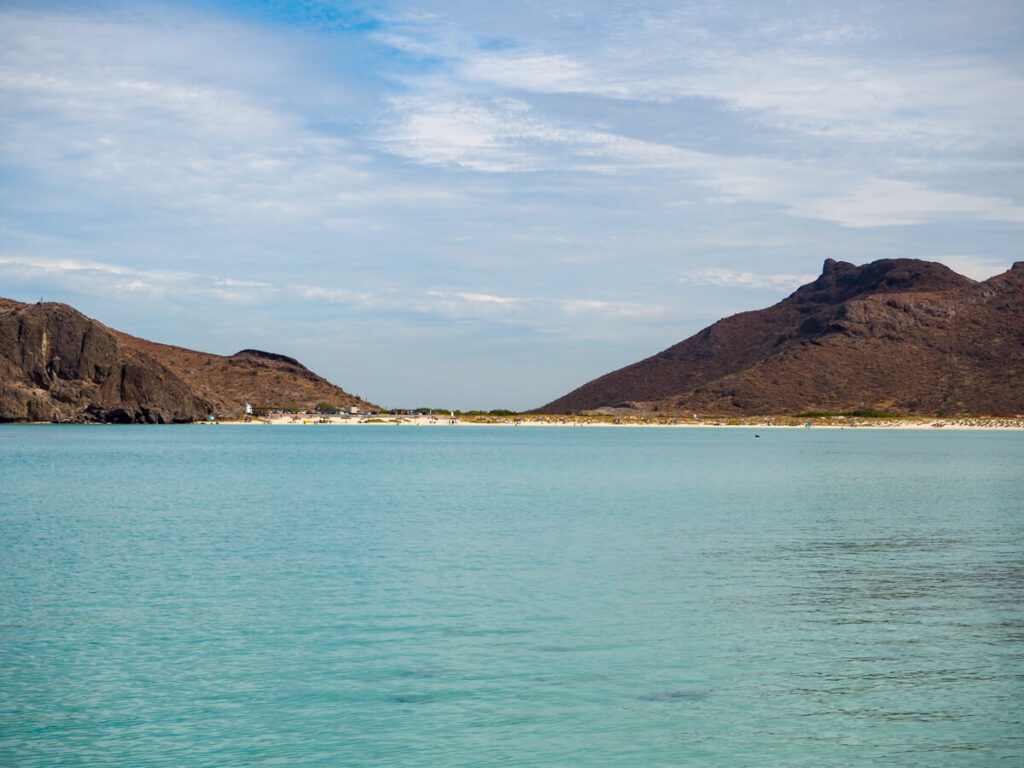
The Sea of Cortez offers calm, turquoise waters in La Paz, perfect for kayaking and snorkelling. The area close to the city is filled with stunning beaches like Balandra Beach, while several islands sit offshore, like the beautiful Isla Espíritu Santo.
Cabo’s coastline is more dramatic, with rocky outcrops and surf-friendly beaches. You’ll still find nature, but you need to go inland to find hiking areas like Fox Canyon (also called Cañón de la Zorra) in Santigao and the Sierra de la Laguna Biosphere Reserve.

Differences between La Paz and Cabo
There are quite a few components to think about when it comes to La Paz vs Cabo, and which elements are most important to you will be personal preference.
Layout
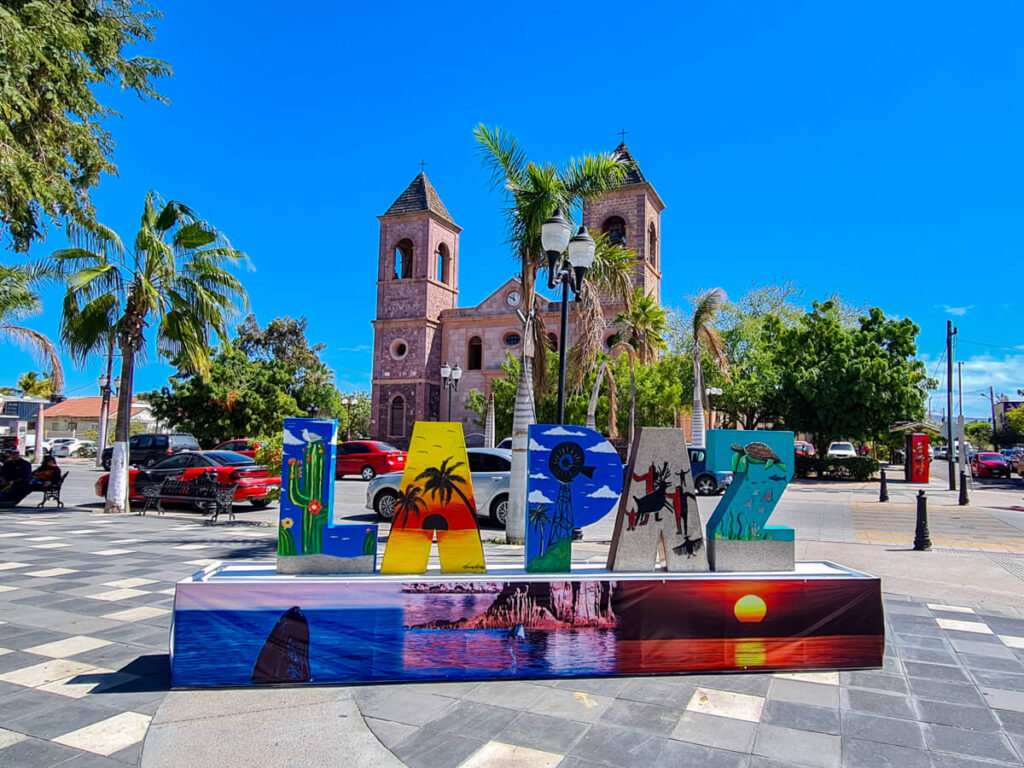
La Paz has a compact, walkable downtown with a seaside malecón (boardwalk) and a network of streets. There’s a central square, Jardín Velasco, which houses the impressive Catedral de Nuestra Señora de La Paz (Our Lady of Peace Cathedral). You can easily explore restaurants, shops, and cultural sites on foot. The actual city itself is quite large and spread out, but you wouldn’t know it because you don’t really need to leave the centre unless you’re going on a day trip to beaches or islands.
Cabo, on the other hand, is much more spread out, with separate areas for downtown, beaches, and resorts. Cabo San Lucas and San José del Cabo are about a 1.5-hour drive from each other, separated by the Tourist Corridor, which is lined with luxury resorts. Cabo San Lucas is a huge city, although it has a central downtown area by the marina. San José del Cabo isn’t small either – it’s sort of split into two areas: one in the historic centre and one by the beachfront in the Hotel Zone.
Driving or rideshares make getting around Cabo much easier. Both towns are easy to navigate, but La Paz feels more intimate. Planning your activities ahead helps you make the most of your visit to either place.


Vibe
The biggest difference between La Paz and Cabo is the vibe. To put it simply, Cabo is flashy, busy, and tourist-focused, while La Paz is relaxed and more authentic. That’s not to say that you shouldn’t visit Cabo – it definitely has its advantages, and we enjoyed visiting both locations. But you need to know what to expect to prepare yourself before you visit. Equally, if partying and nightlife are your thing, you might be really disappointed in La Paz.
Cabo San Lucas is quite Americanised, geared toward tourists looking for excitement, and a popular destination for Spring Break. You’ll find clubs pumping out loud music, large resorts, and lots of boat tours that have beer on tap. However, it’s still possible to find pockets of peace, whether you book into one of Cabo’s beachfront hotels or scout out the little local taco joints.
On the other hand, San José del Cabo is much more relaxed, known for its artsy historic centre and more relaxed beaches, making it much more similar to La Paz. La Paz has a similar historic centre feel, but with more natural attractions like hikes, beaches, and islands.

Wildlife
Our favourite topic and the main thing that we considered when picking where to visit in Baja – both La Paz and Cabo offer some of the most incredible animal encounters in the world.
La Paz is a hub for marine life, with opportunities to ethically swim with whale sharks, SCUBA dive with a variety of fish, and snorkel with sea lions.
Cabo also offers marine life encounters, being one of the best places for whale watching in Baja California Sur. It’s the best place in the country to experience the seasonal migration of humpbacks, with numerous operators running whale watching tours in Cabo. You can also go SCUBA diving in Cabo – Dan got his PADI there during our trip.
La Paz tends to be more focused on eco-tourism and conservation experiences, with a better variety of licensed and responsible operators. Unfortunately, we found a lot of operators in Cabo were prioritising money over animal welfare or your experience and would operate either unlicensed or irresponsible tours, chasing wildlife or having negative impacts on the environment.

Activities
The things to do in La Paz revolve around experiencing the natural beauty of the region and experiencing the local culture. You can kayak, snorkel, dive, and island hop in the Sea of Cortez, or hike at nearby beaches and on headlands.
There’s a wider variety of things to do in Cabo San Lucas than in La Paz. Mostly, it’s geared toward tourists, with golf, partying, deep-sea fishing, and party cruises all on offer. A lot of the tours are catered more to having fun than really experiencing Mexican culture, but you’ll still find food tours and other cultural experiences.
In contrast, things to do in San José del Cabo are more low-key. You’ll find creative experiences like the Art Walk on offer, and frequent events and festivals.
Both towns offer boat trips and water-based adventures. Taking a boat tour in Cabo is a great way to see the coast and iconic landmarks like The Arch (El Arco). There’s also a wider variety of luxury catamaran cruises catered to groups, honeymooners, and those with a higher budget. You’ll still find cruises in La Paz, especially around the islands like Isla Espíritu Santo.

Beaches
La Paz’s best beaches are actually located outside of the city, so they require a trip to get to. They’re quiet, safe, and ideal for swimming, snorkelling, or simply relaxing. Playa Balandra, with its shallow turquoise waters and cacti-strewn headlands, is considered the most beautiful beach in Mexico. Isla Espíritu Santo also has some beautiful sandy shores, set against rugged red cliffs.
Cabo’s beaches are more crowded but easier to get to. They offer surfing, sunbathing, and social scenes with beachfront bars. Playa Medano is the most famous beach, while Lovers’ Beach (Playa del Amor) is a sheltered bay next to El Arco, which can only be reached by water taxi. In San José del Cabo, the beaches are quieter and larger, spread out in the Hotel Zone. Some Cabo beaches have strong currents, so swimming isn’t always recommended.

Shopping
If it’s shopping you’re after, Cabo wins hands down. Cabo San Lucas has large malls, stores, and souvenir shops catering to international tourists. San José del Cabo has boutique galleries that cater more to those seeking artisanal souvenirs.
La Paz focuses more on local markets, artisan shops, and small boutiques. You can find handmade crafts, jewellery, and fresh produce in La Paz, but Cabo is better for high-end brands and luxury shopping.

Accommodation
You’ll find several boutique hotels in La Paz, along with cosy guesthouses and locally owned vacation rentals. Most places are centred around the Malecón, so you can easily walk to cafés, shops, and beaches. Accommodations here tend to be more affordable, offering great value without the high resort prices you’ll find in bigger tourist hubs.
In Cabo, the accommodation scene is much more upscale and varied, ranging from large all-inclusive resorts to luxury villas and oceanfront condos that frequently host celebrities. You can find places right in the heart of the action near the marina or along popular beaches if you like being close to nightlife and restaurants. Many resorts offer full amenities, like pools, spas, and fine dining, so you can spend most of your trip on-site if you want to. Prices for hotels in Cabo are generally higher than in La Paz.

Food and drink
Both La Paz and Cabo are on the sea and serve fresh, local seafood, tacos, and traditional Mexican cuisine. You’ll find a greater range of local restaurants in La Paz, and we had some of the best Baja-style fish tacos of our lives here. There are also some great bars, especially rooftop spots on the malecón, where you can watch the blazing sunset with a margarita.
Restaurants in Cabo San Lucas offer more variety, with international cuisine, fine dining, and gourmet experiences. Prices tend to be higher here, reflecting the larger tourist focus. Some menus are even priced in USD, although this tends to be more expensive than paying in local currency. There are some great restaurants in San José del Cabo, too.

Culture and events
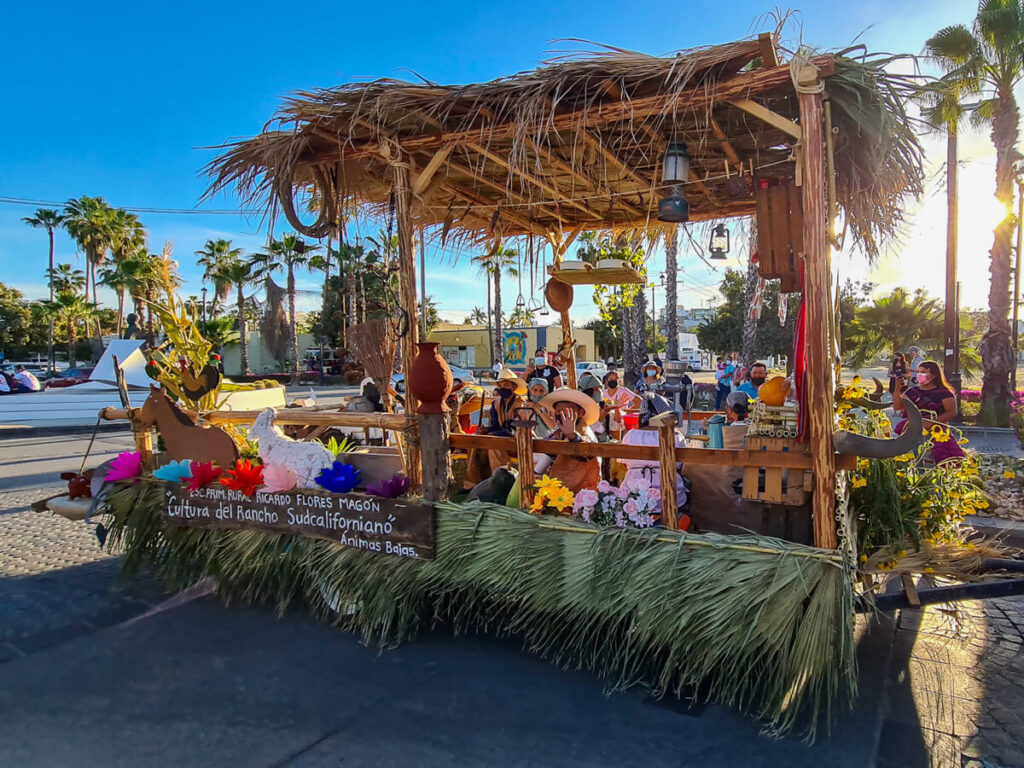
La Paz has a rich local culture, with markets, festivals, and art galleries showcasing Baja’s heritage. You can meet artisans, attend cultural events, and explore historic sites like the cathedral.
Cabo San Lucas is more focused on tourism, with cultural experiences often packaged for visitors. But San José del Cabo is great for experiencing local culture, with frequent festivals, like the San José del Cabo Festival, and events showcasing the arts and local history.
Which is better, La Paz or Cabo?
If we’re purely comparing the towns, our hands-down winner is La Paz. While Cabo’s coastline is beautiful, La Paz is simply the more authentically Mexican, more charming, and the most laidback of the two locations.
But, as wildlife lovers, being able to see whales in Cabo was a huge attraction. It was the first place we experienced acrobatic humpback displays, and we even saw a heat run and babies learning to breach. But being able to tick swimming with whale sharks off our bucket list in La Paz was also a once-in-a-lifetime experience you shouldn’t skip. And we actually preferred the more relaxed snorkel with sea lions, who are cheeky and more inquisitive.
If you have time, we’d highly recommend adding both locations to your Baja itinerary. But if you absolutely had to pick one, it’s best to think about the elements that are most important to you. If partying, nightlife, and sipping margaritas on a boat is your thing, Cabo is the place for you. If you still want access to lots of tours and activities and a higher quality of accommodation, San José del Cabo or the Tourist Corridor could be the best pick. And if you want a more laidback, local feel, with colonial architecture and natural attractions, La Paz is the way to go.
Read next:
28 Best Things to Do in La Paz
32 Best Things to Do in Cabo San Lucas + What Not to Do
22 Best Things to Do in San José del Cabo
Where to Stay in La Paz, Mexico: Best Areas + Hotels
Where to Stay in Cabo: 18 Best Beachfront Hotels
How to Get to La Paz + Getting Around
How to Get Around Cabo: 10 Modes of Transport
Our Baja California Sur Destination Guides:
Our Baja California Sur Travel Guides:
