Ultimate Guide to Ethical Whale Watching in Mexico: Our Experience

A complete guide to seeing whales in Mexico ethically and responsibly, based on our research and personal experience with multiple species and locations.

This post may contain affiliate links, which means we might earn a small commission on anything purchased through these links at no extra cost to you. Learn more on our disclaimer page.
Mexico is one of the best whale watching destinations in the world. But experiencing an epic encounter is not as simple as just booking a tour and hoping for the best. Different species arrive at different times of year, are found in different locations, and experiences vary hugely – plus, not all whale watching is done responsibly, which is a worse experience for you, the whales, and the planet.
When we first quit our jobs to travel the world, we wanted to book a trip centred around whale watching. It had been on our bucket list for years, and Mexico kept coming up as one of the most accessible and affordable places to do it. After falling down more research rabbit holes than we’d like to admit (including tracking down the filming locations of David Attenborough’s Blue Planet II), we booked a one-way ticket to go whale watching in Baja California Sur. It’s one of the most reliable places to see whales in Mexico, but it’s not the only one.
In this guide, we break down everything you need to know about whale watching in Mexico, including where to go, when to visit, what our experience was like, and how to choose an experience that’s both worthwhile and ethical.
Mexico Whale Watching at a glance
More Whale Watching in Mexico
Is Mexico good for whale watching?
Mexico isn’t just incredible for whale watching, but it’s one of the best places in the world for it, largely thanks to its long Pacific coastline and the sheltered lagoons. This combination creates ideal conditions for both migration routes and breeding grounds, meaning you can see whales not just passing through, but actively calving, feeding, and interacting with boats in some areas.
Mexico was the first country we ever went whale watching in. It’s where we fell in love with these gentle giants, and it’s still, to this day, the place where we had some of our best ever encounters.
But whale watching in Mexico has completely blown up since we first visited. On our first trip, it was relatively unknown – we only heard about it because Lucy did a deep dive into nature documentary filming locations. But we’ve watched the industry boom over the years, with viral social media posts making the region more popular.
There are now countless tour operators, private charters, and informal trips all offering whale watching experiences – and not all of them are operating responsibly. With that growth has come more pressure on whale habitats, more boats on the water, and a wider gap between ethical and unethical practices.
So, yes, Mexico is AMAZING for whale watching. But the experience you have, and the impact you leave behind, depends heavily on where you go and who you choose to go with.

Planning a trip to Baja?
Mexico is a very popular destination, so be sure to book in advance as early as possible!
Top Experiences in Baja
Top Hotels in Baja
Transport in Baja
Best eSIM for Baja
What kind of whales are in Mexico?
More than 33 species of cetaceans have been documented in Mexico’s Pacific waters, including whales, dolphins, and porpoises. Here are some of the species you might see, in order of rarity from most to least common:
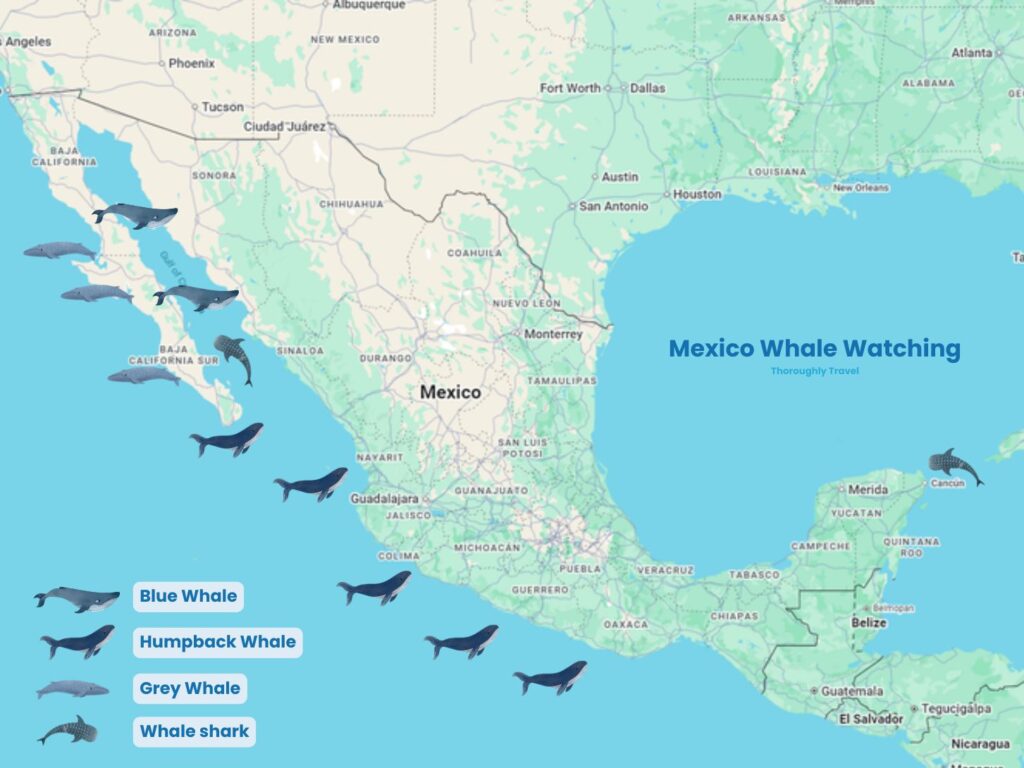
The Mexican Pacific hosts three of the world’s most iconic whale watching species: grey whales, humpback whales, and blue whales. These are the species you’re most likely to see, so we’ve delved a bit deeper into them below.
Planning your whale watching trip?
Whale watching is one of those experiences that really comes down to timing as well as location. Be sure to read our guides on where to see whales in Mexico and when to visit Mexico for whale watching, so you know where and when to go for each species. We’ve also written a guide to the 8 Best Whale Watching Tours in Baja California Sur, comparing our favourite tours with our honest reviews, as well as covering who to avoid booking with.
If you’re building a trip around whales, it’s worth going a bit deeper than just choosing a destination. That’s why we’ve broken everything down into more detailed guides to help you plan properly:
If you’re still deciding where to go, start with Baja California Sur – it consistently offers the best mix of species, behaviour, and conditions anywhere in Mexico, and is easy to plan a full trip around.

Humpback whales
Humpback whales are one of the most commonly seen species along Mexico’s Pacific coast, especially around Los Cabos and the wider Baja region. They’re easily recognised by their black and white colourings, knobbly heads, and large pectoral fins – not to mention their energetic displays.
They migrate here from colder Arctic waters off Canada to breed and give birth during the winter months. That makes them really exciting to see in Mexico, because chances are you’ll see new mothers that have just given birth, their tiny calves learning tricks, and huge males vying for attention.
Humpbacks are known as the most acrobatic whale species, performing stunning displays of natural behaviours. You’ll often see them breaching, tail slapping, and even spy-hopping near boats.

Grey whales
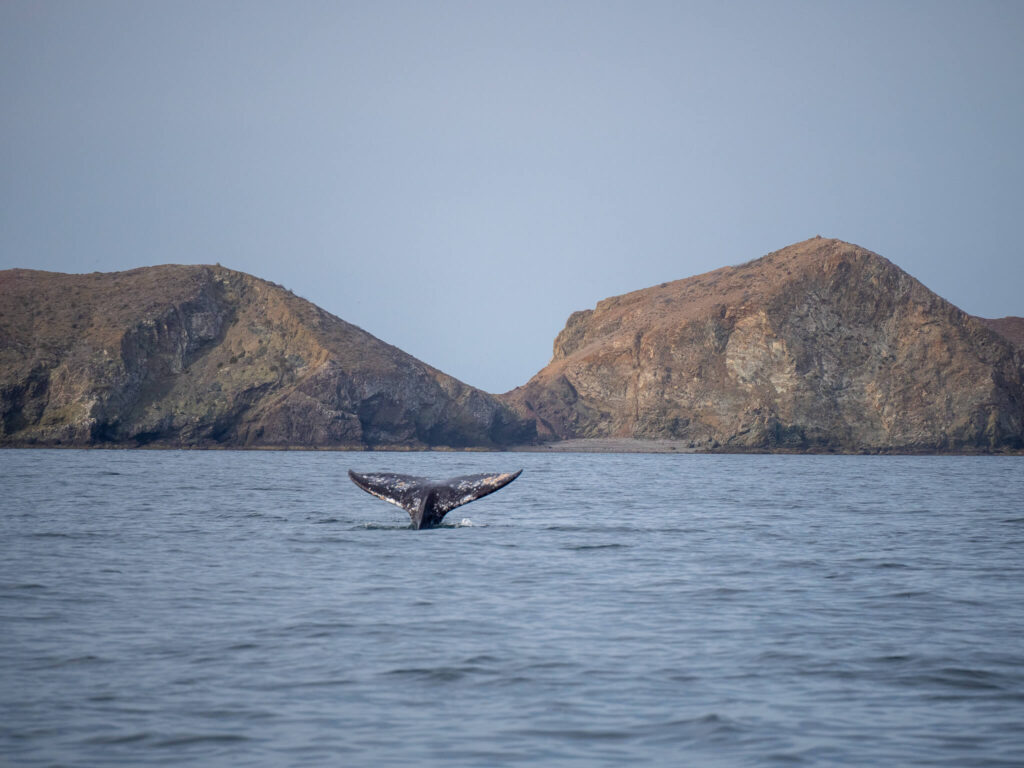
Grey whales are the signature species of Baja California Sur, especially in the sheltered grey whale lagoons.
They undertake one of the longest migrations of any mammal, travelling from Arctic feeding grounds to warm Mexican breeding bays every year. In these calm waters, they are famously curious and sometimes approach boats closely – it’s the only place in the world where whales seek out human interaction in this way.
But grey whales haven’t always got on well with humans. Sadly, they were hunted to near-extinction and were even nicknamed devil fish due to their ferocious behaviour as they fought against barbaric whalers.
Blue whales
Blue whales, the largest animals on Earth, can be seen offshore in the deeper waters around the Sea of Cortez. They are much harder to spot than humpbacks or grey whales, but sightings peak in late winter when they travel from as far north as Alaska to feed in nutrient-rich waters off Mexico.
They’re another species that were nearly driven to extinction and are arguably still the most elusive, despite their size. Seeing one surface exhaling is a rare and unforgettable experience.

Whale sharks
Whale sharks are not whales, but the largest fish in the ocean. They are uniquely found on both sides of Mexico, being commonly seen in the warm Caribbean and Gulf waters.
They feed on plankton near the surface and can often be snorkelled with under controlled, ethical tourism rules. Unlike whale watching (which takes place in a boat), this is an in-water experience, and is one of Mexico’s most iconic marine encounters.

Orca
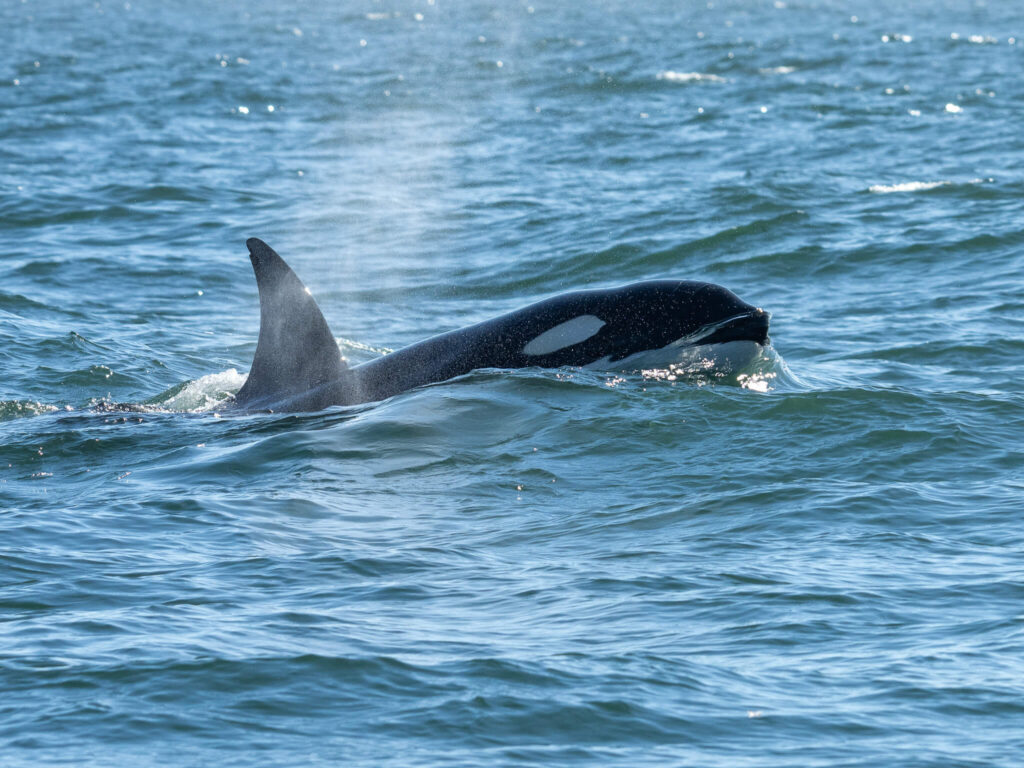
Also not whales, orca (or killer whales) are a species of dolphin. They are present in Mexican waters year-round, mainly in offshore Pacific regions.
They are highly intelligent apex predators and usually travel in pods. Sightings are less predictable than humpbacks or grey whales, but when they do appear, they are often observed hunting or travelling along the coast.
Other dolphin species found in Mexico include Atlantic spotted dolphins, spinner dolphins, common dolphins, rough-toothed dolphins, and bottlenose dolphins, all of which are regularly seen on whale watching tours in Mexico.
Our experience whale watching in Mexico
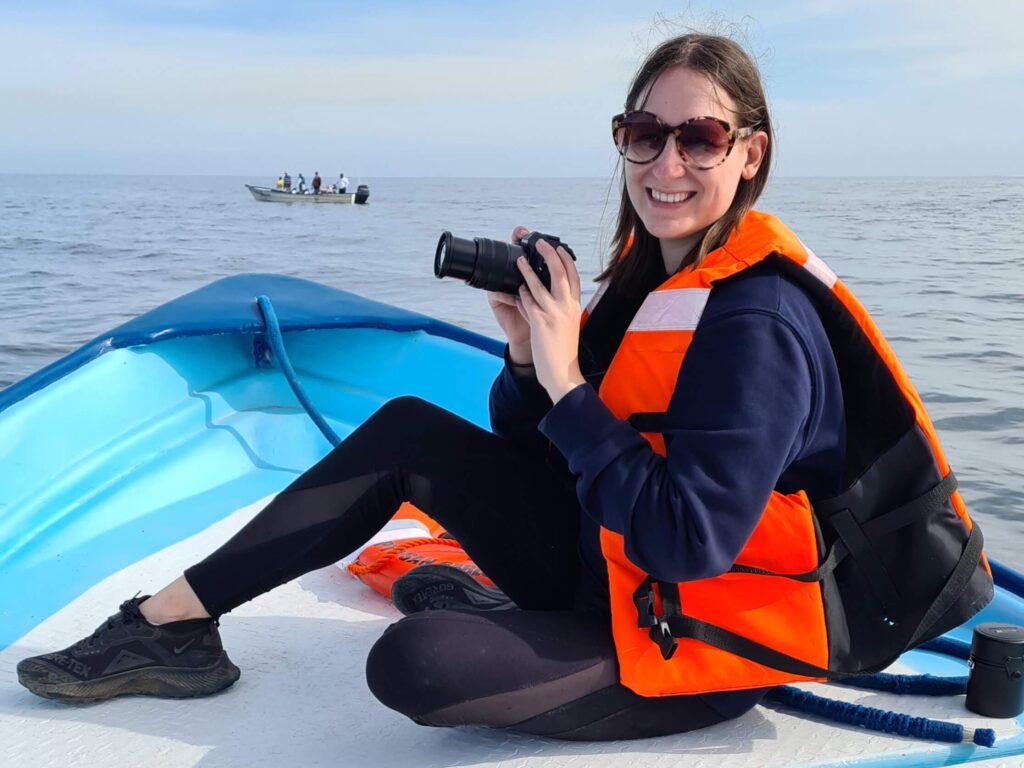
It might sound ambitious (and slightly unrealistic), but when we landed, we set ourselves the challenge: to see Mexico’s three most common whale species in three weeks.
We planned our trip around migration seasons, moving between different regions in Baja California Sur to give ourselves the best chance of seeing each species in the right place, at the right time.
Our first stop was La Paz, the state capital. We had an epic experience swimming with whale sharks with La Paz VIP Tours. They also run really fun tours to go swimming with sea lions. But we didn’t manage to spot any whales.
Our next stop was a splurge on a few nights in Magdalena Bay Whales’ Camp in the middle of the lagoon – it was our first time really whale watching – and it’s to this day one of the best things we’ve ever done. Although we didn’t meet any whales that were interested in interaction, we saw sooo many grey whales over the few days we were there, with some coming right up to the boat, rolling over, and swimming under us.
Next, we headed north to Loreto Bay, which is famous for its blue whales. Our trip with Loreto Sea & Land Tours started out with some surprise fin whales! The second-largest whale species after the blue whale. And then we were lucky with several blue whale sightings, including rare fluking behaviour and one that was quite content just chilling at the surface near our boat, exhaling as loudly as an elephant.
Finally, we headed south to Cabo, and it almost felt like we saved the best till last. We took a couple of trips out with Whale Watch Cabo and Cabo Trek, and saw the most incredible humpback whale displays ever, including babies learning to tail slap and a heat run (where males compete for a female).

Where to see whales in Mexico
Mexico is world-class for whale watching, mainly because you get completely different experiences depending on where you go. From sheltered lagoons to deep offshore Pacific waters, each region varies, whether it’s a new species or a different way to experience it. We’ve got a full guide to the best places to see whales in Mexico, but we’ve done a quick overview below.
Baja California
In our opinion, the Baja Peninsula is the best place to see whales in Mexico. It’s split into two states: Baja California Sur (our fave place, the southern state) and Baja California (also referred to as Baja Norte, as it’s in the north).
The reason this region is so epic for cetaceans is that it’s the confluence of the rough Pacific Ocean and the protected Sea of Cortez (also called the Gulf of California).
It’s one of the most biodiverse marine regions in the world, supporting large whale populations seasonally – this is where you’ll see humpback, grey, and blue whales, as well as whale sharks and orca.
The best places for whale watching in Baja California are:

Mainland Pacific
Along Mexico’s mainland Pacific coast, whale watching is more seasonal and more open-ocean based.
Here, the main species are humpback whales, which migrate along the coastline in Mexico’s whale season. The top locations for whale watching are:
Encounters here are less predictable than Baja, but when whales do appear, it’s just as impressive – often during boat trips heading out into deeper water where migration routes run close to shore.
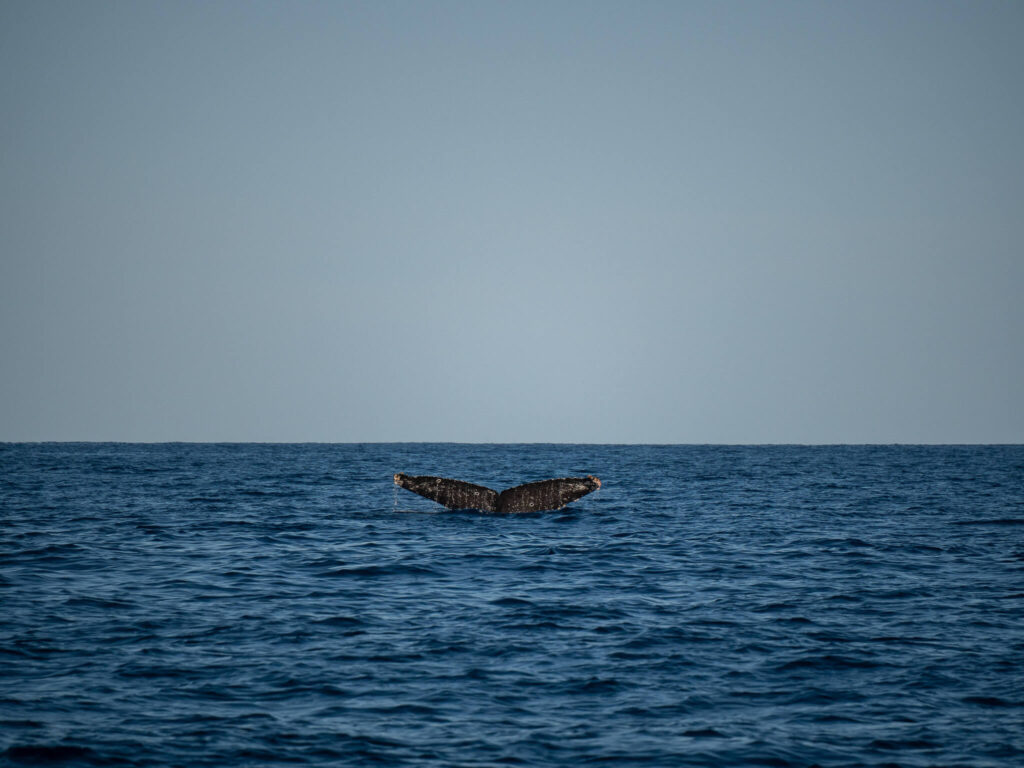
Yucatán Peninsula
The Gulf of Mexico alone contains at least 21 cetacean species, including both baleen and toothed whales, but the Yucatán is not a major whale watching destination in Mexico.
You might occasionally see dolphins (we saw bottlenose in Sian Ka’an Biosphere Reserve), and there are rare sightings of larger marine mammals in deeper waters, but it’s not a reliable whale watching region.
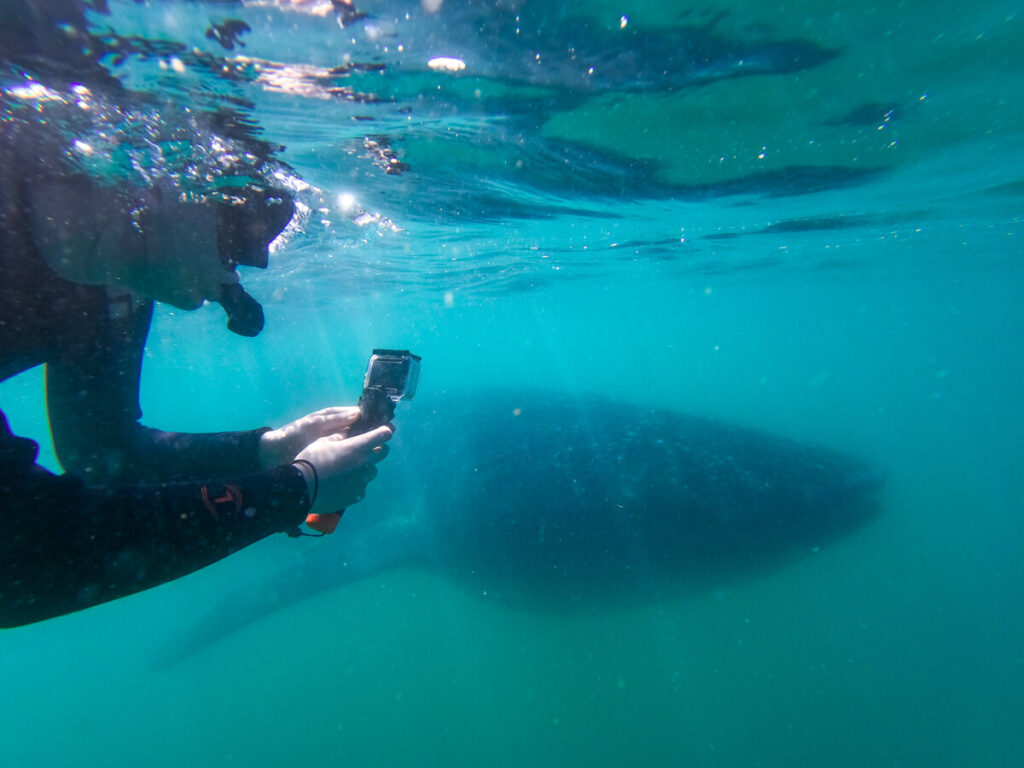
Instead, the Yucatán is far better known for whale sharks, especially in the northeast on the Caribbean Coast, which is a completely different (but equally impressive) marine experience. The best bases for these trips are:
If whale watching is your main goal, this isn’t the region for you.
When to see whales in Mexico
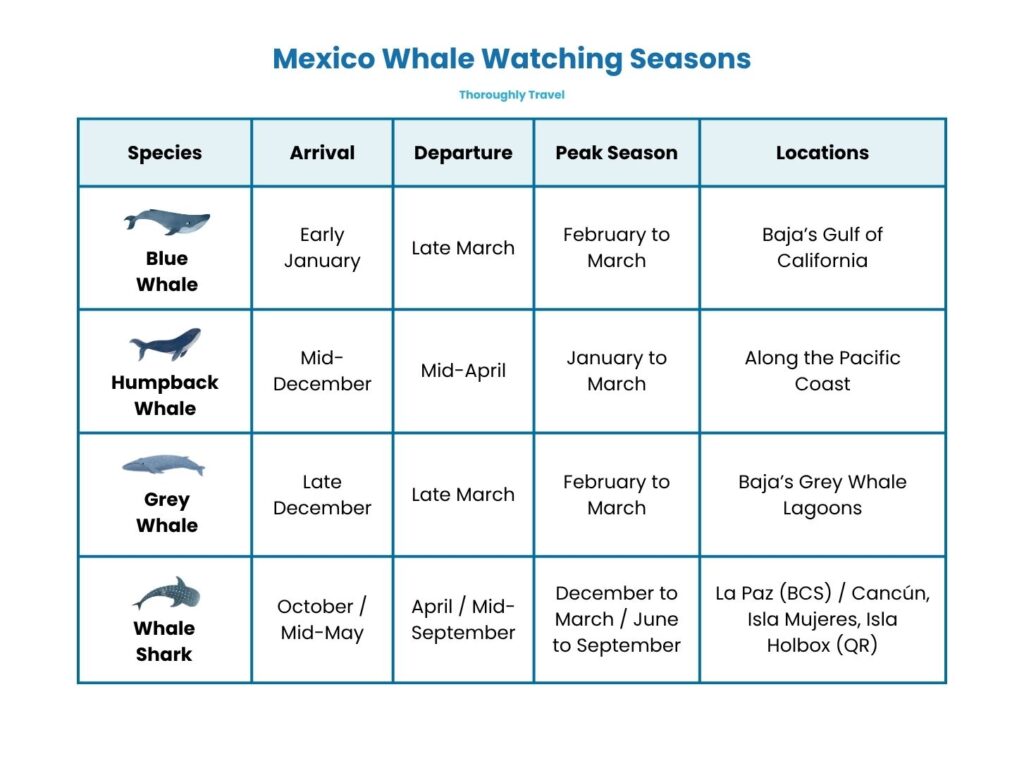
Ok, so you know what whales in Mexico you can see, and you know where to go to see them, but when exactly should you book your visit? Whale watching in Mexico is strongly seasonal, and timing makes a huge difference depending on the species you want to see.
It’s a good idea to plan when to visit Mexico for whale watching to maximise your chances of seeing all the species on your bucket list.
How to see whales in Mexico
Whales in Mexico can be seen in three main ways:
The experience depends heavily on location, season, and species, especially in Baja California Sur, which offers the most reliable encounters.

Whale watching from the land
Land-based whale watching is possible in a few key areas, especially in Baja California Sur during peak migration season.
You can often spot:
We visited Mexico in peak whale season and saw seven whales on our bus ride from Loreto to Cabo! Then, from our hotel, we saw quite a few humpbacks off the coast of Cabo, including the epic double breach in front of the famous El Arco below.
The best land viewpoints are around Cabo’s coastal cliffs and elevated stretches of coastline where the water is deeper close to shore. Staying in a Cabo beachfront hotel that you can see whales from also greatly maximises your chances of sightings.
Likewise, staying in a glamping site in one of the grey whale lagoons maximises your chances of seeing whales from the land. We saw whales blowing in the bay from the deck outside our tent in the Magdalena Bay Whales Camp.

Mexico whale watching tours
Boat tours are the main and most reliable way to see whales in Mexico. You can get up much closer than on land, and you’ll be right in the heart of the action, whether it’s humpbacks breaching off the southern coast or mothers and their calves in the grey whale lagoons.
There’s almost a ridiculous number of operators offering whale watching tours in Baja, but we’d recommend opting for a responsible operator and a small-group tour.

Swimming with whales in Mexico
Unlike in other countries, swimming with whales in Mexico is extremely limited and tightly regulated. It is not allowed with grey, blue, or humpback whales in most regions.
If you’re looking for in-water marine megafauna experiences, the closest legal and ethical option in Mexico is swimming with whale sharks in La Paz.
Underwater sightings do sometimes occur, especially if you’re SCUBA diving or snorkelling. We could hear humpback whales singing while SCUBA diving in Cabo, and occassional pass-bys have happened underwater for lucky divers. Likewise, snorkelling with bait balls in Magdalena Bay is pretty popular – these gatherings of sardines attract larger marine species, and while tours focus on swimming with species like marlin, whales like Bryde’s and humpbacks have been known to appear.
Following an increase in unregulated activity, swimming with orcas has recently been legalised and regulated in a trial period in Baja. Most tours are concentrated in La Ventana, where huge groups of leaping mobula rays attract these apex predators.

Is whale watching in Mexico ethical?
It’s really important to us that the whale watching we participate in is ethical. Taking tours that have no negative impact on the species being observed (a principle of sustainable travel) is vital to the conservation and longevity of the species. It also provides you with the best experience, too, as the animal has enough space to exhibit its natural behaviours.
The boom of the Mexican whale watching industry has resulted in an increase of 666% in income and 51% in the jobs generated in the last 11 years, which is excellent news for local economies. However, this does represent a potential risk of an increase in the number of boats and people seeking to access the whales’ environment. This is exacerbated by the rise of social media, encounters going viral, and an increased interest in whale watching in Mexico in general.
We’ve done a real deep dive into the ethics of whale watching in Mexico, based on our personal experience, anecdotal evidence we gathered from marine biologists and tour guides from licensed companies we encountered when we were there, and information we have gathered by reaching out to licensed companies for clarification in the writing of this article.
There are several species of whales in Mexico that are the targets of whale watching tours in a variety of locations. That makes it quite difficult to give a blanket answer to whether whale watching in Mexico is ethical, but we’re going to try our best to explain it simply.

How does Mexico protect whales?
Choosing a destination where the animal is protected is one of the best ways to guarantee your encounter is an ethical one. One of the reasons why Mexico is one of the best countries in the world for whale watching is because it has established so many laws and protected reserves to conserve whale species.
Whale watching rules are set by Mexico’s Ministry of Environment, SEMARNAT, the Secretariat of Environment and Natural Resources. All tour companies, individual people and even scientists must adhere to these rules. Every year, each licensed company is provided a flag by SEMARNAT, and this flag must be flown at all times when whale watching. If a company breaches the rules, it may be fined or its license not renewed. Guides for each whale watching company undergo specific training to receive this certification.
The National Commission of Natural Protected Areas (Comisión Nacional de Áreas Naturales Protegidas), known by the initials CONANP, is an institution of the Mexican government also responsible for the care and conservation of the 182 Natural Protected Areas, which are home to several whale species.
Several non-profit organisations have also been established to combat unsustainable practices in various areas. The Ecología y Conservación de Ballenas (ECOBAC) created the Whale Disentanglement Network, known as RABEN, a team of people trained to perform rescues of whales entangled in fishing gear.
Additionally, the International Whaling Commission sets out General Principles for Whale Watching, which are recommended globally.

Mexico whale watching laws
The two main pieces of legislation protecting whales in Mexico include:
NOM-131-SEMARNAT-2010
We understand most people don’t have time to find, translate, and read Mexican laws about whale watching, so we did it for you. Here are the main takeaways from NOM-131-SEMARNAT-2010:
NOM-059-SEMARNAT-2010
NOM-059-SEMARNAT-2010 is not a whale watching guideline in itself, but a national conservation law that classifies species according to their risk of extinction.
In relation to whales, its key role is:
Additionally, there are site-specific regulations in Marine Protected Areas (MPAs), including El Vizcaíno Biosphere Reserve and Loreto Bay National Park, which often include stricter enforcement, seasonal restrictions, and dedicated monitoring.
There are some key gaps, however. For example, there are no specific laws in Mexican legislation that forbid swimming with orca and dolphins. NOM-131-SEMARNAT-2010 prohibits swimming, diving, and other direct interactions with baleen and sperm whales, while grey whales are protected under SEMARNAT-059.

Where enforcement is strongest and weakest
It’s been observed that surveillance and enforcement of Mexican whale watching laws differ greatly from Marine Protected Areas to places without protected status. Protected reserves in Mexico, like the three grey whale lagoons in Baja California Sur, often have extra, specific laws to protect the wildlife within. More resources are often put towards these areas, including inspectors who can regulate whale watching activities, reporting any breaches in the rules.
Some of Mexico’s Marine Protected Areas that are popular for whale watching include:
Places without protected status where whale watching occurs in Mexico include:
Generally, whale watching in Marine Protected Areas is a more ethical experience as legislation is better enforced and more restrictions exist to protect the whales in these areas. However, that doesn’t mean you can’t have an ethical experience in places without protected status – it just means a little bit more effort needs to be put in on your part to choose a responsible company.
From our perspective, Cabo San Lucas was by far the worst place for following the whale watching laws in Mexico. There are countless commercial boat tours out in the bay at once, and by the afternoon, the sea turns from whale soup to a traffic jam. There are companies operating ethically, but there’s also a myriad of unlicensed operators chasing the whales, as well as private yacht and boat hires that just have no idea what they’re doing.
Loreto was the most well-regulated, as it is a Marine National Park and is the least touristy of the three locations we visited. The grey whale lagoons are similarly regulated. Magdalena Bay was pretty good, but there were some bad practices slipping under the radar of the rangers (mainly by the day-trip boats, which are under pressure to deliver a hands-on encounter in a short timeframe).

Why is it important to protect whales in Mexico?
Protecting whales in Mexico is important for the whales themselves, their habitat, and also your experience.
While many populations have recovered from the impacts of commercial whaling, they remain vulnerable to disturbance from tourism if it’s not properly managed.
Boats that get too close or ignore regulations can alter whale behaviour, increase stress, and disrupt feeding or breeding, while noise pollution and the risk of boat strikes pose additional threats.
On top of that, growing demand for close or physical encounters, often driven by social media, can encourage unethical wildlife tourism practices if left unchecked.
Ultimately, ethical whale watching is important to protect these species, support conservation efforts, and ensure that encounters remain natural, sustainable, and meaningful for years to come.

Is whale watching in Mexico safe?
Whale watching in Mexico is generally safe, provided you book with a reputable, licensed tour operator that follows local wildlife regulations. Mexico has strict guidelines in place to protect whales and ensure boats keep a respectful distance from them, which keeps both them and you safe.
Tours should be conducted by experienced guides who understand whale behaviour and know how to navigate the waters safely.
It’s worth remembering that whales are wild animals, so sightings and encounters can never be guaranteed, and their movements can sometimes be unpredictable. But any news clips or videos you see of whales breaching super close to, and even on top of, boats are generally taken of private charters and rent-a-boats, not licensed tour operators.
If you’re prone to seasickness, take precautions before setting off, as the boat ride can get a little choppy depending on the weather and location. We’d also recommend checking the weather conditions on the morning of your trip and following your guide’s instructions throughout the excursion.

Is whale watching in Mexico worth it?
Whale watching in Mexico is hands-down one of the best things we’ve ever done. It was our first experience whale watching, and it’s a fantastic destination to see such a variety of species in one trip.
Depending on where and when you visit, you might see whales breaching, slapping their tails against the water or swimming surprisingly close to the boat. To this day, (and we’ve seen lots of whales all over the world now) it’s still one of the very best places for whale watching.
But these magical encounters can only happen with the respect and experience of conscious and responsible operators. It’s a good opportunity to learn more about marine life and the importance of protecting these animals and their habitats, while experiencing a once-in-a-lifetime encounter.
We’d highly encourage you to go whale watching in Mexico if your visit falls during the migration season.

How to choose responsible whale watching in Mexico
Tourism demand shapes the industry, and your behaviour directly influences how whale watching operates.
If people choose:
…it increases demand for those exact practices.
On the flip side, making more responsible choices, like booking with licensed operators, helps reinforce good standards and supports businesses that are doing things properly.

Tips for responsible whale watching in Mexico
Over the last few years, we’ve seen the interest in marine animal encounters in Baja boom. There was very little information online about these encounters when we were researching our trip, but now Mexico’s whale watching opportunities are much better known. Social media is becoming flooded with encounters where people are swimming with orca or touching the friendly grey whales.
We learned so, so much on these trips – not only about whales and their habitat, but also about why it’s so important to observe them ethically. Here are our top tips so you know your experience is positive for you and the whales:

What to wear when whale watching in Mexico
The best outfit depends slightly on the time of year and where you’re heading, but comfort and practicality are key. Whale season does fall in winter, so even if it’s lovely and sunny on land, the breeze out at sea can make things feel considerably cooler.

What to pack when whale watching in Mexico
You don’t need to take loads with you – in fact, it’s best to only take a small bag, as space on boats is limited – but a few essentials will make your whale-watching trip much more comfortable. We’d recommend packing a small day bag with the following:

Whale watching in Mexico resources
If you’re planning a whale-watching trip in Mexico, the following resources are useful for researching wildlife conservation guidelines.

Mexico whale watching FAQs
Planning a whale-watching trip to Mexico? We’ve answered some frequently asked questions to help you plan your trip.
What type of whales can you see in Mexico?
Mexico is home to an impressive variety of whale species, especially along its Pacific coastline. The most commonly spotted species include grey whales, humpback whales, and blue whales, which migrate to Mexican waters at different times of the year. You may also encounter fin whales, minke whales, sperm whales, and Bryde’s whales, particularly around the Gulf of California. Orcas are also present, although they’re less predictable to spot.
What is the largest whale in Mexico?
The blue whale is the largest whale found in Mexican waters and, in fact, the largest animal on the planet. These incredible giants can grow to around 30 metres in length and weigh well over 100 tonnes. They’re most commonly spotted around the Gulf of California, particularly near Loreto in Baja California Sur.
Where do whales live in Mexico?
Whales can be found in several areas around Mexico, although the Pacific coast and Gulf of California offer some of the best opportunities for sightings. Baja California and Baja California Sur are especially popular, with grey whales visiting the coastal lagoons and humpbacks gathering around Los Cabos. The Gulf of California is another important habitat, supporting blue, fin, humpback and sperm whales. Further south, humpbacks can also be spotted around Puerto Vallarta, Nayarit, Jalisco, and Oaxaca. The Caribbean coast has far fewer established whale-watching opportunities, but it does get seasonal whale sharks.
When can I see whales in Mexico?
The main whale-watching season in Mexico generally runs from December until April, although exact dates vary depending on the species and location. Grey whales are usually spotted between December and April, with February and March being particularly good months in the Baja California lagoons. Humpback whales are also commonly seen between December and April, especially around Los Cabos and Puerto Vallarta. Blue whales tend to visit the Gulf of California during the winter and early spring, with February and March offering good opportunities around Loreto.
Are whales endangered in Mexico?
Not all whales found in Mexico are endangered, but several species and populations face conservation concerns. Blue whales are classified as Endangered on the IUCN Red List, while the conservation status of humpback and grey whales varies between populations. Mexico also provides an important refuge for the critically endangered vaquita, although this is a small porpoise rather than a whale. Many whale species are protected under Mexican wildlife legislation, and responsible whale watching plays an important role in raising awareness of marine conservation.
Why are whales endangered in Mexico?
Whales face several threats, many of which are caused by human activity. Fishing nets and equipment can trap whales, causing serious injuries or preventing them from swimming and feeding properly. Collisions with boats and large ships are another concern, particularly in busy coastal waters. Ocean pollution, plastic waste, habitat disturbance, and climate change can also affect their food sources and breeding environments. Although commercial whaling has been greatly reduced, some whale populations are still recovering from decades of hunting. This is why responsible tourism and marine conservation remain so important.
Is it rare to see whales in Mexico?
Not really, provided you visit the right destination at the right time of year. Mexico is actually one of the world’s well-known whale-watching destinations, with thousands of migrating whales visiting its Pacific waters seasonally. Grey whales and humpbacks are relatively common sightings during the winter months, especially around Baja California and Los Cabos. However, some species, such as blue whales and fin whales, can be harder to spot. As with any wildlife experience, sightings are never guaranteed, and you’ll need a little patience and luck. Booking during peak season with an experienced local operator will give you the best chance to see them.
Are there killer whales in Mexico?
Killer whales, also known as orcas, can be found in Mexican waters, mostly around the Gulf of California and the Pacific coastline. Despite their name, orcas are actually the largest members of the dolphin family rather than true whales. Unlike grey and humpback whales, orcas don’t follow such predictable seasonal migration patterns in Mexico. This means sightings are less reliable, but spotting a pod in the wild would certainly be a memorable experience.
What whale can you swim with in Mexico?
There are no dedicated, conventional tours in Mexico that allow you to swim alongside wild whales in the same way that certain destinations, such as Australia and Tonga, are known for. Whale watching excursions in Mexico are designed to observe these animals from boats, and Mexican regulations prohibit swimming and diving activities during these trips in designated observation areas. If you’re hoping for an in-water wildlife experience, you may have heard about swimming with whale sharks instead.
Where is the best place to swim with whales in Mexico?
If you’re hoping to swim with a whale shark, the waters around Isla Mujeres, Isla Holbox, and Isla Contoy, near Cancún, are among Mexico’s best-known destinations. Whale shark season generally runs from May to September, when these gentle giants gather in the warm Caribbean waters to feed.
Can you swim with orcas in Mexico?
Swimming with orcas has recently been tested in a legalised trial period in Baja. Most tours are concentrated in La Ventana, where huge groups of leaping mobula rays attract these apex predators. It’s not yet been decided whether tours will continue.
Read next:
15 Best Places for Whale Watching in Mexico & Which to Choose
The Best Time to Visit Mexico for Whale Watching By Species & Season
The Ultimate Guide to Whale Watching in Baja California Sur
8 Best Whale Watching Tours in Baja California Sur Compared (Honest Reviews) + Who to Avoid
An Ethical Guide to Touching Grey Whales in Baja California Sur
An Ethical Guide to Humpback Whale Watching in Cabo
A Complete Guide to Blue Whale Watching in Loreto
An Essential Guide to Grey Whale Watching in Magdalena Bay, Mexico
Our Magdalena Bay Whales Camp Review: Glamping on an Island in a Grey Whale Lagoon
How to Ethically Swim with Whale Sharks in La Paz
Our Baja California Sur Destination Guides:
Our Baja California Sur Travel Guides:
