The Best Time to Visit Mexico for Whale Watching By Species & Season

Discover when to see whales in Mexico, including a month-by-month calendar of the whale watching season in Mexico.

This post may contain affiliate links, which means we might earn a small commission on anything purchased through these links at no extra cost to you. Learn more on our disclaimer page.
When it comes to whale watching in Mexico, timing is absolutely everything. Different species arrive at different points in the year, and if you visit at the wrong time, you could easily miss them altogether, even if you’re in the right place.
Most whale activity happens during Mexico’s winter and early spring months, when whales migrate from colder waters to the Pacific coast to breed, give birth, or feed. But the exact timing varies depending on the species and region, which is why planning around a general Mexico whale watching season isn’t always enough.
Having spent a month in Baja right in the peak of whale season, we learned a lot about how timing is everything. Discover when to visit Mexico for whale watching by species and location, so you know exactly where to be and when for the best chance of seeing whales in the wild.

More Whale Watching in Mexico
When to see whales in Mexico
Generally, the best time to see whales in Mexico is in the winter months between December and April. But it’s highly seasonal and there are slight variations to these timings depending on the species of whale, their different migration patterns, and your location.
Some people will say the season runs from 15th December to 15th April, but it’s not like the whales have any idea what the date is. This is just guidance for when tours are permitted to operate. If you’re visiting at the very start or end of the season, we’d recommend reaching out to local companies to see what recent sightings have been like.
If we were to generalise, though, there’s a strong overlap between January and March, when multiple whales are present at the same time. This is when we’d recommend you visit, and when we planned our trip for.
Outside of this window, sightings drop off quickly, but don’t cease entirely for a few more months.
Planning your whale watching trip?
Whale watching is one of those experiences that really comes down to timing as well as location. Be sure to read our guide on where to see whales in Mexico, so you know where to go for each species, not just when to visit. We’ve also written a master guide to whale watching in Mexico, which covers everything you need to know before you go, including times, regulations, and ethics, while our guide to the 8 Best Whale Watching Tours in Baja California Sur compares our favourite tours with our honest reviews, as well as covering who to avoid booking with.
If you’re building a trip around whales, it’s worth going a bit deeper than just choosing a destination. That’s why we’ve broken everything down into more detailed guides to help you plan properly:
If you’re still deciding where to go, start with Baja California Sur – it consistently offers the best mix of species, behaviour, and conditions anywhere in Mexico, and is easy to plan a full trip around.

Planning a trip to Baja?
Mexico is a very popular destination, so be sure to book in advance as early as possible!
Top Experiences in Baja
Top Hotels in Baja
Transport in Baja
Best eSIM for Baja
Mexico whale watching season
Mexico’s whale season is almost entirely driven by migration, which means planning where to see whales in Mexico and timing your trip properly makes a huge difference. Many species travel from the cold Arctic waters (where they feed) to the warmer lagoons off Baja or the open coastline (where they breed) in a yearly cycle.
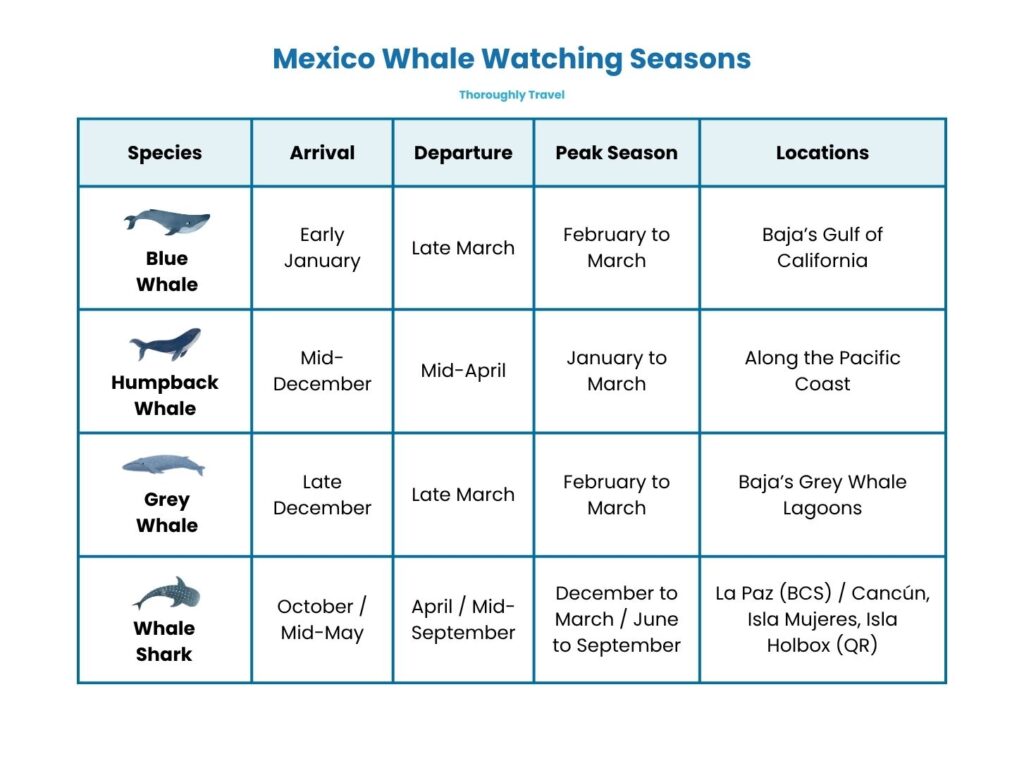
When they arrive in Mexico, some species head for the sheltered Sea of Cortez (Gulf of California), while others hang out in the open Pacific Ocean. We’ve created a month-by-month whale watching calendar below to reflect each species’ activity in each month and location:
The best time to see whales in Mexico by species
As we’ve mentioned, different whale species arrive in Mexico at slightly different times, even though their seasons overlap. We’ve broken down when to visit Mexico for each species below, but you can find a more detailed breakdown of the best times to visit Mexico for each whale species in our dedicated guides:
We’ve broken down each exact season by species below.

Best time to see humpback whales in Mexico
Humpback whales are present in Mexico from roughly December to April, with peak activity between January and March. This is when they’re breeding and calving, which is why you’ll see so much surface behaviour like breaching, tail slapping, and spy-hopping.
Humpbacks migrate along the Pacific coast, so you can see them in multiple regions, from Baja California Sur down to mainland areas like Jalisco and Nayarit. Cabo San Lucas is one of the most reliable places, followed by San José del Cabo, because migration routes pass close to shore.
Early in the season (December-January), sightings are good but slightly less intense, while February and March tend to offer the most consistent action. By April, most whales are already starting to head north again.
We went whale watching in Cabo on three boat trips over the course of three weeks from the end of February to early March and saw so much activity, including babies learning new tricks and a heat run (where males compete for a female). We also saw countless whales off the coast right from the land, from the balcony of our beachfront hotel, and even from our bus!

Best time to see grey whales in Mexico
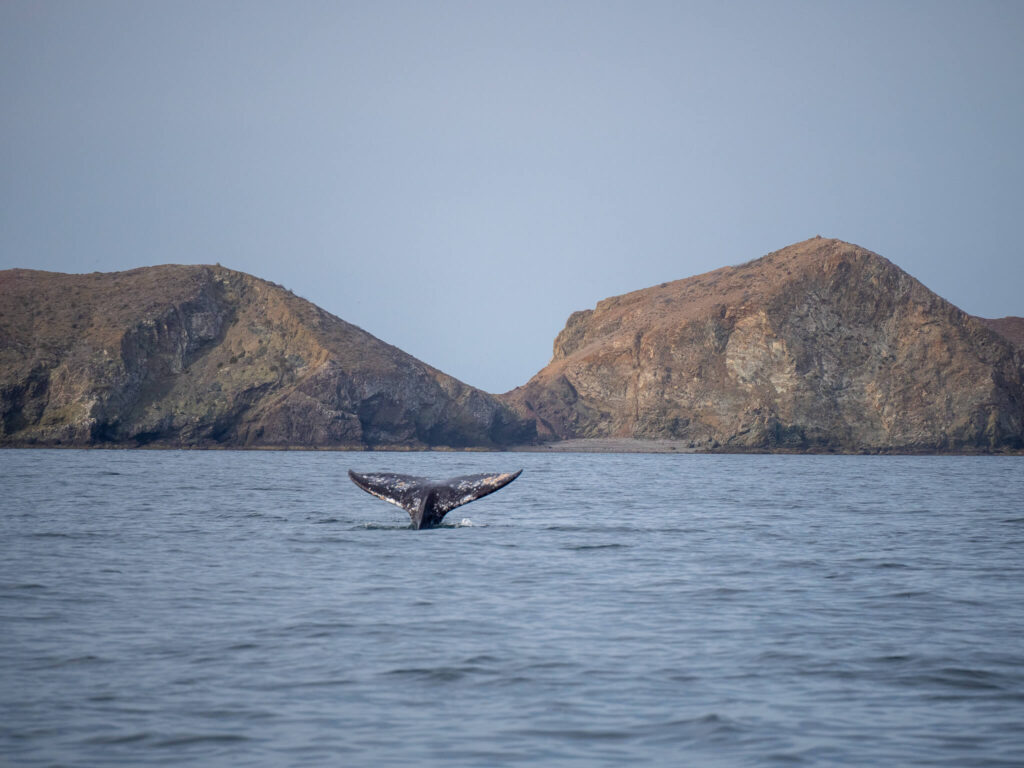
Grey whale season runs from December to March, and it’s one of the most predictable wildlife experiences in Mexico. During this time, they gather in sheltered lagoons in Baja California Sur, where they breed and give birth.
The lagoons, Magdalena Bay, San Ignacio Lagoon, and Ojo de Liebre, are at their best in February, when mothers and calves are most commonly seen. This is also when whales tend to be more relaxed and spend longer periods at the surface.
They begin to arrive in late December, but numbers are better by January, so we wouldn’t recommend visiting before then. February and early March are the peak season, when babies are born and mothers are more relaxed. Males migrate back north first, in early March, and by late March, mothers and calves leave the lagoons and migrate back, too.
Unlike humpbacks, grey whales aren’t about dramatic surface action – the experience is more about proximity, as grey whales are known for their friendly nature. They exhibit a unique behaviour where they approach boats seeking human contact – something you can only experience in Mexico’s lagoons.
Staying in an island whale glamping site is the best way to encounter them, and is one of our favourite ever experiences that we did for Dan’s birthday in late February. There were pros and cons to this time period, which falls bang slap in the peak of the season. There were whales everywhere (we saw about 70 on our first 5-hour boat trip) and we even saw them in the lagoon from the deck of our tent. But there were also a lot of boats out in the bay, which meant we weren’t able to get lucky with the friendly whales that approach for human contact. We were probably just unlucky – wild and truly ethical encounters are never guaranteed – but if we went back, we’d probably return a couple of weeks later, hoping the bay was less busy, or we’d try one of the quieter northern lagoons that doesn’t get the day-trippers.
Best time to see blue whales in Mexico
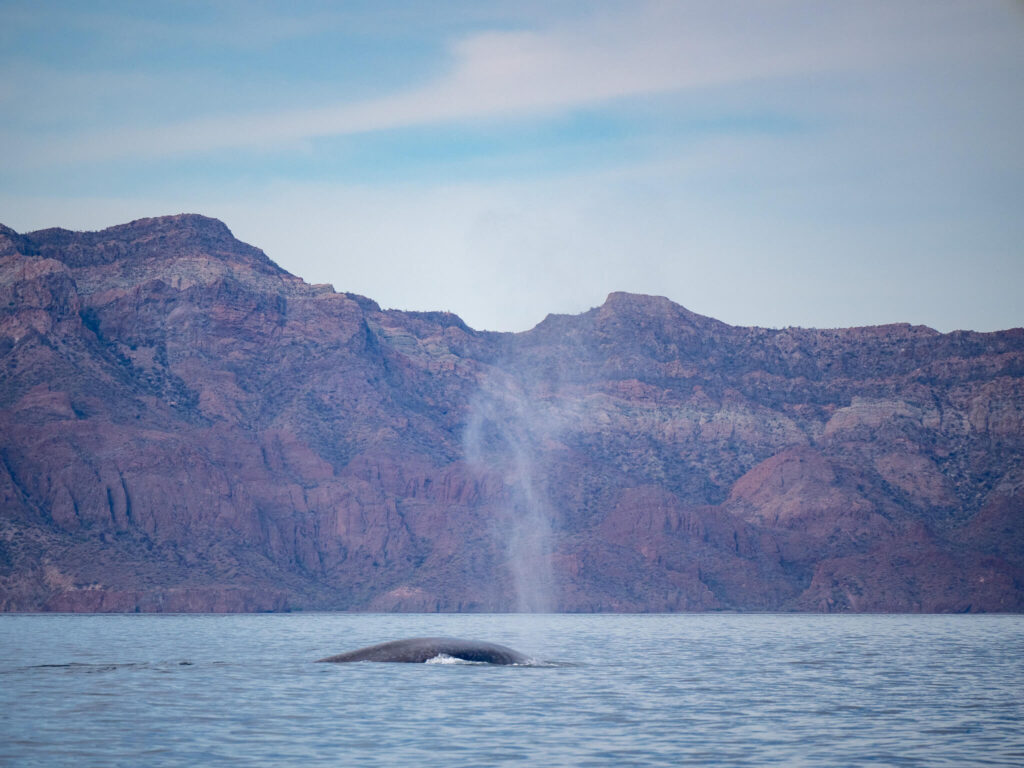
Blue whales have a much shorter season in Mexico, typically from January to March. They’re most commonly seen in the Sea of Cortez around Loreto, where nutrient-rich waters attract them to feed.
Because of this narrow window, timing is much more important – outside of these months, your chances drop significantly. Even during peak season, which is in February and early March, sightings are less guaranteed than humpbacks or grey whales due to their elusive nature.
Having said that, Loreto Bay is one of the few places in the world where you can reliably see blue whales in relatively accessible waters. If this is your priority, it’s worth planning your entire trip around this short season.
We went out on a blue whale watching trip right at the end of February and got so lucky with multiple blue whales, some so comfortable with us they hung around on the surface by us and we saw others fluke (which is rare for this species), we even saw fin whales!
Best time to see other whale species
There are loads of cetacean species in Mexico that can be seen besides the big three, including:

Best time to swim with whale sharks in Mexico
There are actually two whale shark seasons in Mexico – one on the west coast and one on the east coast.
Whale shark season in Yucatán runs from mid-May to mid-September, with the peak between June and early September. This is completely separate from whale watching season and the other side of the country. During this time, plankton blooms attract large numbers of whale sharks to areas off Cancún, Isla Holbox, and Isla Mujeres.
But you can still time your whale shark experience with the whale watching season in Baja. Whale sharks are also attracted to the bay off La Paz, the state capital. You can swim with whale sharks in La Paz between late October and April (and it’s arguably more ethical and better regulated than in the busy Caribbean).
Unlike whale watching, this is an in-water experience, with regulated snorkelling tours allowing you to swim alongside the largest fish in the sea. Tours don’t run until there’s a certain number of whale sharks in the area, so the peak season between December and March is best for higher chances.

Best time to swim with orca in Mexico
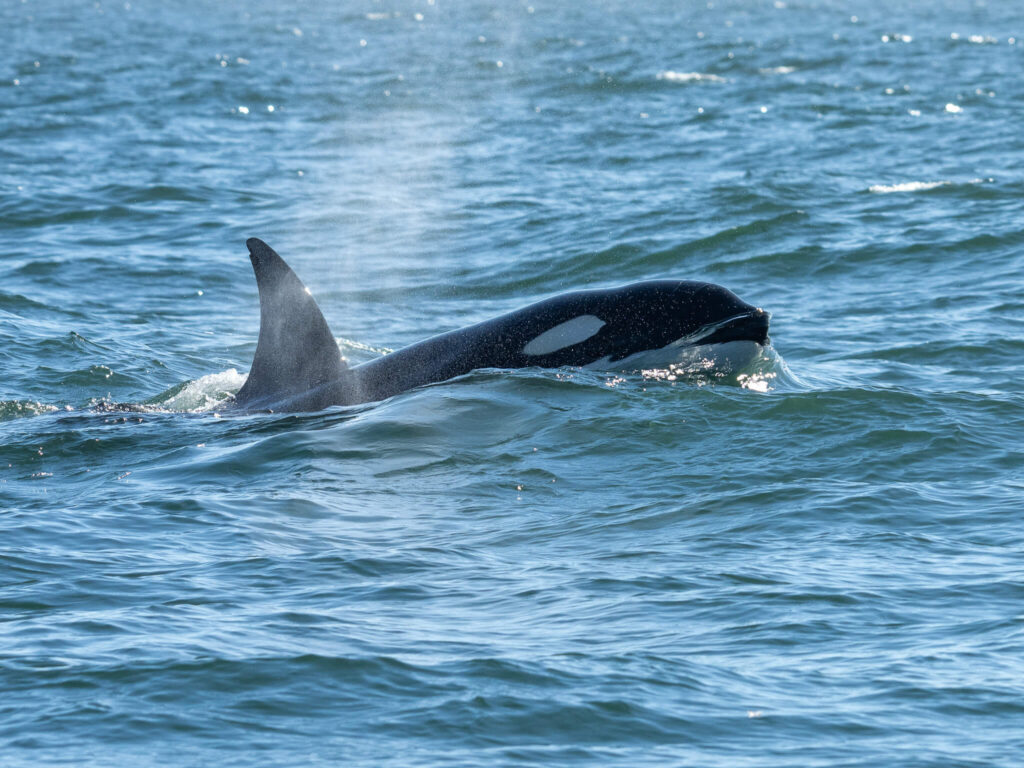
Orca are actually dolphins, not whales, but they’re large and known by their moniker ‘killer whales’, so they’re often included when talking about whale watching.
Swimming with orcas has recently been tested in a legalised trial period in Baja. Most tours are concentrated in La Ventana, where huge groups of leaping mobula rays attract these intelligent predators.
While orcas are present year-round, especially around Baja California, sightings can be unpredictable and typically occur offshore. They’re found in higher numbers between April and August, peaking between May and July. This also coincides with the peak mobula ray migration, where huge numbers aggregate (and are fodder for the orca).
What is the best month for whale watching in Mexico?
In our opinion, February is the best month to see whales in Mexico, as this is right in the middle of the migrations of grey whales, humpback whales, and blue whales. It also coincides nicely with the peak of whale shark swimming season, and orca and other species are present, too.
This is when you’re most likely to see a mix of behaviours, including humpbacks breaching offshore, babies being born, and docile grey whale interactions in the lagoons. Conditions are also usually more stable, with calmer seas and clearer visibility.
However, since it’s peak season, boat traffic can be heavier, especially around Los Cabos, which can actually deter interactions. Visiting at the start or end of peak season can actually yield better encounters with fewer tourists, so late January and March are also good months.
If you’re keen to see multiple species, our advice is to time your visit around the blue whale season, which is the shortest period and the most elusive species. Then plan trips to see other species in their respective locations.
It’s worth remembering that these are wild animals, so sightings can never be guaranteed. Be wary of any operator promising guaranteed sightings, as they may cut ethical corners to ensure your experience. A lot of tour companies will offer a second trip for free if you don’t have a sighting. Combined with unpredictable sea conditions or weather, it’s a good idea to leave room in your Baja itinerary for flexibility in case anything needs to be rescheduled.

What is the best time to see whales in Mexico?
The time of day you go whale watching matters almost as much as the time of year you visit. Early morning is usually the best time of day for whale watching, no matter your location. The ocean tends to be calmer, which makes it easier to spot blows, fins, and surface movement.
There are also fewer boats on the water, so you’re more likely to see some really cool behaviour. As early as possible is our favourite time to go whale watching.
On our morning trips, the whales behaved more naturally and were easier to approach responsibly. We found that by midday in places like Cabo and Magdalena Bay, there were fewer whales or more boats approaching the whales. And we took a sunset tour, which sounded appealing and offered beautiful light, but we were so frustrated by party boats in Cabo crowding the whales and chasing them away – it was our worst trip for sightings.
Early morning light conditions, especially at golden hour, are better for wildlife photography, too.

When not to visit Mexico for whale watching
May to October is generally the worst time for whale watching in Mexico. Most migratory species have already left the region and are back in colder feeding waters. Basically, you won’t see any.
You might still see dolphins or the occasional offshore animal, but consistent whale sightings are very unlikely. This period also overlaps with hurricane season on the Pacific coast, which can affect sea conditions.
That said, this is when whale shark season takes over in the Caribbean (off Cancún, Isla Mujeres, and Isla Holbox), so while it’s not good for whales, it’s still a great time for marine life if you adjust your expectations and go to the right place.
Mexico whale watching season FAQs
Now you know when to see whales in Mexico, we’ve answered these frequently asked questions to help you plan your trip.
Can you see whales in Mexico year-round?
Whale watching in Mexico is highly seasonal, with most species only present from December to April along the Pacific coast. Outside of this window, sightings drop off significantly as whales migrate back to colder feeding grounds. The main exception is whale sharks, which appear in summer in the Caribbean, and orca that are year-round in Baja, but they’re not whales and follow a completely different seasonal pattern.
What is the best time to see whales in Mexico?
February is generally the best time to see whales in Mexico, as it sits right in the middle of the season when both humpback and grey whale activity peaks. This is when you’re most likely to see multiple species, active behaviours, and even calves. If you’re planning one trip and want the highest chance of success, this is the safest month to aim for.
What is whale shark season in Mexico?
Whale shark season runs from June to September in Mexico’s Caribbean and from November to April in Baja, when plankton blooms attract them to warm, shallow waters. The most popular places to see them are around Isla Holbox, Isla Mujeres, and La Paz.
Are whales guaranteed in Mexico?
Whales are wild animals, so sightings are never guaranteed, even in peak season. That said, success rates are very high between January and March, especially in places like Baja California Sur, where migration routes and breeding areas overlap. Choosing the right location, timing, and operator makes a big difference to your chances.

Read next:
Ultimate Guide to Ethical Whale Watching in Mexico: Our Experience
15 Best Places for Whale Watching in Mexico & Which to Choose
The Ultimate Guide to Whale Watching in Baja California Sur
8 Best Whale Watching Tours in Baja California Sur Compared (Honest Reviews) + Who to Avoid
An Ethical Guide to Touching Grey Whales in Baja California Sur
An Ethical Guide to Humpback Whale Watching in Cabo
A Complete Guide to Blue Whale Watching in Loreto
An Essential Guide to Grey Whale Watching in Magdalena Bay, Mexico
Our Magdalena Bay Whales Camp Review: Glamping on an Island in a Grey Whale Lagoon
How to Ethically Swim with Whale Sharks in La Paz
Our Baja California Sur Destination Guides:
Our Baja California Sur Travel Guides:
