8 Best Whale Watching Tours in Baja California Sur Compared (Our Honest Reviews) + Who to Avoid

A comparison of the most popular and professional whale watching tours in Baja California Sur by the ethical companies we love and actually recommend.

This post may contain affiliate links, which means we might earn a small commission on anything purchased through these links at no extra cost to you. Learn more on our disclaimer page.
Baja California Sur is one of the best places in Mexico to see whales in the wild, with grey whales, humpbacks, and even blue whales visiting its waters at roughly the same time of year. But where you go, when you visit, and which tour you book can make a big difference to your experience, particularly if you’re hoping to get close to these incredible animals without supporting operators that don’t respect them.
We spent endless hours researching whale watching tours in Baja California Sur and found that tours can vary considerably in price, group size, boat type, and approach to wildlife. We were terrified of accidentally booking a trip with an operator that wouldn’t respect the whales, chasing them to get up close, giving us and the whales a worse experience – something we saw of plenty of over the month we were in Baja.
On the ground, we took multiple tours with various operators, vetting their ethics through in-depth research and then putting that to the test through what we observed on our trips. We found that some operators are much better at responsible whale watching than others, so we think it’s worth looking beyond the lowest price or the most dramatic marketing photos before booking your tour.
In this thoroughly researched, tried, and tested guide, we’ll compare the best whale watching tours in Baja California Sur, including what each experience is like, where to go, when to visit, and which operators we’d choose – plus the tours and practices we’d avoid. We’ve included our first-hand experience of the tours, the operators’ philosophies, boats, crew, and added inclusions to help you not only choose a fun tour with a responsible company, but also have a once-in-a-lifetime experience that’s good for the whales too.
Planning your whale watching trip?
Whale watching is one of those experiences that really comes down to timing as well as location. Be sure to read our guides on where to see whales in Mexico and when to visit Mexico for whale watching, so you know where and when to go for each species. We’ve also written a master guide to whale watching in Mexico, which covers everything you need to know before you go, including times, regulations, and ethics.
If you’re building a trip around whales, it’s worth going a bit deeper than just choosing a destination. That’s why we’ve broken everything down into more detailed guides to help you plan properly:
If you’re still deciding where to go, start with Baja California Sur – it consistently offers the best mix of species, behaviour, and conditions anywhere in Mexico, and is easy to plan a full trip around.

More Whale Watching in Mexico
The best whale watching tour companies in Baja California Sur at a glance
Choosing between the many companies offering whale watching in Mexico can feel a little overwhelming, especially in Baja California Sur, where there’s an almost endless choice of tours and operators.
To make things easier, we’ve rounded up the best whale-watching tour companies, focusing on responsible operators that prioritise wildlife welfare. An ethical option doesn’t just help protect the whales – it can also offer a more authentic, meaningful experience that feels all the more special.
Of course, wildlife is wild, so responsible practices of ethical wildlife tourism don’t guarantee better sightings, but they do ensure a lower-impact experience that respects the animals and their natural environment.
Note: All prices in this post are shown in USD, as many tours are priced that way.
| Company | Location | Species | Group size | Times | Duration | Price | Top tour |
|---|---|---|---|---|---|---|---|
| Whale Watch Cabo | Cabo San Lucas | Humpback whales | Zodiac: max 10 / Standard: max 12 | Zodiac: 8:00 AM, 11:00 AM, 2:30 PM / Standard: 8:30 AM, 12:00 PM, 3:00 PM | 2.5 hours | Zodiac: $79 / Standard: $89 / Private: $499 | Zodiac Whale Watching Tour |
| Cabo Trek | Cabo San Lucas & San José del Cabo | Humpback whales | Max 12 | 8:00 AM, 11:00 AM, 2:30 PM + sunrise & sunset from CSL / 9:00 AM & 2:00 PM from SJDC | 2.5 hours from CSL / 3 hours from SJDC | $89-110 USD for standard | Whale Watching Tour |
| Salty Cabo Excursions | San José del Cabo | Humpback whales | Max 12 | 9:00 AM & 12:00 PM + sunrise & sunset | 2 hours | Standard: $99 / Private: $475 | Whale Watching Tour |
| DIP Expeditions | San José del Cabo | Humpback whales | Max 8 | 9:00 AM & 2:00 PM | 2 hours | $133 | Whale Watching Tour |
| Magdalena Bay Whales | Magdalena Bay | Grey whales | Private | Daily whale watching trips when you choose | 5 hours | Overnight packages starting at $600 pp | Magdalena Bay Whales Camp |
| Loreto Sea & Land Tours | Loreto | Blue whales | 7-19 | 8:00 AM | 5.5 hours | 2,200 Mexican Pesos (~$120 USD) | Whale Watching Tour |
| La Paz VIP Tours | La Paz | Whale sharks | 6-7 | 7:00 AM & 9:00 AM | 4 hours | 4,300 pesos (~$230) | Whale Shark Swim |
| Baja Sur Tours | Multiple | Multiple | Max 6 | All day | 5 or 7 days | ~$3,000-4,000 | 5-Day Whale Safari / 7-Day Whale Safari |

Planning a trip to Baja?
Mexico is a very popular destination, so be sure to book in advance as early as possible!
Top Experiences in Baja
Top Hotels in Baja
Transport in Baja
Best eSIM for Baja
Choosing a whale watching tour in Baja California Sur
Here’s what you need to think about before booking a whale watching tour in Baja.
Target species
First, think about which whales you actually want to see. Different parts of Baja California Sur are known for different species, so choosing the right destination sometimes matters more than picking a particular tour company.
Other species that you might see in the waters off Baja include fin whales, sei whales, sperm whales, minke whales, and Bryde’s whales.
Whale sharks are also often included as a species you can encounter, although they’re actually the world’s largest fish, not a shark or a whale. You can ethically swim with whale sharks in La Paz, where there are also some whale watching opportunities off La Paz.
Departure location
Not only does the town you base yourself in determine the species you’re likely to see, but you also need to think about where the boat actually leaves from. Two tours advertised as being in the same destination can have very different meeting points, transfer requirements, and journey times.
If whale watching is one of the main reasons for your trip, we’d also factor the departure point into your accommodation choices. Staying within walking distance of the marina in Cabo or Loreto can be particularly convenient, where an early start means you won’t have to organise transport before you’ve had your morning coffee. While trips to the grey whale lagoons may require a longer drive or an overnight stay close to the departure village.

Season
Whales are migratory, so seeing them is highly seasonal. The best time to go whale watching in Baja depends on the species and destination. It’s worth checking the dates for the specific area you plan to visit rather than relying on a single whale watching season for the entire peninsula.
The main seasonal patterns are:
If your dates are flexible, try to visit during the peak of the season for your target species rather than right at the beginning or end.
Time of day
For us, time of day is one of the biggest factors to consider, particularly in busy destinations like Cabo. Getting out as early as possible is generally best for fewer boats on the water, cooler temperatures, and calmer sea conditions before the wind picks up. That last point is especially worth considering if you’re prone to seasickness. We saw some seriously awesome activity on our morning trips, and were often the only boat with the group of whales we were observing.
Departures around 8:00-9:00 AM are popular, but even earlier is better. Some operators offer sunrise tours, and we’d recommend a tour that leaves around 6:03-7:30 AM, as we’ve always found whales to be more active earlier.
Our least favourite time to go whale watching is in the afternoons and evenings. Sunset trips are romantic and offer the most gorgeous light, but it is the busiest time, with so many boats on the water, and the whale activity can be subpar in comparison to the early morning.
Day of the week
We just generally try to avoid booking tours on Fridays and weekends altogether in busy places like Cabo. More traffic can mean more competition around whale groups, making it harder to enjoy a quiet encounter.
The best experience isn’t just to find whales. It’s to give them space to behave naturally while you observe them, and that happens best with a responsible operator and fewer factors like other boats around.

Vessel type
The boat you choose affects the entire experience, from how close to the water you sit to how comfortable you’ll be when the sea gets choppy. There’s no single vessel that’s best for everyone, so think about the trade-offs before booking.
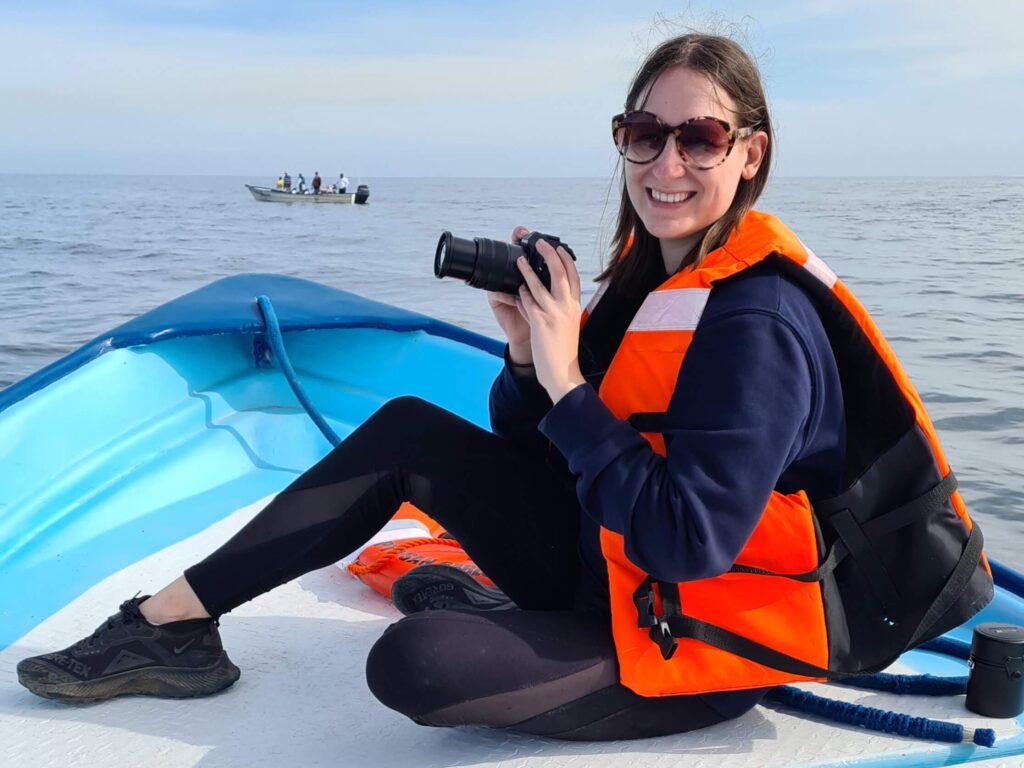
Our favourite kind of boats to go whale watching in are pangas, used in the lagoons and Loreto, and zodiacs, used in Cabo. They’re faster than most other boats, so you can get out to the activity quicker when you see the plume of a whale breathing in the distance, and they’re legally allowed to get closer to whales than larger boats.
Smaller boats also put you close to the water, which can make wildlife encounters feel more intimate, and they also carry fewer passengers, so you won’t be trying to see past several rows of people.
Smaller boats are possibly the worst choice if you’re prone to seasickness, though. In that case, a medium-sized vessel like a catamaran is probably best. You’ll have more room to move around, amenities like a toilet on board, shade, and tours often include food and drinks. They’re also worth considering if you’re travelling with children or someone who would find a small boat uncomfortable.
We’d argue that once a boat becomes very large and the trip is more about partying than wildlife, it stops being a good way to watch whales. There are some boats, especially in Cabo, that hold a couple of hundred people, with a huge outdoor deck. While it might be comfortable, larger boats are more likely to scare off the whales, plus you have to legally keep a greater distance away.
Group size
Don’t settle for an operator describing its trips as having “small groups”. Ask how many passengers will actually be on your boat, and whether that number includes the guide and crew.
Some operators cap their trips at around 12 passengers, while others carry considerably more – it usually depends on the boat, but some operators cap their groups at fewer than the vessel capacity. Personally, we prefer smaller groups of around 6-10, because there’s more room to move around, less competition for a good viewing position, and usually more opportunity to ask the guide questions.
Private vs group tour
A private tour can be worth the extra cost if you’re travelling as a family or group of friends, want a more flexible start time, or prefer to have the guide’s undivided attention. You may also have more room to move around and ask questions without feeling rushed.
Itinerary
Some tours focus almost entirely on finding whales, while others combine wildlife watching with coastal sightseeing, sea arches, sea lion colonies, snorkelling, or food and drinks. Neither approach is automatically wrong, but it’s worth knowing what you’re paying for.
We experienced a mixed variety, but were never disappointed because we knew what we’d booked and we saw epic whale activity on almost every trip. In Cabo, we chose dedicated whale watching trips, but still had a stop at the iconic El Arco sea arch. In Loreto, we opted for a whale watching tour that also focused on wildlife like dolphins, sea lions, and blue-footed boobies, plus we had time to enjoy lunch on an island in the bay. We deliberately chose a whale camp in Magdalena Bay to focus entirely on the friendly grey whales that migrate to the lagoons.
Duration
Standard whale watching trips in places like Cabo are typically around 2-2.5 hours, pretty fine when you don’t have to journey very far, as many whales are swimming just off the coast.
We think around 2.5-3.5 hours is the sweet spot in most places like Cabo and Loreto where you’ve got a pretty good chance of seeing whales, but it’s still down to luck, so you want to be out long enough to see some good activity.
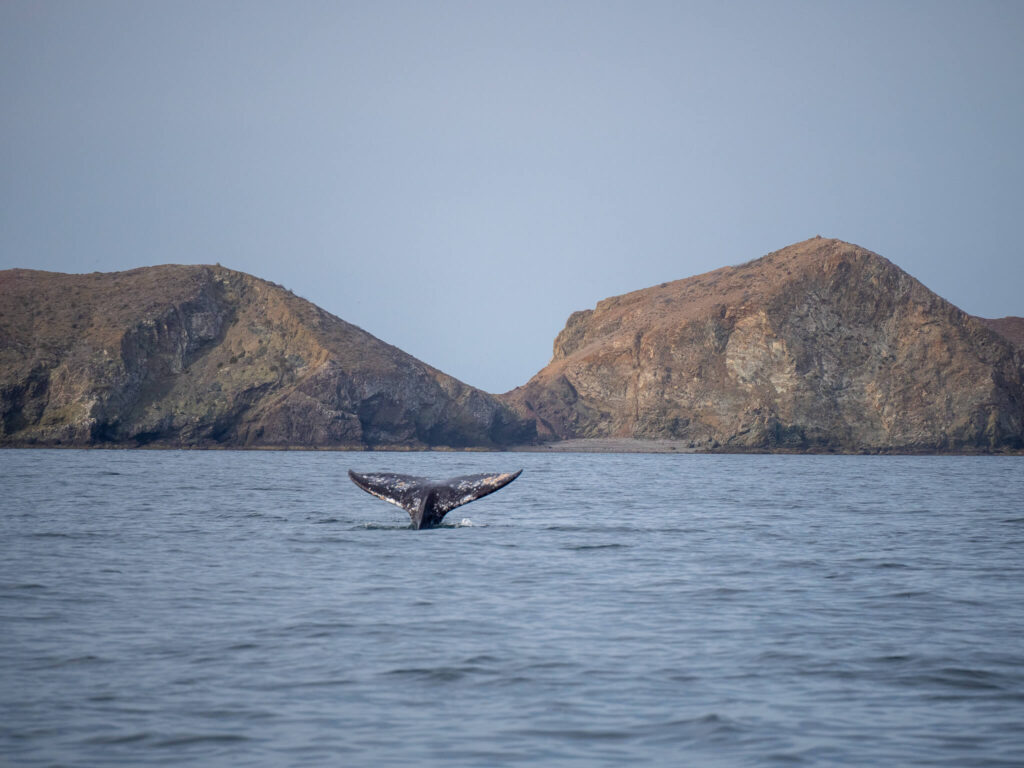
In Magdalena Bay, we were out each day on 5-hour trips, and honestly could have stayed out longer. The area is much larger to explore, and we enjoyed having the time to look around rather than feeling rushed back to shore.
Sometimes, a multi-day trip may be worth considering. Reaching remote departure points takes time, and staying nearby can mean less driving and more opportunity to explore the area. Some packages combine accommodation, meals, transfers, and several outings, making the logistics much easier.
Price
Price matters, but we’d compare what’s included rather than automatically booking the cheapest tour. A lower price might mean a much larger group, fewer facilities, no hotel transfers, or a shorter trip. A more expensive tour could include a smaller group, a knowledgeable guide, transport, or a longer outing. Neither is necessarily better value without looking at the details.
We’d rather pay a little more for a smaller group and support a company that’s going to give us a better experience than save a little money and be trapped on a huge boat with loads of other people, glancing at a whale from a distance as it dives.
Booking platform
Booking directly with an operator can be a good way to support the company you want to travel with, and it gives you an opportunity to ask questions before paying. You can check group size, departure arrangements, the exact itinerary, and the company’s approach to wildlife watching.
Third-party platforms like Viator and GetYourGuide can also be convenient if you prefer to pay in your home currency, need a particular payment method, or want free cancellation or customer support.
Ethical and legal compliance
This is the one factor we’d put above everything else. A great boat, an experienced guide, and a good chance of seeing whales don’t count for much if the operator doesn’t respect the animals.
Green flags include thorough briefings, trained guides, a marine biologist on board, educating guests on the laws they’re following, and being transparent about how they’re approaching the whales and why – all things we experienced with some of the operators we’ve listed below.

The best whale watching tour operators in Mexico
There’s no shortage of companies offering whale watching in Baja, but choosing the right one can make a big difference to your experience. We’ve compared some of the best operators in Baja California Sur, looking at prices, group sizes, locations, and the type of experience they offer.
Which company is best for…?

The best humpback whale watching tour operators in Mexico
If you’re planning to go humpback whale watching in Baja California Sur, these are four operators worth looking into, each with a slightly different approach to boat trips, group sizes, and responsible wildlife watching.
1. Whale Watch Cabo
Whale Watch Cabo was apparently the first whale watching operator in Cabo San Lucas, and to this day is the only whale-dedicated company. We like them because they put a strong emphasis on education, with bilingual marine biologists leading their whale watching tours.
The zodiac and super-panga boats are fast and shaded and equipped with hydrophones so you can listen to whale vocalisations underwater. They’ll get you to the whales quickly, but are very respectful of keeping the legal distance and following the rules, which they share with guests on the tour through infographics.
They also include free professional photos, and the company advertises a whale sighting guarantee during the main season – not because they chase the whales to get you a sighting, but because they offer complimentary tours until you see whales.
We took a couple of trips with them and were really impressed with their eco-education focus, learned loads about whales from our knowledgeable guides, and even adopted their philosophy of “observing, not disturbing”. Next time we’re in Cabo, we’d book with them in a heartbeat.
Whale Watch Cabo also offer day tours to Puerto Chale to go grey whale watching in Magdalena Bay, as well as 2-day grey whale tours.
Pros
Cons
Top Whale Watch Cabo Tours

2. Cabo Trek
Cabo Trek is a good option in Cabo San Lucas if you’d prefer a small yet comfortable boat experience. Their trips use well-equipped cruisers with cushioned seating and plenty of space to enjoy the coastline while looking for whales. On-board, they have a hydrophone and a marine head toilet
The company also offers private charters, as well as departures at sunrise and sunset, which can be appealing if you’re travelling as a couple, family, or group of friends and want a more personal outing.
Cabo Trek is the first ecotourism company in Mexico to obtain the official recognition of ‘Responsible Whale Watching Operator’ assigned by the World Cetacean Alliance. We went out on a sunset tour with them and were really impressed with their approach to whale watching – the tour was educational, and we saw some great activity because the captain was so respectful of the whales. We’d definitely book with Cabo Trek again, but we wouldn’t book the sunset tour specifically, as we thought there were too many other non-whale-watching boats out and about scaring away some of the whales.
They also run morning and afternoon tours from San José del Cabo on Thursdays, which run for 3 hours, as well as 2-day grey whale tours to Magdalena Bay.
Pros
Cons

3. Salty Cabo
Salty Cabo Excursions is a locally operated tour company offering whale watching alongside snorkelling, sailing, and other ocean excursions. They offer small-group trips led by experienced guides, including marine biologists, with a hydrophone on board, and they include free photos at the end.
Their custom-made boat has cushioned seating and plenty of shade, while blankets and drinks are offered for extra comfort. They also have a yacht if you want to go whale watching in luxury.
As the first operator based in San José del Cabo, they’re a useful alternative to operators departing from the busier Cabo San Lucas marina, particularly if you’re staying in a nearby beachfront hotel in Cabo.
We haven’t taken a tour with Salty Cabo yet, but we really like their transparency – they display their annual license on their website and have several fun looking tours.
Pros
Cons
4. DIP Expeditions
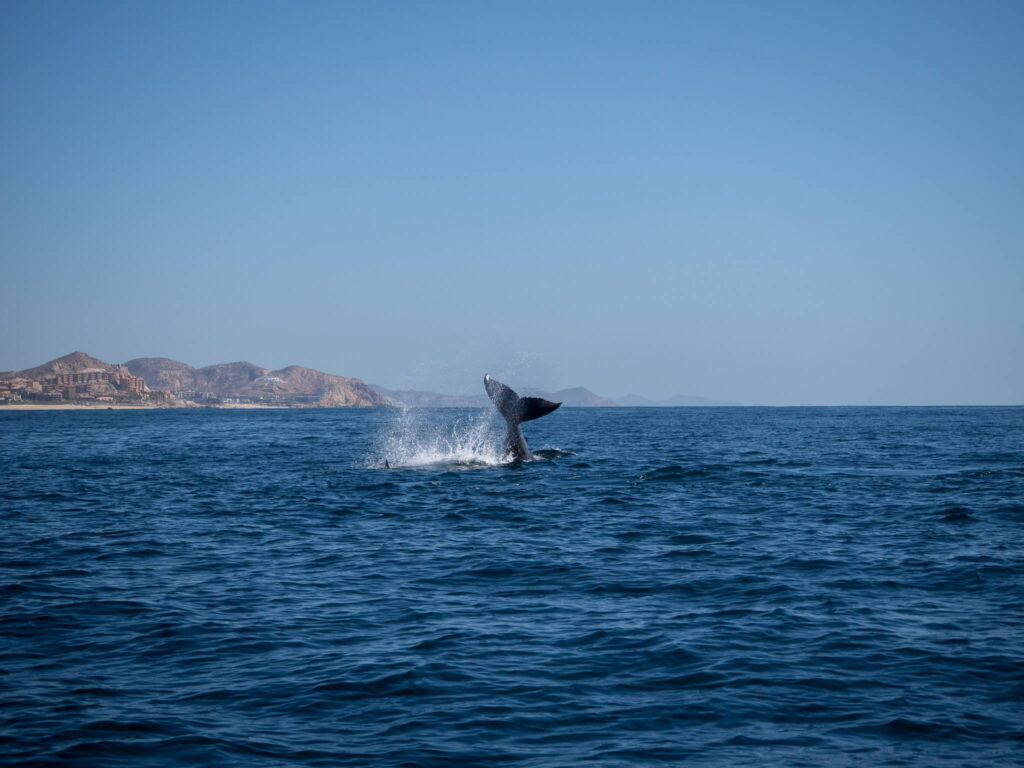
DIP Expeditions takes a small-scale, conservation-focused approach, with founders Matías and Eduardo leading their expeditions from Puerto Los Cabos in San José del Cabo. Day trips are limited to eight guests, and the company emphasises respectful wildlife encounters rather than getting as close as possible to the animals, which is what drew us to them. They also gave little extras like reef-friendly sunscreen on board.
Their standard humpback whale watching trip lasts around two hours and includes a guide, crew, drinks, and snacks, with private trips also available.
We’d consider DIP if you value a personal experience, smaller groups, and an operator that makes its environmental approach a central part of its business.
Pros
Cons

The best grey whale watching tours in Mexico
Magdalena Bay and the two lagoons in El Vizcaíno Biosphere Reserve further north are some of Mexico’s best-known destinations for grey whale watching, but choosing a responsible operator matters just as much as choosing where to go.
5. Magdalena Bay Whales
Magdalena Bay Whales is a family-run operator based in Puerto San Carlos, with decades of experience taking visitors out to see the grey whales that gather in the bay during winter. They run trips in small fishing-style boats, with both shared and private tours, as well as multi-day packages that combine whale watching with glamping accommodation at Magdalena Bay Whales Camp on Isla Magdalena.
We splurged a little on this experience, and it really is a once-in-a-lifetime opportunity. Included in your overnight package is a daily private whale watching tour that lasts around 5 hours – we must have seen close to a hundred whales over the 3 days we stayed.
We have yet to try the two northern lagoons, but when we do, we’ll be adding our recommended operators to this post.
Pros
Cons

The best blue whale watching tours in Mexico
Loreto is one of the main places in Mexico to look for blue whales, which visit the Sea of Cortez in winter and early spring. This is the operator we’d compare if seeing the world’s largest animal is high on your Baja itinerary.
6. Loreto Sea and Land Tours
Loreto Sea and Land Tours is a locally owned operator offering blue whale watching trips in Loreto Bay National Park, with traditional Mexican pangas fitted with shade, radios, and dry storage. Boat capacity varies by vessel, so check the group size when booking if you’d prefer a smaller outing, but private tours are also available.
Tours include a freshly prepared Mexican lunch, drinks, and the necessary equipment. On our tour, we not only saw several blue whales, but also fin whales, bottlenose dolphins, a sea turtle, sea lions, and blue-footed boboies. We saw so much biodiversity and had lunch on a beach on one of the bay’s beautiful islands.
The company is clear that sightings aren’t guaranteed (a green flag), and its trips depend on seasonal whale movements and sea conditions, so we’d recommend timing your visit with peak season for the best chances.#
Pros
Cons

Special mentions: other wildlife tours in Mexico
Beyond traditional whale watching, Baja California Sur has some excellent options for swimming with whale sharks or combining several marine wildlife encounters in one trip.
7. La Paz VIP Tours
La Paz VIP Tours runs small-group whale shark snorkelling trips in La Paz, with a maximum of six to seven guests on its shared tours. Guides provide snorkelling equipment, wetsuits, and photos and videos, and organise entries into the water in pairs to help keep encounters controlled and respectful.
If you’d like to see more of the Sea of Cortez, their combo tours combine whale shark snorkelling with a visit to beautiful places like Balandra Beach and Isla Espíritu Santo, where you can snorkel near the sea lion colony and stop for lunch on a beach. We took several of their tours and loved every single one.

Multi-day whale watching tours in Mexico
If you want to see several species on the same trip, a multi-day tour is worth considering rather than trying to squeeze everything into a few days.
8. Baja Sur Tours
Baja Sur Tours runs multi-day expeditions combining whale watching with other marine wildlife experiences, with transport, accommodation, and meals arranged for you. Their multi-day trips visit Loreto for blue whales, Cabo San Lucas for humpbacks, Magdalena Bay and Puerto Chale for grey whales, and La Paz for whale shark and sea lion snorkelling.
Groups are limited to 6 guests, making this a tempting option if you’d rather have the main logistics taken care of than plan several separate tours yourself.

Which Baja whale watching tours should you avoid?
Who you avoid is arguably more important than who you ultimately end up booking with. You can spend hours researching the best whale-watching tours in Baja California Sur, comparing prices, boat sizes, reviews, and departure times, but it’s just as important to know which operators you don’t want your money supporting.
Seeing whales in the wild should be about observing them on their terms, not chasing them around the ocean until you get the photo you came for. Unfortunately, not every tour operator takes the same approach, and a licence alone doesn’t guarantee that a company puts animal welfare first.
Firstly, we’d encourage you to familiarise yourself with Mexico’s whale watching laws (we’ve summarised them in our guide to ethical whale watching in Mexico), so you know exactly….
There are a few things we’d look out for before booking any whale watching trip in Baja, from whether the operator is properly authorised to how they behave around whales and what other activities they’re selling.
Travel insurance can save you $$$ if things go wrong
Don’t forget to buy travel insurance! From lost luggage to emergency medical care abroad, travel insurance gives you peace of mind so you can solely focus on the adventure. It might not be exciting, but you’ll be very glad you have it if something goes wrong. A few of our favourite companies are:
Get 8 weeks of electronic theft coverage free with SafetyWing Travel Insurance with our code: THOROUGHLY8 (new members only). Simply click the pink camera and laptop icon on the Nomad Essential page to redeem the reward before creating a new account.
Find out more: 6 Best Travel Insurance Companies for Every Kind of Trip
Red flags to look out for when booking a whale-watching tour in Baja
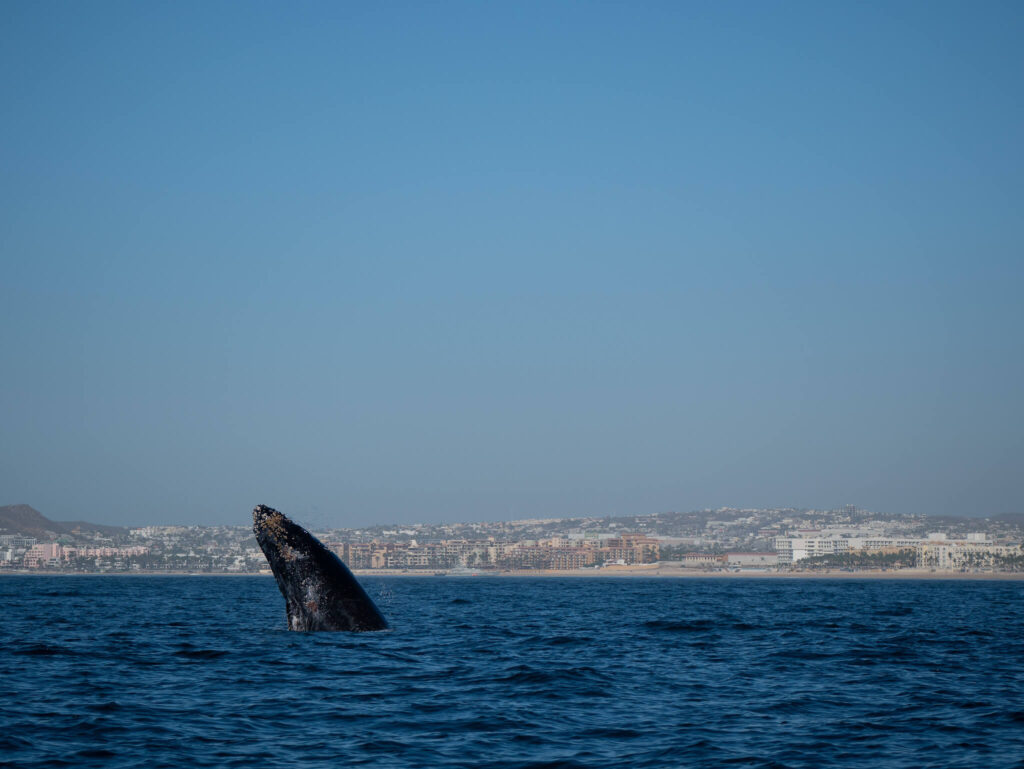
These aren’t just things that give us the ick when we research specific whale watching tours, but they’re red flags that an operator prioritises profit over animal welfare when it comes to any of the tours they offer.

Companies we personally avoided and why
We’re aware that naming companies in a section like this can be controversial, particularly when some of them are among the largest and most established tour operators in Baja California Sur. We’re not suggesting that every excursion they run is identical or that every member of their team behaves in the same way – this is just our personal experience.
We think travellers should be able to make informed decisions about where their money goes. If we only recommend companies and stay quiet about the practices we don’t support, it’s difficult to have an honest conversation about responsible wildlife tourism. Here are some companies we actively chose to avoid and why:
We also saw a huge number of unlicensed water taxis, private yachts, and boat charters in Cabo that would chase after whales, scaring them off. Which is why it’s not a case of avoiding certain companies and going it alone, but it’s most important to choose a responsible company that knows what they’re doing, follows the rules, and adapts to the whales’ behaviours.

Can you see whales without a tour in Mexico?
You might spot whales from the shore in parts of Baja California Sur, but if you want a proper encounter, you’ll usually need a boat.
The best place to see whales without a tour is in Cabo. We saw countless whales off the coast of Cabo San Lucas from the balcony of our hotel, from rooftop bars, and even from the bus. But it doesn’t compare to experiencing them on a boat trip.
For lagoons like Magdalena Bay, the grey whale lagoons further north, and Loreto Bay National Park, a guided trip is generally the practical way to see the whales unless you’re very lucky.

Tips for booking a whale watching tour in Baja California Sur
Here are the things we wish we knew before we went:

Read next:
Ultimate Guide to Ethical Whale Watching in Mexico: Our Experience
15 Best Places for Whale Watching in Mexico & Which to Choose
The Best Time to Visit Mexico for Whale Watching By Species & Season
The Ultimate Guide to Whale Watching in Baja California Sur
An Ethical Guide to Touching Grey Whales in Baja California Sur
An Ethical Guide to Humpback Whale Watching in Cabo
A Complete Guide to Blue Whale Watching in Loreto
An Essential Guide to Grey Whale Watching in Magdalena Bay, Mexico
Our Magdalena Bay Whales Camp Review: Glamping on an Island in a Grey Whale Lagoon
How to Ethically Swim with Whale Sharks in La Paz
Our Baja California Sur Destination Guides:
Our Baja California Sur Travel Guides:
