15 Best Places for Whale Watching in Mexico & Which to Choose

Discover the best places to see whales in Mexico in this complete guide to cetacean spotting by location and which site is best for you to visit.
This post may contain affiliate links, which means we might earn a small commission on anything purchased through these links at no extra cost to you. Learn more on our disclaimer page.
Mexico is one of the best whale watching destinations in the world because different species travel past parts of the Pacific coast, where sheltered breeding lagoons sit alongside deep offshore waters. That means you can experience everything from close-up grey whale encounters and swimming with whale sharks to blue whales feeding and humpbacks breaching in the open ocean, within the same trip.
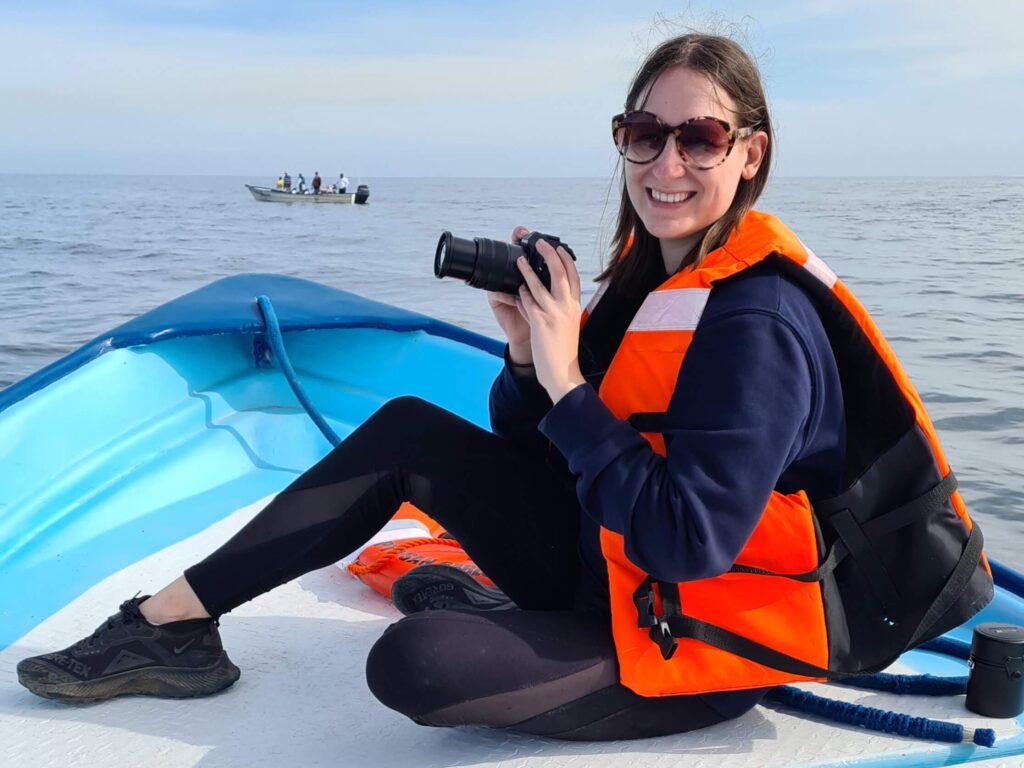
We planned an entire trip around the best places to see whales in Mexico, which meant we spent a month whale watching in Baja California Sur, and we saw so many species and behaviours. But not all destinations offer the same kind of experience. Choosing where to see whales responsibly can allow you to witness natural behaviour without putting unnecessary pressure on the animals. Discover the best places for whale watching in Mexico, including what you can expect in each location, the types of whales you’re likely to see, and how to choose the right destination for your trip, in this guide.

More Whale Watching in Mexico
Where to see whales in Mexico
Mexico’s whale watching is mostly concentrated along the west side of the country, where deep offshore waters and long migration routes bring whales close to the coast each year.
The most important body of water is the Pacific Ocean, particularly around the Baja California Peninsula and down the mainland coast, making Baja California Sur the best destination to visit for whales.
The Sea of Cortez (also called the Gulf of California) is another key hotspot, especially for seasonal feeding and breeding.
While on the east coast, the Gulf of Mexico is not a whale watching region in the traditional sense, but it does have some whale-like encounters around the Yucatán Peninsula.
Planning your whale watching trip?
Whale watching is one of those experiences that really comes down to timing as well as location. Be sure to read our guide on when to visit Mexico for whale watching, so you know when to go for each species, not just where to visit. We’ve also written a master guide to whale watching in Mexico, which covers everything you need to know before you go, including times, regulations, and ethics, while our guide to the 8 Best Whale Watching Tours in Baja California Sur compares our favourite tours with our honest reviews, as well as covering who to avoid booking with.
If you’re building a trip around whales, it’s worth going a bit deeper than just choosing a destination. That’s why we’ve broken everything down into more detailed guides to help you plan properly:
If you’re still deciding where to go, start with Baja California Sur – it consistently offers the best mix of species, behaviour, and conditions anywhere in Mexico, and is easy to plan a full trip around.

Planning a trip to Baja?
Mexico is a very popular destination, so be sure to book in advance as early as possible!
Top Experiences in Baja
Top Hotels in Baja
Transport in Baja
Best eSIM for Baja
Mexico whale watching map
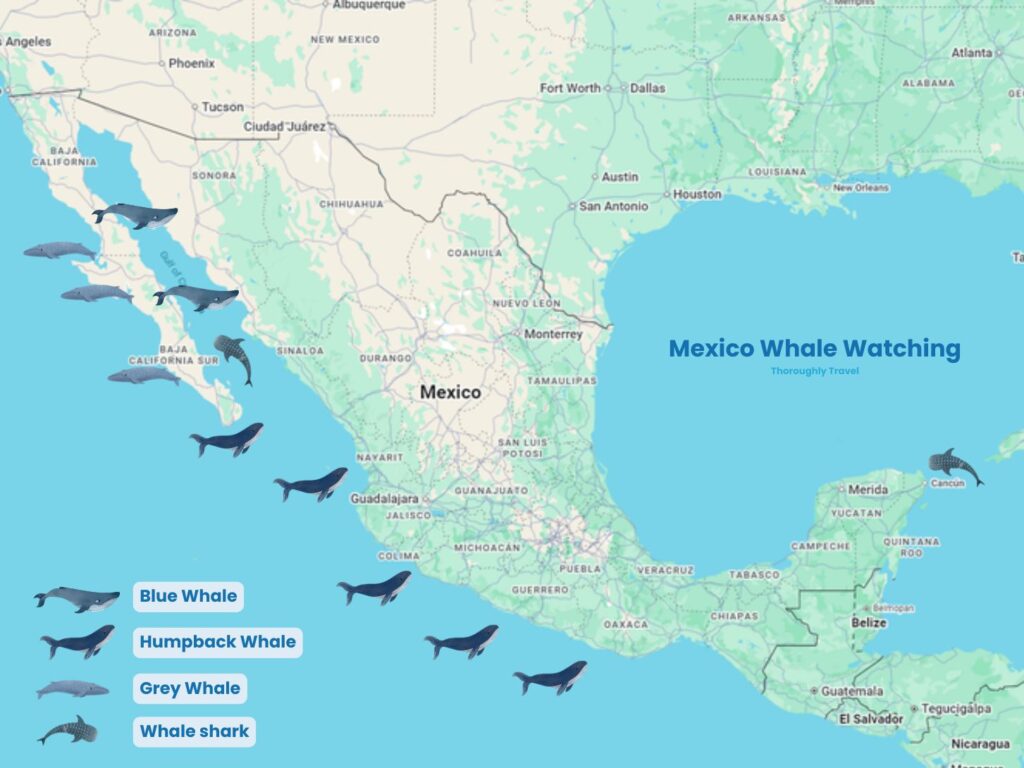
As you can see from the map below, all whale activity takes place on the west coast of Mexico, while whale sharks visit both sides. Grey whales primarily stick to the Pacific coast, blue whales swim all the way into the Sea of Cortez, and humpbacks have the widest range, heading down the mainland.
The best places to see whales in Mexico
Whale watching in Mexico is heavily split between a few major regions, each with its own species, seasons, and style of experience. The main areas are:
Mexico’s Environment and Natural Resources Ministry (SEMARNAT) is responsible for regulating whale watching, and annually publishes the places and periods where the activity is permitted.
Where to see whales in Mexico by species

Baja California Sur
When we were deciding where to base ourselves on a dedicated whale watching trip, Baja California Sur was the obvious choice – and we fell in love with the region. It kept coming up again and again in research, documentaries, and travel reports as one of the most reliable whale watching regions in the world.
Having spent a month there, we can confidently say that Baja California Sur is, without a doubt, the best place to see whales in Mexico. We wanted a destination where we could maximise our chances of seeing different whales in a relatively short period of time, but also somewhere where we could compare different types of experiences and ensure we were choosing ethical experiences – and we got it all during our Baja itinerary. Here are the best places in Baja to go whale watching.

1. Magdalena Bay
Magdalena Bay is one of the best places to see grey whales in Mexico (and the world). Between January and March, grey whales migrate here to give birth and nurse their calves in calm, protected waters.
It’s the most accessible and affordable of Baja’s three grey lagoons, known for friendly grey whales who approach the boats seeking human interaction – a phenomenon only experienced here.
Boat tours operate inside the lagoon system, and you can even stay in a glamping tent one of the lagoon’s islands, which was one of the best things we did. It’s a bit of a splurge, but you can fall asleep to the sound of whales exhaling and be out on the water first thing in the morning. Otherwise, you need to take a day tour from:
Day tours to Magdalena Bay typically run from Loreto, La Paz, and Cabo, but require long travel times and less time on the water.

2. San Ignacio
Further north along Baja’s Pacific coast, San Ignacio Lagoon (also called Scammon’s Lagoon) is another key grey whale breeding lagoon. It’s part of the protected El Vizcaíno Biosphere Reserve and is one of the most tightly regulated whale watching areas in the country.
While it’s not proven, it’s said to have higher numbers of whales than the other lagoons, with a better chance of interaction.

3. Ojo del Liebre
Ojo de Liebre is the largest of the grey whale lagoons and sits north of San Ignacio. It also operates under strict environmental protections during the winter season, playing a major role in global grey whale conservation.
Sightings here are common during peak months, but the scale of the lagoon means whale activity can be more spread out. The closest town is Guerrero Negro.

4. Loreto
Loreto, located in the Sea of Cortez, is one of the few places in the world where blue whales can be seen with some regularity. Sightings typically occur between February and March, although they are never guaranteed.
Loreto Bay National Marine Park is known for its biodiversity, with dolphins, sea lions, and other marine life, making it a broader wildlife destination rather than a single-species hotspot. It’s backed by the cacti-strewn Sierra de la Giganta mountain range and home to several islands, including Isla Coronado.
We also saw fin whales, along with several blue whales, in Loreto, and other species like sei and pilot whales can be spotted here, if you’re lucky.

5. La Paz
La Paz is the state capital and best known for swimming with whale sharks in the winter months, but it also sees several species of whales during the migration season. These sightings usually occur offshore rather than in enclosed bays, and boat trips to places like Espíritu Santo National Park often combine multiple marine wildlife experiences depending on the time of year.
While it’s not the best place specifically for whales, it’s also home to marine life like flying mobula rays and sea lions – we loved swimming with sea lions on a couple of boat trips, which also visited Balandra Beach, Mexico’s most beautiful beach.
La Paz is also close to the smaller town of La Ventana, a popular launching point for ocean safaris and trips to swim with orca.

6. Cabo San Lucas
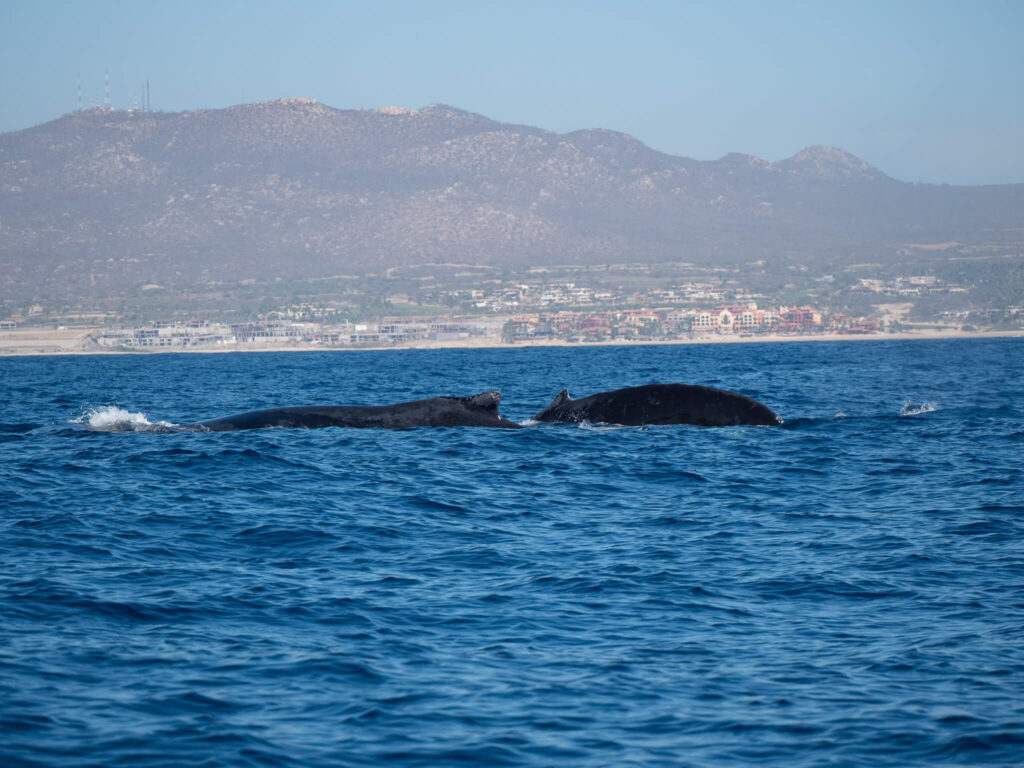
Cabo San Lucas is one of the most accessible whale watching locations in Mexico. Between December and April, acrobatic humpback whales migrate through the waters off the southern tip of Baja, often visible on short boat tours departing directly from the marina.
Encounters here are frequent during peak season, and it’s one of the easiest places in the country to join a whale watching trip. We saw some epic activity, from breaching adults to babies learning new tricks, as well as a heat run, where multiple males aggressively compete for a female.
But boat traffic can be heavy, with unlicensed tours and party boats scaring off the whales in the afternoons and evenings, so it’s best to go out early with a licensed operator. We recommend Whale Watch Cabo and Cabo Trek.

7. San José del Cabo
Just east of Cabo San Lucas, San José del Cabo offers a slightly quieter alternative with similar humpback whale activity during migration season. Boat tours often cover the same offshore waters but with fewer crowds compared to Cabo’s main harbour.

8. Cabo Pulmo
Cabo Pulmo is primarily known for its coral reef national park and having the best SCUBA diving in Cabo, but it also sits within migration routes for humpback whales. Sightings are less predictable here, but offshore encounters do happen during the winter months, especially in calmer sea conditions.
If you’re on a dive, you might hear whale song underwater, which is a magical experience.

9. Todos Santos
Todos Santos isn’t really a whale watching destination in Mexico per se, but it’s on the migration route facing the Pacific Ocean, so sightings from the land are common.
Humpbacks can often be seen offshore, and in some cases, whales are visible from elevated coastal viewpoints depending on conditions. We saw seven on a bus ride down the coast here!
Baja California Norte
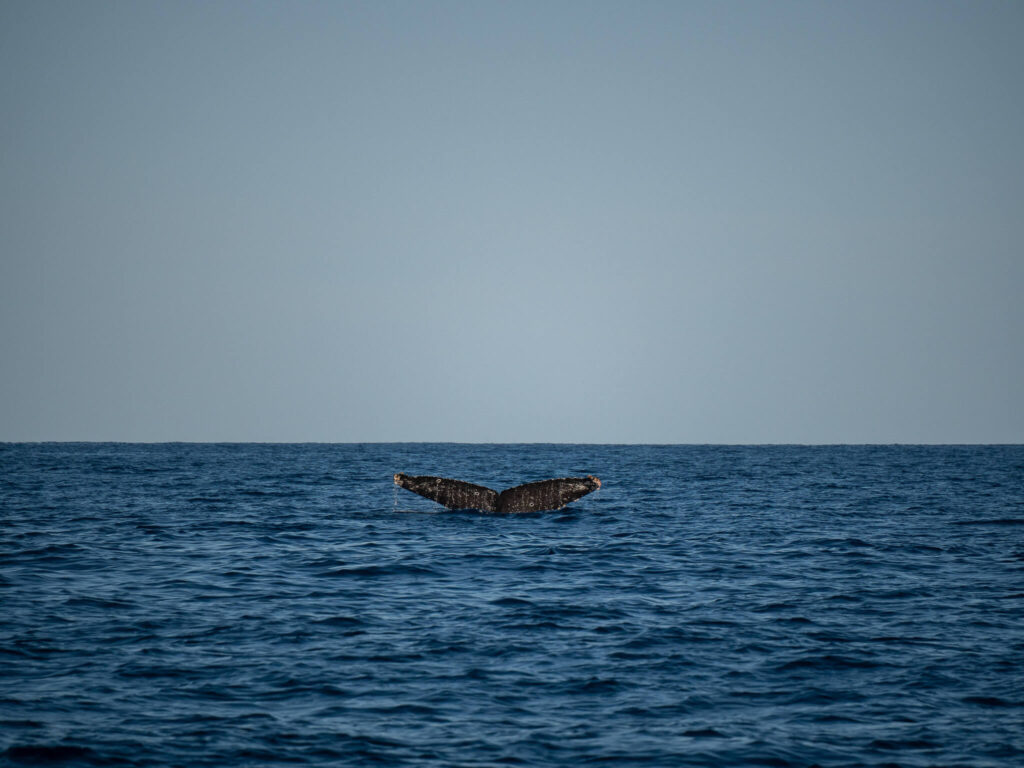
Northern Baja is far more remote and less visited than the southern state, but it still offers occasional whale sightings, particularly in the Gulf of California. While towns like Mulegé and Santa Rosalía make popular bases, the prime locations are:
10. Bahía de los Ángeles
Bahía de los Ángeles is a small, remote fishing town in the Sea of Cortez where blue whales and other large marine species can occasionally be seen offshore. Encounters are not regular, but the area is part of a rich marine ecosystem that includes dolphins, rays, and sea turtles.

11. Ensenada
Ensenada is one of the more accessible Baja California locations, but whale watching here is highly seasonal and less reliable than further south. Grey whales and humpbacks may pass offshore during migration, but sightings depend heavily on timing and sea conditions.

Mainland Pacific Coast
Outside Baja, whale watching along Mexico’s mainland Pacific coast is centred mainly around humpback migration routes. Experiences here are typically boat-based and more weather-dependent than in Baja, but still good if you’re keen to see whales from Mexico’s mainland.
12. Nayarit
Nayarit is a state on the west coast of Mexico that’s a good whale watching location thanks to its access to the Banderas Bay. A wide, sheltered bay, this is one of the most reliable mainland whale watching areas in Mexico. Because the bay is semi-enclosed, humpback whales often stay in the area for longer, making sightings more consistent than along more exposed stretches of coastline.
Sayulita is a popular base for whale watching in Nayarit, offering a more laidback alternative to busy resort towns like Puerto Vallarta. Tours usually depart from nearby Punta de Mita, where boats can quickly reach the deeper parts of the bay where whales are most active.

13. Jalisco
Jalisco offers some of the best mainland humpback whale watching in the country, thanks to its access to the protected waters of Banderas Bay, which create ideal conditions for breeding and calving.
Humpbacks are the main attraction here, but the bay’s size and depth also mean there’s always the chance of seeing other species, including Bryde’s whales and, more rarely, orcas passing through offshore waters.
Puerto Vallarta is the main departure point for tours, with a huge range of operators and daily trips during peak season. Because whales often enter the bay itself, you don’t need to travel far to see them.

14. Oaxaca Coast
The Oaxaca Coast is a quieter, less developed stretch of Mexico’s Pacific coastline. Sightings here are less crowded than in places like Cabo or Puerto Vallarta, but they’re also slightly less predictable.
Huatulco is one of the best places to base yourself, with countless secluded coves and untouched beaches. Whale watching tours head out into deeper water, where humpbacks are often seen travelling along the migration route.
Puerto Escondido is also a good base for whale watching in Oaxaca, with seasonal humpback whales and year-round Bryde’s whale sightings. It’s more touristy, with tours typically leaving from Playa Principal and Puerto Angelito. Puerto Ángel and Mazunte are also good options to stay in, further down the coast, if you want somewhere quieter.
15. Sinaloa
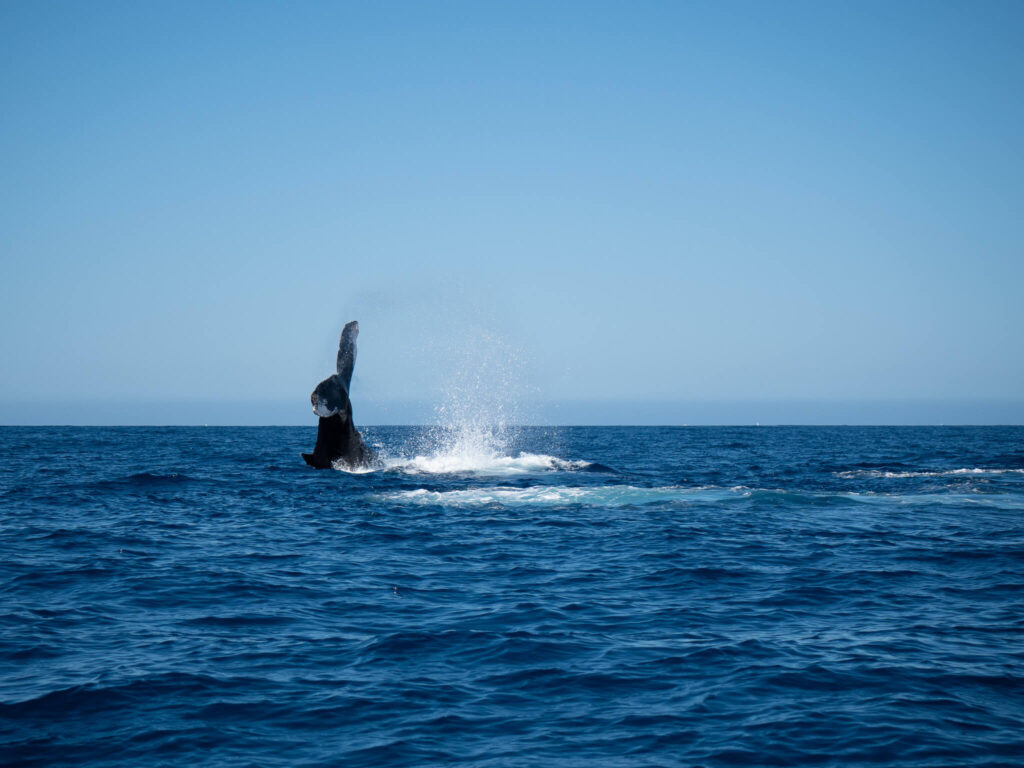
Sinaloa sits further north along the mainland Pacific coast, opposite Baja, but sees more sporadic whale activity compared to regions further south. Humpback whales do pass offshore during migration, but they’re less likely to linger, which makes sightings more dependent on timing and a bit of luck.
Mazatlán is the main place to base yourself, with some whale watching tours running during the winter months.

Can you see whales on Mexico’s Caribbean Coast?
Mexico’s Caribbean coast is not a whale watching destination. The waters here are shallow and dominated by reef systems rather than deep migration corridors, so whales do not pass through regularly in the same way they do on the Pacific side.
But while you won’t see whales in the Riviera Maya, this region is famous for something else entirely: whale sharks. Around places like Isla Holbox, Isla Mujeres, and Cancún, these gentle giants gather seasonally to feed on plankton in the warm Gulf waters.
It’s one of Mexico’s most iconic marine experiences, but it can be popular, causing overcrowding at the sites, which are already prone to challenging sea conditions. Swimming with whale sharks in La Paz is better regulated, with easier swimming conditions.

How to choose where to go whale watching in Mexico
Choosing where to go whale watching in Mexico really depends on the type of experience you’re hoping for. You’ll also want to think about the time of year you’re visiting, which species you’d like to see, how easy each destination is to reach, and whether you’d prefer a short boat trip or a more remote wildlife experience.
Here are the main things we’d consider when deciding where to go whale watching in Mexico:
1. Which type of whale do you want to see?
Different parts of Mexico attract different whale species, so it’s worth deciding which animals you’d most like to encounter. If seeing grey whales and their calves is high on your list, the lagoons of Baja California Sur are the place to go. For humpback whales, Los Cabos and Puerto Vallarta are better choices, while Loreto is a great option for anyone hoping to spot blue whales.
2. When are you visiting Mexico?
The whale-watching season varies slightly depending on the destination and species. Generally, December to April is the best time for whale watching along Mexico’s Pacific coast, with January, February and March being particularly popular months. If you’re visiting outside this window, your options may be more limited.
3. What type of whale-watching experience do you want?
Not all whale watching tours in Mexico are the same. Some destinations offer traditional boat excursions where you head out into open water to look for migrating whales, while others combine whale watching with partying on a mega yacht or nearby natural attractions.
4. How easy is the destination to get to?
Accessibility is another important consideration, particularly if you’re only visiting Mexico for a short time. Los Cabos and Puerto Vallarta have international airports and plenty of organised excursions, making them relatively straightforward choices. Loreto and some of the more remote grey whale lagoons require a little more planning, with longer transfers and fewer accommodation options.
5. What is your budget?
Whale-watching prices can vary quite considerably depending on the destination, tour length, boat size, and whether transfers are included. More remote locations may involve additional transport and accommodation costs, while popular resort destinations often have a wider choice of tours. In places like Los Cabos, you can also spot whales from the land, which is completely free.
6. Are you looking for a responsible wildlife experience?
This is something we’d never compromise on when choosing a whale-watching destination. Look for authorised operators who follow Mexican wildlife regulations, maintain the required distance from whales, and avoid chasing or crowding the animals. It’s also worth considering whether the destination has a strong conservation focus and experienced local guides. Remember that the best encounters are those where the whales are allowed to behave naturally, without being disturbed for the sake of photographs.
| Destination | Pros | Cons |
|---|---|---|
| San Ignacio Lagoon & Ojo de Liebre Lagoon | Close encounters with whales and calves, with glamping sites, and said to have a higher concentration of grey whales | Remote location, limited accommodation, requires additional travel planning, expensive tours |
| Magdalena Bay | Excellent grey whale sightings with options to depart from the mainland or glamp, so tours are cheaper | Most accessible lagoon, so is busier and close encounters may be fewer |
| Loreto | One of the best places to spot blue whales in the world, relatively easy to get to, good amenities in town | Relatively short peak season and blue whales are more elusive than other species |
| Los Cabos | Excellent humpback whale sightings, plenty of organised tours, easy to combine with a beach holiday, good for first-timers | Can get busy in peak season, the open water can be choppy, and unlicensed operators can ruin it for others by chasing the whales |
| Puerto Vallarta | Excellent humpback whale sightings, plenty of tour operators, easy marina access | Busy during peak season, sightings depend on conditions, not as biodiverse as Baja |
| La Paz | Crazy biodiversity, stunning landscapes, a lovely town to use as a base | Doesn’t get whales as much as other marine life like whale sharks |

Where to see whales in Mexico FAQs
To help you plan your trip around whale watching locations in Mexico, we’ve answered these frequently asked questions.
Where is the best place in Mexico to see whales?
The best place to see whales in Mexico is Baja California Sur, especially around Los Cabos, Loreto, and Magdalena Bay. The region offers opportunities to spot several species, including humpback, grey, and blue whales, depending on the season.
Where do whales in Mexico come from?
Many of the whales seen in Mexico travel thousands of kilometres from colder northern waters. Grey whales migrate south from feeding grounds in the Bering, Chukchi, and Beaufort seas, near Alaska, towards the warmer lagoons of Baja California. Humpback whales also migrate from their northern feeding grounds in the North Pacific to breed and give birth in Mexican waters. These seasonal journeys are among the longest migrations in the animal kingdom. Mexico provides a warmer environment where whales can mate, give birth, and raise their calves before heading north again.
Where do whales go in Mexico?
Whales travel to different parts of Mexico depending on their species and migration patterns. Grey whales head towards the sheltered lagoons of Baja California, including Magdalena Bay, San Ignacio Lagoon, and Ojo de Liebre Lagoon, where they give birth and raise their calves. Humpbacks tend to favour the waters around Los Cabos, Puerto Vallarta, and the wider Pacific coastline. Blue whales can be found around Loreto and the Gulf of California, where food is plentiful. These areas provide important breeding, nursery and feeding habitats before the whales continue their migration.
Are there whales by Cancún?
You won’t find the same regular whale-watching opportunities around Cancún as you would on Mexico’s Pacific coast. The Caribbean waters around Cancún are better known for whale sharks, which are actually fish rather than whales. Although occasional whale sightings can occur in the wider Caribbean, there isn’t an established whale-watching season or reliable whale-watching industry in Cancún. If seeing actual whales is high on your Mexico bucket list, we’d recommend heading to Baja California, Los Cabos, or Puerto Vallarta instead.
Read next:
Ultimate Guide to Ethical Whale Watching in Mexico: Our Experience
The Best Time to Visit Mexico for Whale Watching By Species & Season
Seasonal Guide to Whale Watching in Baja California Sur
8 Best Whale Watching Tours in Baja California Sur Compared (Honest Reviews) + Who to Avoid
An Ethical Guide to Touching Grey Whales in Baja California Sur
An Ethical Guide to Humpback Whale Watching in Cabo
A Complete Guide to Blue Whale Watching in Loreto
An Essential Guide to Grey Whale Watching in Magdalena Bay, Mexico
Our Magdalena Bay Whales Camp Review: Glamping on an Island in a Grey Whale Lagoon
How to Ethically Swim with Whale Sharks in La Paz
Our Baja California Sur Destination Guides:
Our Baja California Sur Travel Guides:
