15 Best Things to Do in Durmitor National Park + Our Itinerary

Discover the best things to do in Durmitor National Park, from highlights and hidden gems to fun activities and natural attractions, in this complete list.
This post may contain affiliate links, which means we might earn a small commission on anything purchased through these links at no extra cost to you. Learn more on our disclaimer page.
While most tourists are aware of the obvious things to do in Durmitor National Park, like the famous Black Lake and Tara River Canyon, there’s a lot more to see than just the highlights. As the region has grown in popularity, Durmitor has become a staple on almost every Montenegro road trip itinerary. But thankfully, the park is large enough that it’s still easy to escape the crowds, whether you’re tackling one of its famous hiking trails, searching out hidden lakes, or simply enjoying the spectacular scenery from one of its many mountain roads.
We spent over a week exploring the park from top to bottom and have collated a complete list of the best things to do in Durmitor National Park. In this guide, we’ll cover the highlights and hidden gems, as well as what’s not worth it, our favourite hikes, practical tips, and a suggested itinerary of how to organise your time to make the most of your visit.
Top Tours in Durmitor National Park
More from Durmitor National Park
The best things to do in Durmitor National Park
Designated a UNESCO World Heritage site, Durmitor is the most visited of Montenegro’s 5 national parks, yet it’s surprisingly easy to escape the crowds once you venture beyond Black Lake. Whether you’re visiting for a day or planning to use Žabljak as a base and stay longer, a little planning goes a long way, especially if you want to fit in the park’s best hikes and viewpoints.
The best things to do in Durmitor National Park take place outdoors. From hiking and scenic drives to glacial lakes and Durmitor National Park adventure activities, there are plenty of ways to experience this spectacular corner of Montenegro.
1. Visit the Black Lake
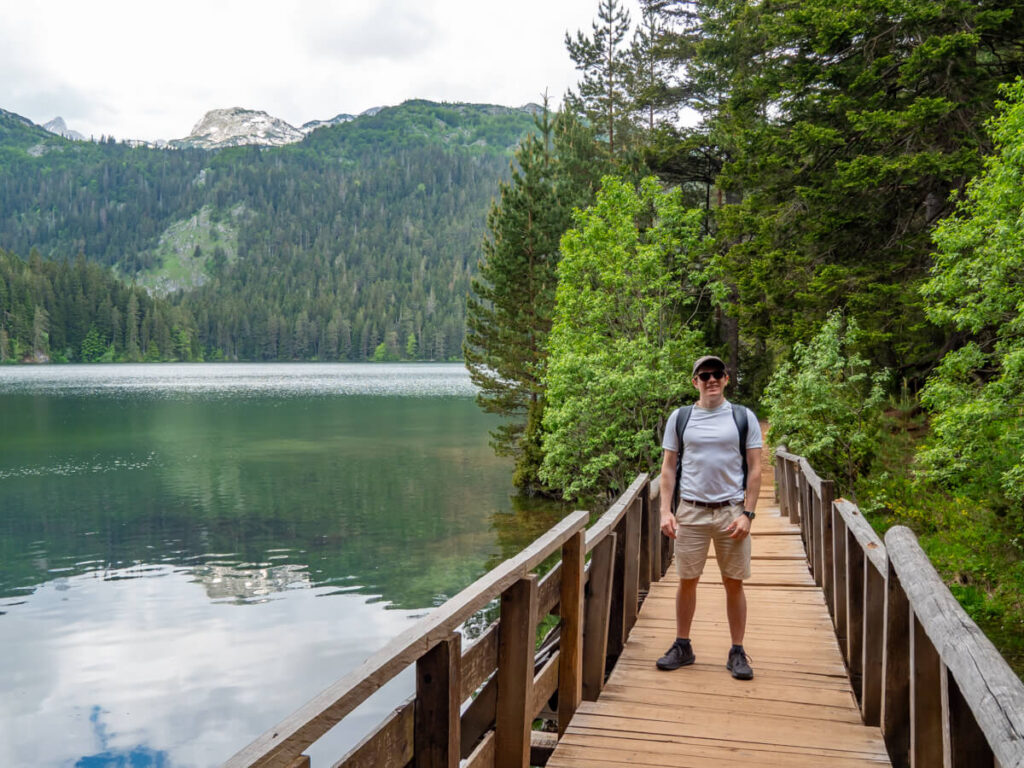
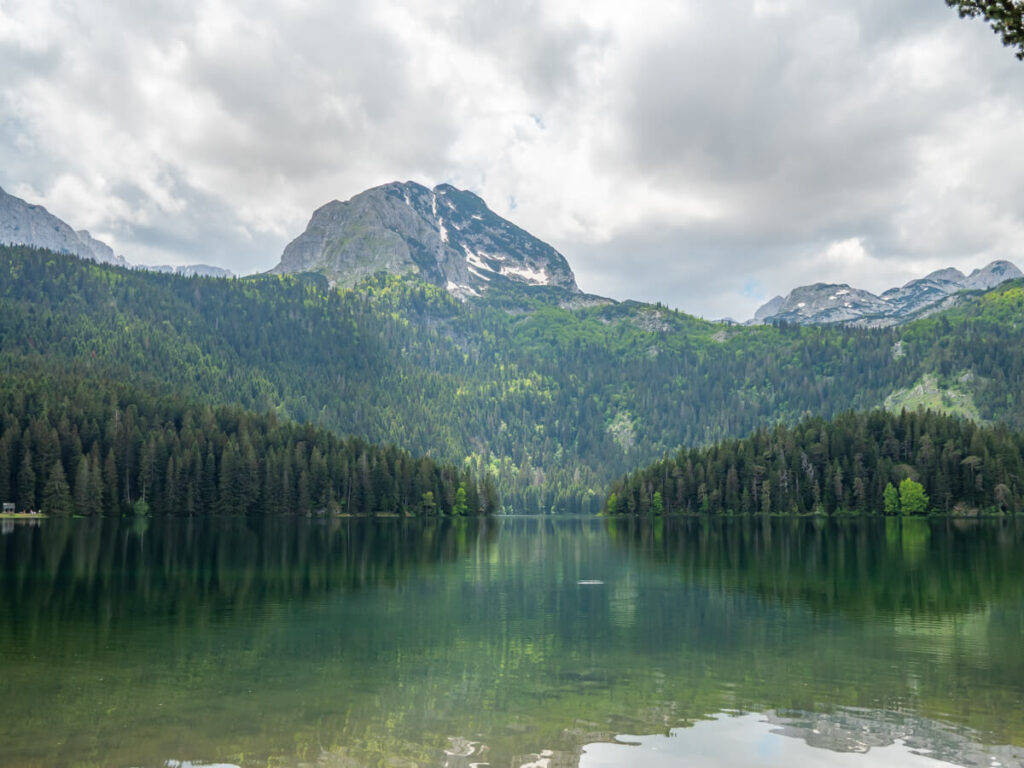
The Black Lake (Crno Jezero) is one of the most famous things to do in Durmitor National Park. It’s the largest and most visited of Durmitor’s 18 glacial lakes, sitting beneath the forested slopes of Mount Međed.
Its name comes from the dense black pine forest surrounding the lake and the dark reflections it casts across the water, particularly on calm days. The glassy glacial surface changes colour between emerald, sapphire, and almost inky black depending on the light.
Despite its name, the Black Lake isn’t actually a single lake, but two glacial basins: Veliko Jezero (Big Lake) and Malo Jezero (Little Lake). During spring snowmelt and wet periods, they’re connected by a narrow channel, but in dry summers they often become completely separate.
There’s an easy 2-mile (3.5 km) loop walk around the perimeter, or you can simply relax at the restaurant on the shore’s edge. The Black Lake is also the start of some of the longer and more technical hikes in Durmitor National Park, including the Ice Cave (Ledena Pećina) and Planinica Peak.
The Black Lake is often the first stop for visitors to Durmitor National Park, but it’s equally popular with locals escaping Žabljak during warmer months. Tours to the Black Lake are also popular with travellers who have limited time to explore the whole national park. We also saw a surprising amount of Serbian number plates in the car park, as it’s a popular place with tourists throughout the Balkans, too.
2. Drive the Durmitor Ring Road
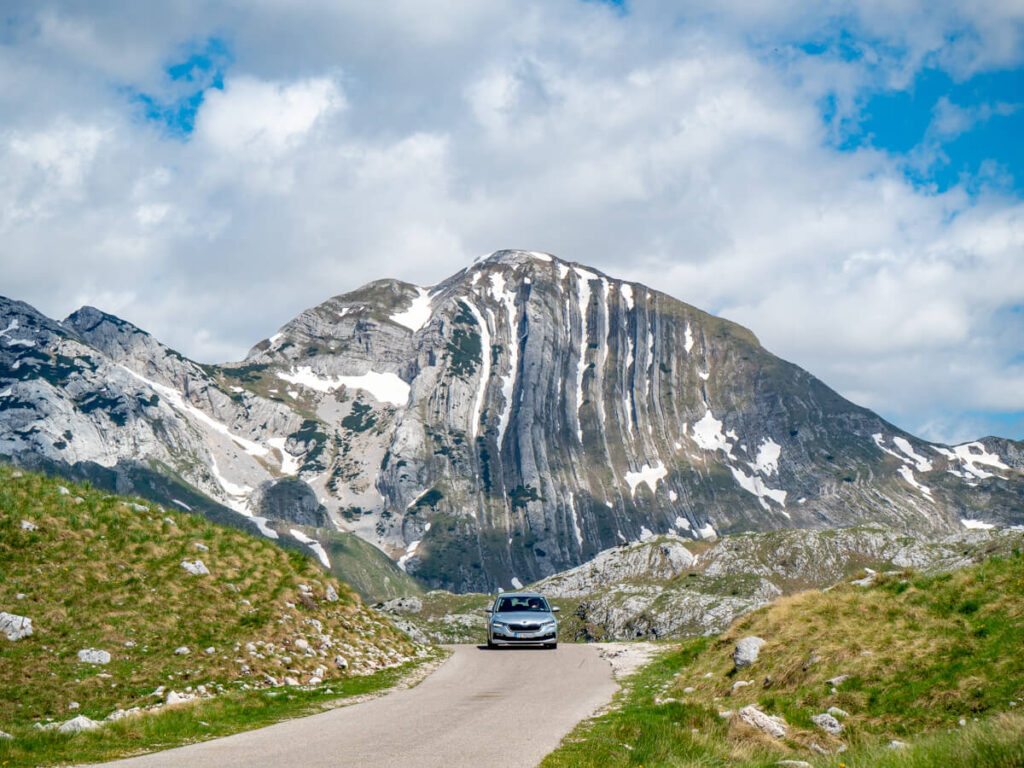
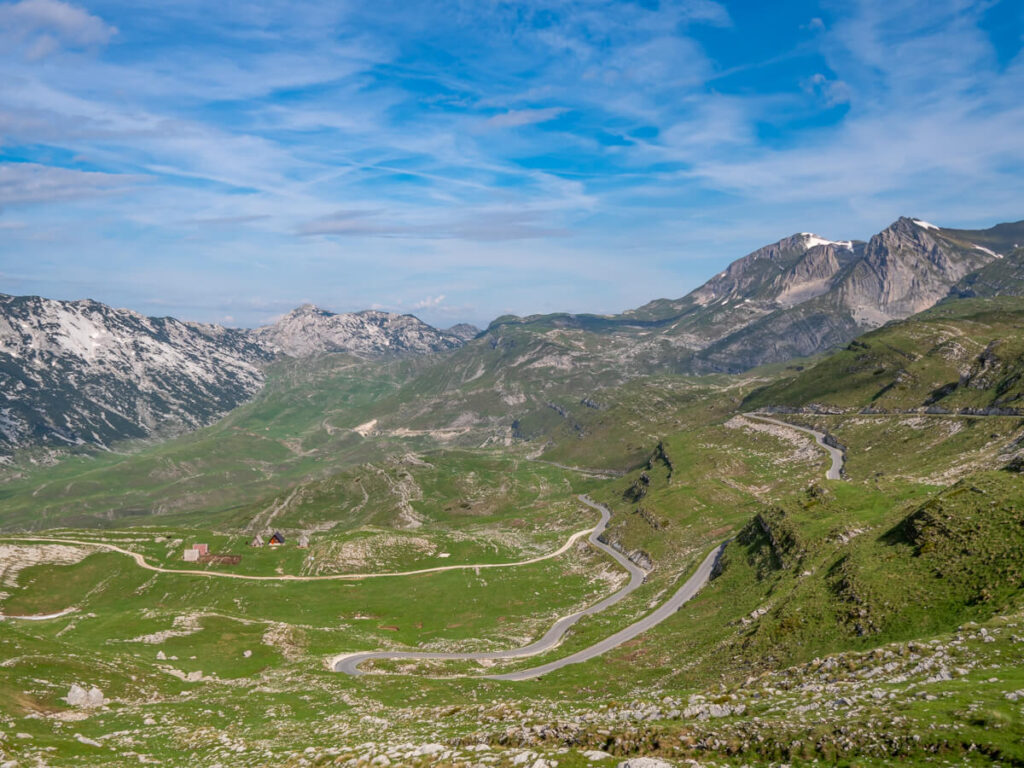
The Durmitor Ring (Durmitorski Prsten) is an epic 47-mile (76 km) loop around Durmitor National Park and is often described as Montenegro’s most scenic road trip. Originally built to connect isolated mountain villages and traditional summer shepherd settlements (katuns), it threads high mountain passes, rolling plateaus, and limestone peaks together.
It’s so worth renting a car in Montenegro just for this route. While it only takes around 3 hours of driving, we took 8 hours, navigating the winding mountain roads to hikes, viewpoints, and lakes, all backed by dramatic limestone escarpments.
It’s easy to start the drive in Žabljak, and the most impressive section is the Sedlo Pass, which reaches 1,907 metres (6,255 ft) above sea level. We’d recommend going anticlockwise for the best views, light, and easiest navigation of the hairpin bends and sheer cliff sections.
But don’t worry if you’re not keen on driving in Montenegro – it’s easy to join a Ring Road Jeep Tour with a local guide who will handle all the driving for you and show you the best sights around the park.
3. Hike in the mountains
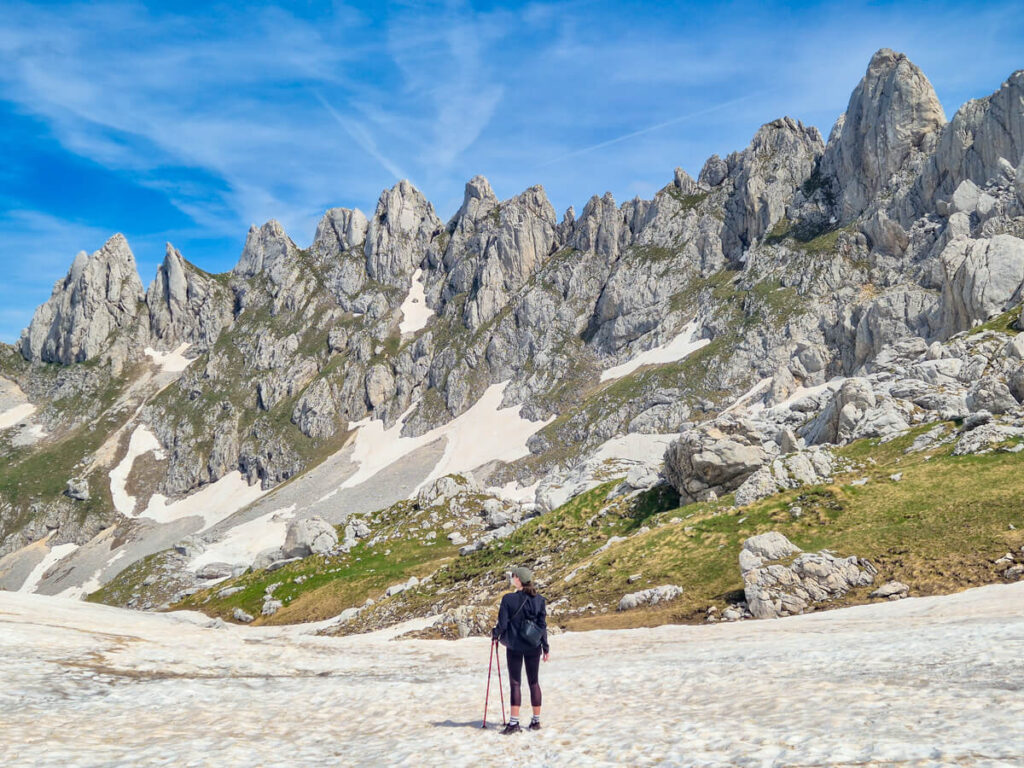
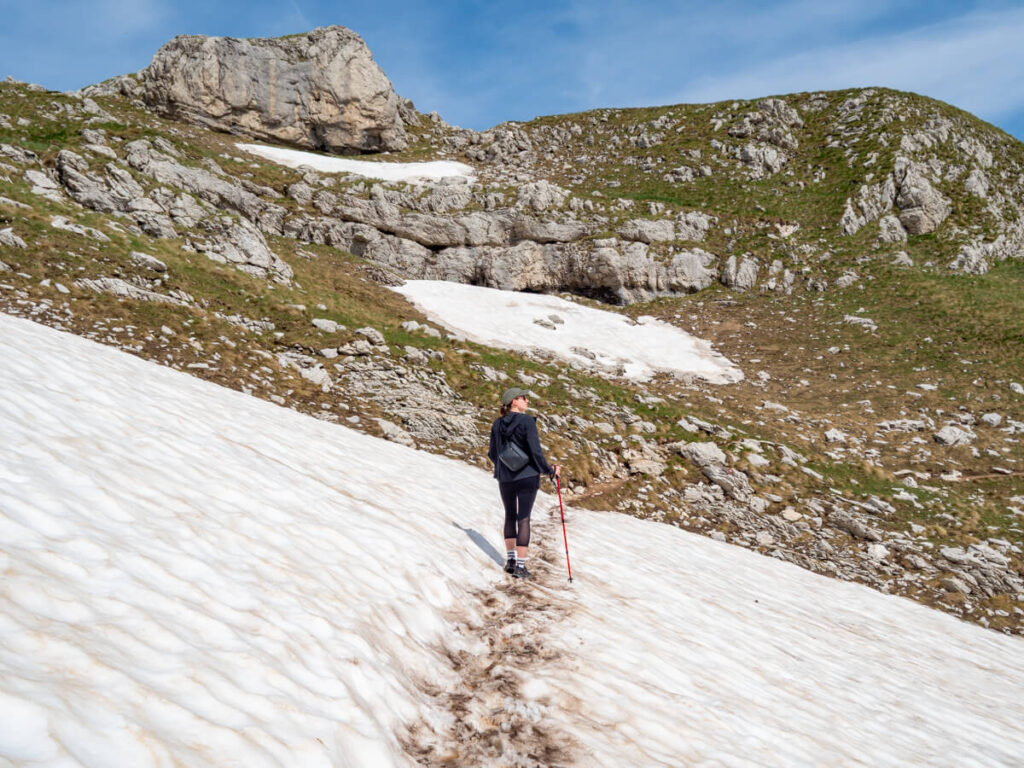
One of the main reasons travellers visit Durmitor National Park is for its excellent hiking opportunities. The park offers everything from gentle forest walks to exposed summit scrambles, with over 40 peaks above 2,000 metres (6,560 ft).
Every trail feels different, whether you’re crossing wildflower meadows, climbing rocky ridges or walking beside glacial lakes. There are more than 30 marked hiking trails to choose from, and many can be combined into longer hikes to suit your preferences.
Some of the most popular hiking trails in Durmitor National Park include:
4. Spot chamois
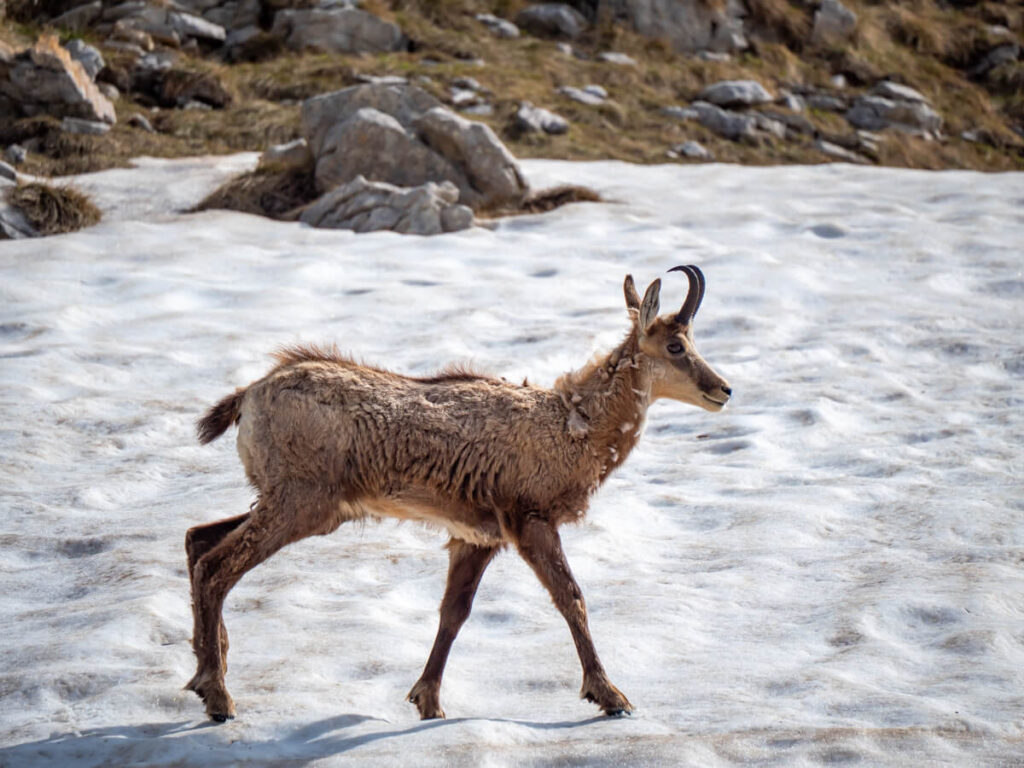
One of the best activities in Durmitor National Park that we weren’t expecting, but that we were super pleased by, was seeing northern chamois, an agile mountain goat-antelope species. They favour high, rocky areas and are most active around dawn and dusk, so you might get lucky and spot them on an early morning hike in the mountains.
Northern chamois are easily recognised by their short, hooked horns and thick, furry coats. Their split hooves provide exceptional grip on the limestone cliffs, making them incredible climbers that can effortlessly navigate steep, near-vertical rock faces.
We saw quite a few chamois on the Bobotov Kuk hike. At first, it was just one on its own, and the further we got, the more we saw. They often freeze completely when disturbed, making them surprisingly difficult to spot. Once we got our eye in, we realised there were large groups of them all over the valley above us.
5. Take the Savin Kuk Cable Car
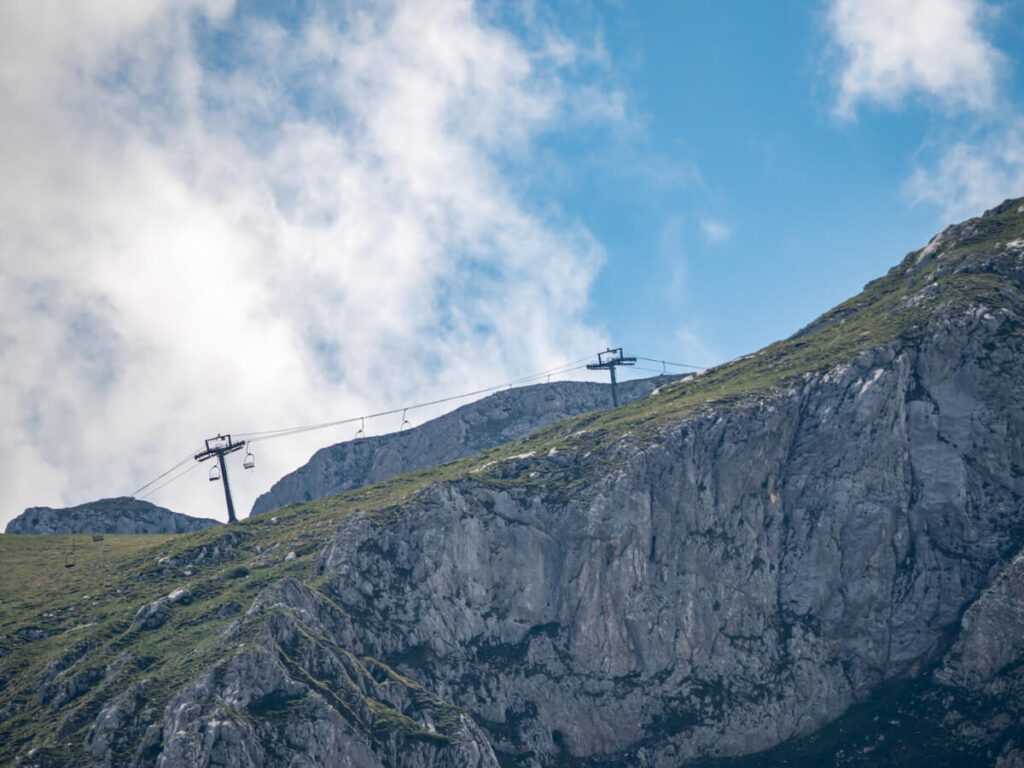
For one of the easiest ways to experience Durmitor’s high alpine scenery without a strenuous hike, take the Savin Kuk Cable Car. It starts at the Savin Kuk Ski Center on the east side of Durmitor National Park and stretches high into the mountains. The Lower station sits at around 1,516 metres (4,975 ft), while the Upper station is 2,213 metres (7,260 ft) high.
From the top, you can enjoy a fairly easy 20-minute walk to the summit at 2,313 metres (7,588 ft) high. It’s also, as the name suggests, a popular spot for skiing, with slopes suitable for beginners and intermediate skiers – one of the best things to do in Durmitor National Park in winter.
The cable car operates year-round, but can close due to bad weather, so it’s worth checking ahead before you go.
6. Look into the Tara River Canyon
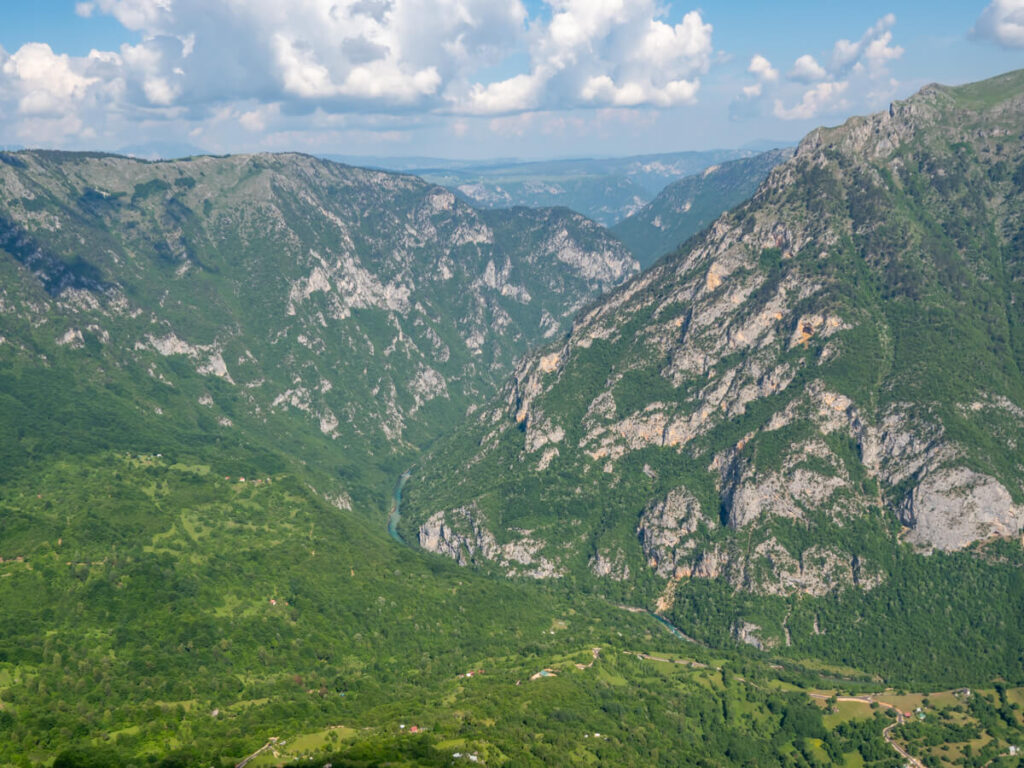
The Tara River Canyon is Europe’s deepest canyon and often cited as the second deepest canyon in the world, after the Grand Canyon. It reaches 1,300 metres (4,265 ft ) at its deepest part, but its sheer scale is difficult to appreciate until you stop at one of the many viewpoints in the park.
Our favourite viewpoints of the Tara River Canyon are:
One of the coolest things to do in Durmitor National Park is to stand at the canyon rim, which gives little indication of just how far the turquoise Tara River lies below. The best vantage point in our opinion is Ćurevac Peak.
7. Go white water rafting
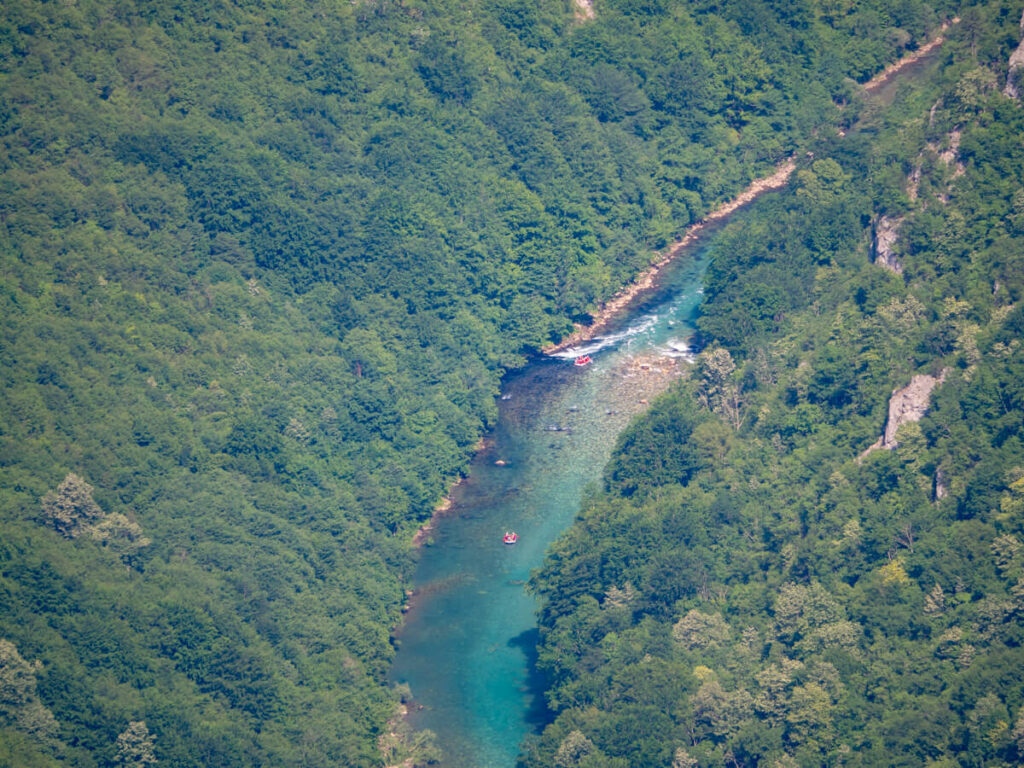
One of the best ways to appreciate the Tara River is not from a viewpoint, but to get on it in a raft. Tara River rafting tours are very popular, offering a completely different perspective of the canyon as you float between towering cliffs, forests, and dramatic rock formations.
Nicknamed the “Tear of Europe”, the Tara River has exceptionally clean water with water visibility often exceeding several metres. Rapids vary from Class II-IV depending on water levels, and between rapids, the river slows enough to appreciate the towering canyon walls and forest that surrounds you.
Trips typically range from 6-11 miles (10-18 km) depending on operator, and the best time to go is between April and June, when the spring snowmelt swells the river, creating faster rapids and more exciting rafting conditions. Rafting in summer is best for beginners, as the waters become calmer but the water remains crystal clear.
8. Visit the Devil’s Lake
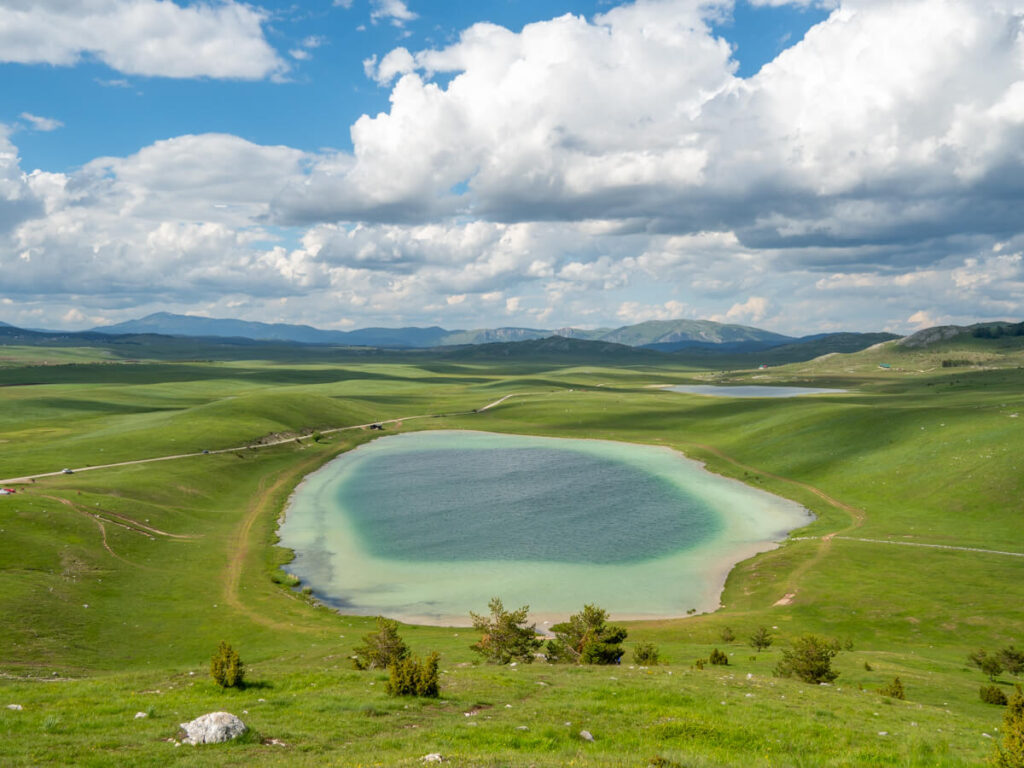
The Devil’s Lake (Vražje Jezero) is a large glacial lake with a deep blue centre and shallow turquoise edge that gives it a unique appearance of an eye. Despite its sinister name, it’s actually very peaceful and receives only a fraction of the visitors who head to other lakes in Durmitor National Park, especially the busy Black Lake.
The lake’s unusual name comes from local legends that tell of devils, spirits, and strange events taking place around its waters. According to folklore, the lake was considered a mysterious and otherworldly place, with stories of supernatural creatures and unexplained happenings adding to its reputation.
The striking turquoise colour comes from the lake’s exceptionally clear water, combined with sunlight reflecting off the shallow lake bed. This creates the contrast between the darker central waters that are deeper.
The Devil’s Lake is something we might have missed if it hadn’t been 5 minutes’ drive from our cabin, which shows that choosing where to stay in Durmitor National Park carefully can make such a difference.
9. See the stećci
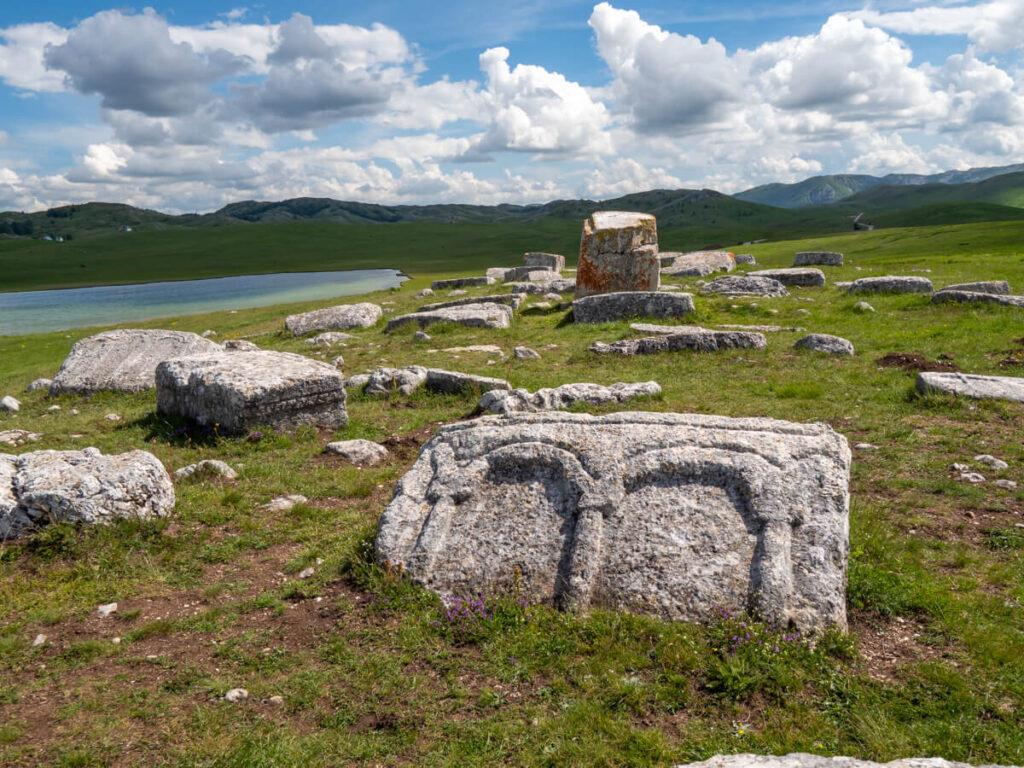
Near the Devil’s Lake sits a Medieval Slavic Cemetery. On top of the ridge, with direct views of Savin Kuk and Durmitor National Park, tombstones dating from the 12th-16th centuries are scattered throughout the windswept grasslands. Each is intricately carved with crosses, hunting scenes, dancers, spirals and geometric shapes, details of which have been remarkably well preserved despite centuries of harsh mountain winters.
There are more than 70,000 stećci across the western Balkans, and it’s thought they belong to multiple medieval religious communities rather than a single faith. If you’re a history buff, seeing them is a great insight into Montenegro’s archaeological heritage. Plus, they’re completely free to see, and most visitors don’t even know they exist.
10. Cycle through the valleys
Cycling is one of the best ways to experience the scale and scenery of Durmitor National Park. The park’s quiet mountain roads, open plateaus, and dramatic passes make for unforgettable rides, with routes ranging from gentle loops around Žabljak to challenging climbs through the heart of the mountains.
The Durmitor Ring Road is obviously a popular spot for bikers, but bear in mind that much of the road is narrow and often not wide enough for two vehicles to pass comfortably. Cars and campervans do use the route, and cyclists taking up the road can be annoying, so be mindful of other vehicles and pull over if you’re in the way.
For a more relaxed ride, the roads around Black Lake (Crno Jezero) and Devil’s Lake (Vražje Jezero) have less traffic and are also super scenic.
If you don’t want to plan the logistics yourself, several local operators offer cycling tours in Durmitor National Park, providing bike hire, route guidance, and support vehicles for longer rides.
11. Try local rakija
In northern Montenegro, rakija is as much a symbol of hospitality as it is a drink. A traditional Balkan fruit brandy, rakija is commonly made from plums, grapes, pears or apples, with many families producing their own homemade versions using recipes passed down through generations.
A small glass of rakija is often offered to guests as a welcome, shared during celebrations, or enjoyed alongside a meal. It pairs particularly well with traditional Montenegrin dishes such as kačamak (a hearty dish of potatoes, cornmeal, and cheese), cicvara (a rich cornmeal dish made with dairy products), smoked meats, and local cheeses.
In Durmitor, you may see locals sitting outside their houses with tables of homemade rakija, especially in the small villages along the Durmitor Ring Road like Trsa and Pišče.

12. Detour to Piva Lake
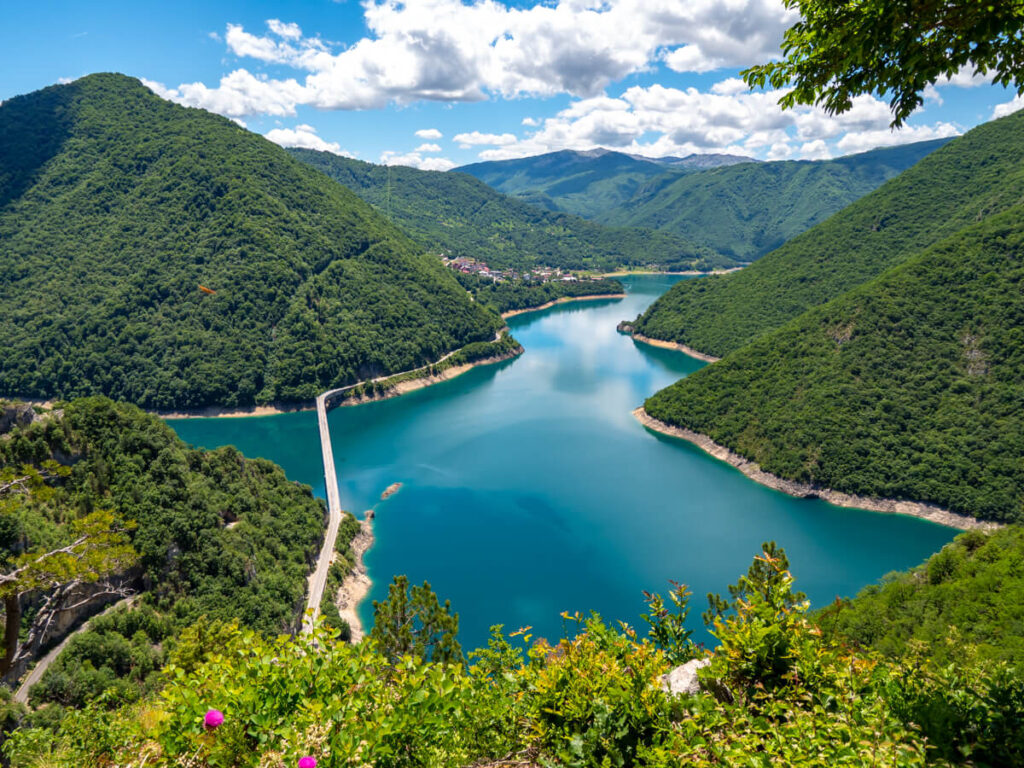
Nestled on the western border of Durmitor National Park, Piva Lake is a stunning turquoise lake that winds through steep limestone mountains covered in lush forest. It sits around 31 miles (50 km) west of Žabljak in Piva Nature Reserve, next to the small town of Pluzine.
Piva Lake was actually created after the construction of Mratinje Dam in 1975, which has a height of 220 metres (720 ft). Although artificial, it’s one of the most scenic places in Montenegro and worth the short detour.
One of the highlights of the lake is the journey to it, which winds through dozens of tunnels cut into the cliffs. There are several viewpoints to pull over into on the way. Once you reach the bottom of the flooded canyon, you can enjoy ziplining, kayaking, boat trips, and swimming in the crystal-clear waters.
13. Eat out in Žabljak
Žabljak is the gateway town to Durmitor National Park and a popular base for travellers, especially those without a rental car thanks to its public transport connections. We won’t lie, the town really didn’t blow us away, and we much preferred staying in a cabin or guesthouse in the countryside. But one of the best reasons to visit Žabljak is to eat.
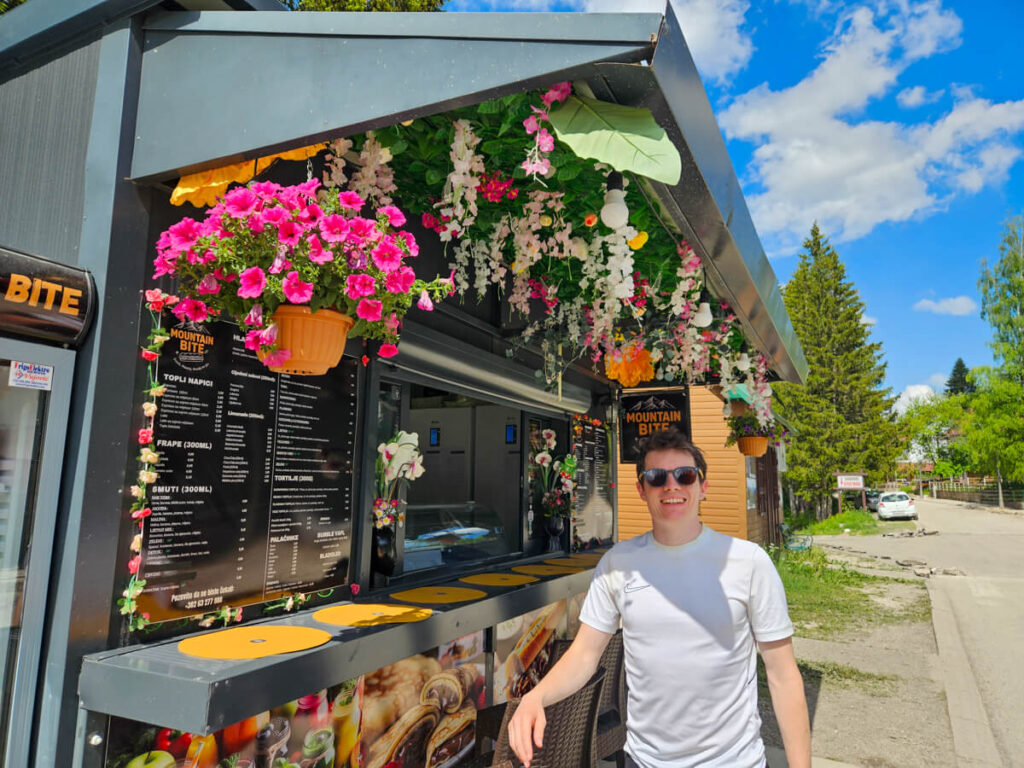
Beyond its supermarkets, Žabljak has a good range of restaurants and an increasing street food scene, especially along the road to the Black Lake where independent vendors serve delicious creations from wooden huts.
We especially rate:
14. Simply stare at the mountains
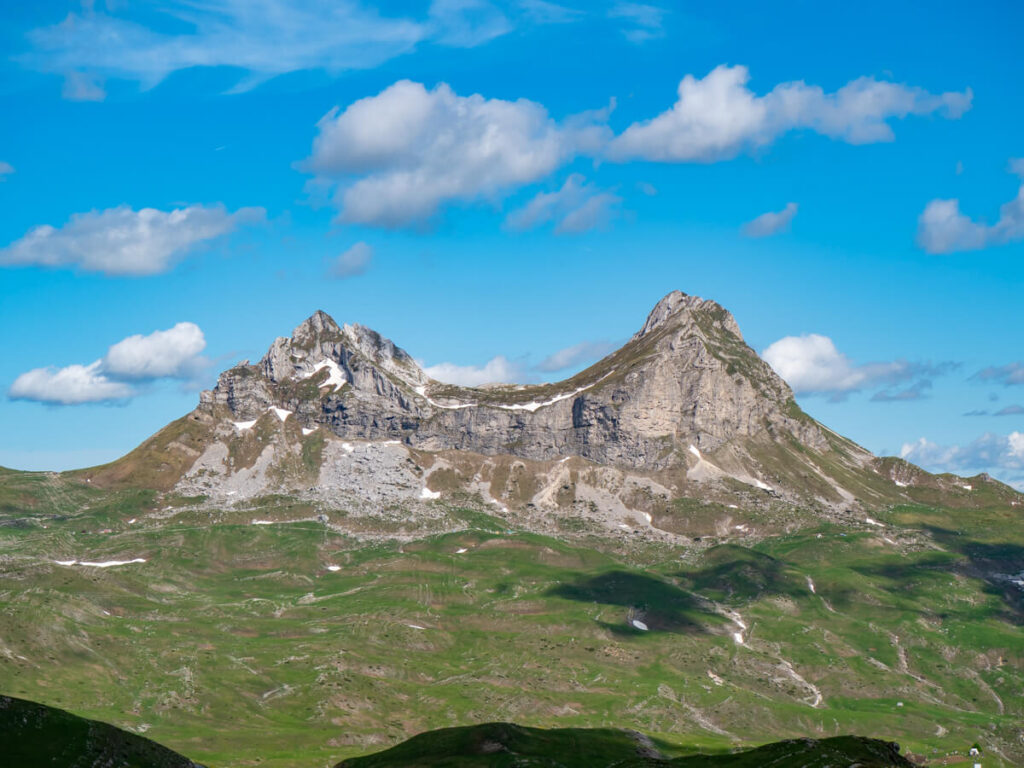
Durmitor National Park is jam-packed with activities, but we’d argue some of the best moments of our trip simply came from slowing down and taking in where we actually were. Part of the park’s appeal is its spectacular scenery, which is so different to the rest of the country, so it’s worth finding some time to really immerse in nature without being constantly on the go.
Sunrise and sunset completely transform the mountains, with the limestone peaks shifting through shades of gold, pink, and orange as the light moves across the landscape. Even during the day, the views are constantly changing as clouds drift overhead, casting shadows across the valleys and making the mountains appear different from one moment to the next.
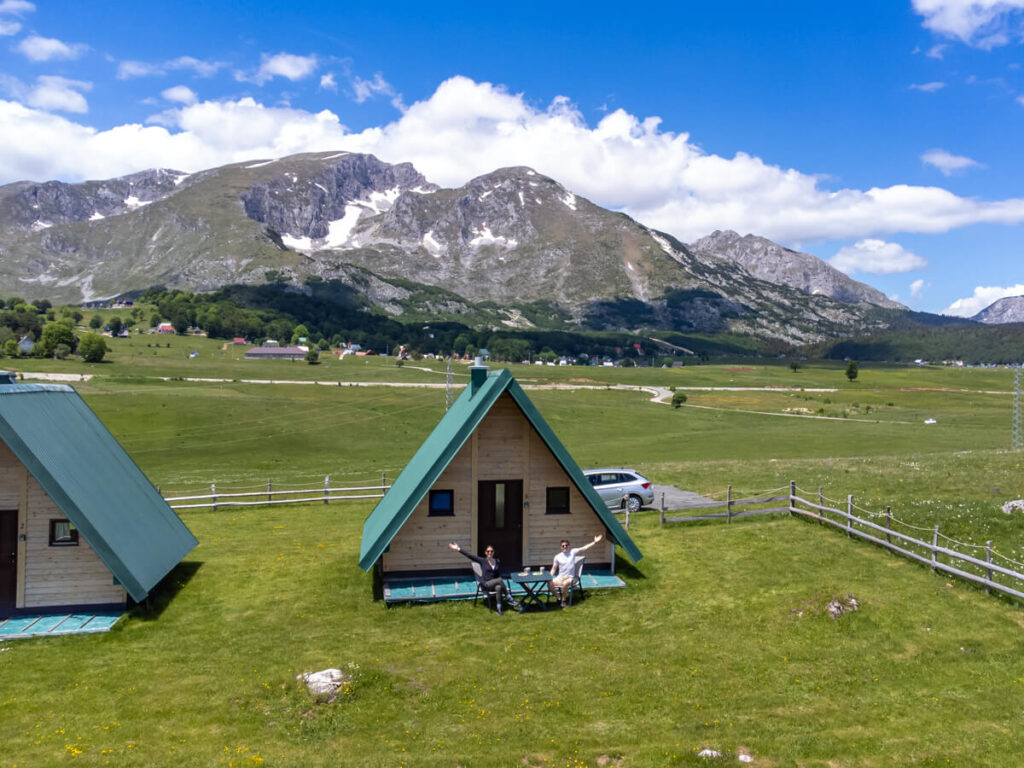
Booking Durmitor accommodation with mountain views is so worth it and doesn’t need to break the bank. We had a blissful stay in a cabin with views of Savin Kuk and enjoyed evenings in Guesthouse Planinarski dom Neviđen’o with a glass of wine or beer in hand, listening to thunder roll off the surrounding mountains. 10/10 highly recommend.

15. See the Đurđevića Tara Bridge
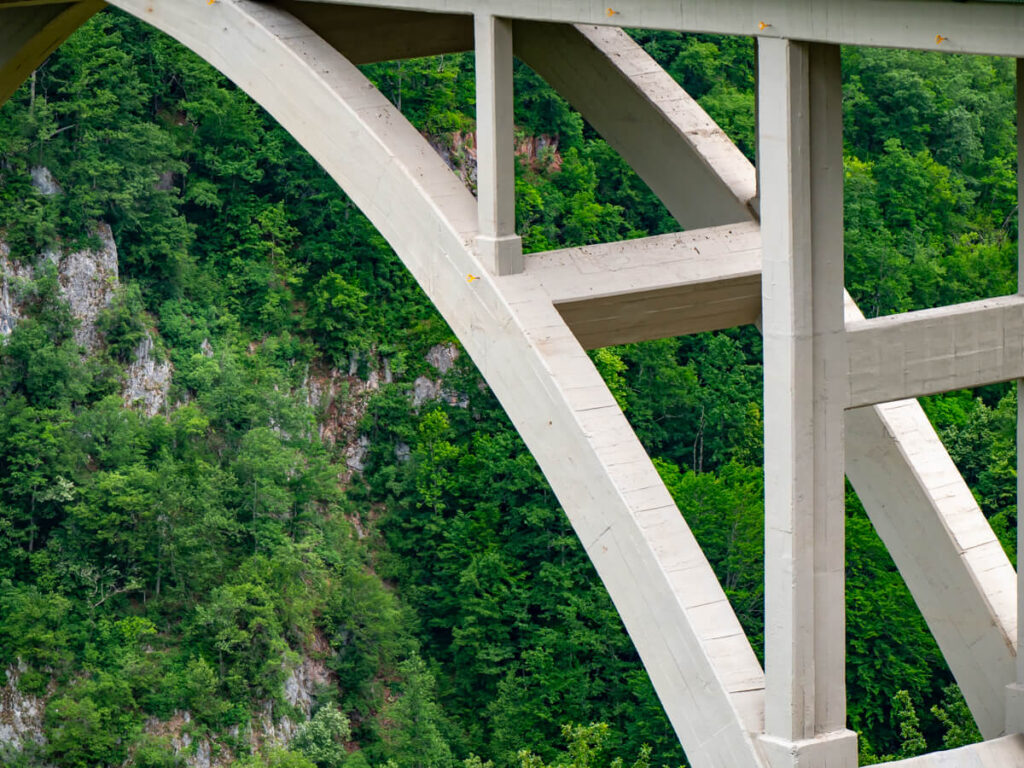
The Đurđevića Tara Bridge is an iconic landmark that spans 365 metres (1,198 ft) across the Tara River Canyon. It was partially destroyed during WWII to slow advancing Italian forces before later being rebuilt. Featuring five concrete arches, it was one of Europe’s largest concrete arch bridges when it opened.
Today, you can stop off at viewpoints on either side of the bridge or zipline over the valley below. There’s also the nearby St. Michael the Archangel Orthodox Monastery, another interesting stop in the area.
Honestly, we’ve put this last because we thought the Đurđevića Tara Bridge was probably the most overrated attraction in Durmitor National Park. It didn’t help that the bridge was under construction during our visit, and that the weather was grey – we think the pictures of it in the sunshine look much nicer than the reality.
There’s no denying the bridge is impressive from a technical and historical perspective, but it’s also clearly a popular tourist spot. The surrounding area feels quite developed, with restaurants selling expensive food and drink, people promoting tours, and crowds taking up the pavement and parking for miles along the road.
At the end of the day, there’s a limit to how interesting a road bridge can be, especially when compared to all the incredible natural beauty of the national park itself. Plus, we’ve seen more impressive bridges and viaducts in places like Southeast France.
It’s worth a quick stop-off on the way, especially if you’re driving past it to or from Biogradska Gora National Park, but really not worth detouring out to from the national park unless you’re really keen to do the zipline.
How to spend one day in Durmitor National Park
Personally, we think you need a lot longer than a single day to even scratch the surface of Durmitor National Park. It’s far too big and varied to see everything in just a few hours. But if you’re keen to see Durmitor National Park in one day, we’d recommend choosing your biggest interest and building your itinerary around it. Some of the best options include:
One of the best ways to see Durmitor National Park in one day is to book a Durmitor guided day tour with a local operator. It will be a long day, but transport and logistics are organised for you, allowing you to focus on the scenery rather than planning routes and timings. The best tours in Durmitor National Park include:

Our Durmitor National Park Itinerary
If you have a week or less to explore Durmitor National Park, this is pretty much our exact itinerary and gives you a good balance of scenic drives, hiking, viewpoints, and time to slow down and enjoy the mountains.
If you don’t have a full week, there are also plenty of tours of Durmitor National Park that combine the highlights into a single day or shorter visit.
It’s important to be flexible with your Durmitor National Park itinerary, as many hikes are weather-dependent. We’d recommend checking the forecast and rearranging your days so you hike on the days with the best weather. Balancing longer and shorter hikes, and allowing yourself rest days in between, is also a good idea.
Durmitor National Park Activities FAQs
To help you choose what to do in Durmitor National Park, we’ve answered these frequently asked questions.
What can you do in Durmitor National Park?
Durmitor National Park is best known for its spectacular array of hiking trails. But there is far more to Durmitor National Park than hiking. You can explore glacial lakes, drive the scenic Durmitor Ring Road, admire the Tara River Canyon, go white water rafting, ride the Savin Kuk cable car, visit historic sites, cycle through mountain valleys, or simply enjoy the dramatic scenery from one of Montenegro’s most beautiful landscapes.
What to do in Durmitor National Park as a couple?
Some of the most memorable experiences in Durmitor National Park are perfect for couples, including watching the sunset from a mountain viewpoint, taking a scenic drive along the Durmitor Ring, walking around Black Lake, enjoying a homemade meal in a mountain katun, or staying somewhere surrounded by nature.
What to do in Durmitor National Park as a family?
Durmitor is surprisingly family-friendly, especially for those who enjoy being outdoors. Easier activities include walking around Black Lake, visiting viewpoints over the Tara River Canyon, taking the cable car up Savin Kuk, exploring the Đurđevića Tara Bridge, and enjoying short nature walks. Families with older children can also try activities such as rafting on the Tara River or tackling some of the park’s shorter hikes.
What to do in Durmitor National Park when it rains?
Good rainy-day activities in Durmitor National Park include visiting Žabljak’s restaurants and cafes, enjoying traditional mountain food in your accommodation, exploring nearby cultural sites, or taking a short walk when conditions allow. Just be aware that mountain weather can change quickly, and some viewpoints may be less rewarding in heavy cloud or rain.
What are the best things to do in Durmitor National Park in winter?
Despite being off-season, there are lots of things to do in Durmitor National Park in winter. The landscape transforms into a snowy alpine wonderland, attracting visitors for skiing, snowshoeing, winter walks, and enjoying the peaceful atmosphere of the mountains.
Savin Kuk is one of Montenegro’s main winter sports destinations, with ski slopes overlooking the surrounding peaks. Winter months like December are also a beautiful time to visit Black Lake, although access and road conditions can be more challenging due to snow and ice.
Read next:
An Ultimate Guide to Visiting Durmitor National Park
Where to Stay for Durmitor National Park: Cool Cabins + Top Hotels
Driving the Durmitor Ring Road Route Guide
12 Best Hikes in Durmitor National Park From Easy to Expert
What It’s Really Like Hiking Bobotov Kuk
A Complete Guide to Hiking Ćurevac Peak
A Comprehensive Guide to Visiting the Black Lake
