A Complete Guide to the Bacalar Lagoon of 7 Colours

Everything you need to know about visiting the Laguna de Siete Colores de Bacalar, from lake access points to the top kayak and sailing tours.

This post may contain affiliate links, which means we might earn a small commission on anything purchased through these links at no extra cost to you. Learn more on our disclaimer page.
Often referred to as the ‘Maldives of Mexico‘, Bacalar’s Lagoon of Seven Colours is a stunning freshwater lake system, known for its vivid colour palette created by limestone beds, submerged cenotes, and varying depths. The lagoon includes several notable landmarks, including three of Bacalar’s cenotes, Negro, Esmeralda, and Cocalitos. With ecosystems ranging from wetlands to sandy beaches, Bacalar Lagoon is one of the most peaceful and visually stunning places to visit in Mexico. We’ve included everything you need to know about visiting the lagoon, from the best activities and access points to how to get here and where to stay, in this guide.
Bacalar Lagoon at a glance

More from Bacalar
What is Bacalar Lagoon?
Bacalar Lagoon is often confused with the town of Bacalar. While they’re similar destinations, there’s quite a distinction between the two:
Also called the Lagoon of Seven Colours (Laguna de Siete Colores), the Bacalar Lagoon is a large lake in Southeast Mexico. It spans 41 miles (60km) in length and 1.2 miles (2km) in width.
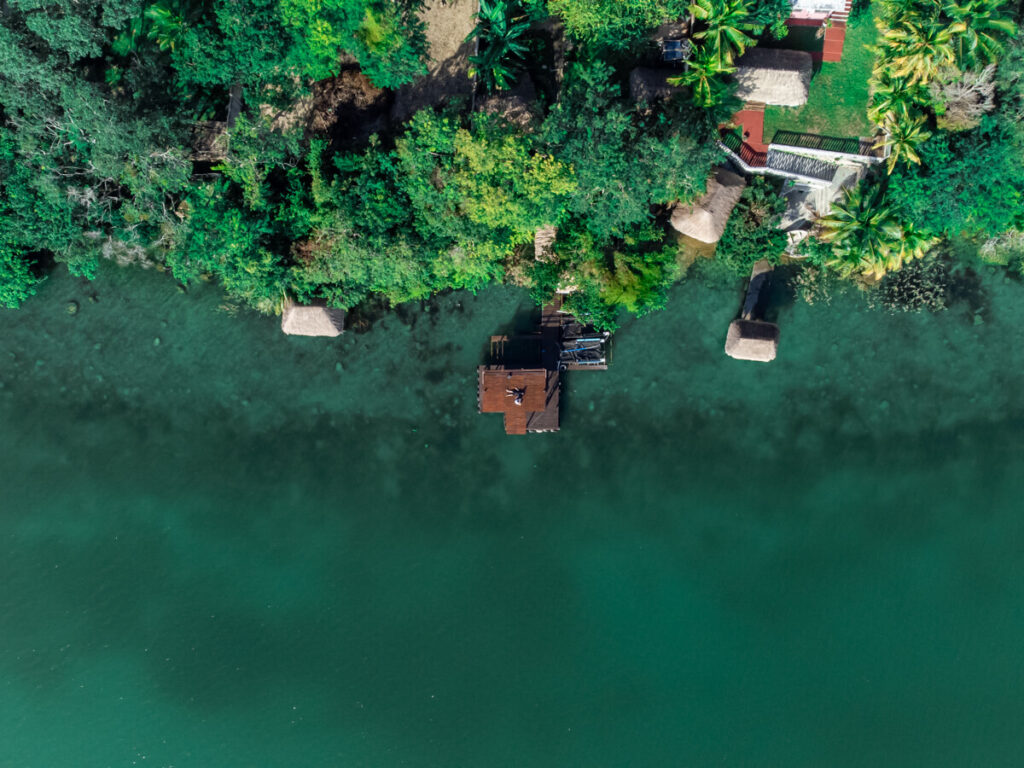
The lagoon is so called for its multi-coloured hues, which range from blue and turquoise to green and black. Its crystal-clear waters display these different shades, which are caused by variations in depth and mineral content.
The lagoon is one of the Yucatán Peninsula’s few permanent freshwater bodies and is fed by underground rivers and cenotes. The lagoon itself was formed over time as limestone bedrock collapsed, creating long, narrow depressions like cenotes filled by groundwater. Over time, these depressions interconnected and formed what is now the lagoon.

Where is Bacalar Lagoon?
Located in southern Quintana Roo, Bacalar Lagoon borders the municipality of Bacalar and is situated approximately 22 miles (35 km) north of Chetumal, the state capital.
The town of Bacalar sits on the lagoon’s western shore, offering easy access to south-facing beaches and docks.
The Hondo River (Río Hondo), which forms part of the Mexico–Belize border, connects to Bacalar Lagoon via the Chaac Estuary, especially at the southern end of the lagoon near Chetumal Bay. Historically, the river was a vital trade and transport route during pre‑Columbian Mayan times and later colonial trade networks, used to move goods between inland locales and coastal ports.

Bacalar Lagoon Map
We’ve pinned the key parts of Bacalar Lagoon on the map below.

Can you swim in the Bacalar Lagoon?
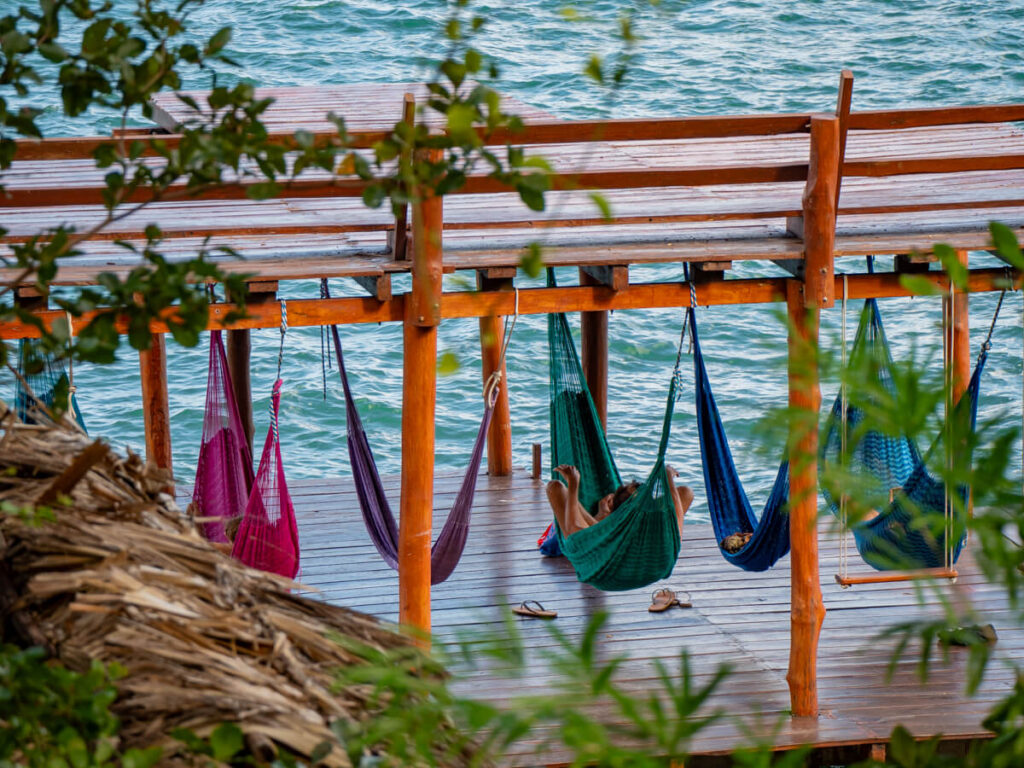
Swimming in the lagoon is one of the best things to do in Bacalar. Its warm, shallow edges are perfect for floating or wading in the turquoise waters. Many hotels have been built along the western shoreline, allowing direct access via piers and docks. Beach clubs, called balnearios, also allow access to the lagoon, with facilities like hammocks, swings, and platforms.
Swimming is allowed daily, though motorised boats, kayaks, and paddleboards are restricted on Wednesdays to allow the lagoon ecosystem a day of rest.

What is special about Bacalar Lagoon?
Besides its multi-colours, Bacalar Lagoon is considered of ecological importance due to its stromatolites, ancient microbial formations found in the lagoon. Stromatolites are some of the oldest living organisms on Earth, dating back 3.5 billion years. These fascinating and fragile natural formations are living rock-like formations created by colonies of microorganisms, primarily cyanobacteria.
Stromatolites played a critical role in producing the oxygen that made life possible on Earth, and they still grow slowly today in the shallow, mineral-rich waters of Bacalar Lagoon. Bacalar is one of the few places in the world where living stromatolites are still found.
Stromatolites are extremely delicate and vulnerable to pollution, excessive tourism, and physical contact. Sunscreens, soaps, and even walking on them can damage or kill these formations. That’s why ecological rules are in place in Bacalar to protect them, including no touching, no standing, and ideally, no swimming near stromatolite zones unless guided.

How to get to Bacalar Lagoon
Access to Bacalar Lagoon is straightforward via Highway 307, linking Bacalar to popular destinations like Tulum, Playa del Carmen, and Cancún.
If you’re flying in, the nearest airports are Chetumal International Airport (CTM), about 40 minutes away by car, or Cancún International Airport (CUN), roughly a 4.5-5 hour drive. From either airport, you can take a rental car, take the ADO bus, or book a Bacalar transfer.
If you’re in Bacalar town, the lagoon is easily accessible on foot, by bicycle, or by taxi. Many hotels and restaurants sit directly on the waterfront, and there are several public access points (which we cover later in this article), where you can swim, kayak, or paddleboard.

The best ways to see Bacalar Lagoon
There are really two ways to experience Bacalar Lagoon:
Here are some of the best ways to experience Bacalar Lagoon:
1. Take a boat tour
Traditional motorboat tours are widely available and typically visit several lagoon highlights in one trip. They’re a good option for those with limited time, though they can be noisier and have more environmental impact than sailing.
For something more relaxing, opt for a Bacalar Lagoon sailing tour. These tours often stop at key highlights like Cenote Negro, Bird Island, and the Pirates’ Canal, all while offering panoramic views and a peaceful ride without the hum of a motor.

2. Kayak or paddleboard
Renting a kayak or paddleboard allows you to explore the lagoon at your own pace. Early mornings are especially serene for a kayak tour of Bacalar Lagoon, as you can glide across the crystal-clear water to hidden corners and stromatolite fields with minimal impact on the environment. For something a little slower, opt to paddleboard on Bacalar Lagoon.
Many hotels offer complimentary kayaks or paddleboards for guests to explore the lagoon independently, or you can head to Maya SUP on the shoreline. DayTour Bacalar are a great option for rentals and tours, and we had a wonderful sailing experience with them.

3. Swim or float
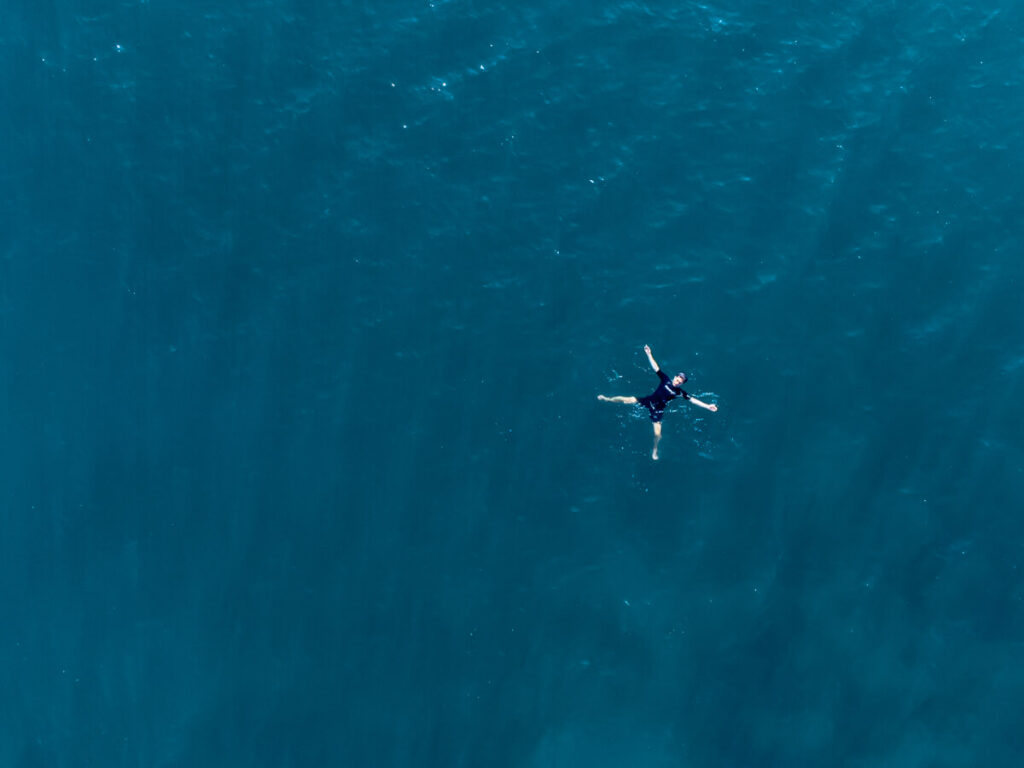
With shallow, warm waters in many spots, swimming or simply floating in the lagoon is a top activity. Locations like Los Rápidos, where a narrow channel creates a natural lazy river effect, are ideal for this. Centoes are also popular swimming spots around the lagoon.

4. Lakeside balnearios and hotels
Staying in a lakeside hotel or visiting a balneario (public swimming area) gives you direct access to the lagoon with facilities for lounging, dining, and water entry. Many offer gear rentals, piers, and shaded areas for relaxing. We’ve listed the best ones later in this post.

5. Visit viewpoints
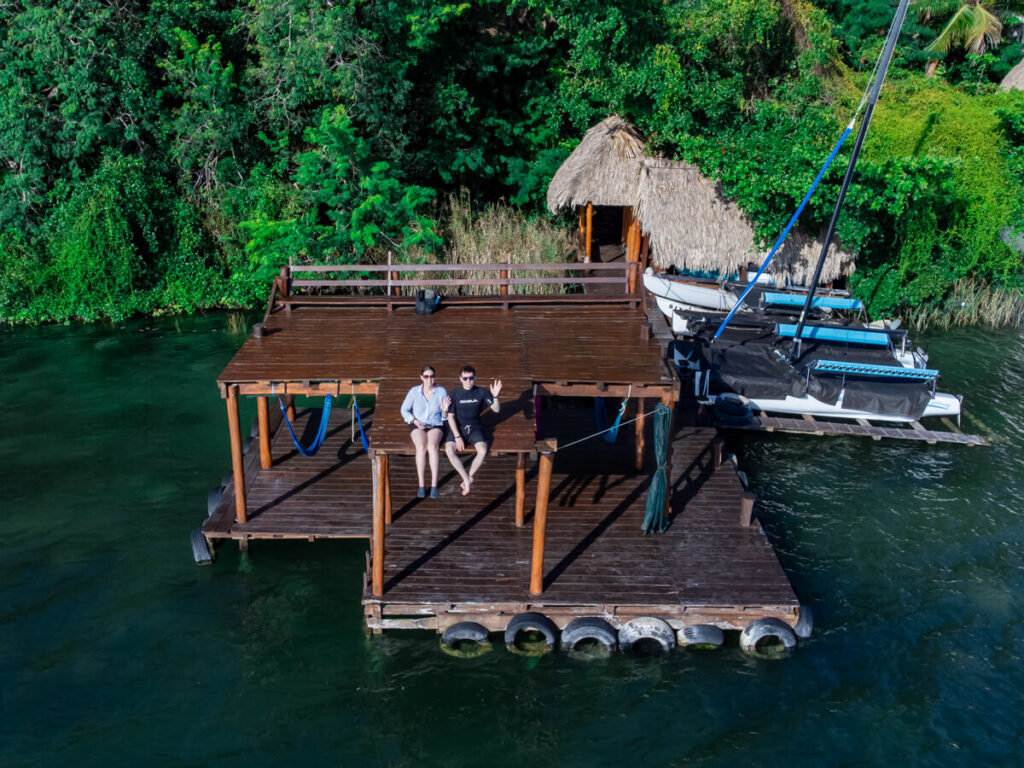
Bacalar offers several scenic viewpoints where you can admire the lagoon’s famous seven shades of blue without getting wet. Many cafés and rooftop bars offer panoramic vistas perfect for photos or a quiet drink, while lots of hotels have docks and piers, which provide the perfect vantage point. The Fort of San Felipe sits on a hill above the town and gives you a historic view over the lagoon and beyond. While not as immersive as sailing or swimming, these spots are great for capturing photos of the lagoon, especially at sunrise.
Bacalar Lagoon Tours
Bacalar Lagoon tours are available via motorboat, sailboat, catamaran, kayak, or paddleboard, depending on your preference. We chose a sailboat, a more eco-friendly option than gasoline motor boats, and also spent a few hours with a kayak from our hotel.
Boat tours are popular with visitors looking to experience Bacalar Lagoon’s highlights in a single trip, or those simply wishing to sit back and relax. Many tours also include snorkel stops and snacks or lunch and drinks, with both private and group options available.
Kayaking and paddleboarding are more independent and great for exploring Bacalar’s mangroves. A vital ecosystem along the edges of the lagoon, mangroves provide essential habitat for a wide variety of wildlife, including birds, fish, and crustaceans. These dense mangrove forests help protect the lagoon’s delicate water quality by filtering pollutants and preventing erosion, while also acting as natural buffers against storms and rising waters.
Most tours depart from the Bacalar town dock and vary in length from 2 hours to full-day experiences. Booking in advance is recommended during peak season to secure your spot.

Sailing on Bacalar Lagoon
Sailing tours on catamarans or Hobie Cats offer quiet and eco-friendly exploration of the lagoon, passing stromatolite zones, cenotes, and mangrove-framed canals at a peaceful pace. Many tours include circumnavigating landmarks like Bird Island and entry into the Pirates’ Canal, allowing passengers to swim or snorkel at remote spots.
Sunrise or sunset sails provide stunning light on the water’s seven colours. We had the best time on a sailing experience with DayTour Bacalar for Dan’s birthday at sunrise.

What to see at Bacalar Lagoon
Bacalar Lagoon is dotted with natural and cultural landmarks, from ancient cenotes to protected islands and narrow canals once used by pirates. A few of the most popular stops include:

1. Cenote Esmeralda
An open cenote within the lagoon with emerald-green hues and 70 metres (230 ft) depth, Cenote Esmeralda is known for its great swimming and snorkelling. This is Bacalar’s largest cenote at over 500 metres (1640 ft) wide and is often visited on sailing or paddleboarding tours, as you can see the water change colour as the depth changes.

2. Cenote Negro
Also called the ‘Black Cenote‘ or ‘Witch’s Cenote‘ (Cenote de la Bruja), Cenote Negro has a strikingly dark colour and dramatic drop-off where the water appears almost black. It is the smallest of the four main open-air cenotes in the region, with a diameter of approximately 130 metres (426 ft) and depths of around 70 metres (230 ft).

3. Pirates’ Canal
A historic waterway connecting the lagoon with the Hondo River, the Pirates’ Canal is a narrow channel where the lagoon runs into a canal that ends at the Caribbean Ocean. Originally engineered by the Mayans for trade, it later served as a secret route pirates used seeking valuable goods like palo de tinte (logwood used for dying clothes) and exotic hardwoods, giving it its name, Canal de los Piratas.

4. Bird Island
A small, protected islet with shallow water, Bird Island (Isla de los Pajaros) is an important bird nesting sanctuary for species, like magnificent frigatebirds, parrots, herons, ibis, and pelicans. This is a great spot for birdwatching from the water. There’s a protective rope around the island, and it’s important not to go within the protected zone.

How to access Bacalar Lagoon
On the water, you can access the lagoon via boat tours departing from the central dock in Bacalar town or by renting kayaks or paddleboards alongshore. From the land, it’s a little more complicated.
You can’t just access the lagoon from anywhere. Much of the lagoon’s shore has been privatised by hotels and restaurants, meaning the only way to access the lagoon is through these establishments. The lagoon is lined with accommodation options, from shared Airbnbs and eco-glamping sites to boutique and luxury hotels.
There are several public access points, too. Beach clubs, called balnearios, also provide access to the lagoon in a more spa-like way. Rather than traditional beach areas, these parks are often grassy areas or wooden docks, providing access for swimming in the water and relaxing on the shore.

Where to access Bacalar Lagoon
A plethora of photogenic docks and piers have been built along the shore, providing access to the lagoon. These access points vary in terms of facilities, entry fees, and the type of experience offered. Some are ideal for relaxing swims and family visits, while others offer kayak rentals, restaurants, or hammocks for lounging. We’ve listed all the best places to access Bacalar Lagoon below, from cheap public parks to more upscale private options.

1. Ecoparque Bacalar
An ecological park near Calle 36 in town, Ecoparque Bacalar (Balneario Ecológico) offers entry to the lagoon and swimming in the shallow waters from a long, three-sided boardwalk. The park also features boardwalks through mangrove areas and over stromatolites, with informative signs where you can learn more about the ecological significance of the area. It’s particularly popular on Wednesdays, when the lagoon is closed to boat traffic. It has a small entrance fee of 20 pesos for adults (~$1 USD) and 10 pesos for children and seniors (~$0.50 USD), making it one of the cheapest places to access the lagoon.

2. Los Rápidos
Located at the southern end of the lagoon, Los Rápidos (the rapids) is a narrow channel where a gentle current flows between mangroves and stromatolites, creating a natural lazy river effect. Here, you can don a lifejacket and float down the stream, or hop in a kayak and paddle down even faster.
Los Rápidos is ecologically delicate, lined with living stromatolites, which filter water and help create the lagoon’s signature blue. Strict rules prohibit touching, stepping on, or wearing any sunscreen or lotions to preserve these ancient formations. On-site amenities include platforms, a swing, hammock platforms in the water, a boardwalk through mangroves, a restaurant, restrooms, showers, and locker rental.
It’s 200 pesos for adults (~$10 USD) and 160 pesos for children (2-10)(~$8.50 USD), so it isn’t the cheapest, but it is worth it for the experience of floating in the currents.

3. Laguna Bonanza
If you’re seeking a peaceful place to access Bacalar Lagoon, head to Laguna Bonanza. A great alternative to Los Rápidos, this local spot is located near the rapids and is much quieter, although it lacks the floating currents.
You can rent a kayak and paddle down to the rapids or simply float on the lagoon at this quieter spot. Laguna Bonanza costs 80 pesos per adult (~$4.50 USD). The facilities are more limited, but you can bring your own food and drink.

4. Cenote Cocalitos
A semi-open cenote directly connected to Bacalar Lagoon, Cenote Cocalitos, also called Playa Cocalitos or ‘Stromatolite Sanctuary‘, is as close to a beach as you’ll find in Bacalar. A private eco-park, it contains one of the region’s most extensive and accessible living stromatolite colonies, protected by ropes and signage and strictly off-limits to avoid touching or stepping on.
The cenote itself is about 60 metres (197 ft) deep, with clear, shallow turquoise waters that make it a popular spot with lagoon tours. The site is known for its in-water hammocks and swings, which make for a great photo op.
It costs 100 pesos for adults (~$5.50 USD) and 50 pesos for children (~$2.60 USD).

5. Balneario Ejidal Mágico
A locally-run waterfront park with entry access to lagoon swimming, Balneario Ejidal Mágico functions like a giant freshwater pool with a maximum depth of around 1 metre (3.3 ft), making it safe and enjoyable for families with children. Amenities include tobogans (water slides), palapas (thatched umbrellas), shaded picnic areas, restrooms, and changing facilities, a small restaurant, a dock with boat access, and kayak rentals.
Balneario Ejidal Mágico costs 70 pesos for adults ($~4 USD), and you get a wristband as your ticket.

6. Balneario Municipal El Aserradero
A public lagoonfront balneario offering swimming access, a picnic area, and limited facilities, Balneario Municipal El Aserradero is known for its long and wide dock. It’s a popular spot with backpackers as it’s absolutely free! There’s another dock here with a palapa at the end, which is popular with drone photographers and Instagrammers.

7. Balneario Sac-ha
A local swimming hole with optional amenities and a very affordable entry fee, this is a quieter alternative to more commercial spots. It’s more rustic than other beach clubs, but it does offer additional services like kayak and hammock rentals and a small restaurant. It’s 50 pesos per person (~$2.60 USD).

8. Lagoonfront hotels
Many of the best places to stay in Bacalar offer private docks or direct lagoon access for guests, making them ideal bases for swimming, snorkelling, paddleboarding, or launching a kayak. We really enjoyed staying in Eco-hotel Casa Lamat, a waterfront hotel with sustainable initiatives to the north of the town, but there are plenty of options for all budgets along the shore and in downtown. Here are the best hotels for lagoon access:
Bacalar Lagoon Hotels
Is Bacalar Lagoon worth visiting?
Bacalar Lagoon is absolutely worth visiting, balancing ecological importance, visual beauty, and a peaceful atmosphere that sets it apart from other tourist destinations in the region. Its multi-coloured water and living stromatolites make it one of Mexico’s most unique natural wonders.
Having said that, some people report being disappointed in Bacalar Lagoon, as the water is not always the vibrant turquoise colour you see on social media, there are no real beaches, and it’s a sleepier town than others in the north.
Additionally, the lagoon’s lush, humid environment attracts mosquitoes, especially at dawn and dusk, making an eco-friendly insect repellent essential. Weather, especially cloud cover, wind, or recent rain, can significantly dull the lagoon’s seven colours, making it look murkier or less vivid than expected. Algae blooms or sediment stirred up by boat traffic can also affect clarity and hue. Managing expectations and understanding that the lagoon’s appearance is heavily influenced by natural conditions can help avoid disappointment, especially if you’re visiting during the rainy season.
Due to rising tourism and development, the lagoon has faced increasing pollution and ecological strain. Sunscreen, wastewater, and unregulated boat traffic can impact its unique stromatolites and fragile ecosystem. Protection measures and low-impact tourism are integral to preserving the area’s beauty and integrity, offering responsible exploration opportunities through eco-tourism.
With accessible activities such as sailing, cenote swimming, and kayaking and wellness opportunities like yoga and meditation classes, Bacalar Lagoon can become a hub for low-impact travel and should be added to your itinerary if you’re seeking a combination of nature, adventure, and relaxation.
Why is Bacalar Lagoon closed on Wednesdays?
Bacalar voluntarily restricts motorised boats, kayaks, and paddleboards every Wednesday to give the lagoon ecosystem a weekly rest from human disturbance.
Swimming is still permitted, and public docks like Ecoparque Bacalae remain open, but most water-based tours are suspended.
The initiative was introduced by local authorities to protect fragile elements like stromatolites and reduce pollution. Wednesdays, therefore, have unusually calm waters and minimal activity, perfect for photography, although the beach clubs and lagoon access clubs are busier on these days.

Our experience at Bacalar Lagoon
We had the best time on a tour of Bacalar Lagoon. We took a private sailing experience (a surprise for Dan’s birthday, as he’s always been interested in sailing). We visited all the highlights of the lagoon and had time to swim in the shallow waters. It was so peaceful, the water was as still as glass, and there were no other boats out on the lagoon! By about 11:00 AM, the lagoon gets much busier, and by the afternoon, there’s a lot more boat traffic around, so we’d recommend going out early.
We also explored the lagoon from several other access points during our visit, enjoying several blissful hours floating down the rapids at Los Rápidos and chilling out at Cenote Cocalitos. Our lagoonfront hotel, Casa Lamat, was a great base with a dock that gave us direct access to the lagoon, too. We enjoyed jumping into the refreshing water and kayaking along the mangrove-lined shores.

Bacalar Lagoon Video
Check out our video of Bacalar Lagoon and be sure to follow us on Instagram for similar destinations!
Bacalar Lagoon FAQs
To help you plan the best way to experience Bacalar Lagoon for you, we’ve answered these frequently asked questions.
What is the Lagoon of Seven Colours in Bacalar?
The Lagoon of Seven Colours is a large freshwater lake in Bacalar, Mexico, known for its vivid shades of blue.
What are the colours of the Bacalar Lagoon?
The lagoon displays multiple shades of blue, including light turquoise, aquamarine, teal, cobalt, and deep navy, as well as green and black. These distinct hues are caused by the varying depths, sandy bottom, and natural light refraction.
Why is Bacalar Lagoon so blue?
The stunning blue tones of Bacalar Lagoon come from the combination of white limestone sediment, crystal-clear freshwater, and the lagoon’s depth variations, which reflect sunlight differently across areas.
Does Bacalar have a beach?
Bacalar doesn’t have sandy ocean beaches, but it offers lagoonfront access with docks and grassy shorelines where visitors can swim, sunbathe, or launch kayaks and paddleboards.
Where to swim in Bacalar for free?
You can swim for free at public access points like the Balneario Municipal El Aserradero or from docks along the lagoon’s shore, like those in your accommodation.
What lives in the Bacalar Lagoon?
The lagoon is home to freshwater fish, snails, birds, and most notably, ancient microbial structures called stromatolites. These living rock-like formations are rare and ecologically important.
Does Bacalar Lagoon have crocodiles?
While crocodiles exist in the region, they are rarely seen in the main swimming and tourism areas of the lagoon. Encounters are extremely uncommon, especially around central Bacalar. If you want to see a crocodile, head to Sian Ka’an Biosphere Reserve and take a wildlife watching tour.
Can you wear sunscreen in Bacalar Lagoon?
Wearing regular sunscreen is discouraged as it harms the fragile aquatic ecosystem, including stromatolites. Use biodegradable sunscreen and don’t put any sunscreen on before swimming in the lagoon.
What else is there to do in Bacalar besides the lagoon?
Beyond the lagoon, Bacalar offers cenotes, Mayan ruins, local street art, the Fort of San Felipe, cultural festivals, wellness experiences like yoga and massage, and nearby day trips to places like Chetumal, Mahahual, and Xcalak.
Read next:
A Traveller’s Guide to Bacalar
28 Best Things to Do in Bacalar
Where to Stay in Bacalar: 14 Top Hotels
How to Visit Los Rápidos Bacalar
A Comparison of Bacalar’s 4 Cenotes
How to Visit Cenote Cocalitos Beach Resort
How to Visit Ecoparque Bacalar
