How to Visit Macaw Mountain + is it Ethical?

Discover everything you need to know about visiting Honduras’ Macaw Mountain Bird Park near Copán Ruinas.
This post may contain affiliate links, which means we might earn a small commission on anything purchased through these links at no extra cost to you. Learn more on our disclaimer page.
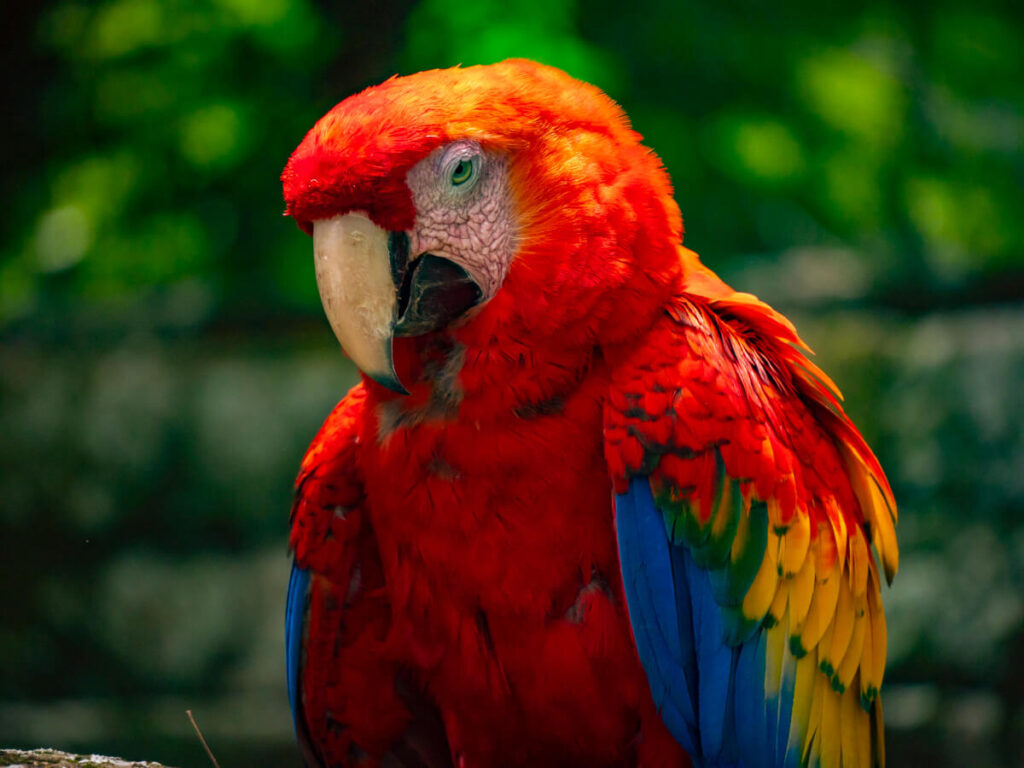
If you’re visiting Copán Ruinas, chances are you’ve heard it’s one of the best places in Honduras to see scarlet macaws. Once nearly extinct here, scarlet macaws have been successfully reintroduced around Copán, largely thanks to Macaw Mountain Bird Park.
It can be hard to tell when captive animal experiences are truly conservation-focused or just a money-grabbing initiative catered to tourists. In fact, we actually skipped this experience on our first visit to Copán Ruinas due to doubts we had about its ethics. But things have changed, online information is out of date, and we’ve collated everything you need to know about visiting Macaw Mountain today, from its opening hours, ticket prices, and how to get there to ethics, conservation work, and birds you might see.
Macaw Mountain at a glance

More from Copán Ruinas
About Macaw Mountain
Scarlet macaws are the national bird of Honduras and have become the unofficial symbol of Copán Ruinas, a small town near the Guatemalan border known for its Mayan ruins.
Located near the ruins, Macaw Mountain Bird Park is a sanctuary that’s home to over 100 colourful birds. They run a rescue, rehabilitation, release, and rewilding programme that’s responsible for the reproduction of macaws and their reintroduction into the wild.
Visiting Macaw Mountain is one of the best things to do in Copán Ruinas. A lush and leafy bird park and rescue centre, it’s not a zoo, but a sanctuary for rescued and rehabilitated tropical birds.
Macaw Mountain History
Scarlet macaws (las guacamayas rojas in Spanish) were considered sacred by the ancient Maya, symbolising the sun and representing the bridge between the earthly and spiritual worlds. The park gets its name from the nearby Copán Archaeological Site, which was once known as Mo’ Witz (Macaw Mountain), said to have been named over 1,500 years ago. You’ll even see carvings of them in stone stelae in the archaeological site.
Macaw Mountain’s premise was born in the 1990s, when Lloyd Davidson agreed to temporarily care for several birds that had been rescued in Roatán. The number of birds that the park cared for increased, and it became a more established sanctuary.
After a devastating hurricane, Lloyd and his growing collection of over 100 birds moved to Copán Ruinas, completing work in the park in 2003.
Their scarlet macaw rewilding programme started in 2011 in conjunction with the World Parrot Trust, the local NGO Asociación Copán, and several government agencies.
Macaw Mountain is now home to more than 330 species of birds. Although their main focus is scarlet macaws, you’ll see a wide variety of birds in the park, many of which are endangered.
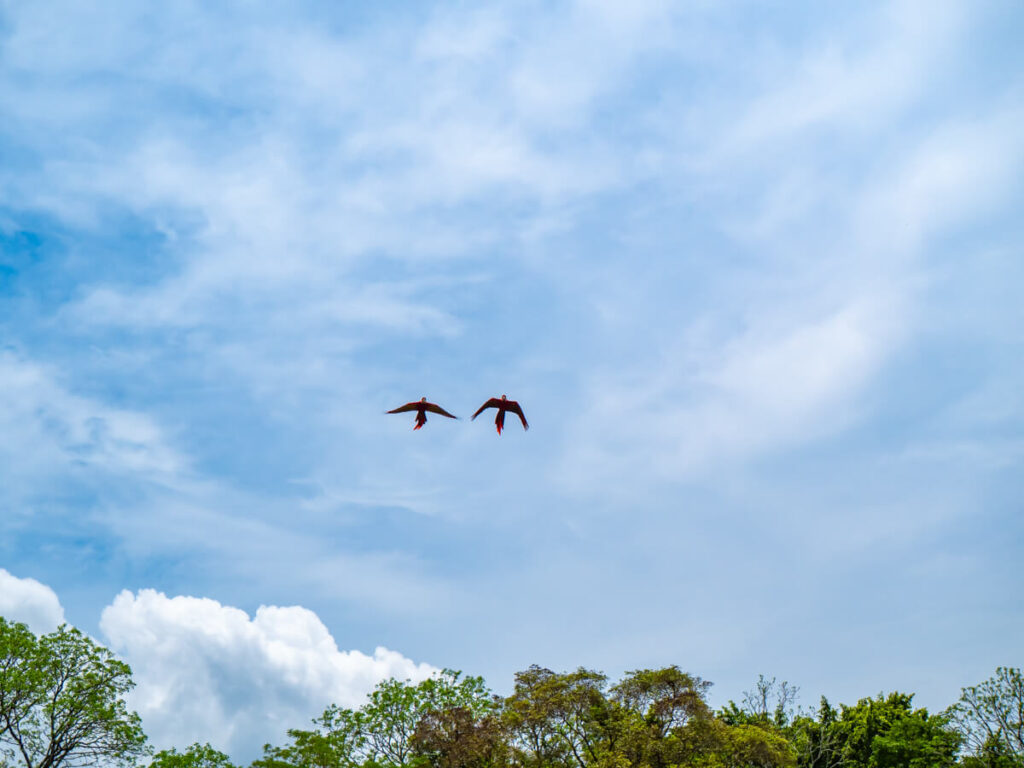
Their work helps to rescue and rehabilitate countless individuals, releasing them back into the Copán Valley – many of the birds you’ll see in the wild in the surrounding area have come from this project.

Why visit Macaw Mountain?
Macaw Mountain offers visitors the opportunity to get up close to these beautiful, colourful birds, learn about their behaviours and the threats they face, and the important work that sanctuaries like this one do to protect them.
You can walk through forested enclosures filled with macaws, toucans, and parrots, while learning about local conservation efforts. The park also works closely with the nearby Copán Archaeological Site, where released macaws can now be seen flying freely.
The work it does is not only important for preserving various native species but also for combating terrible animal welfare attitudes and the illegal wildlife trade, which reminds us of ARCAS in Guatemala.

Where is Macaw Mountain?
Macaw Mountain Bird Park sits 1.5 miles (2.4 km) from the centre of Copán Ruinas.
True to its name, the property sits atop a hill, spanning 10 acres of forested terrain in a stream-fed valley on the banks of the Copán River (Río Copán).
Macaw Mountain Map
We’ve pinned Macaw Mountain on our interactive Copán Ruinas map below.
How to get to Macaw Mountain
The easiest way to get to Macaw Mountain is to walk from Copán Ruinas town. It’s a 30-45 minute walk, depending on your pace, but it’s an enjoyable route (and you might see or hear wild scarlet macaws on the way). The road is fairly steep, but not too difficult to follow.
Alternatively, you can hop in a tuk-tuk. From the town centre, the journey takes about 10 minutes and costs about 25-35L (~$1 USD) there and 40L (~$2 USD) back. There aren’t many tuk-tuks around the park, so it’s best to negotiate a return journey with your driver, or you can simply walk back downhill.
Travellers coming from Guatemala (via Antigua or Río Dulce) can get to Copán Ruinas by shuttle or bus in about 6-8 hours, while those from San Pedro Sula can expect a 4-5 hour journey by bus.

Is Macaw Mountain ethical?
Unfortunately, the demand for exotic pets like scarlet macaws and other parrots has long fueled the illegal wildlife trade in Central America. Many of the birds at Macaw Mountain were once captured from the wild and kept in poor conditions before being rescued.
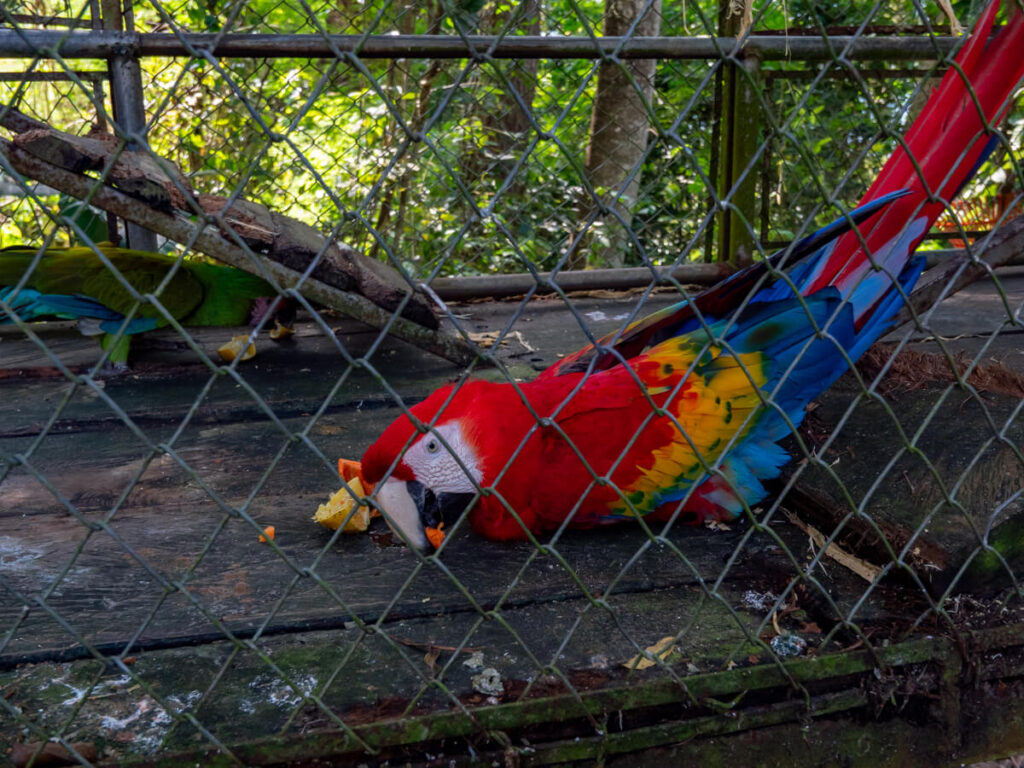
The first thing to note about Macaw Mountain is that most of the birds are in cages. There’s a sign at the entrance explaining that this is the case.
Many of the birds in Macaw Mountain have been rescued from illegal trafficking or unsuitable captivity, or were born or raised in captivity, and lack the necessary skills to survive in the wild. Some have been donated by owners who could no longer care for their pets, while others have been confiscated by the government. Some have been rescued because they were mistreated, while others are receiving care because they were injured.
The park does not capture or breed wild birds. Those without the necessary level of health or skills to survive in the wild are not able to be released. Keeping them in cages is, unfortunately, necessary to ensure they receive the right level of care and provide them a safe home to live comfortably. While it’s not ideal, it’s nice to know they are finally being looked after.
Macaw Mountain has a breeding and release programme for scarlet macaws that focuses on repopulating the Copán Valley. Birds that can’t be released can still contribute to this conservation initiative as breeding pairs and parents.
Birds that can be rehabilitated are eventually released into the wild. The chicks of breeding pairs are also released once they’re able to survive on their own. It’s really touching knowing that the birds you see around the ruins are the direct result of the conservation work of the park.
On our first visit to Copán Ruinas, Macaw Mountain allowed visitors to touch and hold some of the birds, which was a big red flag for us. There were pictures plastered everywhere of people with birds on their arms, and it gave us the ick, so we decided to skip it. Instead of visiting, we decided to spot scarlet macaws in the wild.
Macaw Mountain have since stopped this practice and is now completely hands-off. There’s an “interactive area” where you can get a picture with the habituated macaws (that can’t be rereleased) around you, but they’re free (within the confines of the enclosure) to go where they like. Forcible holding and touching can cause stress to animals, so it’s much better for their wellbeing that they’re no longer forced to act as props for photos.
The sanctuary is much more ethical than other experiences around Honduras, especially the “wildlife parks” on Roatán, which seem to be entirely catered to tourists getting photo ops with animals at the expense of their welfare.
The birds are well looked after, in good condition, and you can tell the staff really cares about the conservation of the species. The aviaries are large and clean, and well integrated into the forest.
While it’s not necessary to visit Macaw Mountain to see scarlet macaws – you’ve a high chance of seeing them in the wild around Copán – it’s a great way to support the rewilding programme and learn about the conservation work they’re doing.
Macaw Mountain Tickets
You can simply show up and buy Macaw Mountain tickets in person at the entrance. There’s no need to purchase them in advance.
You’ll receive a paper wristband, which proves you’ve paid the entry fee, and allows you re-entry if you leave the park.
Entry includes access to all walking trails, viewing areas, and the riverside café, as well as the chance to see the macaws’ feeding and flying sessions.

Macaw Mountain Entrance Fee
The entrance fee to Macaw Mountain is 250 Lempiras or $10 USD, with a slight discount for children aged 4-10 years old (and under 4s are free).
The fee helps support the conservation work of the park.
Macaw Mountain Opening Times
Macaw Mountain is open every day of the week, from 8:00 AM-4:00 PM.

When to visit Macaw Mountain
Honduras’ dry season from November to April has the nicest weather, and the forest trails are easier to walk. However, even in the rainy season, showers are usually short, and the park remains lush and green. We visited in June, the start of the rainy season, but were lucky with a sunny day.
The best time to visit Macaw Mountain is in the morning, before the sun gets too hot. This also allows you plenty of time to head to the nearby Mayan ruins afterwards, too. Alternatively, you could visit Macaw Mountain in the afternoon, after exploring the ruins.
It doesn’t get that busy, so there’s no need to try and avoid any crowds. That said, weekends are slightly busier than weekdays.
If you plan in advance, you can even witness a release, where rehabilitated birds are let back into the wild, but you’ll have to check ahead with the park.
How long to spend at Macaw Mountain
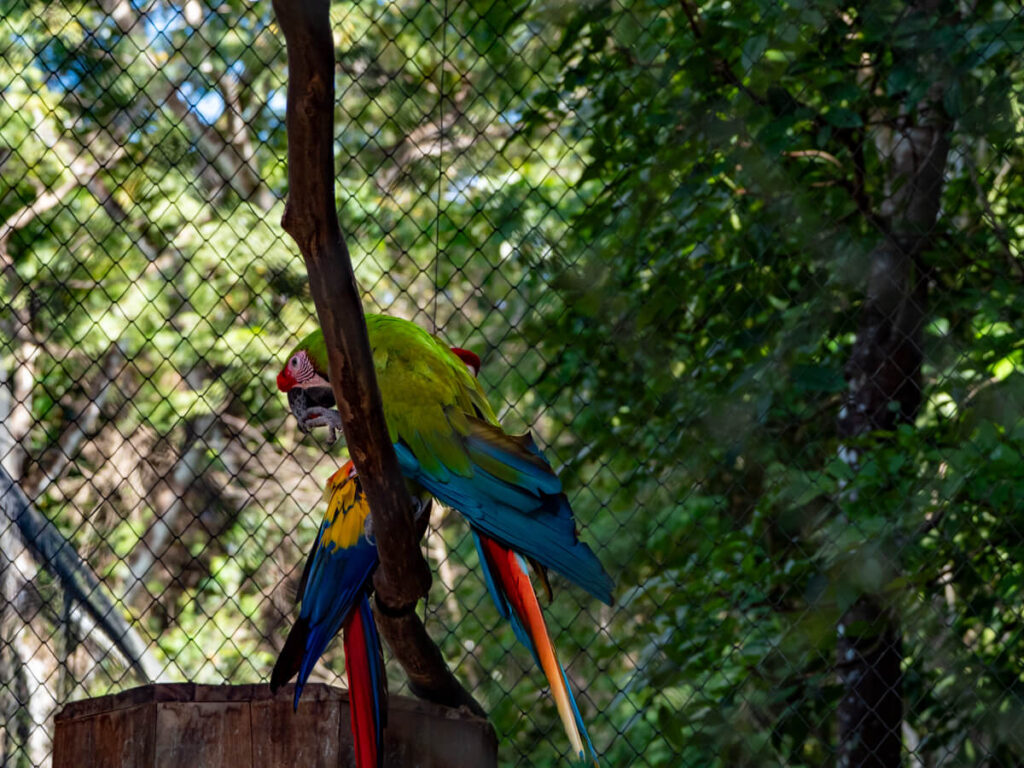
For a self-guided visit of Macaw Mountain, we’d recommend 1.5-3 hours. There’s a well-marked trail throughout the park, which is surprisingly spacious. You’ll pass the various enclosures, seeing a variety of bird species along the way. There are informative signs in English and Spanish, which give some good background information about the species you’re seeing, their threats, and the breeding and release programmes in the park.
There are various release enclosures, which get bigger as the birds get closer to being released into the wild. There’s also a nursery for little chicks.
The final part of the park is the large “interactive area”. It’s not really interactive, as you can’t touch or hold them, but you can get photos with the birds milling about. Staff monitor it, are familiar with the birds’ behaviours, and take them back to their enclosures, so they don’t spend too long in this area around people. It’s also closed between 12:00-1:00 PM to give the birds a rest, so time your visit around this if you’re keen to see them in this area.
Birds that are new arrivals, ill, or being quarantined are kept in a separate area, away from visitors, to minimise stress.
Guided tours are sometimes available in English and Spanish, offering more background on the rescue work and the species living in the park, but it’s best to arrange this with the park ahead of your visit.

Macaw Mountain Bird Species
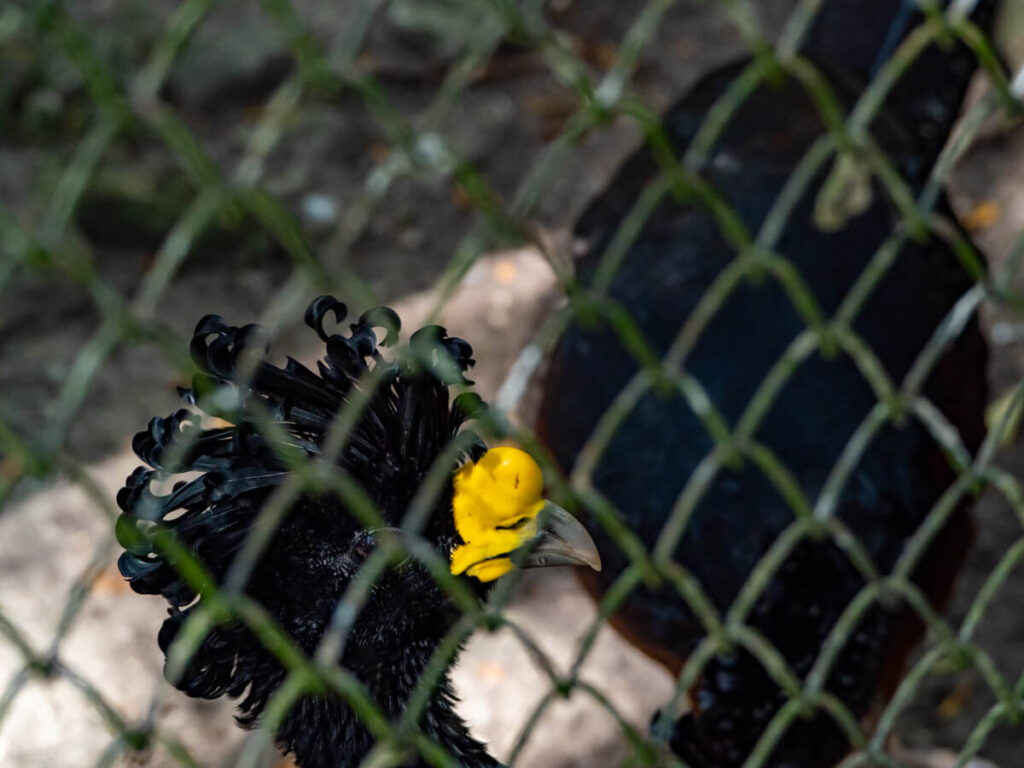
Macaw Mountain cares for more than 330 varieties of wild native birds, although different species will be present at different times, depending on what’s being rescued and released. Here are some of the species you might see:
Macaws (Guacamayas)
Parrots & Parakeets
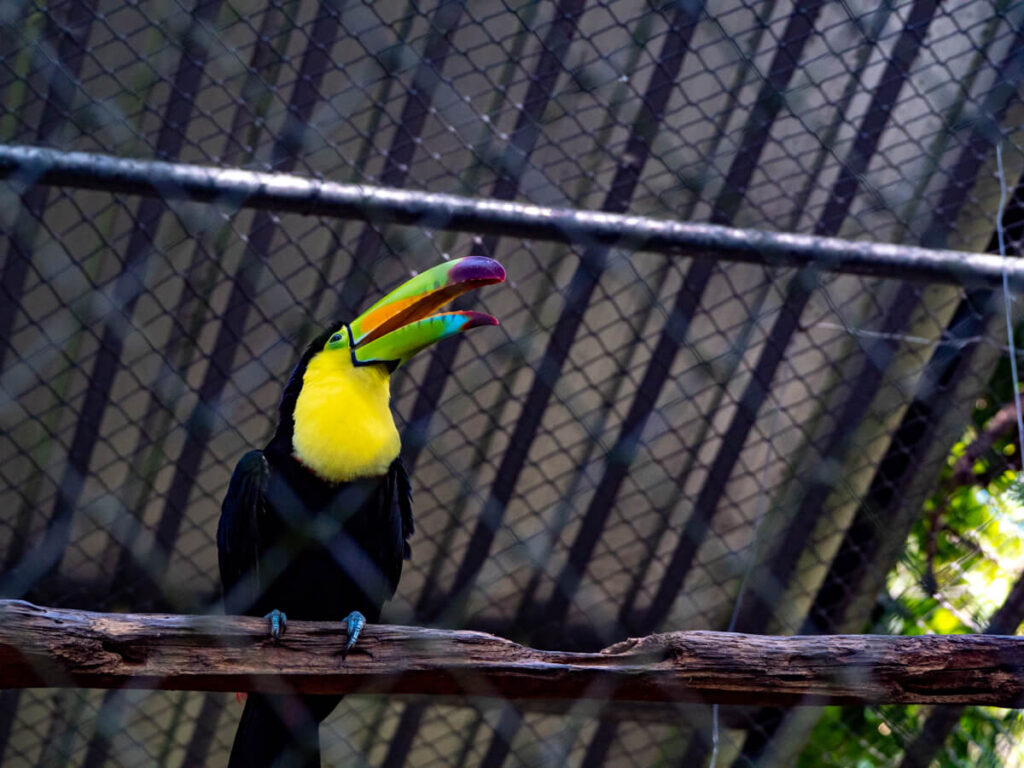
Toucans
Other Bird Species
If you’ve heard about resplendent quetzals, you can see them in Honduras, but you won’t find them near Copán Ruinas. You’ll need to head to Pico Bonito National Park near Río Cangrejal or Santa Barbara Mountain near Lake Yojoa. We saw a quetzal in Costa Rica, as they favour the altitude of Monteverde Cloud Forest.
Macaw Mountain Amenities
Macaw Mountain is home to a café with WiFi, which has an elevated balcony, where you can observe wild birds feeding on the fruit tables.
It also has a small souvenir shop, with proceeds supporting the park, as well as clean restrooms.

Is Macaw Mountain worth it?
Macaw Mountain offers travellers a guaranteed opportunity to see scarlet macaws, making it absolutely worth a visit if you’re keen to see these colourful birds for yourself. We loved being able to see them up close, and it was so inspiring knowing that the wild birds we saw flying overhead around the town had probably come from the release programme. It’s never nice to see animals in captivity, but we think it’s always worth supporting causes that are working hard to better the welfare of animals.

What to pack to visit Macaw Mountain
To ensure an enjoyable experience at Macaw Mountain, it’s important to pack the right things. Don’t forget to pack your:

Planning a trip to Copán Ruinas?
Prepare for your trip to Copán Ruinas with our comprehensive travel guides! They include lots of handy tips like how to get to the town and the Mayan ruins, as well as the best things to do, tours, accommodation, restaurants, and more.

Read next:
Where to See Scarlet Macaws in Honduras
Copán Ruinas Town + Mayan Archaeological Site Guide
