All 4 Bacalar Cenotes: Azul vs Negro vs Esmeralda vs Cocalitos

A comparison of Bacalar’s cenotes, including how to visit and the pros and cons of each stunning sinkhole.

This post may contain affiliate links, which means we might earn a small commission on anything purchased through these links at no extra cost to you. Learn more on our disclaimer page.
While Bacalar is best known for its stunning Lagoon of Seven Colours, the region is also home to several remarkable cenotes. These natural freshwater sinkholes offer some of the best swimming and exploration in the area. Whether you’re looking to swim in the dramatic depths of Cenote Azul, see the water change colour at Cenote Negro, experience the unique biodiversity of Cenote Esmeralda, or chill out in a hammock at Cenote Cocalitos, there are plenty of amazing cenotes to discover in Bacalar. We’ve listed the best Bacalar cenotes to visit, along with tips on how to get there, what to expect, and how to make the most of each one.

More from Bacalar
Does Bacalar have cenotes?
Bacalar does have cenotes, and they are among the most unique in Mexico. They’re often visited on sailing tours of Bacalar Lagoon, but you can reach them from land, too.
Cenotes are natural freshwater sinkholes formed when limestone bedrock collapses, exposing the underground rivers and groundwater below. Cenotes can vary in shape and depth – some are open-air and resemble natural swimming pools, while others are partially or fully enclosed in caves. Common throughout Mexico’s Yucatán Peninsula (there are literally thousands of them), they were considered sacred by the ancient Mayans, who considered them portals to the underworld and important water sources.
Unlike the typical cave or sinkhole-style cenotes found elsewhere in the Yucatán, Bacalar’s cenotes are often open, deep-water pools that connect directly with the lagoon. The water depth change from the lagoon to the cenotes creates dramatic shifts in water colour, giving the lake its name, the ‘Lagoon of Seven Colours‘.
There are four cenotes in Bacalar:

1. Cenote Azul
Cenote Azul is Bacalar’s only open cenote, meaning it’s not connected to the lagoon. It is one of the deepest cenotes in the region, plunging over 90 metres (295 ft), making it perfect for swimming and freediving thanks to its clear, deep waters.
The cenote is surrounded by vegetation and offers shaded areas for relaxing before or after your swim. The water remains cool year-round, offering a refreshing contrast to the warmer waters of the nearby lagoon.
There’s a restaurant on site with views of the water, and on-site amenities include restrooms and changing rooms, but there are no lockers, so bring minimal valuables.
There are no large-scale rental services, so bring a mask and snorkel to explore the rocky underwater walls and tree roots that descend into the depths.
Life jackets are required if you’re not a strong swimmer, and there’s a safety rope across the width of the cenote that you can use for aid. Sunscreen, lotions, and bug spray are not allowed to protect water clarity and ecology.
Cenote Azul sits just a few minutes’ drive from town, located right off the highway (Carretera Federal 307), meaning it’s easily accessible by car, taxi, or even bike.
The entrance fee is small, around 180 pesos (~$10 USD). You can only pay cash to enter, but the restaurant accepts cards.

2. Cenote Negro
Cenote Negro sits in the lagoon and has a strikingly dark colour and dramatic drop-off that feels like a mysterious underwater portal. Nicknamed the ‘Black Cenote‘, it sits within the Bacalar Lagoon and is the smallest of the four main open-air cenotes in the region, with a diameter of approximately 130 metres (426 ft) and depths of around 70 metres (230 ft).
Local folklore calls it Cenote de la Bruja or ‘Witch’s Cenote’, named after an alleged centenarian Mystic Woman who lived nearby, surrounded by dolls. She allegedly cursed the land when it was developed, sparking rituals among locals to counteract the curse.
Cenote Negro is often included in boat tours of Bacalar Lagoon, where you can see the dramatic, inky-black drop-off. You can also rent a kayak or go standup paddleboarding and navigate your way out to the cenote on your own.
Snorkelling, swimming, and diving are popular here, though diving requires a certified guide due to the depth and underwater formations.
The cenote is free to access from the water, while there’s a small fee to enter by car or bike if you’re coming by land.
There are no facilities at this cenote, and no lifeguard, so bring what you need with you and swim with caution.

3. Cenote Esmeralda
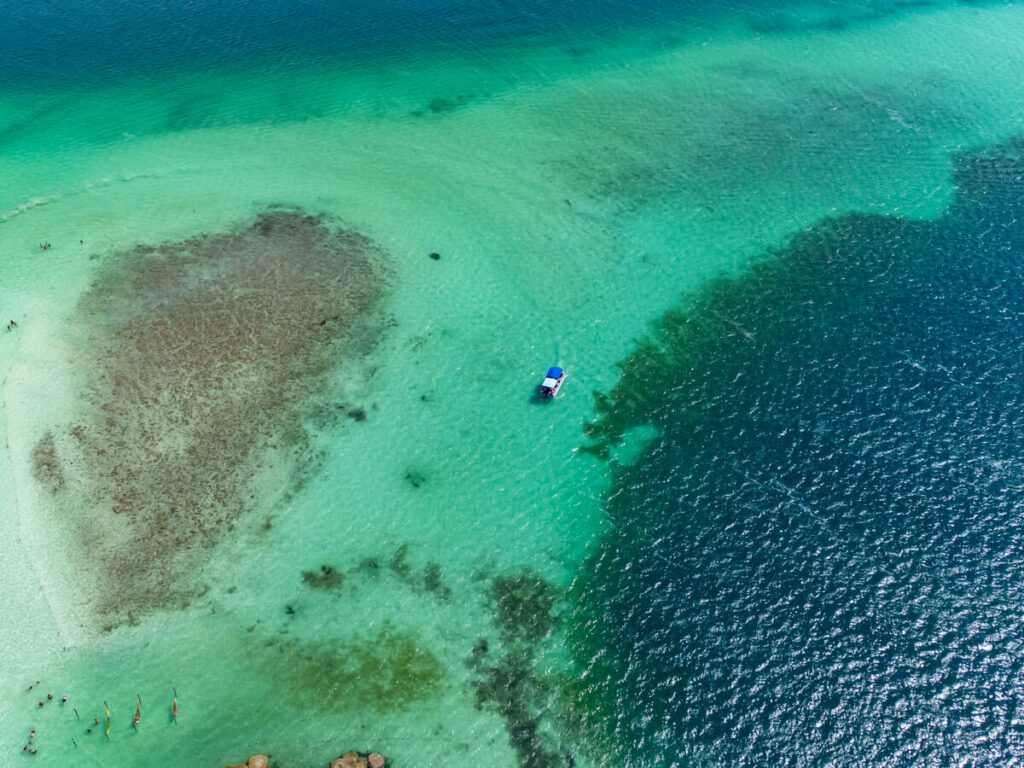
Located in the lagoon near Cenote Azul, Cenote Esmeralda creates a sudden drop in depth, noticeable by a swirl of deeper blue amidst lighter waters. With a depth of approximately 70 metres (230 ft), this open cenote is Bacalar’s largest at over 500 metres (1640 ft) wide.
Cenote Esmeralda is ideal for swimming and snorkelling, as the crystal-clear water reveals submerged roots, rock formations, and occasional fish. It is often visited on sailing or paddleboarding tours and is a great example of how cenotes feed into the larger Bacalar Lagoon system.
Cenote Esmeralada lies about 15 minutes’ drive south of Bacalar town, accessible by car, taxi, or bike. You can also visit it on a guided kayak tour of Bacalar Lagoon or sail on a boat tour.
DayTour Bacalar is a good place to enter Cenote Esmeralda from the land. This local company is located right on the cenote’s edge, and offers boat tours of the lagoon and kayak and paddleboard rentals. We really enjoyed a private sailing trip with them for Dan’s birthday.

4. Cenote Cocalitos
Known for its visible stromatolites, Cenote Cocalitos is a protected eco-park with shallow, turquoise water and relaxing hammocks. Often called the ‘Sanctuary of Stromatolites‘, it is home to large colonies of stromatolites, some of the oldest living organisms on Earth that date back over 3.5 billion years. Stromatolites play a critical role in filtering and maintaining the lagoon’s stunning clarity and colour, and are protected at Centoe Cocalitos by ropes and signage to avoid people touching or stepping on them.
The cenote itself is about 60 metres (197 ft) deep, with clear, shallow turquoise waters near the shore that make a dramatic transition to deeper, more intense blue hues. The park is known for its in-water hammocks, swings, which make for a great photo. The shallower, calm waters are perfect for snorkelling, with great visibility to see fish and stromatolites near the surface.
Cenote Cocalitos was closed for two years, and many blogs still report it as shut, but it has fully reopened. Basic facilities are available on-site, including clean bathrooms and showers. The site used to offer a small restaurant, but now there’s only a small snack shop (selling items like chips (crisps), beer, and water) at the entrance – you’re welcome to bring your own food and drink with you, though. Tables and chairs can be rented, while a couple of public picnic benches are scattered throughout the site.
The visitor price is 100 pesos (~$5.50 USD) for adults and 50 pesos (~$2.60 USD) for children, while the local price is 50 pesos (~$2.60 USD).

Bacalar Cenotes Map
We’ve pinned the four main cenotes in Bacalar on our map below.

How deep are the cenotes in Bacalar?
The cenotes in Bacalar vary in depth, and since their limestone floors are naturally uneven, the depth can change depending on where it’s measured. Contradictory measurements are also reported online. Still, if you’re curious about just how deep these striking formations go, here’s a breakdown of the best-known cenotes in Bacalar, and the impressive depths that make them so unique:
Can you swim in the cenotes in Bacalar?
Swimming in the cenotes is one of the best things to do in Bacalar! Swimming in cenotes like Cenote Azul and Cenote Cocalitos is a popular and safe activity, making them perfect spots to cool off and explore the natural beauty of Bacalar. While Cenote Negro and Cenote Esmeralda are more commonly seen from the water on a boat or kayak tour, you can also swim in these dramatically deep pools.
These crystal-clear freshwater sinkholes offer refreshing spots to swim, snorkel, and even SCUBA dive, with safe areas marked and life jackets often available for visitors who want extra security. Just remember to follow local guidelines: avoid using sunscreen or insect repellent before entering the water to protect the delicate ecosystem, and respect any rules about swimming zones or wildlife.

Things to do in Bacalar’s cenotes
Bacalar’s cenotes offer a variety of exciting activities for visitors. You can swim and snorkel in their crystal-clear waters, discovering underwater rock formations and aquatic life like fish.
For the more adventurous, freediving and SCUBA diving are popular, especially in deeper cenotes like Cenote Azul.
Many cenotes also provide kayaking or paddleboarding opportunities on the calmer surfaces.
Beyond water activities, the surrounding areas often feature shaded picnic spots and walking trails, perfect for relaxing.
Many cenotes are home to small fish, turtles, and aquatic plants, offering great opportunities for nature enthusiasts to observe local biodiversity. Some cenotes, like Cenote Cocalitos, are also famous for their ancient stromatolites, where you can observe these fragile bio-geological formations.
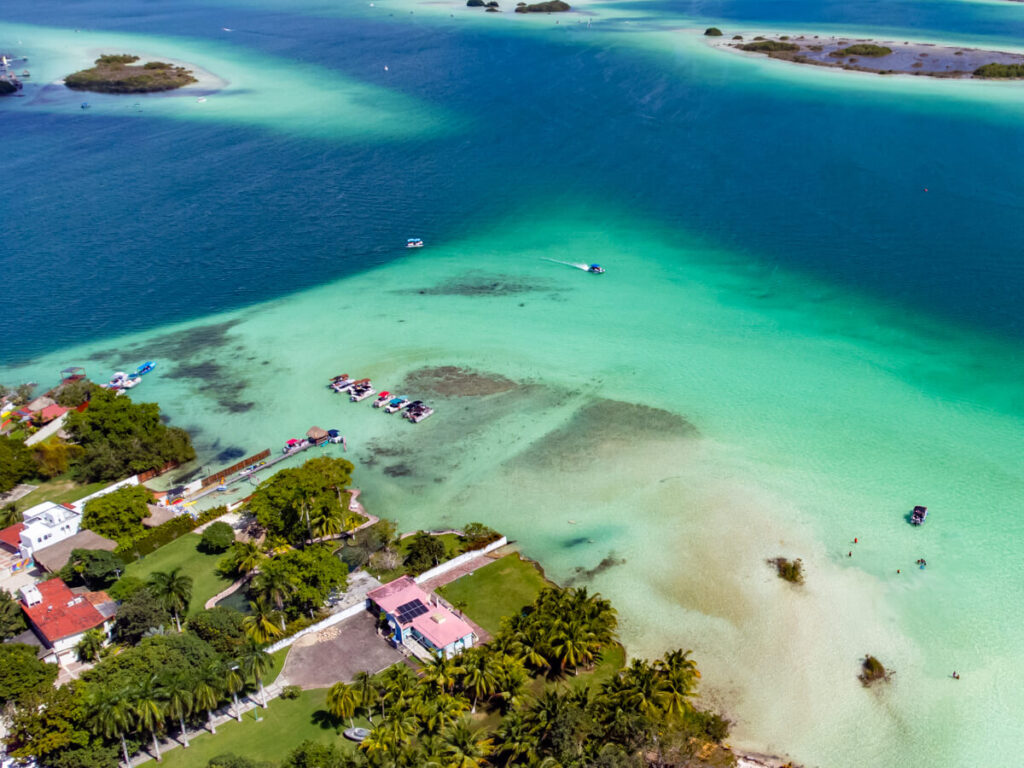
The vivid blue and turquoise waters, combined with unique rock formations and lush greenery, make Bacalar’s cenotes a dream spot for photographers. They’re especially stunning from the air if you have a drone (just be sure to follow drone flying guidelines and laws).
Bacalar Cenotes Comaprison
To help you choose which cenote in Bacalar is right for you, we’ve put together this list of pros and cons.
Cenote Azul
Pros
Cons

Cenote Negro
Pros
Cons
Cenote Esmeralda
Pros
Cons

Cenote Cocalitos
Pros
Cons

Bacalar Cenote Hotels
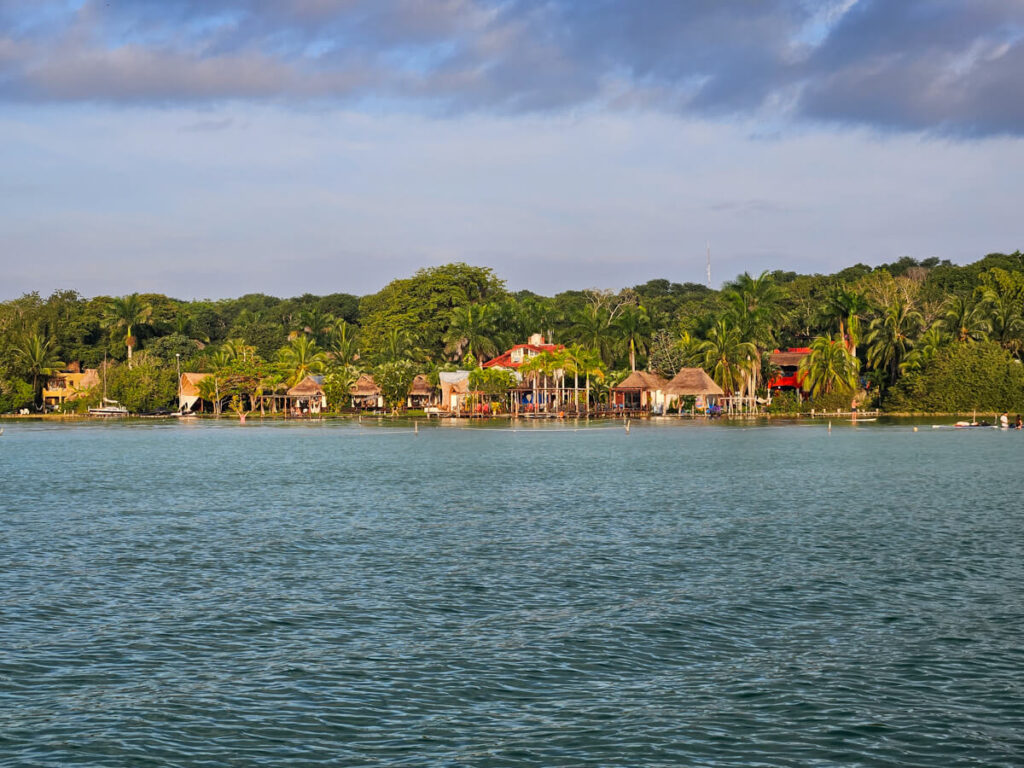
For a more immersive experience, staying in a hotel by Bacalar’s cenotes is a great idea. Not only do you get access to these sinkholes, but you can access them without the crowds, at sunrise or golden hour. Some of the best hotels in Bacalar are located near the cenotes, including:
Bacalar Cenote FAQs
To help you plan your trip to Bacalar’s cenotes, we’ve answered these frequently asked questions.
What are some popular cenotes in Bacalar?
The most well-known cenotes in Bacalar include Cenote Azul, one of the deepest and most dramatic, Cenote Cocalitos, known for its stromatolites and shallow, swimmable waters, Cenote Negro (also called the Black Cenote), a dark and deep cenote along the lagoon, and Cenote Esmeralda, which blends seamlessly into the turquoise lagoon.
How do I get to the cenotes in Bacalar?
Most of Bacalar’s cenotes are located within a short drive or bike ride from central Bacalar. Cenotes Azul and Cocalitos are just a 5-10 minute drive south of town along Highway 307. You can reach them by car, taxi, or bicycle. Some, like Cenotes Negro and Esmeralda, are visible from the water and best accessed via boat, kayak, or paddleboard tours on the lagoon.
What should I know before visiting a cenote in Bacalar?
Sunscreen, lotions, and bug spray harm the cenote ecosystems and are banned when swimming in Bacalar’s cenotes. Most cenotes charge a small entrance fee, and some offer amenities like restrooms, restaurants, and parking. Life jackets are available or required at some locations. Always respect the natural environment, especially fragile features like stromatolites at Cenote Cocalitos.
How deep is the black cenote in Bacalar?
Cenote Negro, or the Black Cenote, reaches depths of around 70 metres (230 ft). It’s striking due to its sudden drop-off and deep, dark waters contrasting with the surrounding turquoise lagoon.
What else is there to do in Bacalar besides cenotes?
Bacalar offers a variety of activities beyond cenotes, such as sailing or kayaking on Bacalar Lagoon, visiting historic landmarks like the Fort of San Felipe, exploring the town, its Zócalo, and spotting local street art, floating down Los Rápidos (Bacalar’s natural lazy river), walking over the mangroves at Ecoparque Bacalar, birdwatching, and taking day trips from Bacalar to Mayan ruins like Kohunlich and Dzibanché.

Read next:
A Traveller’s Guide to Bacalar
28 Best Things to Do in Bacalar
Where to Stay in Bacalar: 14 Top Hotels
Bacalar Lagoon of 7 Colours Guide
How to Visit Los Rápidos Bacalar
How to Visit Cenote Cocalitos Beach Resort
How to Visit Ecoparque Bacalar
