A Perfect Costa Rica Pacific Coast Road Trip Itinerary

Steal our epic Costa Rica self-drive itinerary of all the best stops on a Pacific Coast road trip, lasting 1 to 6 weeks.

There are so many exciting destinations to explore in Costa Rica, and it can be hard to whittle your list down to a manageable road trip itinerary. If you’re looking for a mixture of exotic wildlife, beautiful beaches, pristine natural areas, volcanic landscapes, and adrenaline activities, you’re in the right place. Costa Rica’s Pacific Coast offers the best of the country on one coastline. And there’s no better way to explore it than by car on a self-drive road trip.
We’ve compiled this ultimate Costa Rica Pacific Coast road trip route based on our own road trip experience, with optional stops and suggested detours depending on the amount of time you have and your interests. We had the best time on this route and are excited to share it with you too.
Road-tripping Costa Rica at a glance

Where to go on a Costa Rica Pacific Coast Road Trip
Home to sprawling beaches, lush rainforest and diverse wildlife, Costa Rica’s Pacific Coast is made up of several areas, including the Nicoya Peninsula, Central and South Pacific and the Osa Peninsula. Spanning the Guanacaste and Puntarenas provinces, this stunning stretch of coastline is one of the best places to road trip in Costa Rica.
Here, you can experience a variety of thrilling activities, including hiking, ziplining, waterfall rappelling, and canyoning. The Pacific Coast should be added to any wildlife lovers’ itinerary – it’s the best place for wildlife, bird, and whale watching, as well as one of the best places to see turtles in the country, thanks to several diverse national parks, each home to a variety of unique Costa Rican animals and plant life. We’ve listed all the best stops to add to your itinerary below.

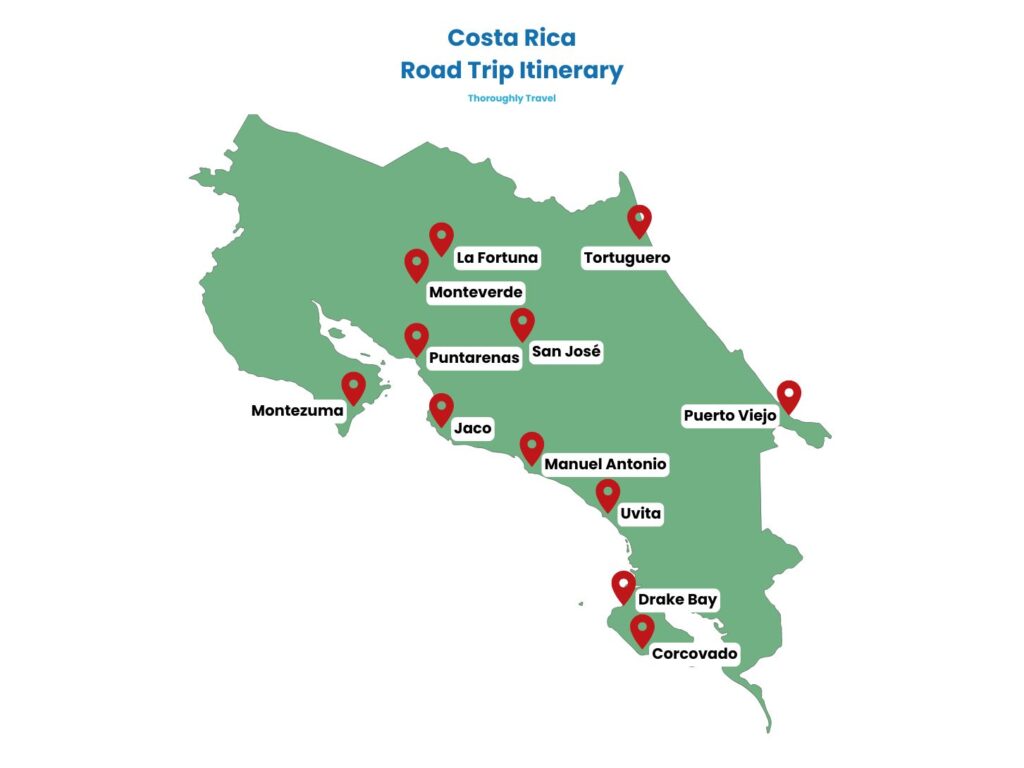
Costa Rica Itineray Road Trip Map
We’ve pinned the top spots to include in your Costa Rica road trip itinerary below.
More from Costa Rica
Costa Rica Road Trip Itinerary Routes
All of the following routes can start and end in San José, the capital of Costa Rica, and are planned in an anti-clockwise direction, but can easily be reversed. This is because most travellers are likely flying in and out of Juan Santamaría International Airport (SJO). But these routes can also be easily adapted to remove stops or add extensions to either end (which we suggest a bit later in this post) to see more of Costa Rica too.
We planned these Costa Rica road trip itinerary routes to start with the more popular destinations, designed to warm you up to the country, before ending in the more remote and rural parts of Costa Rica. We believe (as we found ourselves) that this route gives you a better experience as you can learn a lot about Costa Rica, its people, plants, animals, and culture in the more touristy destinations first. This means, by the end of the itinerary, you’ve left the tourist trail behind and know exactly how to get the most out of your Costa Rica road trip – for example, what to look out for when wildlife spotting or how to choose the best campsites.
To get to the Pacific Coast from San José, we’d recommend passing through Alajuela and stopping off at some of Costa Rica’s most famous attractions on your way to the coast. So we’ve included La Fortuna and Monteverde at the beginning of these routes as they’re really diverse and unmissable stops on a Costa Rica road trip. If you have limited time, you can skip these stops and head straight to the coast.
Ultimate Costa Rica Pacific Coast Road Trip
This is the route we’d suggest to anyone who likes to travel thoroughly (like we do). It takes in all the most famous and practically unknown spots and will leave you feeling like you’ve totally experienced the best of Costa Rica.
Costa Rica Highlights Road Trip
If you have limited time, this is a great route along Costa Rica’s Pacific Coast to see all the best spots without spending too much time in the car detouring to hard-to-get-to locations.
Costa Rica’s Coastal Towns Road Trip
If you’re solely interested in the Pacific Coast and don’t want to see any of the central mainland, this route sticks to the coast and takes in the best beaches and bays in Costa Rica.
Wildlife Spotting in Costa Rica Road Trip
If you’re a wildlife lover, this route is for you. It stops at all of the best wildlife-watching spots on Costa Rica’s Pacific Coast, from nature reserves to national parks.

Costa Rica Pacific Coast Road Trip Itinerary Stops
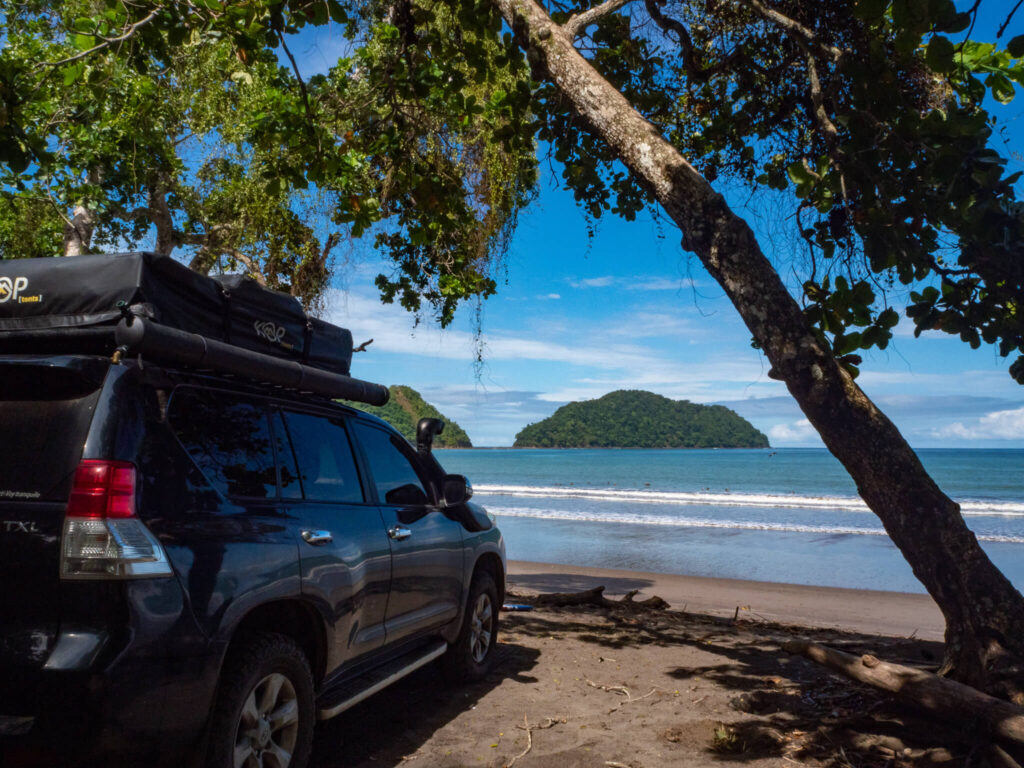
We’ve put together a complete list of all the best destinations on Costa Rica’s Pacific Coast. We are thorough travellers and big wildlife watchers, and didn’t want to miss a single inch of Costa Rica on our trip. We’ve tailored routes for every timeframe, budget and interest. This is based on our own experience on an epic Costa Rica road trip in a Nomad America 4×4 camper car rental, but with added improvements and extra recommendations to make your trip the best it can be.
Start: San José
Most visitors to Costa Rica will start in the capital, San José. This is where most of the major car rental agencies are based, and also where you’ll find the cheapest hire car deals. There’s no need to stay in the city once you’ve got your car, but you might like to spend a day orienting yourself and sightseeing.
San José Airport (SJO) isn’t actually in the city centre, it’s in Alajuela. You might prefer to start your road trip in Costa Rica immediately, in which case we’d recommend giving the capital a miss.
How long to spend in San José: 1 day.
What to do in San José
Where to stay in San José
Driving from San José to La Fortuna
There are two routes from San José to La Fortuna. One through San Miguel and one through San Ramon. The San Ramon route is shorter and faster. The roads are well-paved and suitable for any type of vehicle. It starts with a multi-lane highway and then becomes a normal road, passing through towns and villages. The journey does get windy in some parts, so it’s best to drive with caution.
There are a few toll booths to pass through when leaving San José. They’re only around 200 to 800 colones (40 cents to $1.50 USD).
If you want to head straight to the Pacific Coast, stay on the Pan-American Highway to Orotina, where you can choose to head north to Puntarenas or south to Jaco.

1. La Fortuna
La Fortuna is a small, charming town nestled in the foothills of the active Arenal Volcano. Home to geothermal hot springs, petrified lava flows, large crater lakes and thundering waterfalls, La Fortuna is an unmissable stop on any Costa Rica road trip. La Fortuna is one of the best places to see sloths in the world and has a variety of unique sloth-watching trails to choose from. The town is also a great base to explore some of Costa Rica’s hanging bridges and is super close to the famous Mistico Arenal Hanging Bridges Park, which is great for wildlife watching too.
How long to spend in La Fortuna: 3-4 days.
What to do in La Fortuna
Where to stay in La Fortuna
Driving from La Fortuna to Monteverde
The journey from La Fortuna to Monteverde is scenic but windy and slow going. The road is unpaved in parts and can be dirty, muddy and wet. You’ll likely encounter multiple huge potholes, so a 4×4 would be preferable, especially in wet season.
2. Monteverde
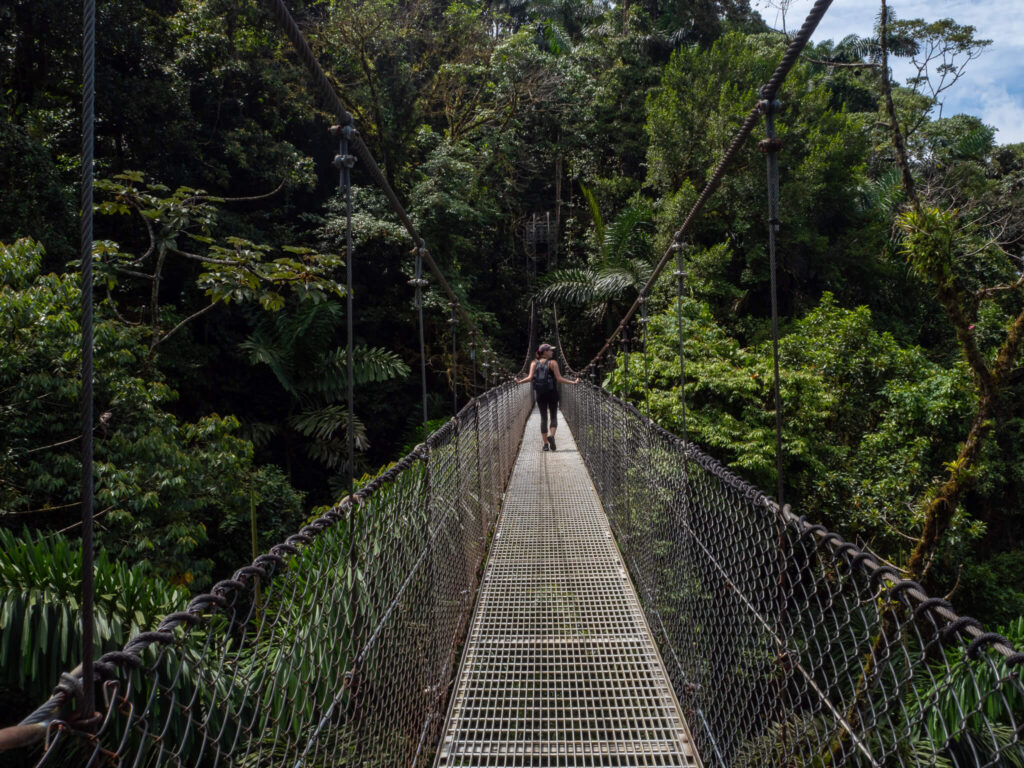
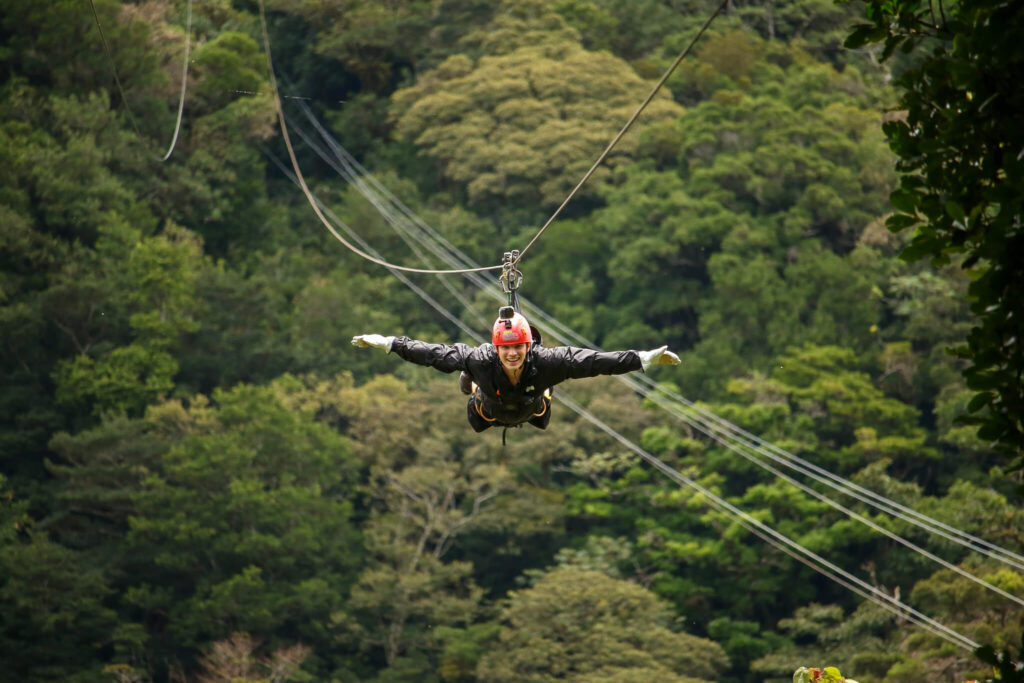
Monteverde sits at an elevation of 1440 metres (4662 ft) above sea level and is most well-known for its expansive cloud forest reserves, including Monteverde Cloud Forest and Santa Elena Cloud Forest. The area has a unique climate which is perfect for coffee and chocolate production, as well as providing habitat to a wide range of unique species. Monteverde is a particularly popular destination with birdwatchers and is one of the best places to see quetzals in Costa Rica. Located high in the Guanacaste Mountains, Monteverde is the gateway to Costa Rica’s Pacific Coast and the perfect stop-off on a road trip. Monteverde is also the adventure capital of Costa Rica, offering ziplining courses, hanging bridges, waterfall canyoning and tree-top adventures.
How long to spend in Monteverde: 2-4 days.
What to do in Monteverde
Where to stay in Monteverde
Driving from Monteverde to Tamarindo
The road out of Monteverde is just as bad as the road in. Expect winding corners, hills, and more potholes. The route to Tamarindo passes Palo Verde National Park, which can be a great stop-off if you have extra time. Liberia is a great town to stop off at, with multiple restaurants, fast food chains and a large shopping centre.
3. Tamarindo
You’ve reached Costa Rica’s Pacific Coast! Nestled on the Nicoya Peninsula, Tamarindo is a lively beach town on Costa Rica’s northern Pacific Coast. Known for high winds that produce strong surf, Tamarindo has a great surfing culture. The town itself is home to boutique shops, lively bars and cosy coffee shops. The landscape around Tamarindo features marshy mangroves, lush rainforest hiking trails and sandy beaches.
How long to spend in Tamarindo: 1-3 days.
What to do in Tamarindo
Where to stay in Tamarindo
Driving from Tamarindo to Montezuma
The route from Tamarindo to Montezuma traverses nearly the whole length of the Nicoya Peninsula. It follows the Gulf of Nicoya to Paquera, the main port town of the peninsula (and we’ll mention it again in a bit). It’s not recommended to take the inland road via San Francisco de Coyote as it’s unpaved and involves several river crossings. Stop off in Santa Cruz for refreshments and Cabo Blanco Nature Reserve if you have some free time to explore.

Optional Stop: Ostional
Before we get to Montezuma, we need to mention Ostional. Ostional is one of those places you may not have heard of unless you’re a big wildlife lover, and we’re hesitant to share it as we don’t want it to be ruined by overtourism. Ostional is one of the most popular turtle-nesting beaches in the world. It’s here that, at certain times of the year and depending on the moon cycle, hundreds of thousands of sea turtles crawl ashore to lay their eggs. This spectacle, worthy of a National Geographic documentary, is known as an arribada. If you time your Pacific Coast Road Trip right, stopping at Ostional could be a bucket list memory not to miss. Seeing the turtles in Ostional is highly regulated and can only be done on an official tour. If you’re out of season or don’t have a tour booked, it’s best to skip Ostional and move on to Montezuma.
How long to spend in Ostional: 1-2 days.
What to do in Ostional
Where to stay in Ostional
Driving to Ostional
As you get closer to Ostional, the road becomes completely unpaved. It’s important you have a 4×4 car with high clearance if this stop is on your itinerary. If there is particularly bad rain, flooding can cause the route to be impassable.

4. Montezuma
Magical Montezuma is located on the southern coast of the Nicoya Peninsula and is a true tropical paradise. The laid-back town is small and home to a beautiful beach, as well as rock pools, a waterfall hike and even an independent brewery. There are several secluded free campsites along the coast of Montezuma that are perfect for those looking to unwind and recharge. Montezuma is still largely undiscovered in comparison to the other Nicoya beach towns and is a great stop on a Pacific Coast road trip itinerary.
How long to spend in Montezuma: 2-3 days.
What to do in Montezuma
Where to stay in Montezuma
Driving from Montezuma to Santa Teresa
The fastest route to Santa Teresa is actually the longest route and goes via Cobano. The two other routes are unpaved so a 4×4 is necessary.

Optional Stop: Santa Teresa
Located on the southern tip of the Nicoya Peninsula, Santa Teresa is a hippy beach town. Here, long sandy beaches are lined with tall palm trees, and a dip in the sea has never seemed so inviting. Popular with digital nomads, surfers and yogis alike, Santa Teresa offers boutique everything, from hotels to cafes and restaurants. The town has earned its place on the tourist trail for its terrific surfing, so it isn’t the most secluded spot in Costa Rica, but one surely worth a place on your Costa Rica Pacific Coast itinerary. If you’re more of a remote vagabond, we’d recommend giving Santa Teresa a miss and taking the ferry straight over to the Costa Rican mainland.
How long to spend in Santa Teresa: 1-2 days.
What to do in Santa Teresa
Where to stay in Santa Teresa
Driving from Santa Teresa to the Paquera Ferry
The route from Santa Teresa to Puntarenas requires taking the ferry from Paquera. This is much faster than taking the road the whole way back up the coast to take the inland route around the north of the peninsula. Also, the ferry is very scenic.
Taking the Ferry from Paquera to Puntarenas
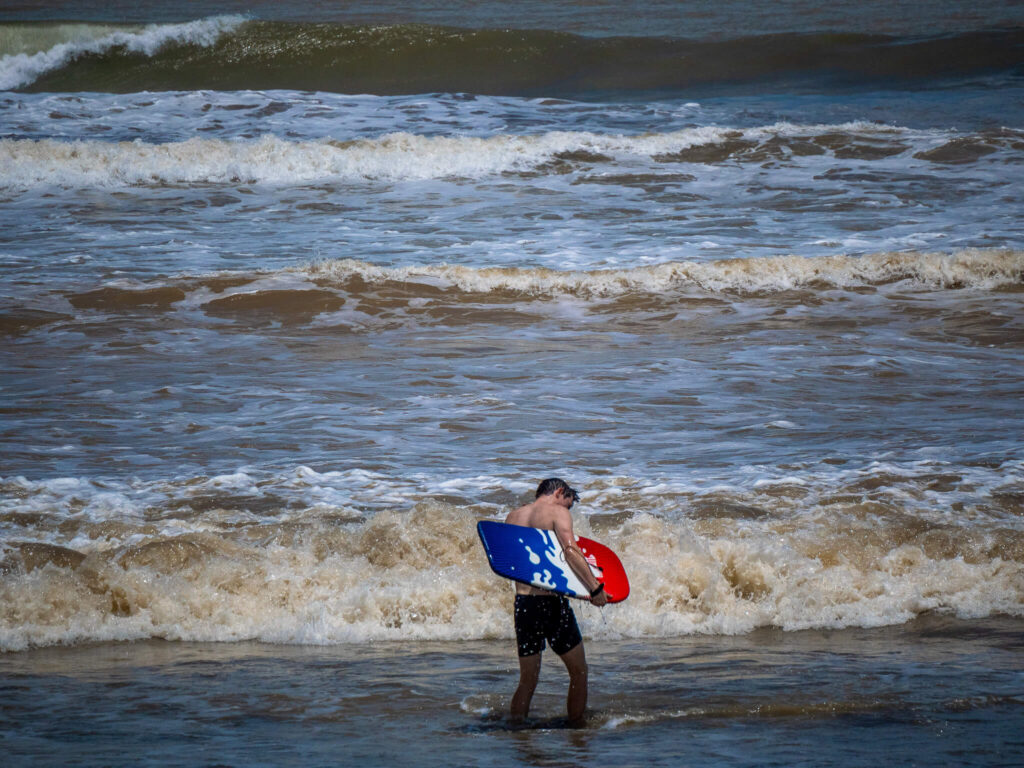
To get back to the Costa Rican mainland from the Nicoya Peninsula, you’ll need to catch the Ferry from Paquera to Puntarenas. This is an easy process and cuts hours off your journey, saving you the long drive back around the mainland.
5. Puntarenas
A port town on the Gulf of Nicoya, Puntarenas may be small, but it’s a cultural hub full of life. Home to a theatre, art gallery and university, Puntarenas is built along a long spit of land that sticks out into the sea. It is the closest coastal town to San José and looks out over the Pacific Ocean. Puntarenas has unique mangrove habitats along its estuary and inlets, which are home to a variety of animals and unique bird species.
How long to spend in Puntarenas: 1-2 days.
What to do in Puntarenas
Where to stay in Puntarenas
Driving from Puntarenas to Quepos
Welcome to the Central Pacific Coast! The roads from here on out are paved and smooth sailing – no problem for a 2-wheel drive. Playa Herradura is a lovely secluded town with an idyllic free beach campsite, which is great to stay at if you have an extra night. And if you get into Puntarenas in the evening, consider staying by the estuary where you can spot crocodiles and birds.

Optional Stop: Jaco
Jaco is one of the most developed beach towns on the Pacific Coast, and you’ll likely pass it on a Costa Rica Road trip as it’s the gateway between San José and the rest of the coast. Jaco is built around a long golden beach and features lively restaurants, bars, coffee shops and an outdoor shopping centre. The town may be lively, but you can escape the noise while appreciating the view from several panoramic viewpoints, including Mirador de Jaco and El Miro.
How long to spend in Jaco: 1-3 days.
What to do in Jaco
Where to stay in Jaco
Driving from Jaco to Manuel Antonio
Jaco to Manuel Antonio is an easy route, smoothly surfaced and maintained regularly. There are several lovely lookouts to stop off at and admire the view from.

6. Manuel Antonio
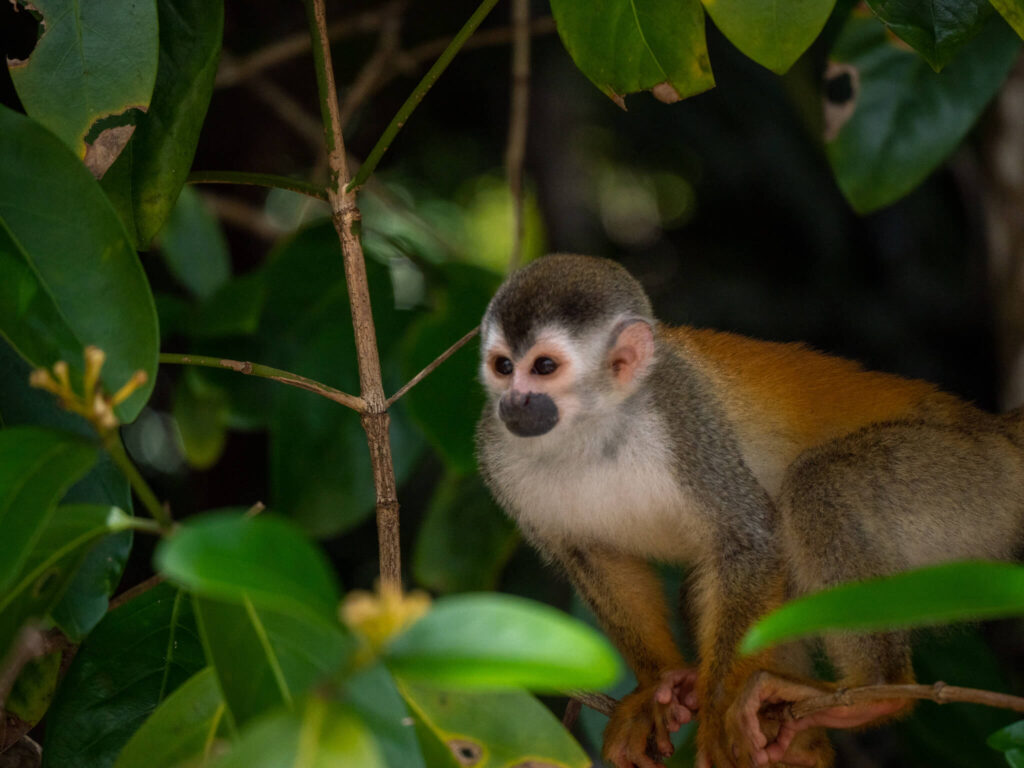
Manuel Antonio is a small but popular town in Costa Rica’s Central Pacific. Home to the smallest national park in the country, Manuel Antonio is one of the best road trip stops in Costa Rica. Manuel Antonio National Park may be small in size, but it offers the chance to see a huge variety of animals, including sloths, monkeys, agoutis, armadillos and coatis and is therefore one of the best places in Costa Rica to take a guided wildlife tour. The beach town itself is home to beach bars and restaurants, as well as boutique hotels in a prime position for exploring the park and the surrounding area. With more popularity comes more tourism, but Manuel Antonio is popular for a reason and should not be missed off your Pacific Coast itinerary.
How long to spend in Manuel Antonio: 2-4 days.
What to do in Manuel Antonio
Where to stay in Manuel Antonio
Driving from Manuel Antonio to Dominical
The drive from Manuel Antonio is an easy drive along the main Pacific Coast road. Some of the roads in Dominical are dusty and bumpy, but can be navigated by a normal car easily in dry season.
Alternative stop: Quepos
Quepos is a small coastal town with a laid-back vibe. There’s not too much to do in the town itself, but at only a 15-minute drive from Manuel Antonio National Park, it’s a popular and much cheaper option than staying in Manuel Antonio.
Where to stay in Quepos
Driving from Quepos to Dominical
Quepos to Dominical is the same route as the one from Manuel Antonio, but 15 minutes shorter, as you don’t have to drive from Manuel Antonio.

7. Dominical
Flanked by a river and surrounded by jungle, Dominical is a cool beach town and a perfect place to stop on a Costa Rica Pacific Coast Road Trip. Dominical is largely known for its epic surfing conditions, but the town is also home to a yoga studio and SCUBA diving shop. Pop-up farmers’ and artisans’ markets give the town an artsy feel, while Dominical and Dominicalito beaches are perfect for a lazy day on the sand and home to some of the best beach campsites in Costa Rica.
How long to spend in Dominical: 1-3 days.
What to do in Dominical
Where to stay in Dominical
Driving from Dominical to Uvita
The drive from Dominical to Uvita is short and sweet. A 4×4 is not necessary for this journey, but can be beneficial if you’re staying in accommodation down smaller roads or slightly out of town, which can be unevenly paved, especially in wet season.

8. Uvita
As you get further south on Costa Rica’s Pacific Coast, you leave the crowds behind and start to enter natural, rugged landscapes of pristine beaches and lush rainforests. Uvita is a small town and the gateway to Marino Ballena National Park. Popular with backpackers, the best thing to do here is to get out in nature – keep your binoculars handy as there’s some incredible wildlife in these parts.
How long to spend in Uvita: 3-5 days.
What to do in Uvita
Where to stay in Uvita
Driving from Uvita to Drake Bay
The route from Uvita to Drake Bay we’ve listed below does not pass any river crossings. However, the last part of the route is unpaved and takes over an hour to traverse. A 4×4 would be preferable, especially in wet season, as large potholes can form and it is steep and uneven.
Pro-tip: Break up your drive back to San José at the end of your trip and stop at Dominical or Uvita on the way back up from the Osa Peninsula, skipping this stop on your way south at this stage of the itinerary.

9. Drake Bay
Snuggled on the coast of the Osa Peninsula, one of the most remote areas of Costa Rica, Drake Bay is teeming with lush jungle and diverse wildlife. The marine life here rivals the quality of wildlife watching that can be done on land, and whale watching in Drake Bay has even been featured in television documentaries. The closest town, Agujitas, is home to a long beach, a variety of accommodations and multiple tour companies. A true biodiverse paradise, the best way to experience Drake Bay is to spend your days on wildlife-watching tours and your nights camping.
How long to spend in Drake Bay: 3-5 days.
What to do in Drake Bay
Where to stay in Drake Bay
Getting from Drake Bay to Corcovado
To get to Corcovado National Park, you actually need to ditch the car and take a boat. Entrance to Corcovado is only permitted with a licensed guide, so you’ll need to book onto a Corcovado National Park tour. While it would be possible to arrange your transport, permit and guide separately, it’s really not worth it, and a tour will make it much easier. Let the tour company organise everything for you, and on a day trip from Drake Bay. Alternatively, you can actually spend a night or two in the park at the Sirena Ranger Station.

10. Corcovado
Corcovado is home to one of the most biodiverse national parks in Costa Rica and should not be missed off your road trip itinerary if you love wildlife. Offering some of the best wildlife spotting in the country, Corcovado is one of the most biodiverse places on the planet. Corcovado National Park is most commonly visited on a day trip from Drake Bay, so no 4×4 is necessary. If you don’t stay in Drake Bay, Puerto Jiminez is a small town home to some charming eco-lodges.
How long to spend in Corcovado: 2-4 days.
What to do in Corcovado
Where to stay in Corcovado
The best way to stay in Corcovado is on an overnight tour with a sleepover in a ranger station. There are five ranger stations: San Pedrillo, La Sirena, La Leona, Los Patos, and El Tigre.

Heading back to San José
The journey from the Osa Peninsula to San José is a long one, although it follows smooth and fast highways once you’re back on the mainland. If you don’t want to do it all in one day, we’d recommend skipping Dominical on the way down to Drake Bay and stopping there on the way back to break up the journey. Alternatively, extend your road trip and see more parts of the Costa Rican mainland, like Quetzals National Park, or even head over to the Caribbean Coast if you have more time – check out our Pacific Coast road trip extension recommendations in the next section.
Pro-tip: Why not break up your journey back to San José by stopping at Dominical or Uvita (Stops 7 and 8) on the way back? Alternatively, head inland to Quetzales National Park and add some final birdwatching to your itinerary.

Extending your road trip around Costa Rica
This is a thorough Costa Rica Pacific Coast itinerary, but there’s so much more of the country to see. If you have time to extend your trip, consider adding some of these locations to your itinerary.

How to get around Costa Rica
There are a variety of ways to get around Costa Rica, from straightforward routes to more adventurous journeys, depending on whether you use public transportation or drive yourself.
Car
Renting a car in Costa Rica and road-tripping is really the best way to get around. Driving in Costa Rica is easy and gives you the flexibility to follow your own route on your own schedule. A 4×4 isn’t necessary for most journeys on the Pacific Coast, but is required if you plan to leave the beaten path or camp in Costa Rica. Having said that, many of the smaller roads, including several in this itinerary, are unpaved and prone to large potholes and mud. While they can be driven in a 2-wheel drive, it’s inadvisable. Not only is it slow going and uncomfortable, but most car rental agencies won’t cover unpaved roads on your insurance. So it’s best to be safe and explore 4-wheel-drive options.
Can you road trip Costa Rica?
Yes, you can! Road-tripping in Costa Rica is not only one of the most exhilarating ways to experience the country, but it’s super fun and practical too. Hiring a car and undertaking a road trip gives you complete freedom to travel wherever you like and prioritise your interests in your own bespoke itinerary.
Driving in Costa Rica is easy and safe, making road-tripping really easy. Undertaking a Costa Rica road trip is an unforgettable experience and one we’d highly recommend
Public transport
While there is public transport, such as buses, in Costa Rica, it is limited. Most bus routes only connect the major towns, and transport within destinations can be non-existent. Not to mention, using public transport comes with all sorts of drawbacks. These include long waiting times, uncomfortable journeys and cancellations. The best way to see Costa Rica is to drive yourself.

Where to stay on a Costa Rica Pacific Coast Road Trip
Camping
Camping in Costa Rica is an epic experience. Imagine falling asleep to the sound of the ocean, waking up to a stunning sunrise and discovering monkeys right by your campsite! It’s also a super affordable accommodation option, and many campsites are actually free. Renting a camper rental car with a rooftop tent is more comfortable than traditional tent camping.
Hotels
There are a variety of hotels in Costa Rica, from luxury to basic. The main cities tend to see more large chain hotel brands, while the smaller towns, like the beach towns on the Pacific Coast, are home to more independent boutique accommodations. Eco-lodges are also popular places to stay when in the more remote, jungle-y parts of the country.
Hostels
Those on a budget may be more comfortable in hostels, and Costa Rica has a variety to choose from. Hostels in Costa Rica usually offer dormitories with bunk beds, which can be mixed or one gender only. Many hostels also offer private rooms. Staying in a hostel usually means you have less privacy and share facilities like bathrooms, kitchens and communal areas, but they are priced much cheaper than hotels.
Airbnb
Airbnb is a great option for accommodation in Costa Rica. Self-catering properties are particularly great if you have your own car, as they get cheaper the further from major towns and cities you get. There are plenty of Airbnbs to choose from in Costa Rica. We’d just recommend always reading the description and reviews so you know what you’re booking.

When to go on a Costa Rica Pacific Coast Road Trip
Unless you’re planning to visit in a specific month for a specific wildlife sighting, the biggest factor to take into account when planning a road trip in Costa Rica is the weather.
We road-tripped Costa Rica in June and found it to be a good month to visit, as we usually had the tent up before the evening rains set in. We also found the national parks and beach towns to be super quiet as it was off-season, and often we were the only camper car in a campsite! If you’d like to play it safe with the rain though, we’d recommend planning your Pacific Coast Road trip for May.

Is it better to stay on the Pacific side or Caribbean side of Costa Rica?
As we mentioned above, choosing a coast to visit in Costa Rica might depend on the animals you wish to see on your trip. It will also depend on the time of year you are visiting Costa Rica, as each coast has a very different weather pattern, and specific destinations can have unique microclimates. Besides that, it really depends on what you like to experience when travelling.
Costa Rica’s Caribbean Coast is slightly harder to get to, but is home to sprawling beaches and smaller, authentic towns. Meanwhile, the Pacific Coast is home to cool beach towns and some of the best national parks for wildlife watching in the country.
If this is your first time in Costa Rica, or you’re planning to see as much as possible, we’d recommend choosing the Pacific Coast as it’s a lot more varied and has a lot more things to see and do.

How many days to spend in Costa Rica
How long to spend on a Costa Rica road trip will really depend on how much time you have and your travel style preferences. Many visitors enjoy a one or two-week road trip and feel like they got an authentic feel for the country in that time. Other travellers may prefer three to four weeks to go further afield and explore more of Costa Rica.
1 week Costa Rica Road Trip Itinerary
One week is the minimum amount of time you should spend in Costa Rica in order to see some of the main highlights and get a flavour of the country. You can’t see everything in this time, so we’d recommend choosing a small area and exploring it thoroughly rather than spreading yourself thin with long travel times to explore a larger area. We’d recommend spending one week in one of the following areas:
While not on the Pacific Coast, La Fortuna and Monteverde and real highlights of a Costa Rica road trip and take about a week to explore. If it’s your first time in Costa Rica and you have limited time, we’d encourage checking them out first.
10 day Costa Rica Road Trip Itinerary
With more than a week, you can add a few more stops to your road trip itinerary.
After exploring La Fortuna and Monteverde, there are still a few days left to see the Pacific Coast. Head to the Nicoya Peninsula and stop at Tamarindo, Ostional, Montezuma, or Santa Teresa.
Alternatively, head straight to the Central and South Pacific, including Puntarenas, Jaco, Quepos, Manuel Antonio, Dominical and Uvita. If you’d like to add the Osa Peninsula, Drake Bay, and Corcovado to your itinerary, we’d recommend skipping a few of the beach towns.

2 week Costa Rica Road Trip Itinerary
Two weeks is a great amount of time to see a wider variety of destinations. Within two weeks, you can drive the whole of the Pacific Coast, but you won’t necessarily have time to stop off at every single stop, so it’ll require some prioritising. If you’re planning a two-week Costa Rica road trip, we’d recommend choosing two Nicoya Peninsula stops, three Central and South Pacific stops, and one Osa Peninsula stop from the following list:
If you’d like to add La Fortuna and Monteverde to the beginning of your Pacific Coast road trip itinerary, we’d recommend skipping a few of the towns like Santa Teresa, Jaco and Dominical, or the more remote areas like Ostional.
3 week Costa Rica Road Trip Itinerary
Three weeks is the perfect amount of time to see all the main sights on Costa Rica’s Pacific Coast. This gives you time to see all the main stops we’ve suggested without rushing: La Fortuna – Monteverde – Tamarindo – Ostional – Montezuma – Santa Teresa – Puntarenas – Jaco – Quepos – Manuel Antonio – Dominical – Uvita – Drake Bay – Corcovado.
1 month Costa Rica Road Trip Itinerary
A month-long Costa Rica road trip is a popular amount of time to see the whole country. If you plan to stick just to the Pacific Coast, this will give you plenty of time to really immerse yourself in your favourite destinations, or get off the beaten path and discover some hidden gems we’ve not covered in this itinerary.

Is Costa Rica expensive to road trip?
We’ve heard many travellers complain that Costa Rica is expensive. While it’s true that it is more expensive than its Central American neighbours, Costa Rica is a much cheaper destination than many developed vacation destinations in Europe and America.
If you want to save money on your trip to Costa Rica, be sure to follow our budget tips, like cooking your meals instead of eating out.

Read next:
The Best Time to Visit Costa Rica for Weather and Wildlife
An Essential Guide to Driving in Costa Rica
The Ultimate Guide to Camping in Costa Rica
The 14 Best Hanging Bridges Parks in Costa Rica
Our Costa Rica Guides:
